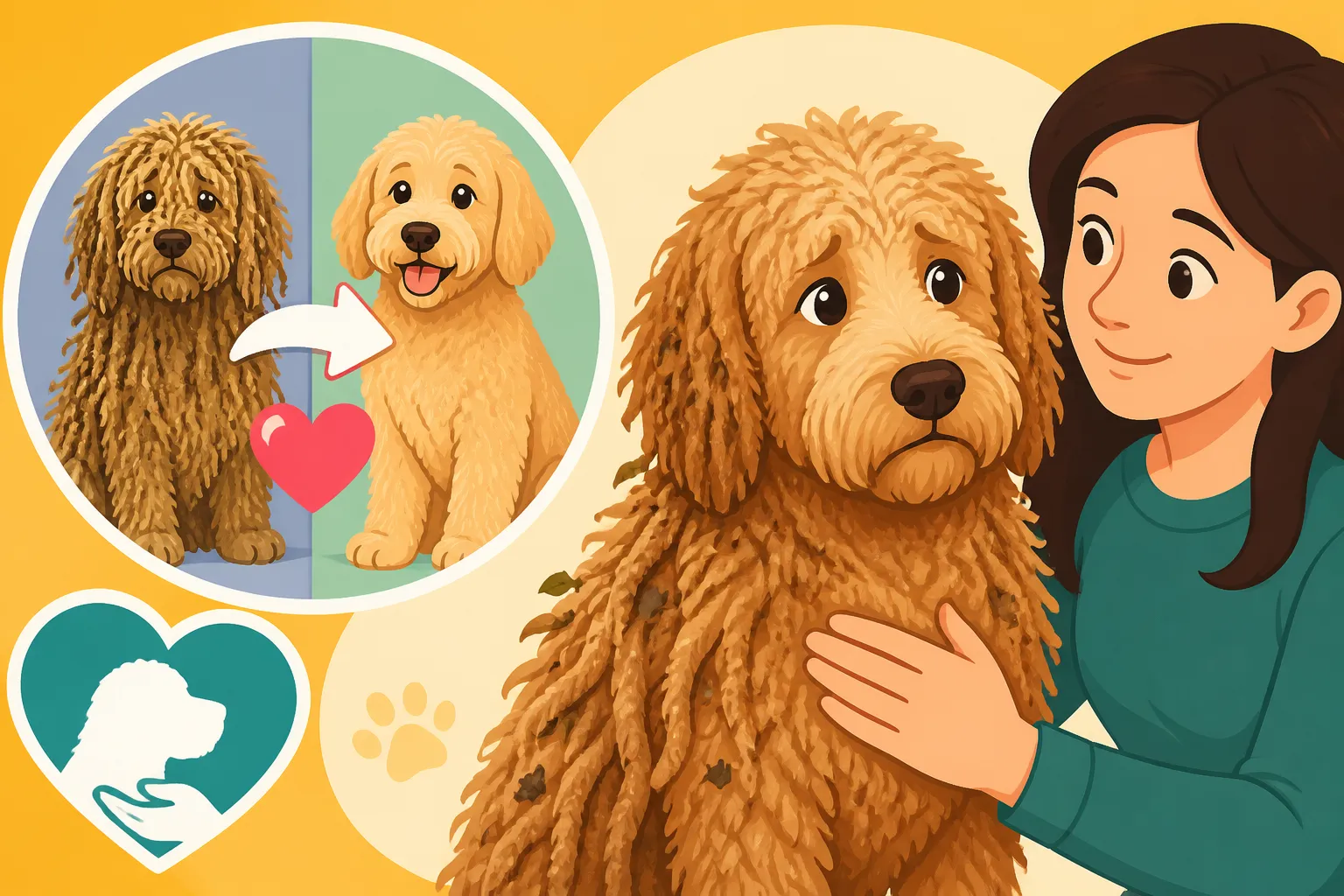
Adopting a Goldendoodle With a Matted Coat
Bringing a rescue Goldendoodle into your home is an incredibly compassionate act, one filled with hope and the promise of a loving future. However, many adopters are understandably shocked and disheartened when their new family member arrives with a coat so severely matted that it hides an array of issues. This guide will walk you through understanding why this happens, what immediate steps you need to take, and how to embark on a journey of recovery and preventative care for your matted rescue Goldendoodle.
The Heartbreaking Reality of a Matted Rescue Goldendoodle
It’s a tough truth, but many Goldendoodles find their way into rescue with coats in dire condition. You envision soft, fluffy curls, and instead, you get a dog whose fur is a solid, felted mass. This isn't just an aesthetic problem; it's a serious welfare issue that often indicates past neglect or simply an owner overwhelmed by the breed's unique grooming needs. The initial shock can be immense, and it’s completely normal to feel a mix of sadness, frustration, and a fierce desire to make things right for your new companion.
Why Matting Happens in Goldendoodles
Goldendoodles are cherished for their beautiful, low-shedding (or non-shedding, in some cases) coats, but this very trait is what makes them prone to matting. Unlike dogs with single coats that shed their old hair, Goldendoodles often have hair that continues to grow, similar to human hair, and also has a wavy or curly texture that easily tangles. When loose hair gets caught in the growing coat and isn't brushed out regularly and thoroughly, it clumps together, forming mats. These mats start small but can quickly grow into large, dense patches, especially in high-friction areas like behind the ears, armpits, groin, and under collars or harnesses.
It's a common misconception that because Goldendoodles are "low-shedding," they are low-maintenance. The opposite is true. Their coats demand consistent, diligent care, often requiring daily brushing and professional grooming every six to eight weeks. If a Goldendoodle owner isn't prepared for this commitment, or if circumstances change, such as illness or financial hardship, grooming can quickly fall by the wayside. Before you know it, a few tangles turn into full-blown mats that are painful and impossible to brush out. This is a primary reason why many Goldendoodles end up in rescue, as the previous owners simply couldn't keep up with the demands, or perhaps didn't even understand them. You can read more about why these coats are such a challenge in our article, Why a Goldendoodle Mats in a Week Without Brushing.
The Health Risks Hiding Beneath the Mats
Beyond the obvious discomfort, matted coats pose significant health risks that are often invisible until the mats are removed. Imagine wearing a heavy, constricting sweater that's constantly pulling at your skin, harboring moisture, and becoming a breeding ground for all sorts of unwelcome guests – that's what a matted coat feels like for a dog.
Common issues include:
- Skin Infections and Irritation: Mats trap dirt, debris, and moisture against the skin. This creates a perfect environment for bacterial and yeast infections to flourish, leading to painful hot spots, redness, and itching.
- Parasites: Fleas, ticks, and other parasites can hide deep within the dense mats, making them incredibly difficult to detect and remove. These infestations can cause further skin irritation, allergic reactions, and even transmit diseases.
- Restricted Movement and Pain: Severe mats can pull tightly on the skin, restricting a Goldendoodle's ability to walk, run, or even lie down comfortably. This constant pulling is incredibly painful and can lead to muscle soreness or joint issues, especially around the legs and ears. Imagine if your hair was constantly pulling at your scalp with every move – that’s what your Goldendoodle might be experiencing.
- Hidden Wounds and Lumps: Mats can conceal wounds, sores, or even lumps and bumps that would otherwise be easily noticed. A matted coat can make it impossible for you or a vet to properly examine the skin underneath.
- Poor Air Circulation: The dense matting prevents air from reaching the skin, leading to overheating in warmer weather and poor regulation of body temperature.
- Ear Problems: The long, floppy, furnished ears of a Goldendoodle are particularly susceptible. Mats around the ears trap moisture and debris, exacerbating issues like Goldendoodle Ear Infections Under a Furnished Ear. The weight of matted ear hair can also pull painfully on the ear canal.
Your First Steps: A Gentle Approach to a Matted Coat
When you first bring home a matted rescue Goldendoodle, your heart will likely ache to fix everything immediately. However, rushing in with clippers or brushes can do more harm than good, both physically and emotionally. Patience and a gentle approach are paramount.
Prioritizing Your Goldendoodle's Comfort and Trust
Your Goldendoodle has likely been through a stressful experience, and the matting itself is a source of discomfort and possibly pain. They might be fearful, shy, or even defensive when touched, especially around sensitive areas where mats are tight. Your absolute first priority is to build trust and ensure they feel safe.
- Don't attempt to brush out severe mats yourself. This is crucial. Trying to pull apart dense mats with a brush or comb will cause excruciating pain and can traumatize your new dog, making future grooming (and handling in general) much more difficult. It's also nearly impossible to do effectively once mats are truly tight against the skin.
- Focus on bonding: Spend time simply being with your Goldendoodle. Offer gentle praise, soft voices, and positive reinforcement with treats. Let them come to you. Short, positive interactions will start to build a foundation of trust.
- Keep initial handling brief and positive: When you do need to handle them, keep it gentle and short. Focus on areas that aren't matted or as sensitive. The goal is to associate human touch with good things.
The Initial Vet Check-Up: Beyond the Mats
Before any significant grooming takes place, a trip to the veterinarian is non-negotiable. This is vital for several reasons, and it’s a critical part of helping your Goldendoodle recover.
The vet can:
- Assess overall health: They can check for underlying medical conditions that might have contributed to the matting (e.g., skin allergies making the dog scratch and tangle their fur, or conditions that make a dog too painful to be groomed). They will also look for any signs of Goldendoodle Skin and Coat Disease or other health issues that might require immediate attention.
- Identify hidden injuries or infections: The vet can carefully part smaller sections of hair (where possible) or gently palpate to find skin infections, wounds, or parasites that are hidden by the mats. Early diagnosis and treatment of these issues are essential.
- Discuss pain management: If the matting is severe, your Goldendoodle may be in considerable pain. The vet can prescribe pain relief or anti-inflammatory medication to make the grooming process more bearable and help your dog be more comfortable generally.
- Advise on sedation: In some severe cases, especially if a dog is particularly fearful or in extreme pain, sedation might be recommended or even necessary for the grooming process. This decision should always be made by a veterinarian to ensure your dog's safety and well-being.
- Provide a baseline: This initial check-up establishes a baseline of your dog's health, which is important for any future medical needs, and especially if you're considering Goldendoodle Pet Insurance for a Dog With No Breed Papers.
The Grooming Intervention: What to Expect
Once your Goldendoodle has seen the vet and you have a plan, the next step is the grooming. This can be an emotional experience for owners, especially if it means saying goodbye to those iconic Goldendoodle curls for a while.
The Shave-Down: Often the Only Humane Option
Let's be realistic: when a Goldendoodle arrives severely matted, a complete shave-down is almost always the kindest, safest, and most humane option. Many new owners are heartbroken at the thought of shaving off their dog’s beautiful coat, but trying to de-mat a severe case is torture. It causes immense pain, stress, and can even damage the skin.
- Why de-matting is not an option: Professional groomers are trained to understand coat types and matting. For a Goldendoodle, if a comb cannot slide easily through the coat all the way to the skin, it’s matted. Attempting to brush out such mats pulls at the skin, causes bruising, and can lead to clipper burns if the groomer tries to work around them. A groomer who truly prioritizes your dog's welfare will recommend shaving. You might want to read our article on Why a Groomer Shaves a Matted Goldendoodle for more insight.
- Finding the right groomer: Seek out a groomer who has extensive experience with Goldendoodles and understands matted coats. They should be empathetic and explain the process clearly. Be prepared for potentially higher costs due to the time and effort involved, as well as possible Dematting Surcharges on a Goldendoodle. Discuss whether your vet recommends sedation for the groom, and if so, choose a groomer who is comfortable working with sedated animals, or who works closely with a vet clinic where the groom can be performed.
- The process: The groomer will use clippers to carefully shave off the matted coat, often using a very short blade (like a #10 or #7). They'll work slowly and meticulously to avoid nicking the skin, which can be delicate and inflamed under the mats. It will take time, and your Goldendoodle might look quite different afterward – very short, almost bald in places. But they will feel immense relief.
| Aspect | Before Grooming (Matted) | Immediately After Shave-Down |
|---|---|---|
| Coat Condition | Dense, felted, pulls on skin, dull, possibly smelly | Very short, uneven (due to matting), revealing skin |
| Comfort Level | Painful, restricted movement, itchy, overheating risk | Immediate relief, lighter, freer movement |
| Skin Visibility | Hidden, prone to infections, sores, parasites | Fully exposed, allowing inspection and treatment |
| Grooming Effort Required | Impossible to brush, requires professional shave-down | Easy to maintain, regular brushing will be key |
| Emotional Impact on Dog | Stressed, fearful, painful during touch | Relief, calmer, more comfortable, bonding can deepen |
After the Shave-Down: Post-Groom Care
Once the mats are gone, your Goldendoodle will feel like a brand new dog. But the care doesn't stop there.
- Inspect the skin: Gently examine your dog’s skin. It might be red, irritated, or have clipper burn in some spots, especially if the mats were very tight. Your vet may recommend a soothing shampoo or topical treatment.
- Keep them warm: With their protective coat gone, your Goldendoodle might feel cold, especially if it's chilly outside or in your home. A soft sweater or blanket can provide comfort.
- Introduce gentle grooming: Now is the time to start fresh with a positive grooming routine. Begin with very short, positive sessions. Use a soft brush, even if just for a minute, and offer plenty of treats and praise. The goal is to make grooming a pleasant experience, not a chore.
- Monitor for secondary issues: Watch for signs of skin irritation worsening, new hot spots, or unusual scratching. If you have any concerns, contact your vet.
Long-Term Management: Preventing Future Mats and Ensuring Well-being
The shave-down is a fresh start, a clean slate. Your main goal now is to ensure your Goldendoodle never experiences severe matting again. This requires commitment, consistency, and the right tools.
Establishing a Consistent Grooming Routine
This is the cornerstone of Goldendoodle care. Without it, the mats will inevitably return.
- Daily Brushing: Yes, daily! This is especially critical during The Goldendoodle Coat Change at Eight to Twelve Months, when their puppy fluff transitions to adult fur, making them extra prone to matting. You'll need specific tools: a good quality slicker brush and a sturdy metal comb. The slicker brush removes loose hair and detangles, while the comb is essential for "line brushing" – ensuring you get all the way down to the skin. Pay special attention to common matting areas like behind the ears, armpits, tail, and groin. You can learn more about this in our article Brushing a Goldendoodle Often Enough to Stop Matting.
- Professional Grooming: Even with diligent home brushing, professional grooms are usually necessary every 6-8 weeks. A professional groomer can trim the coat, clean ears, trim nails, and spot any developing issues you might miss. Be clear with your groomer about the length you desire, keeping in mind that longer coats require even more home maintenance. For advice on what tools to use at home, check out Home Grooming Tools a Goldendoodle Actually Needs.
- Bathing: Bathe your Goldendoodle as needed, using a good quality dog shampoo and conditioner. Always ensure they are thoroughly brushed out before bathing, as water tightens existing mats, making them worse. Dry them completely after bathing, ideally with a high-velocity dryer, while brushing to prevent new tangles from forming.
Nutritional Support for a Healthy Coat
A healthy coat starts from within. Good nutrition plays a significant role in skin and coat health, helping to keep fur strong, shiny, and less prone to breakage and tangles.
- High-Quality Diet: Feed a well-balanced, high-quality dog food. Look for foods with real meat as the first ingredient and a good balance of nutrients. Brands like Ollie, which offers fresh, human-grade food, can contribute to overall skin and coat health by providing easily digestible nutrients.
- Omega Fatty Acids: These are crucial for skin and coat health. Look for dog foods that include omega-3 and omega-6 fatty acids, or consider adding a supplement, like fish oil, under your vet's guidance. These can help reduce dryness, itching, and improve coat luster.
- Hydration: Ensure your Goldendoodle always has access to fresh, clean water. Good hydration is essential for healthy skin cells.
The Emotional Recovery and Building Trust
Beyond the physical transformation, the emotional journey is just as important. A Goldendoodle arriving matted has often experienced neglect or periods of discomfort, which can impact their confidence and willingness to be handled.
- Positive Reinforcement: Continue to use positive reinforcement for all interactions, especially around grooming. Make every brushing session short, calm, and end on a good note with treats and praise.
- Gentle Handling: Regularly touch your Goldendoodle all over their body, including their paws, ears, and mouth, even when not grooming. This desensitizes them to handling and makes future care much easier.
- Patience and Love: Building trust takes time. Your consistent love, patience, and commitment to their well-being will slowly but surely help your Goldendoodle recover emotionally and physically. They will learn that grooming is not a punishment, but a part of being cared for, and that you are a safe and reliable presence in their life.
Adopting a Goldendoodle with a matted coat is a challenge, but it's one you can absolutely overcome. With the right approach, a good vet, a skilled groomer, and your unwavering dedication, you can transform your rescue dog from a matted mess into a happy, comfortable, and beautifully maintained companion. The journey might be tough at first, but the bond you'll form through this process will be incredibly rewarding.
Disclaimer
This article is for general informational purposes only and does not constitute professional advice. Laws, prices and regulations vary by location and change over time. Consult a qualified professional for guidance on your specific situation.