The Novelist Who Crossed a Golden With a Poodle
Oh, the Goldendoodle! It's such a beloved family member in so many homes today, but sometimes, when people talk about their origins, there's a charming misconception about how they first came into being. Many folks wonder if a famous novelist was the actual architect behind this wonderful crossbreed. We're going to dive into that history today, separating the fascinating literary mentions from the true story of how the Goldendoodle found its way into our hearts.
The Seeds of an Idea: An Early Poodle-Golden Cross in Literature
Before the Goldendoodle became the household name it is today, gracing everything from social media feeds to popular pet stores like Chewy, there was an earlier, much more understated appearance of a Golden Retriever and Poodle cross. This wasn't in a breeder's kennel or a scientific journal, but rather, within the pages of a beloved children's book series. It's a testament to the inherent appeal of combining these two wonderful breeds that the idea popped up even before the "designer dog" craze truly took hold.
Monica Dickens and the "Follyfoot" Connection
If you're a fan of classic British children's literature or equestrian tales, you might have already guessed who we're talking about: Monica Dickens. Granddaughter of the legendary Charles Dickens, Monica was a prolific writer, and among her works was the much-loved "Follyfoot" series, which followed the adventures and challenges at a sanctuary for horses. What's often overlooked, however, is a particular canine character in these stories that captured the hearts of readers.
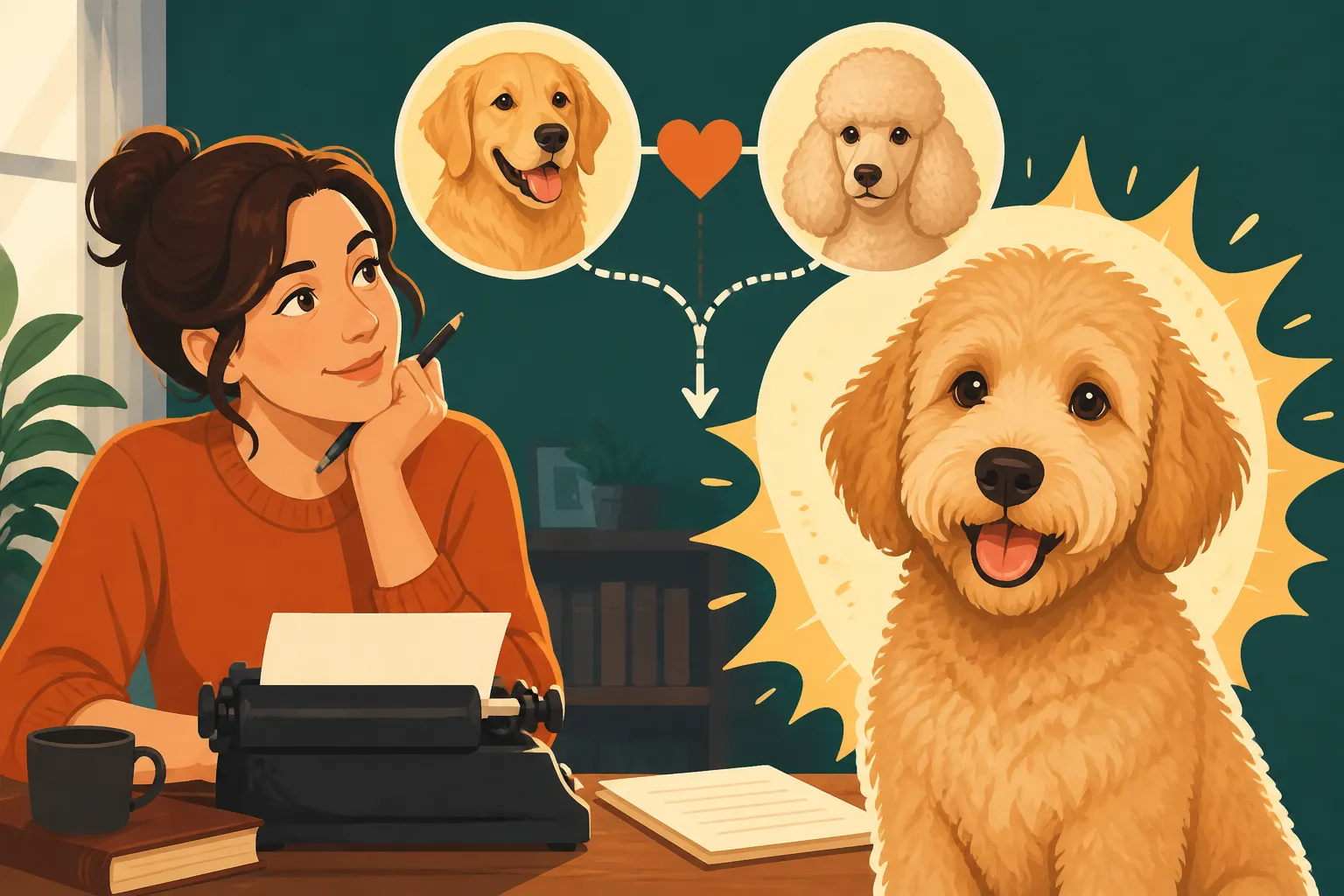
In the late 1960s, Monica Dickens wrote about a charming dog named "Follyfoot" – yes, the namesake of the series itself – who was described as a cross between a Poodle and a Golden Retriever. Now, this wasn't a scientific study or an attempt to launch a new breed; it was simply a character in a fictional world. But it's utterly fascinating, isn't it? Here, decades before the Goldendoodle exploded in popularity, was a writer imagining the very blend of traits that would later make this crossbreed so desirable. It speaks volumes about the intuitive understanding many people had, even then, that mixing these two breeds could result in something truly special.
Why This Particular Cross Appeared in Her Work
It’s interesting to ponder why Monica Dickens chose this specific cross for her titular character. Golden Retrievers have always been celebrated for their gentle nature, their unwavering loyalty, and their eagerness to please – traits that make them fantastic companions and therapy animals. Poodles, on the other hand, are renowned for their keen intelligence, their trainability, and their often lower-shedding coats. For a story centered around an animal sanctuary, where compassion and understanding are paramount, a dog possessing the best qualities of both could certainly make for a compelling and endearing character.
Perhaps Dickens envisioned a dog with the Golden's heartwarming demeanor and the Poodle's quick wit, creating a balanced, lovable, and perhaps even slightly quirky companion for the human characters. This was long before terms like "hybrid vigor" were commonly tossed around in casual dog owner conversations, and certainly before anyone was actively trying to create a "hypoallergenic" Golden Retriever. It was a more organic, imaginative selection, reflecting a novelist's keen eye for character and charm, rather than a breeder's strategic intent. This early literary appearance is a delightful historical footnote, showing that the idea of this wonderful cross had a quiet resonance even in simpler times.
Distinguishing a Literary Mention from a "Breed" Origin
It's crucial to understand that while Monica Dickens's mention of a Golden-Poodle cross is a delightful historical tidbit, it doesn't mark the origin of the Goldendoodle as a recognized "designer breed" in the way we understand it today. The difference lies in intent, scale, and the deliberate effort to create a consistent "type" of dog for specific purposes. Many Goldendoodle enthusiasts mistakenly believe this early literary mention was the starting gun, but the real story of the modern Goldendoodle is a bit more recent and has a different catalyst.
The Lack of Intent to Create a New Breed
When Monica Dickens penned her "Follyfoot" series, she wasn't issuing a call to action for breeders to start producing Golden Retriever-Poodle crosses en masse. Her character, Follyfoot, was an individual dog within a story, not the prototype for a breeding program. There was no registry for such crosses, no efforts to establish coat types, sizes, or temperamental consistency. The term "Goldendoodle" didn't exist, nor did the concept of a widespread "doodle" phenomenon. It was an isolated, fictional instance that probably didn't spark any real-world breeding trends at the time.
Think of it like this: if a novelist wrote about a character with a dog that was a Beagle-Poodle mix, it wouldn't mean that the "Beagledoodle" officially originated with that book. It simply means an individual dog with those parent breeds existed in the story. The widespread adoption and intentional breeding of Goldendoodles for specific traits, particularly their sought-after coats and temperaments, came from a very different place and time.
The Goldendoodle's True Emergence
The true catalyst for the modern "doodle" craze, and by extension the Goldendoodle, actually came from an entirely different crossbreed: the Labradoodle. In the late 1980s, an Australian breeder named Wally Conron, working for the Royal Guide Dogs Association of Australia, sought to create a guide dog for a visually impaired woman whose husband was allergic to dogs. He crossed a Standard Poodle (known for its intelligence and low-shedding coat) with a Labrador Retriever (a well-established guide dog breed). This intentional, purpose-driven cross created the first Labradoodles, and their success in fulfilling this specific need quickly garnered international attention. You can read more about The 1989 Guide Dog Cross Behind Every Goldendoodle.
It was this widespread media coverage and the subsequent demand for these "allergy-friendly" guide dogs that truly sparked the "designer dog" movement. People began to see the potential in crossing other popular, biddable breeds with Poodles. The Golden Retriever, already beloved for its temperament, was a natural next choice, leading to the intentional breeding of the Goldendoodle we know today. This period, roughly from the late 1990s and into the new millennium, is when the Goldendoodle truly emerged as a popular and intentionally bred cross.
The Goldendoodle's Road to Recognition: A Later Phenomenon
The journey of the Goldendoodle from a niche concept to one of America's most popular family dogs is a truly fascinating one, especially when you consider its relatively recent surge in popularity compared to centuries-old purebreds. It wasn't an overnight sensation, but rather a gradual build-up of interest that capitalized on changing preferences and the search for a new kind of companion. Today, you see Goldendoodles everywhere, and stores like Chewy cater to their every need, from specialized grooming tools to grain-free food.
The Rise of the "Designer Dog" Concept
The success of the Labradoodle in the late 1980s and early 1990s opened the floodgates for what became known as "designer dogs." The idea was simple: combine the desirable traits of two different purebred dogs, often with the Poodle, to create a new, often "hypoallergenic" or "low-shedding" companion with a great temperament. Terms like "hybrid vigor" were frequently cited, promising a healthier dog due to a broader gene pool, though this claim has been widely debated and often misunderstood. The Goldendoodle Hybrid Vigor Claim and Where It Breaks delves into this in more detail.
This movement captured the public imagination. People were tired of shedding, sometimes looking for a dog that might trigger fewer allergies, and they were drawn to the novelty and charm of these new crosses. The lack of traditional kennel club recognition was often seen not as a drawback, but as a sign of innovation, creating a new space outside the established purebred world. Many Goldendoodle breeders and enthusiasts started forming their own communities and informal registries to track their lines and uphold certain standards.
Why the Goldendoodle Became So Popular
The Goldendoodle, in particular, became a runaway hit for several compelling reasons. Take the Golden Retriever: known for its sunny disposition, incredible patience, and intelligence, making it an ideal family pet. Combine that with the Poodle's renowned intellect, trainability, and its hallmark curly, low-shedding coat, and you have a recipe for a truly appealing dog. The Goldendoodle often inherits the best of both worlds: the Golden's friendly, eager-to-please nature, and the Poodle's sharp mind and distinctive curl.
Furthermore, Goldendoodles come in a wide array of sizes and colors, from tiny Toys to imposing Standards, and coats ranging from wavy to curly. This versatility means there's often a Goldendoodle to suit almost any family or living situation. As breeders refined their lines, offering various generations like F1, F1b, and Multigen Goldendoodles, they began to create dogs with more predictable coat types, further catering to those seeking specific traits. Goldendoodle Generations From F1 to Multigen explains how these generations are developed and what they mean for puppies. This combination of adorable looks, fantastic temperament, and the promise of a low-shedding coat quickly cemented the Goldendoodle's place as one of the most sought-after companion dogs, a popularity that shows no signs of waning.
The Lasting Impact of Early Crosses (or lack thereof)
So, what does this all mean for Monica Dickens and her "Follyfoot" dog? While her literary creation was a lovely, early acknowledgment of the Poodle and Golden Retriever mix, it ultimately had little direct impact on the development and popularization of the modern Goldendoodle. It stands as a charming historical footnote, a poetic foreshadowing rather than a foundational blueprint. The true story of the Goldendoodle's rise is one of intentional breeding, market demand, and the convergence of desired traits, far removed from the quiet pages of a children's book.
How Accidental Crosses Differ from Intentional Breeding Programs
The key distinction between a fictional or accidental cross and a true breeding program lies in purpose, planning, and progression. An accidental cross, like two dogs of different breeds mating, or a literary character's mixed-breed pet, doesn't involve careful health screening of parents, genetic testing for inherited diseases, or a long-term vision for consistency in offspring. It's often a one-off event, and while the resulting dog might be wonderful, its lineage isn't being tracked to improve future generations.
In contrast, even without formal kennel club recognition, responsible Goldendoodle breeders today engage in a methodical approach. They carefully select parent dogs based on temperament, structural soundness, and comprehensive health clearances for conditions common to both Golden Retrievers and Poodles, such as hip and elbow dysplasia, eye conditions, and cardiac health. They track pedigrees, observe the puppies' development, and strive for consistency in temperament and coat type across generations. This deliberate effort, even in a crossbreed, is what differentiates it from the simple, serendipitous existence of a mixed-breed dog like the one in "Follyfoot." If you're looking for a Goldendoodle, understanding Health Testing Both Goldendoodle Parents Should Have is vital.
What These Early Mentions Tell Us About Goldendoodle Appeal
Despite not being the direct genesis, Monica Dickens's inclusion of a Poodle-Golden cross in her work does offer a lovely insight into the inherent appeal of this combination. Even back in the 1960s, the idea that a dog could possess the gentle, devoted nature of a Golden Retriever alongside the intelligence and unique coat of a Poodle was intuitively attractive. It speaks to a timeless desire for a companion that is not only beautiful but also smart, kind, and responsive.
Her fictional Follyfoot, much like the Goldendoodles we cherish today, likely embodied loyalty, a playful spirit, and an eagerness to connect with people. It suggests that long before "doodles" became a phenomenon, the raw potential for greatness in this cross was evident. So, while Monica Dickens didn't create the Goldendoodle movement, she certainly had a keen eye for the wonderful qualities that would eventually make this hybrid one of the most beloved dogs in homes around the world, whether they're lounging on a sofa or romping through a park with their favorite Chewy toy.
| Era | Type of Cross | Intent | Impact on Modern Goldendoodle |
|---|---|---|---|
| Late 1960s | Literary / Accidental | Character development, individual pet ownership. | Minimal direct impact, a foreshadowing. |
| Late 1980s | Intentional (Labradoodle) | Create allergy-friendly guide dogs. | Direct catalyst for the "doodle" phenomenon. |
| 1990s – Present | Intentional (Goldendoodle) | Combine Golden temperament with Poodle coat/intelligence. | Led to widespread popularity and dedicated breeding efforts. |
Disclaimer
This article is for general informational purposes only and does not constitute professional advice. Laws, prices and regulations vary by location and change over time. Consult a qualified professional for guidance on your specific situation.