The 1989 Guide Dog Cross Behind Every Goldendoodle
It’s easy to look at a Goldendoodle today and think they’re just another "designer dog" that popped up recently on the scene, a cute, fluffy crossbreed whose origin story is as simple as two popular breeds meeting. But the truth is far more interesting and rooted in a truly heartfelt mission. This guide is going to take you back in time to explore the surprising, pivotal moment in 1989 that laid the groundwork for every Goldendoodle we adore today, shining a light on the guide dog cross that started it all and how that initial purpose continues to shape the breed.
The Genesis of the "Doodle" Idea for Specific Needs
Before the Goldendoodle became a household name, before "doodle" even entered our common dog lexicon, there was a very real, pressing need that sparked an innovative idea. It wasn't about fashion or trends; it was about accessibility and service. People often forget that the intentional crossing of a Poodle with another breed began not in a quest for a cute, curly pet, but in a dedicated effort to solve a specific problem for those with disabilities.
Searching for a Solution to Allergies
Imagine needing a guide dog, a partner to help you navigate the world, but being severely allergic to dog dander. This was a significant barrier for many visually impaired individuals. Traditional guide dog breeds, like Golden Retrievers and Labradors, are wonderful, but their coats and dander production often triggered severe allergic reactions. For years, this meant that many who could benefit immensely from a guide dog were simply unable to have one due to health constraints. It was a heartbreaking reality that left many feeling excluded and limited in their independence.
The Challenge of Purebred Limitations
Purebred dogs, while having predictable traits in many areas, also come with predictable limitations, especially when it comes to allergenic properties. The Poodle, with its unique single coat and low-shedding qualities, had long been recognized as a more suitable breed for allergy sufferers. However, Poodles, while intelligent, didn't always possess the same biddability, calm demeanor, or specific working traits that made Golden Retrievers and Labradors exceptional guide dogs. The challenge was to combine the best of both worlds: the Poodle's hypoallergenic coat with the guide dog aptitude of a more traditional service breed. This is where the concept of a crossbreed, specifically designed for a purpose, truly began to take root. For more on the Goldendoodle's beginnings, check out Where the Goldendoodle Story Actually Starts.
Wally Conron and the Labradoodle's Origin
The year 1989 marks the critical turning point in the "doodle" story, thanks to a man named Wally Conron, the breeding manager for the Royal Guide Dogs Association of Australia. He received a request that would forever change the landscape of companion and service dogs.
The First "Doodle" for a Specific Need
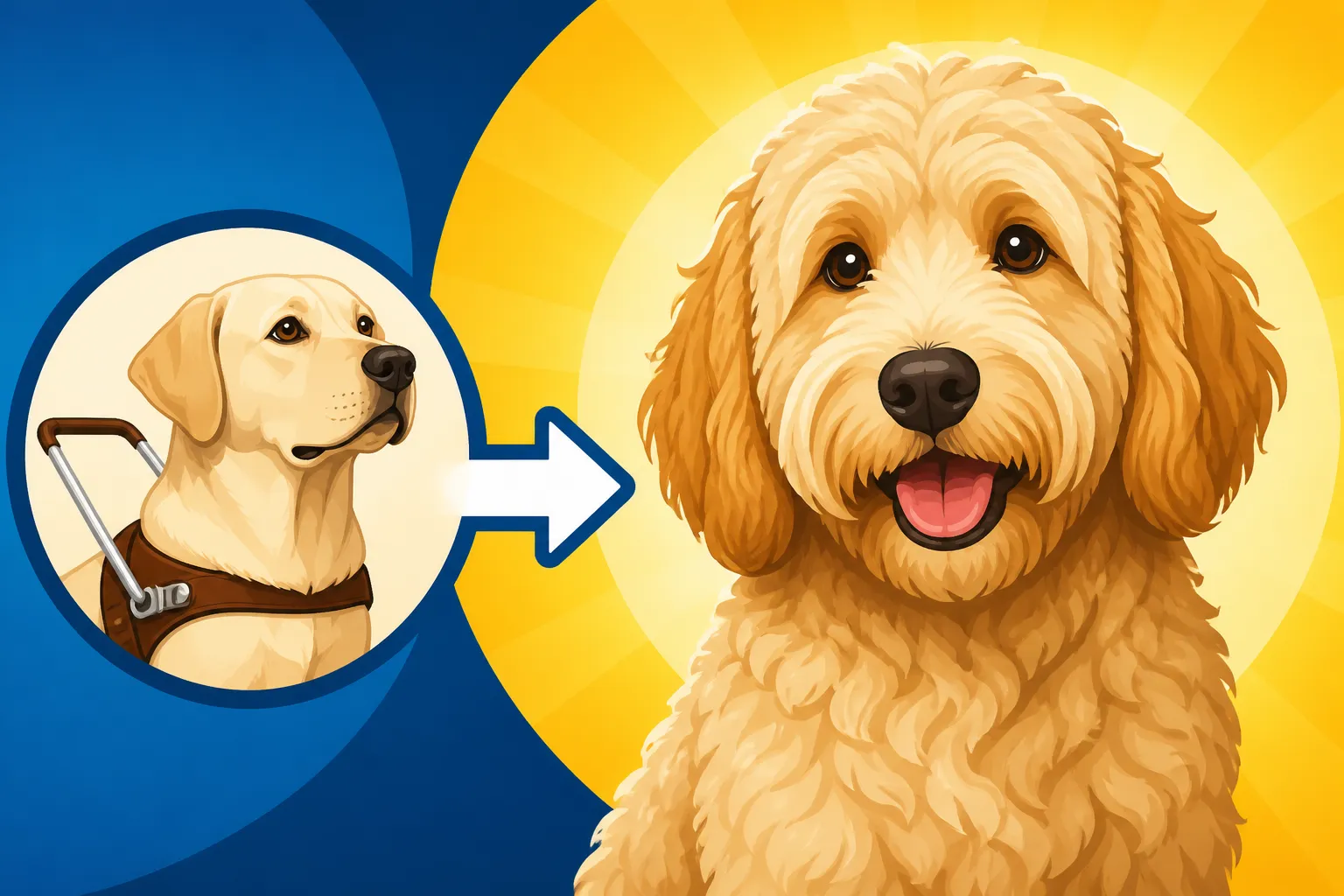
Conron's mission was clear: create a guide dog for a visually impaired woman in Hawaii whose husband was allergic to dog hair. He needed a dog that was intelligent, trainable, had a gentle temperament, and, crucially, didn't shed. His solution was to cross a Labrador Retriever, known for its excellent guide dog qualities, with a Standard Poodle, lauded for its low-shedding coat. The result was a litter of puppies, one of whom, named Sultan, proved to be an exceptional guide dog and didn't trigger the husband's allergies. This successful pairing was groundbreaking, proving that intentional crossbreeding could indeed meet highly specific and challenging needs. Sultan became the world's first Labradoodle, and the concept of the "doodle" was born from a place of genuine necessity and compassion.
The Unforeseen Popularity Boom
While Conron's initial intent was purely functional, the word quickly spread about these "hypoallergenic" guide dogs. People, both those with allergies and those without, were captivated by the idea of a dog that offered the best of two beloved breeds. The Labradoodle's charming looks, often wavy or curly coats, and friendly disposition made them instantly appealing. What started as a niche solution for a very specific problem soon exploded into widespread demand. This rapid rise in popularity, driven by both genuine need and aesthetic appeal, paved the way for other Poodle crosses, including our beloved Goldendoodles. The market for these "designer dogs" grew at an exponential rate, far beyond what Conron had ever envisioned.
Conron's Later Reservations
It's important to note that Wally Conron, the man credited with creating the Labradoodle, later expressed significant regret over the phenomenon he unleashed. He became vocal about the indiscriminate breeding practices that arose from the "doodle craze." He saw many breeders prioritizing profit over health testing and temperament, leading to dogs with unpredictable coats, health issues, and behavioral problems. His intention was noble and specific, but the commercialization and lack of ethical oversight in many breeding programs deeply troubled him. This serves as a potent reminder that while the initial idea was brilliant, the execution by some, especially those without a true understanding of genetics and responsible breeding, can unfortunately fall short. When considering a Goldendoodle, understanding this history underscores the importance of choosing a reputable breeder who prioritizes health and temperament, rather than just capitalizing on a trend. You can often find a lot of information on breeder practices and recommendations through reputable forums and even pet supply sites like Chewy that often host community discussions.
From Allergy-Friendly Guide Dog to Family Pet
The success of the Labradoodle in a service context quickly showed people that Poodle crosses had much more to offer than just hypoallergenic qualities. The unique blend of traits began to be appreciated by a broader audience looking for family companions.
Expanding Beyond Guide Dog Work
Once the potential of the Labradoodle became apparent, it wasn't long before people started realizing these dogs could be incredible family pets, therapy dogs, and emotional support animals. Their intelligent, eager-to-please nature, combined with their generally friendly disposition, made them highly adaptable. The idea of a dog that was not only less likely to trigger allergies but also possessed a wonderful temperament for home life was incredibly attractive. This shift from a purely utilitarian role to a more generalized companion role was a natural evolution, fueled by positive experiences and word-of-mouth.
The Appeal to Allergy Sufferers
For families with allergies, the promise of a low-shedding, potentially hypoallergenic dog was a game-changer. Suddenly, having a dog, which for so long had been an impossible dream, became a real possibility. While it’s crucial to understand that Why No Goldendoodle Is Truly Hypoallergenic, the Poodle cross does significantly reduce the amount of dander and hair shed, making them tolerable for many allergy sufferers who previously couldn't share their homes with a canine companion. This opened up a whole new world for people longing for a furry friend without the constant sniffles and itchy eyes. It's why many still seek out specific Goldendoodle generations, like the F1b, hoping for a higher Poodle percentage. More on this can be found in Which Goldendoodle Generation Sheds Least.
The "Designer Dog" Phenomenon Takes Hold
As the popularity soared, the term "designer dog" gained traction. This label, while sometimes carrying a negative connotation of being a fad, truly reflected the intentional design behind these crosses – initially for specific needs, and then for appealing combinations of traits. People started to appreciate the idea of a dog deliberately bred to combine desirable characteristics from two different breeds. This led to an explosion of "doodle" variations, each promising a unique blend of traits. The Goldendoodle, with its Golden Retriever lineage, was a natural next step, promising the friendly, outgoing nature of the Golden combined with the intelligence and low-shedding coat of the Poodle.
The Goldendoodle's Entry onto the Scene
With the Labradoodle blazing a trail, it was only a matter of time before another beloved retriever breed entered the mix. The Golden Retriever, known for its beautiful coat, friendly disposition, and incredible biddability, was the perfect candidate.
Applying the Labradoodle Blueprint
Breeders, seeing the success of the Labradoodle, began to apply the same crossbreeding principles to the Golden Retriever. The logic was sound: if a Labrador Poodle cross worked for guide dogs and families, then a Golden Retriever Poodle cross surely would too, perhaps even more so for those seeking a dog with the Golden's universally adored temperament. The goal remained similar – to create a dog with the Poodle's low-shedding coat and intelligence, blended with the Golden Retriever's characteristic friendliness, gentle nature, and trainability. This intentional choice led directly to the creation of the Goldendoodle.
Golden Retriever Traits Meet Poodle Intellect
What makes the Goldendoodle so special is this unique combination of its parent breeds. From the Golden Retriever, Goldendoodles inherit their famously sociable and eager-to-please nature, their unwavering loyalty, and that quintessential "happy-go-lucky" attitude. These are dogs that generally love everyone and thrive on being part of the family. The Poodle, on the other hand, contributes exceptional intelligence, a sharp mind, and that coveted low-shedding coat. This blend often results in a dog that is not only smart and easy to train but also incredibly affectionate and patient, making them fantastic companions for various lifestyles. You can explore this more in What a Goldendoodle Inherits From Each Parent Breed. This combination also means they need a good balance of physical and mental stimulation, and you'll find plenty of enrichment toys and treats on Chewy to keep those smart brains busy!
The Rise of Goldendoodle Generations
Just like the Labradoodle, the Goldendoodle quickly diversified into various "generations." The "F1" Goldendoodle is a first-generation cross, 50% Golden Retriever and 50% Poodle. Then came the "F1b," which is a backcross of an F1 Goldendoodle to a purebred Poodle, aiming for a higher percentage of Poodle genetics to enhance the low-shedding trait. As time went on, "F2," "F2b," and "Multigen" Goldendoodles emerged, with breeders attempting to stabilize desired traits like coat type, size, and temperament. Each generation represents a step in the ongoing effort to refine the Goldendoodle, catering to specific preferences while striving for health and consistency. Understanding these generations helps prospective owners choose the best fit for their family's needs, especially concerning potential allergies.
The Legacy of Intentional Crossbreeding
The 1989 guide dog cross was more than just the birth of a new type of dog; it was a paradigm shift in how we think about dog breeding and the potential of crossbreeds. It proved that intentional, thoughtful crossbreeding could yield remarkable results for specific purposes.
Benefits of the Initial Cross
The original impetus behind the Labradoodle, and by extension the Goldendoodle, was deeply practical and compassionate. The benefits were clear:
- Reduced Allergens: Providing a path for allergy sufferers to experience the joy of dog ownership and, crucially, to have life-changing service dogs.
- Enhanced Trainability: Combining the Poodle's intelligence with the Golden Retriever's biddability often results in a highly trainable and cooperative dog.
- Hybrid Vigor (when done right): The idea that crossing two distinct purebred lines can sometimes lead to a healthier animal with fewer inherited genetic diseases, a concept known as hybrid vigor. However, it’s important to understand The Goldendoodle Hybrid Vigor Claim and Where It Breaks as it's not a guaranteed shield against all health problems.
- Versatile Temperament: A blend of the gentle, friendly Golden with the smart, athletic Poodle creates a versatile dog suitable for various roles, from therapy work to active family life.
The Need for Responsible Breeding
Wally Conron's regrets highlight a critical point that remains just as relevant today: the how of breeding matters immensely. The initial success unfortunately led to a flood of irresponsible breeders, often referred to as "backyard breeders" or "puppy mills," who saw a quick profit in the "doodle" craze without understanding or prioritizing genetic health, temperament, or proper husbandry. These practices undermine the very intent of the original cross and can lead to unhealthy, poorly socialized, or temperamentally unsound dogs. This is why thorough research and selecting a breeder who performs comprehensive health testing on both parent breeds is paramount for any prospective Goldendoodle owner. Checking for Health Testing Both Goldendoodle Parents Should Have is a non-negotiable step.
Modern Goldendoodle Breeding Practices
Today, responsible Goldendoodle breeders are committed to continuing the legacy of thoughtful, health-conscious breeding. They conduct extensive health screenings for conditions common to both Poodles and Golden Retrievers, such as hip and elbow dysplasia, eye conditions like progressive retinal atrophy, and certain heart issues. They also focus on temperament, ensuring that puppies are well-socialized and come from parents with sound, stable personalities. Ethical breeders aren't just pairing dogs; they're curating lines, carefully considering genetics, and prioritizing the well-being of their animals above all else. They understand that while the "doodle" was born from a specific need, its continued evolution depends entirely on responsible stewardship. You might even find them recommending specific types of food or enrichment from Chewy to new puppy owners.
Here's a quick look at the evolution of the "Doodle" concept:
| Year/Period | Key Event/Concept | Primary Goal | Impact on Goldendoodles |
|---|---|---|---|
| Pre-1989 | Purebred Guide Dogs (Lab, Golden) | Excellent trainability, temperament for service | Inaccessibility for allergy sufferers |
| 1989 | Wally Conron creates the Labradoodle | Hypoallergenic guide dog | Proved crossbreeds could meet specific needs |
| 1990s | "Doodle" Popularity Boom | Allergy-friendly, desirable pet traits | Led to interest in other Poodle crosses |
| Early 2000s | Goldendoodle Emerges | Combines Golden temperament with Poodle coat | Rapid rise as a popular family companion |
| Present | Multigen Goldendoodles | Consistent traits, health, temperament | Ongoing refinement through responsible breeding |
The Goldendoodle's journey from a targeted solution for a guide dog allergy to one of America's most beloved family pets is truly remarkable. It’s a testament to ingenuity, compassion, and the enduring human-canine bond. While the path has had its bumps, especially with the rise of irresponsible breeding, the core idea – combining the best of two breeds for a specific purpose – remains powerful and continues to shape the future of these wonderful dogs.
Disclaimer
This article is for general informational purposes only and does not constitute professional advice. Laws, prices and regulations vary by location and change over time. Consult a qualified professional for guidance on your specific situation.