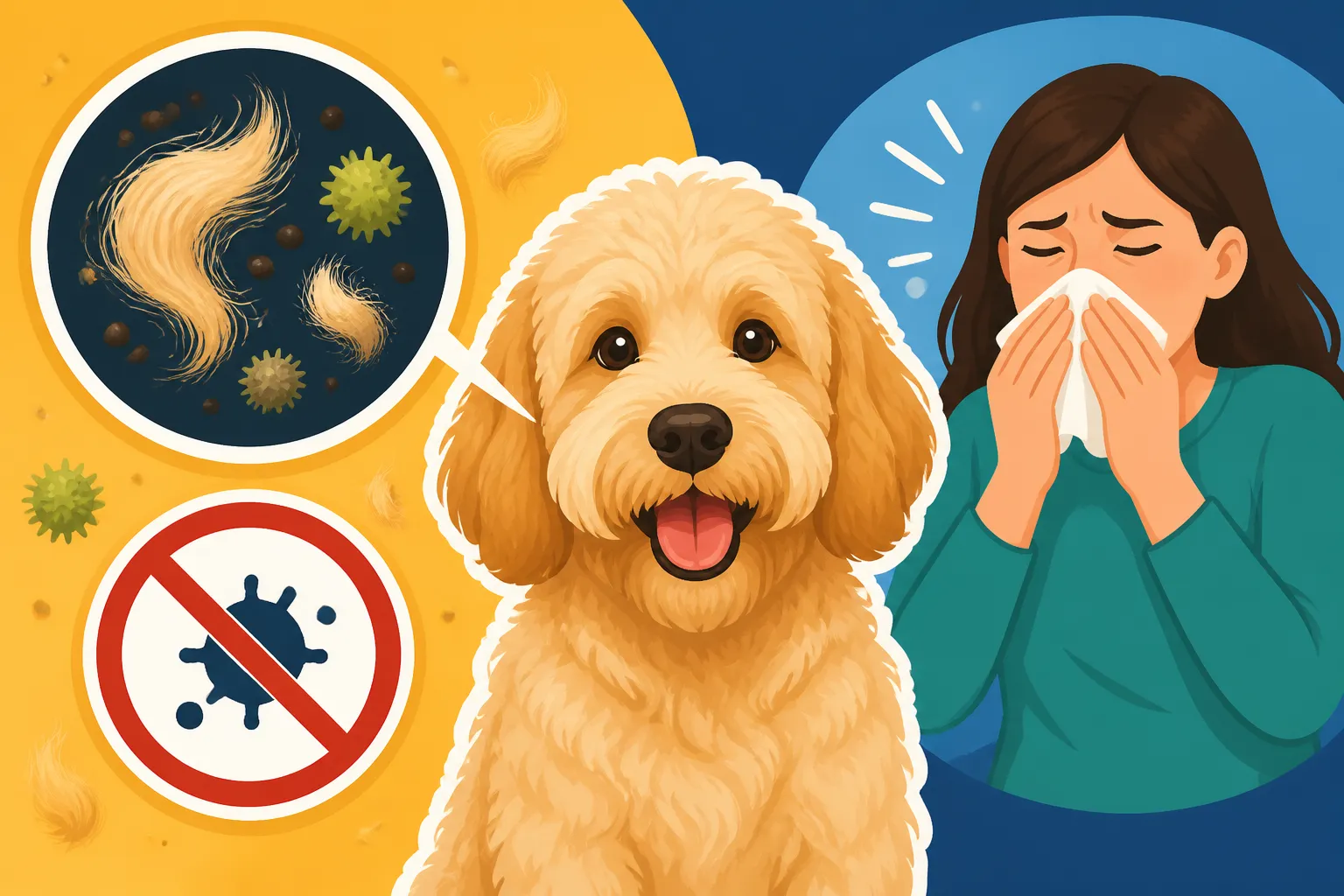
Why No Goldendoodle Is Truly Hypoallergenic
Many prospective Goldendoodle owners come to this breed hoping for a furry companion that won't trigger their allergies. It’s a common and understandable desire, born from the frustration of wanting a dog but dreading the sneezing, itching, and watery eyes that often come with pet ownership. This guide will dive deep into why the term "hypoallergenic" is a myth when it comes to Goldendoodles, and what you really need to understand about dog allergens to make an informed decision for your family.
Understanding the "Hypoallergenic" Misconception
The word "hypoallergenic" is thrown around quite a lot in the dog world, especially when talking about Doodles, and it really sets people up for disappointment. It suggests a complete absence of allergens, which simply isn't possible for any living creature, let alone a dog. What people often mean when they say a dog is "hypoallergenic" is that it's less likely to trigger allergic reactions, usually because it sheds less. But the truth is, the problem isn't just the hair.
The Real Source of Dog Allergens
When you have a dog allergy, it’s not primarily the fur itself that’s causing your symptoms. It's microscopic proteins found in a dog's dander (tiny flakes of dead skin), saliva, and urine. These proteins are the true culprits. When a dog sheds hair, it also disperses dander, which then floats through the air and settles on surfaces. Less shedding might mean less dander spreading around, but it doesn't mean no dander, and certainly no saliva or urine allergens.
Think about it: every dog has skin, every dog licks themselves (and you!), and every dog produces urine. Therefore, every dog produces allergens. It's the quantity and how these allergens are distributed that really matters for an allergy sufferer. A dog that sheds less might indeed be easier on someone with mild allergies, but it's crucial to understand that they are not allergen-free. It’s a difference in degree, not in kind.
Why Goldendoodles Get Labeled "Hypoallergenic"
The Goldendoodle's Poodle parentage is where the "hypoallergenic" myth primarily originates. Poodles are known for their curly, non-shedding coats, which trap dander and hair rather than releasing it into the environment. When a Golden Retriever, a notoriously heavy shedder, is crossed with a Poodle, the hope is that the offspring will inherit the Poodle's low-shedding qualities. And often, they do! This reduced shedding is fantastic for many people and does often lead to fewer visible pet dander particles floating around your home.
However, the genetic lottery involved in a crossbreed means there's no guarantee. Some Goldendoodles inherit a straighter, more Golden-like coat, which will shed more. Others get that perfect wavy or curly coat that sheds minimally. Even with the curliest coat, Goldendoodles still produce dander and saliva with allergenic proteins. The expectation that a Goldendoodle will be a magical, allergy-free dog can lead to heartbreak and, unfortunately, many Doodles ending up in rescues when families realize their allergies are still an issue. The Goldendoodle Hybrid Vigor Claim and Where It Breaks talks about some of the unpredictable aspects of crossbreeds.
Goldendoodle Coat Types and Allergen Levels
The Goldendoodle's coat is a fascinating blend of its parent breeds, and it's also the single biggest factor in how much dander and loose hair it distributes. You'll hear a lot of talk about different generations and coat types, and understanding these can help set realistic expectations for allergen management.
The Three Main Goldendoodle Coat Types
Goldendoodles typically come in three main coat types: straight, wavy, and curly. Each type has different shedding characteristics and, consequently, different implications for allergy sufferers.
- Straight Coat (Hair Coat): This coat is often referred to as a "flat coat" or "hair coat" and looks very similar to a Golden Retriever's coat. It sheds the most of all Goldendoodle coat types, and therefore, it's generally the least suitable for people with allergies. If a Goldendoodle has this coat, it means it inherited more of the Golden Retriever's fur genes and less of the Poodle's. These dogs will shed significantly, spreading more dander throughout your home.
- Wavy Coat (Fleece Coat): The wavy coat, often called a "fleece coat," is the most common Goldendoodle coat type and what many people picture when they think of a Goldendoodle. It's soft, shaggy, and tends to shed minimally, though not completely. This coat type is usually a good compromise for many families with mild allergies, as it balances the desirable Goldendoodle look with reduced shedding. Grooming is still essential to prevent matting and manage dander.
- Curly Coat (Wool Coat): This coat is very Poodle-like, featuring tight curls that are dense and coarse. It's often referred to as a "wool coat." This coat type sheds the least of all, as the curly hair traps any loose dander and shed hairs, preventing them from floating into the environment. For severe allergy sufferers, a Goldendoodle with a true curly coat might offer the best chance of coexisting comfortably, but even then, consistent grooming is paramount. The Three Goldendoodle Coat Types and How to Tell Them goes into more detail.
The Impact of Shedding on Allergen Dispersal
While the fur itself isn't the primary allergen, shedding plays a huge role in how much dander, saliva, and urine proteins get distributed in your home. A dog that sheds a lot, like a Golden Retriever, will constantly release hair that carries dander into the air and onto your furniture, floors, and clothes. This makes it much harder to control the allergen load.
A Goldendoodle with a low-shedding coat, on the other hand, traps these allergens within its coat. This means they are less likely to become airborne, and instead, stay put until they are brushed out or washed away. This is why regular grooming, even for non-shedding Doodles, is absolutely critical. If those trapped allergens aren't removed, they can still build up and cause issues when the dog shakes, rolls, or gets cuddled.
Managing Allergens in a Goldendoodle Household
If you're an allergy sufferer determined to bring a Goldendoodle into your life, don't despair! While no dog is truly hypoallergenic, there are many proactive steps you can take to minimize allergens and create a more comfortable living environment. It takes dedication, consistency, and often, some adjustments to your home routine. Managing Dog Allergens in a Goldendoodle Household provides more comprehensive strategies.
Consistent Grooming is Your Best Friend
This is, hands down, the most important strategy for minimizing allergens in a Goldendoodle home. Because low-shedding Goldendoodle coats trap dander, you need to actively remove it.
- Daily Brushing: Investing in good quality brushes (like a slicker brush and a metal comb) and committing to daily brushing is non-negotiable, especially for wavy and curly coats. This removes loose hair and dander before it can spread. Try to do this outdoors if possible, or in an easily cleanable area like a bathroom. Brushing a Goldendoodle Often Enough to Stop Matting offers a step-by-step guide.
- Regular Professional Grooming: Even with diligent home brushing, professional grooming every 6-8 weeks is essential. Groomers can give a thorough bath, blow-dry, and haircut that gets deep into the coat, washing away accumulated dander and keeping the coat at a manageable length. Many allergy sufferers find that a shorter cut helps immensely. Goldendoodle Grooming as the Biggest Line in the Budget explains the costs involved.
- Bathing at Home: Between professional grooms, regular baths (every 2-4 weeks, or as recommended by your vet or groomer) can significantly reduce allergens. Use a gentle, dog-specific shampoo. Remember, a wet Goldendoodle coat can mat easily, so ensure you dry them thoroughly.
Environmental Controls and Cleaning
Beyond grooming your dog, you need to turn your attention to your home environment. Allergens settle on surfaces and can linger for a long time if not properly removed.
- HEPA Filters: Invest in high-quality air purifiers with HEPA filters for common areas and bedrooms. These can capture airborne dander before it settles. Regular cleaning or replacement of your home's HVAC filters with MERV 11 or 13 filters can also make a big difference in trapping allergens circulating through your ventilation system.
- Frequent Cleaning: Vacuuming floors and upholstered furniture frequently with a vacuum cleaner equipped with a HEPA filter is crucial. Washing pet bedding, blankets, and even your own bedding regularly in hot water will help remove accumulated dander. Hard surfaces are easier to clean than carpets, so consider replacing carpets with hardwood, tile, or laminate if allergies are severe.
- Designated Dog-Free Zones: Designate certain areas of your home, like the bedroom of the allergy sufferer, as strictly dog-free. This creates a sanctuary where allergen levels are kept as low as possible. This means no Fido on the bed, no matter how much those soulful eyes beg!
Other Allergy Management Strategies
Sometimes, even with the best grooming and cleaning, you might need extra support.
- Allergy Medication: For individuals with diagnosed dog allergies, over-the-counter or prescription allergy medications (antihistamines, nasal sprays) can help manage symptoms. Consult with your doctor or an allergist for personalized advice.
- Immunotherapy (Allergy Shots): For severe allergies, immunotherapy might be an option. This involves a series of injections over time to desensitize your immune system to specific allergens. It's a long-term commitment but can be highly effective.
- Allergen Barrier Sprays: Some products are available that claim to neutralize pet dander proteins on surfaces. While not a magic bullet, they might offer some additional relief when used as part of a comprehensive strategy. You can often find these types of specialized cleaners on sites like Chewy.
The Role of DNA Testing and Responsible Breeding
When you're looking for a Goldendoodle, particularly if allergies are a concern, knowing what to ask a breeder and understanding the genetics behind coat types can be incredibly empowering. Responsible breeders prioritize health and temperament, and increasingly, they're also testing for coat traits.
Testing Parents for Shedding Genes
Good breeders use DNA tests to determine the coat genetics of their breeding dogs. Specifically, they can test for the "furnishings" gene (which gives Goldendoodles their characteristic beard and eyebrows and is associated with low shedding) and the curl gene. A dog that is dominant for furnishings (F/F) and has a curly gene (Cu/C or Cu/Cu) is much more likely to produce puppies with low-shedding, wavy or curly coats.
A breeder who can show you the DNA results for the parents' coat types provides a much better prediction of a puppy's adult coat and shedding potential than simply looking at the puppy's fluffy coat at 8 weeks. The DNA Panel a Goldendoodle Breeder Should Run discusses other important health tests.
Why Generation Doesn't Guarantee Hypoallergenic Status
You might hear that certain Goldendoodle generations are "more hypoallergenic" than others. While there's a kernel of truth in the general trends, it's not an absolute guarantee.
- F1 Goldendoodles: These are 50% Golden Retriever and 50% Poodle. Their coats are the most unpredictable. Some will be very Poodle-like, some Golden-like, and many will be wavy. This means their shedding can vary wildly, making them a gamble for allergy sufferers.
- F1b Goldendoodles: These are a backcross, typically 75% Poodle and 25% Golden Retriever. By breeding an F1 Goldendoodle back to a Poodle, breeders aim to increase the Poodle traits, including the low-shedding curly coat. F1bs are often considered the "most hypoallergenic" because of their higher Poodle percentage and increased likelihood of a curly coat. However, individual variation still exists.
- Multigen Goldendoodles: These are Goldendoodles bred to other Goldendoodles for several generations. The goal here is consistency in desired traits, including coat type. A responsible multigen breeder will have a strong understanding of their lines' coat genetics, potentially offering the most predictable low-shedding results.
Regardless of generation, it’s about the specific genetic makeup for coat type, not just the F-number. Always ask to see the DNA results for the parents rather than relying solely on generational claims. Whether Generation Predicts Goldendoodle Temperament explains other factors beyond coat.
Living With Allergies and a Goldendoodle
Bringing a Goldendoodle into an allergy-prone household is a significant commitment. It’s not just about the upfront cost, but the ongoing effort and expense of managing allergens. Being realistic about expectations and prepared for the challenges will lead to a happier life for both you and your furry friend.
Testing Your Allergies Beforehand
Before you commit to a Goldendoodle puppy, spend time with several adult Goldendoodles of varying coat types. Visit homes where they live, ideally for an extended period, or even consider fostering an adult Goldendoodle from a rescue. This is the only real way to gauge your personal reaction. What works for one allergy sufferer might not work for another, as people can be sensitive to different protein levels or types.
You could also ask a breeder if you can spend time with the puppy's parents, especially the mother, as she will be sharing her dander with the puppies. This isn't foolproof, as puppies' coats change, but it can give you some indication. What to Test Before Buying a Goldendoodle delves into other useful evaluations.
The Long-Term Commitment
Remember, managing allergies isn't a one-time fix; it's a lifelong commitment for the entire duration of your Goldendoodle's life. This means consistent grooming, vigilant cleaning, and potentially ongoing allergy treatments. The cost of special shampoos, high-quality vacuums, air purifiers, and regular professional grooming can add up quickly. If you slack on these routines, your allergies will likely resurface.
It's also important to consider that allergies can sometimes develop or worsen over time. While rare, some individuals may find their sensitivity increases after prolonged exposure. This is why having a robust management plan in place from day one is so important. Companies like Chewy offer auto-ship options for grooming supplies, making it easier to stick to a routine.
Acceptance and Adjustment
Ultimately, accepting that no dog is truly hypoallergenic is the first step. Goldendoodles can be wonderful companions for many people with allergies, precisely because their Poodle lineage often leads to significantly reduced shedding compared to many other breeds. But it’s a matter of management, not elimination. With the right strategies, a clear understanding of what causes your reactions, and a dedicated approach to grooming and cleaning, many allergy sufferers can indeed enjoy life with a Goldendoodle. Just go into it with open eyes and a prepared home, ready to put in the work required to keep those sniffles at bay.
| Goldendoodle Coat Type | Shedding Level | Allergen Dispersal Potential | Suitability for Allergy Sufferers | Key Management |
|---|---|---|---|---|
| Straight (Hair) | High | High | Least Suitable | Avoid if possible |
| Wavy (Fleece) | Low to Moderate | Moderate | Good for Mild Allergies | Regular brushing & grooming |
| Curly (Wool) | Very Low (Minimal) | Low | Best for Moderate/Severe Allergies | Daily brushing & frequent grooming |
Disclaimer
This article is for general informational purposes only and does not constitute professional advice. Laws, prices and regulations vary by location and change over time. Consult a qualified professional for guidance on your specific situation.