Whether Goldendoodles Will Ever Become a Breed
It's a question many Goldendoodle owners ponder, often with a mix of hope and frustration: Will our beloved Goldendoodles ever be recognized as an official breed by major kennel clubs? You love your goofy, intelligent, furry companion, but seeing them lumped into the "designer dog" category can feel dismissive, as if they're a fleeting trend rather than the incredible dogs we know them to be. This guide will explore the intricate world of breed recognition, breaking down exactly what it takes, why Goldendoodles don't currently fit the bill, and what monumental shifts would be needed for them to ever achieve that official status.
What Does "Breed Recognition" Actually Mean for a Dog?
When we talk about a dog being a "recognized breed," we're not just talking about its popularity or how many people own one. We're talking about a very specific, stringent set of criteria laid out by established organizations like the American Kennel Club (AKC) in the US, The Kennel Club (KC) in the UK, or the Canadian Kennel Club (CKC). These institutions exist to preserve and promote purebred dogs, and their standards for recognition are incredibly high, built on centuries of selective breeding.
The Strict Standards of Kennel Clubs
For a dog to be considered a "breed" in the eyes of these clubs, it must possess consistently predictable traits across generations. This means that if you breed two recognized Golden Retrievers, you know exactly what kind of puppies you're going to get in terms of appearance, size, coat type, general temperament, and even expected health predispositions. There's a written "breed standard" – a detailed blueprint describing the ideal specimen of that breed – that every dog is meant to conform to. This consistency is crucial; it ensures genetic predictability, which is the cornerstone of purebred dog breeding.
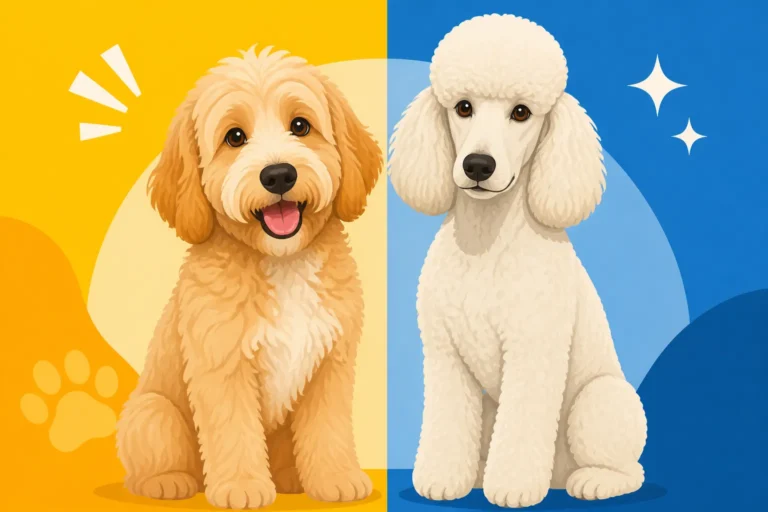
Think about it: a Chihuahua looks like a Chihuahua, a Poodle looks like a Poodle, and a Golden Retriever looks like a Golden Retriever. There's a distinct uniformity that comes from generations of careful, documented breeding within a closed gene pool. These dogs are not just random mixes; their lineage is meticulously tracked, their health records often available for scrutiny, and their characteristics are meant to be reliably reproducible. Without this fundamental predictability and a clear, universally agreed-upon standard, a group of dogs simply cannot qualify for breed status. It’s about more than just having a cute name and a fuzzy face; it’s about a deeply ingrained genetic blueprint. You can read more about why this isn't the case for Goldendoodles in Why a Goldendoodle Cannot Be Called a Breed, and understand What Crossbreed Means for a Goldendoodle on Paper.
The Long Road to Official Status
Becoming a recognized breed is an odyssey, not a sprint. It typically takes decades, sometimes even centuries, of dedicated, disciplined effort from a group of committed breeders. This isn't just about making new puppies; it's about forming a cohesive, generational breeding program with a singular vision. First, a dedicated breed club must be established. This club isn't just a fan club; it's an organization that develops a rigorous breed standard, maintains a studbook (a record of all breeding dogs), and enforces strict ethical breeding practices among its members. They must prove that their dogs consistently reproduce the desired traits, generation after generation.
This process often begins with crossbreeding, much like Goldendoodles did, but then it moves into breeding dog-to-dog within that developing line, not continually re-introducing the original parent breeds. Imagine carefully selecting only the Goldendoodles that exemplify the desired traits, breeding them together, and then repeating that process for twenty, thirty, even fifty years, while meticulously documenting every litter, every health test, and every outcome. They need to demonstrate genetic stability and health clearances across multiple generations. Only after proving this profound consistency and stability over many, many years, often after starting as a "miscellaneous" or "foundation stock" category with a kennel club, might they even be considered for full recognition. This long, arduous journey highlights just how different the current Goldendoodle breeding landscape is from what's required for official breed status. If you're curious about the timeline, take a look at How Long a Goldendoodle Would Take to Become a Breed.
Why Goldendoodles Don't Fit the Current Breed Recognition Mold (Yet)
The core reason Goldendoodles aren't recognized as a breed boils down to a fundamental lack of consistency and a unified breeding approach. While individual Goldendoodles can be wonderful, loving, and smart, the group as a whole simply doesn't meet the stringent, predictable standards demanded by official kennel clubs. They are a beloved cross, but not yet a breed.
The Wide Variance in Goldendoodle Appearance and Temperament
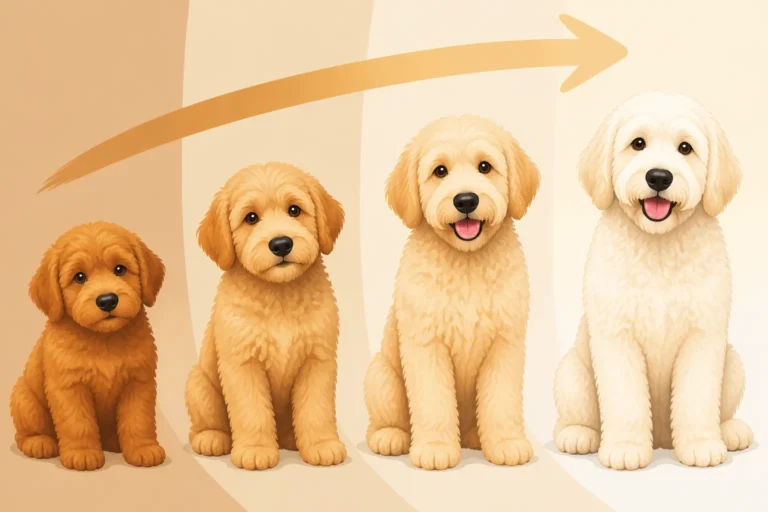
One of the biggest hurdles for Goldendoodle recognition is the sheer diversity you see within the "type." Walk into a park and you might spot two Goldendoodles that look entirely different. One might have a shaggy, wavy, low-shedding coat, while another could be smooth-faced and shed heavily, looking much more like a Golden Retriever. You'll see every size imaginable, from tiny Toy Goldendoodles to large Standards, and a rainbow of colors, some that even change over time. This is particularly true for early generations like F1 and F2 Goldendoodles, where the genetic lottery of combining two distinct breeds results in a wide array of outcomes. This unpredictability in appearance makes it impossible to define a single, consistent "Goldendoodle breed standard."
Beyond looks, there's also a significant range in temperament and energy levels. While many Goldendoodles are indeed friendly and intelligent, some lean more heavily into the high energy and retrieving drive of a Golden Retriever, while others might inherit the Poodle's more reserved nature and sharp wit. This wide spectrum is often attributed to what's sometimes called "hybrid vigor," which, while beneficial for overall health in some ways, also means less predictability in traits. Kennel clubs require breeds to consistently produce a certain "type" – both physically and behaviorally – so that anyone acquiring a dog of that breed knows exactly what to expect. With Goldendoodles, that consistency just isn't there across the board. The variability is part of their charm for many owners, but it's also a roadblock to official status. To understand more about this variation, you can explore Goldendoodle Generations From F1 to Multigen and Why F2 Goldendoodle Litters Vary So Much. The concept of hybrid vigor also plays a role in this unpredictability, which we discuss in The Goldendoodle Hybrid Vigor Claim and Where It Breaks.
The Lack of a Unified Breeding Goal
Another critical factor is the absence of a truly unified breeding goal within the Goldendoodle community. Most "Goldendoodle breeders" are currently focused on producing healthy, desirable companion animals, often emphasizing traits like low shedding or specific sizes. However, there isn't a widespread, collective effort to define and breed towards a singular, consistent "Goldendoodle type" that could then be presented to a kennel club. Each breeder might have their own vision, or they might simply be breeding Golden Retrievers to Poodles (or Goldendoodles to Goldendoodles) based on demand. This differs significantly from purebred dog breeding, where a strict breed standard guides every breeding decision.
For a crossbreed to become a recognized breed, there needs to be a dedicated group of breeders who stop introducing the parent breeds (Golden Retriever and Poodle) and instead focus solely on breeding Goldendoodle to Goldendoodle for many generations, constantly refining the "type." They would meticulously select for specific traits, weeding out those that don't conform to their developing standard, and consistently health testing to ensure genetic stability. Organizations like the Goldendoodle Association of North America (GANA) exist to promote ethical breeding and good practices, which is wonderful, but even they don't function as a traditional breed club working towards formal kennel club recognition with a single, universally accepted breed standard. Their standards are valuable for buyers, as you can see in What GANA Does for Goldendoodle Buyers, but they're not the same as a formal breed club aiming for official recognition, as detailed in Whether GANA Standards Mean Anything for a Goldendoodle.
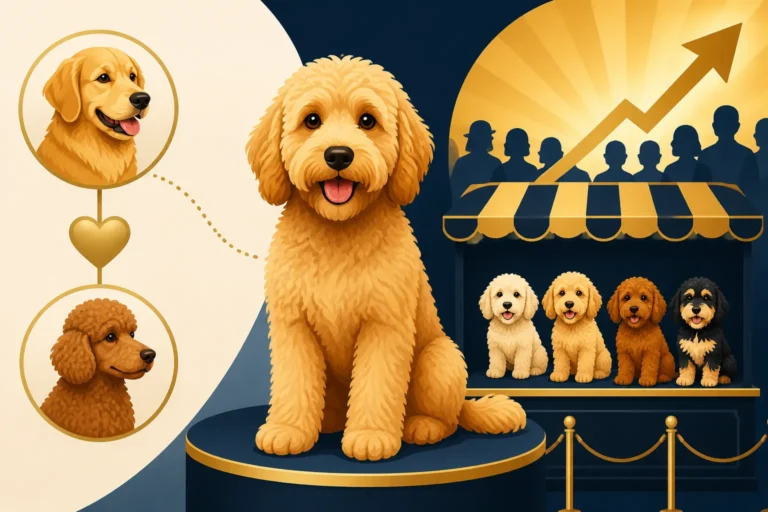
This isn't to say that current Goldendoodle breeders are doing anything wrong – they're simply operating within a different paradigm. But without that collective, long-term commitment to a singular, defined breed standard, and the rigorous selective breeding it entails, Goldendoodles will remain a highly popular and beloved crossbreed, but not a recognized breed. The market for "designer dogs" often prioritizes specific desired traits (like a certain coat or size) over the decades-long process of establishing a genetically stable and predictable breed.
The Path Forward: What Would It Take for Goldendoodles to Become a Breed?
So, if we were to imagine a future where Goldendoodles did achieve breed recognition, what would that monumental undertaking actually look like? It would require a fundamental paradigm shift in how these dogs are bred and managed, moving far beyond the current landscape of individual breeders and diverse breeding goals.
Establishing a True Goldendoodle Breed Club
The absolute first step would be the formation of a formal, highly organized, and deeply committed Goldendoodle breed club. This wouldn't be a casual association; it would need to be an entity akin to the Golden Retriever Club of America or the Poodle Club of America. This club's primary mission would be to meticulously define and standardize the Goldendoodle in every conceivable way. They would need to draft a comprehensive breed standard outlining exact specifications for size categories, acceptable coat types (and colors), desired temperament, movement, and overall conformation.
This club would then enforce this standard with an iron fist among its members. Breeders would be required to perform specific health screenings, only breed dogs that meet the standard, and meticulously record every litter and pedigree. They would need to be singularly focused on refining the Goldendoodle type, ensuring that each generation consistently produces offspring that closely adhere to the new standard. This process demands incredible dedication, consensus among breeders, and a willingness to make difficult choices, such as removing dogs from breeding programs if they don't contribute to the desired consistency. It’s a huge undertaking that requires decades of unwavering commitment, often with little immediate reward beyond the satisfaction of working towards a long-term goal.
Documenting Generations and Proving Consistency
Once a breed club and a standard are in place, the real work of demonstrating genetic consistency would begin. This means breeders would need to stop making F1 Goldendoodles by crossing Golden Retrievers and Poodles. Instead, they would focus solely on breeding Goldendoodle to Goldendoodle (multigenerational breeding), carefully selecting individuals that best embody the established breed standard. Every single breeding would be about reinforcing those specific traits.
Pedigrees would need to be meticulously documented, tracing lines back for many generations to prove that the desired characteristics – from coat type and structure to temperament and health – are reliably passed down. This would involve rigorous health testing beyond what many individual breeders currently do. Imagine comprehensive OFA clearances for hips, elbows, eyes, heart, and genetic panels for conditions like PRA, Ichthyosis, and Addison's, all recorded and made public across an entire breeding population. This data would be crucial for demonstrating that the Goldendoodle is not just a mixed bag of traits, but a stable genetic entity. For context on critical health tests, refer to The DNA Panel a Goldendoodle Breeder Should Run and OFA Clearances on a Goldendoodle Sire and Dam. This consistency in health, alongside physical and temperamental traits, is what separates a crossbreed from a recognized breed.
Overcoming the "Designer Dog" Perception
Perhaps one of the most significant, albeit intangible, hurdles for Goldendoodle recognition is overcoming the pervasive "designer dog" perception. The term itself, while sometimes endearing, often carries connotations of being a fad, a marketing gimmick, or a breed created solely for profit rather than for a specific purpose or consistent type. Traditional kennel clubs, with their deep roots in preserving long-established purebred lines, are inherently cautious and often resistant to recognizing new breeds, especially those that have risen rapidly in popularity without the traditional, slow, and methodical development process.
To overcome this, the hypothetical Goldendoodle breed club would need to demonstrate not only genetic consistency and health over many generations, but also a serious, long-term purpose and stability. They would need to prove that the Goldendoodle is not just a popular pet, but a dog with a defined identity and value that warrants official recognition. This involves a sustained, organized effort to present a compelling case to kennel clubs, showcasing the Goldendoodle's unique traits and the dedication of its breeders. It's a huge shift in mentality, moving from fulfilling market demand to rigorously maintaining a developing breed, which is a very different game.
Comparison: Crossbreed vs. Recognized Breed Criteria
To summarize the vast differences, here's a table outlining the key distinctions between the current status of Goldendoodles and what's required for full breed recognition.
| Feature | Goldendoodle (Current Crossbreed Status) | Recognized Breed (Kennel Club Standard) |
|---|---|---|
| Genetic Basis | First-generation mix (F1) or subsequent generations (F1b, F2, Multigen) with varying genetic input. | Established, consistent genetic lines bred dog-to-dog within the "breed" for many generations. |
| Predictability | Wide variation in appearance (coat, size, color) and temperament, especially in early generations. | High predictability in appearance, temperament, and health predispositions across litters. |
| Breed Standard | No universal, official breed standard recognized by major kennel clubs. Some associations have guidelines. | A meticulously written, universally agreed-upon breed standard that guides all breeding decisions. |
| Breeding Goal | Often driven by market demand (e.g., "hypoallergenic," small size), individual breeder preference. | Driven by preserving and improving the breed standard; focuses on type, health, and function. |
| Registry | Private registries or associations (e.g., GANA), not official kennel club pedigrees. | Official, verifiable pedigrees maintained by major national kennel clubs. |
| Recognition | Not recognized by major national kennel clubs (AKC, CKC, KC). | Fully recognized by major national and international kennel clubs. |
| Development Time | Gained popularity rapidly in a few decades. | Developed over many decades, often centuries, through careful selection. |
Conclusion
The journey for Goldendoodles to become a recognized breed is not merely a matter of time or popularity; it's a colossal undertaking that would require a fundamental re-imagining of their breeding, management, and purpose. While Goldendoodles are undeniably wonderful companions, cherished by countless families for their intelligence, friendliness, and charm, they currently exist outside the strict framework of kennel club breed recognition. The variability in their appearance and temperament, coupled with the lack of a unified, multigenerational breeding standard and a formal breed club dedicated to achieving kennel club recognition, are the primary reasons they remain a beloved crossbreed.
For Goldendoodles to ever join the ranks of recognized breeds, there would need to be a monumental shift within the community: a dedicated breed club would have to emerge, committed to defining and consistently reproducing a specific Goldendoodle type over many decades, backed by rigorous health testing and meticulous record-keeping. It's a challenging, arduous path that few crossbreeds ever successfully navigate. For now, we can continue to appreciate our Goldendoodles for exactly what they are: amazing, unique individuals who bring immense joy into our lives, regardless of any official paperwork.
Disclaimer
This article is for general informational purposes only and does not constitute professional advice. Laws, prices and regulations vary by location and change over time. Consult a qualified professional for guidance on your specific situation.