Whether a Mini Goldendoodle Stays Mini
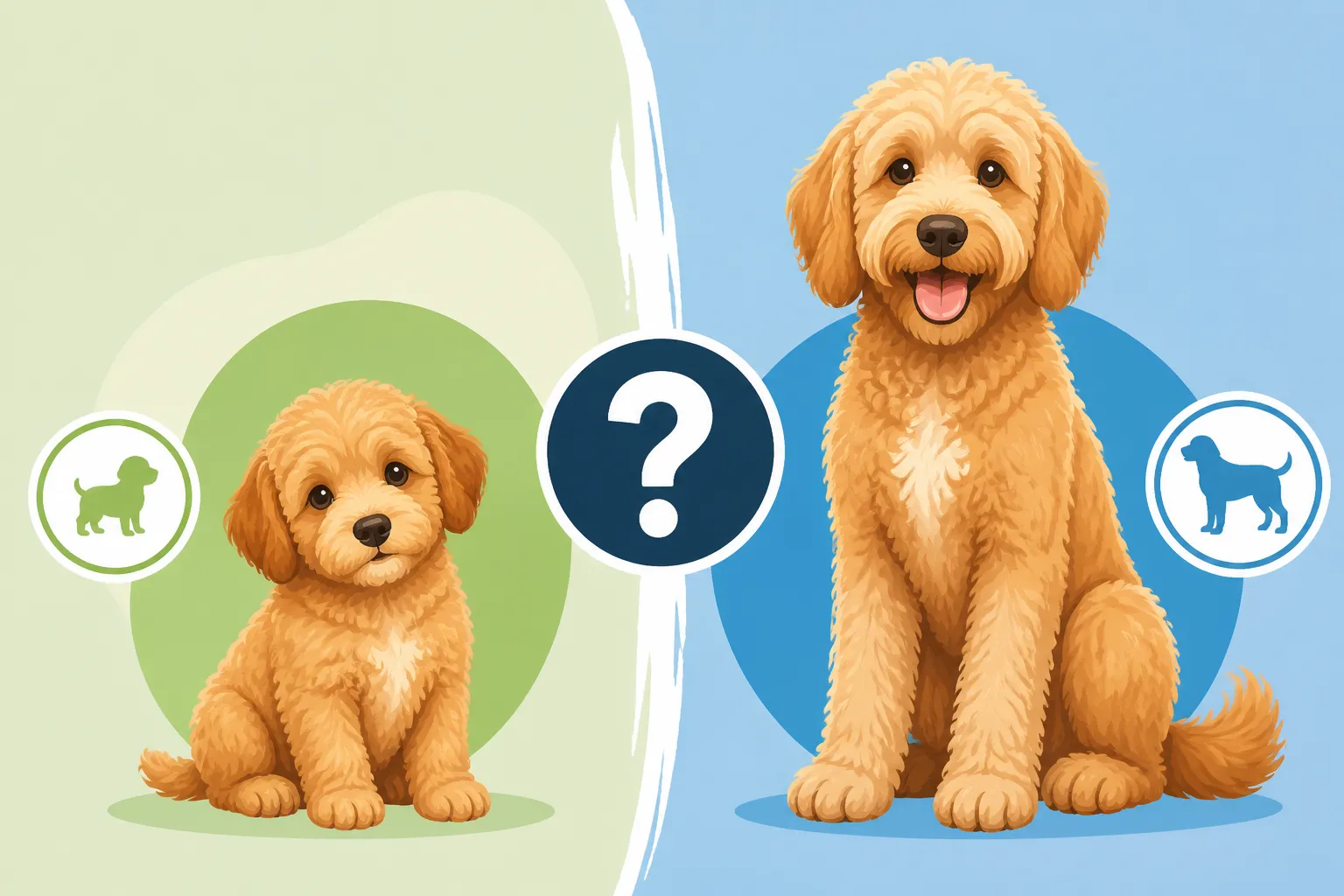
It’s a common scenario: you’ve fallen head over heels for the idea of a Mini Goldendoodle, picturing a charming, fluffy companion that fits perfectly into your home. You’ve done your research, found a breeder, and brought home an adorable little floofball. But as the weeks turn into months, a nagging question starts to creep in: Is this "mini" Goldendoodle actually going to stay mini? It’s a completely valid concern, and one that many Goldendoodle owners face because the reality of growth isn't always as neat and tidy as the promise of a specific size. This guide is here to shed some light on why your Mini Goldendoodle might surprise you with its final adult size, and what you can expect as they grow.
The Mini Goldendoodle Promise Versus Reality
There’s a real allure to the term "Mini Goldendoodle." It conjures images of a smaller, more manageable version of the beloved Standard Goldendoodle, perfect for apartments or families who want a less imposing dog. Breeders work hard to achieve this smaller size, and many succeed beautifully. However, the genetic lottery can sometimes throw a curveball, leading to a dog that's a bit larger than anticipated.
Why "Mini" Isn't a Guarantee of Tiny
When you choose a Mini Goldendoodle, you're investing in a crossbreed that's been specifically bred to reduce its overall size. This is usually achieved by crossing a Golden Retriever with a Miniature or Toy Poodle. The intention is there, the science is there, but nature loves to remind us who's really in charge. Sometimes, those Golden Retriever genes, which carry the blueprint for a much larger dog, assert themselves more strongly than expected.
It’s not uncommon for a "Mini" Goldendoodle puppy to look truly miniature at eight weeks old, only to steadily outgrow what you might have considered "mini" by their first birthday. This isn't a breeder trying to trick you; it's the inherent unpredictability that comes with crossing two distinct breeds. While breeders use parental size and sometimes even DNA testing to Predicting a Goldendoodle Puppy's Adult Size, it’s never a 100% guarantee. You might find two Goldendoodles from the same litter, born to the same parents, who end up with noticeably different adult sizes, highlighting just how much individual genetic expression can vary. For more on this, you might find Why Two Goldendoodles From One Litter Differ insightful.
The Official Range of "Mini" Goldendoodle Size
So, what exactly is a Mini Goldendoodle supposed to be? While there's no single, universally recognized "standard" like there is for purebreds, most Goldendoodle enthusiasts and reputable breeders agree on a general range for what constitutes a Mini. This range typically accounts for both height and weight.
It’s important to remember that these are guidelines, not strict rules. A dog that is a few pounds over or an inch taller than the top end of the "Mini" range is still very much a Goldendoodle, and its size doesn't diminish its wonderful qualities.
Here's a common breakdown you'll see:
| Size Category | Height (at shoulder) | Weight Range (lbs) | Notes |
|---|---|---|---|
| Mini | 13-17 inches | 26-35 pounds | The most commonly aimed-for size in this category. |
| Petite | Under 14 inches | 15-25 pounds | Sometimes referred to as "Toy" or "Teacup" by some breeders. |
| Small Standard | 18-20 inches | 36-50 pounds | A "Mini" that grew a bit larger, often bridging the gap to Medium. |
You can see how even within the "Mini" concept, there are variations. A "Petite" might be significantly smaller than a larger "Mini," leading to confusion if you weren't aware of these sub-categories. The key takeaway here is that "mini" is a spectrum, not a single point on the scale.
Understanding the Genetics Behind Goldendoodle Size
To really grasp why your Mini Goldendoodle might not stay precisely mini, we need to talk a little about the fascinating world of genetics. It’s not just a roll of the dice; there’s a deliberate breeding strategy involved, but also a degree of natural variation that makes each Goldendoodle truly unique.
The Poodle's Role in Downsizing
The Poodle half of the Goldendoodle equation is absolutely crucial when aiming for a smaller size. Golden Retrievers are consistently large dogs, so breeders introduce Miniature Poodles or Toy Poodles to bring down the overall size. For example, an F1 Mini Goldendoodle is typically the result of breeding a Golden Retriever with a Miniature Poodle. The Miniature Poodle’s genes are responsible for introducing the smaller stature.
When we talk about an F1b Mini Goldendoodle, it usually means an F1 Goldendoodle has been bred back to a Miniature Poodle. This increases the Poodle percentage to roughly 75%, and the idea is to further cement those smaller size genes, alongside the curly, lower-shedding coat. The size of the Poodle parent is a huge factor, and good breeders carefully select their Poodle studs and dams to manage the expected size of the litter. Delving into Picking the Poodle Parent for Goldendoodle Size can give you even more insight into this process.
The Golden Retriever Influence You Can't Ignore
Despite the best efforts to miniaturize, the Golden Retriever's genetic legacy is still very much a part of every Goldendoodle. Golden Retrievers typically weigh between 55-75 pounds and stand 21-24 inches tall. Even if your puppy has a high percentage of Poodle genetics, there's always a chance that a less common combination of genes from the Golden Retriever side will express itself, leading to a larger than expected adult size.
Think of it like a family tree. You might have mostly short relatives, but then a great-grandparent who was exceptionally tall, and sometimes those genes skip a generation or two before popping up again. It’s why you can sometimes see a "Mini" Goldendoodle puppy grow to be 45-50 pounds, placing it firmly in the "Small Standard" or "Medium" category. This genetic variability is a known aspect of crossbreeding, and it's also why you might find that Why Goldendoodle Size Charts Disagree across different websites or breeders. Each Goldendoodle carries a unique blend, and that blend can manifest in unexpected ways regarding size.
Generation and Size Consistency
The generation of your Goldendoodle can also play a role in size predictability.
- F1 (First Generation): Golden Retriever x Poodle. These can have the most variability in a litter because you're blending two very different sizes. While the goal is "mini," some pups may lean more towards the Golden Retriever side in size.
- F1b (First Generation Backcross): F1 Goldendoodle x Poodle. These are generally more consistent in size because the Poodle influence is strengthened. They tend to be closer to the Poodle parent's size.
- Multigen (Multigenerational): Goldendoodle x Goldendoodle (of F2 or higher generations). These are bred for greater consistency in traits like coat and size. Responsible multigen breeders track their lines carefully, aiming to produce dogs that reliably fall within their desired size ranges.
Even with multigenerational breeding, it's not a foolproof system. Genetic expression is complex, and unexpected traits can still emerge. However, multigen breeding is typically an effort to create more predictable outcomes over several generations. You can learn more about how breeders attempt to achieve consistency in traits like coat type in articles such as Multigen Goldendoodles and Coat Consistency, which also touches on the concept of trait predictability in general.
How to Estimate Your Mini Goldendoodle's Adult Size
While no method is 100% accurate, there are a few ways to get a better idea of how big your Mini Goldendoodle might get. These methods provide estimates, so it's always wise to allow for a little wiggle room in your expectations.
Looking at the Parents and Grandparents
The most reliable indicator of your Goldendoodle's adult size is to look at their family tree. A reputable breeder should be able to provide information on the size of both the dam (mother) and the sire (father). If both parents are true Miniature Poodles and smaller Golden Retrievers (or if the F1 parent is on the smaller side for an F1), it increases the likelihood that their offspring will also fall within the Mini range.
Even better is if the breeder can show you pictures or provide information on previous litters from the same pairing. Seeing what full-grown siblings from earlier litters look like can offer invaluable insight. If the breeder can show you the parents' pedigrees and even information on the grandparents, you can get a clearer picture of the genetic background. This deep dive into ancestry is similar to how one might go about Reading a Goldendoodle Pedigree Back Three Generations to understand other traits.
Puppy Growth Charts and Weight Prediction
Many Goldendoodle owners love to track their puppy’s growth using various online charts or prediction formulas. These can be fun and give you a general idea, but they come with caveats. One common formula suggests doubling your puppy's weight at 16 weeks of age to estimate its adult weight. For example, if your Mini Goldendoodle puppy weighs 18 pounds at 16 weeks, you might estimate an adult weight of around 36 pounds.
However, growth isn't always linear, especially in crossbreeds. Some puppies have growth spurts later than others, and their final weight can be influenced by diet, activity level, and individual metabolism. While charts like A Goldendoodle Puppy Growth Chart by Size can provide a general trajectory, they should always be taken with a grain of salt. It’s best to view them as a loose guide rather than a definitive prophecy for your dog's final size.
Living with a "Not-So-Mini" Goldendoodle
So, what happens if your adorable "Mini" Goldendoodle grows a bit larger than you initially planned? First and foremost, embrace the wonderful dog you have! A few extra pounds or inches won't change the loving, intelligent, and joyful companion beneath that fluffy coat. However, it's practical to consider the implications for your daily life and budget.
Adjusting Expectations and Space
A Goldendoodle that grows from an expected 30 pounds to 45 or even 50 pounds might not seem like a huge difference on paper, but it can impact several aspects of your life:
- Living Space: While Goldendoodles are adaptable, a larger dog takes up more physical space. If you live in an apartment, a 45-pound dog feels significantly larger than a 25-pound one.
- Crate Size: That cute little crate you bought for your mini puppy might quickly become too small. You’ll need to upgrade to ensure your dog has enough room to stand, turn around, and lie down comfortably. Many pet supply stores, like Chewy, offer a wide range of crates designed for various sizes, so you can find one that fits. This is a common adjustment, and you can find detailed information on appropriate sizing in guides like Crate Size Set by Goldendoodle Size Category.
- Car Space: Larger dogs require more room in the car, whether it’s in a travel crate or in a designated back seat area.
- Furniture: A larger Goldendoodle might have an easier time counter-surfing, or simply take up more room on the couch!
It's all about adapting. Most Goldendoodles, regardless of their exact size, have a wonderful temperament that allows them to thrive in various living situations, provided their exercise and mental stimulation needs are met.
Impact on Costs and Care
A larger dog generally comes with higher costs, and it's important to budget accordingly.
- Food: More dog means more food! The daily calorie needs for a 45-pound dog are considerably higher than for a 25-pound dog. This will directly impact your monthly food bill. Thankfully, Chewy provides detailed feeding guides and a wide selection of foods for all dog sizes. For a deeper look into feeding costs, check out What Feeding a Goldendoodle Costs by Size.
- Vet Care and Medication: Medication dosages are almost always weight-based. From flea and tick prevention to antibiotics or allergy medications, a heavier dog will require a larger dose, which often translates to a higher cost per dose. This also applies to joint supplements later in life, as a larger dog carries more weight on its joints and may be more prone to conditions like arthritis. You can learn more about preventative care in Goldendoodle Joint Health by Size Category.
- Grooming: While all Goldendoodles need regular grooming, a larger dog simply has more coat to manage. Groomers often charge based on size and time, so a bigger Goldendoodle can mean a higher grooming bill. Dematting surcharges are also more likely if a larger coat becomes neglected. This is often the biggest expense for Goldendoodle owners, as discussed in Goldendoodle Grooming as the Biggest Line in the Budget.
- Accessories: Larger beds, bigger harnesses, and stronger leashes can all add up.
These are just practical considerations, not reasons to be disappointed. Planning for the higher end of the size range is always a good idea when budgeting for a Goldendoodle, just in case.
Embracing the Goldendoodle You Get
Ultimately, whether your "Mini" Goldendoodle stays truly miniature, grows into a robust medium, or even a small standard, what matters most is the loving bond you share. Goldendoodles are cherished for their incredible personalities, their intelligence, and their devotion to their families.
While it's natural to have a vision for your dog's size, the joy and companionship they bring far outweigh a few inches or pounds. Focus on their health, their training, and providing them with a happy, enriched life. The Goldendoodle you get, regardless of its final dimensions, will undoubtedly be a cherished member of your family.
Disclaimer
This article is for general informational purposes only and does not constitute professional advice. Laws, prices and regulations vary by location and change over time. Consult a qualified professional for guidance on your specific situation.