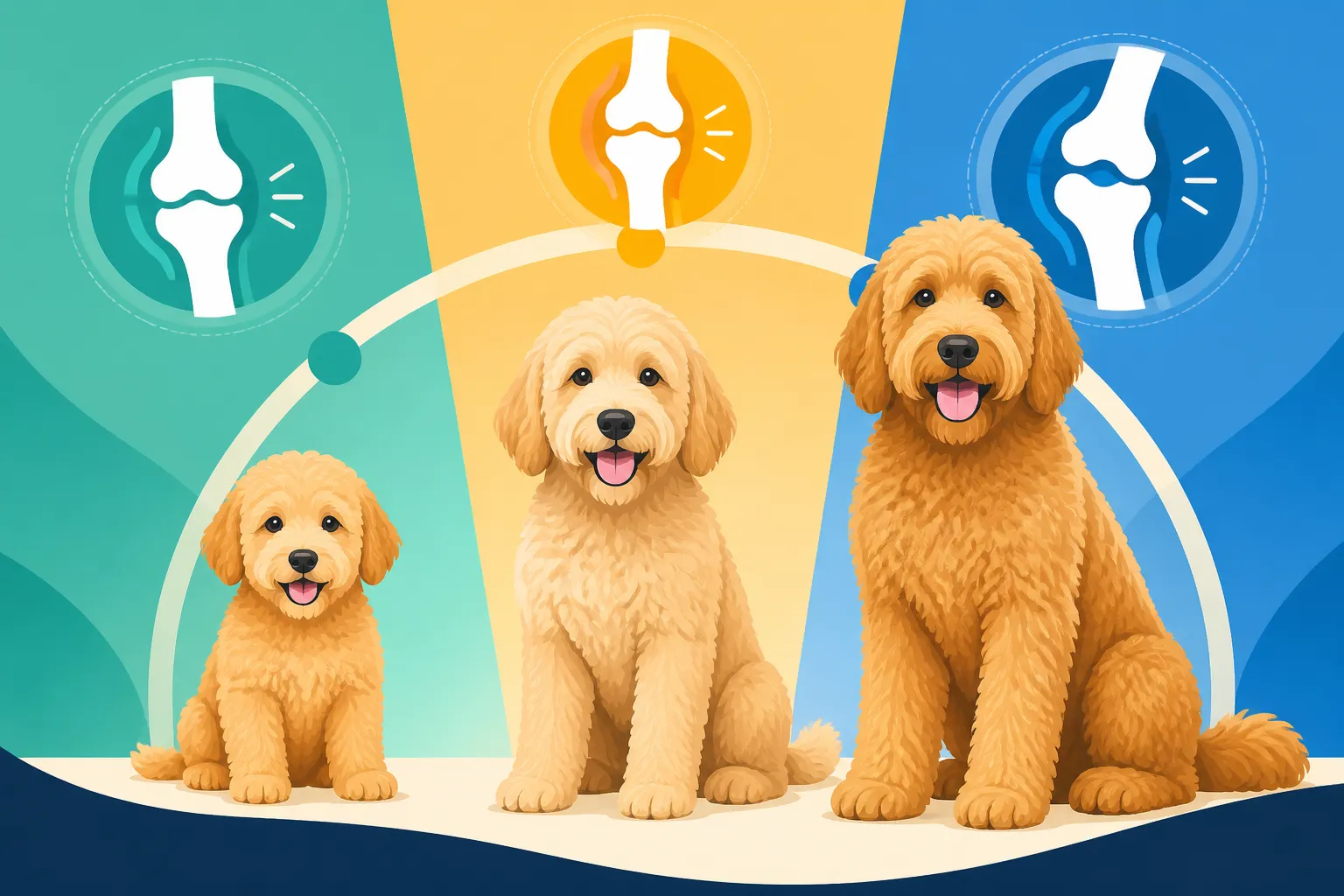
Goldendoodle Joint Health by Size Category
It's incredibly frustrating when you see your beloved Goldendoodle start to slow down, limp, or struggle with activities they once loved, especially when you know their size plays a huge role in the specific joint challenges they might face. Trying to understand which joint issues are most common for a standard, mini, or toy Goldendoodle can feel like navigating a maze of veterinary jargon. This comprehensive guide is here to demystify Goldendoodle joint health, breaking down common problems by size category and offering practical, empathetic advice on how to prevent, recognize, and manage these conditions so your furry friend can live their happiest, most comfortable life.
Understanding Goldendoodle Joint Health Challenges
Goldendoodles are a crossbreed, inheriting traits from both the Golden Retriever and the Poodle. While this blend often brings wonderful personalities and beautiful coats, it also means they can inherit genetic predispositions to joint issues from either parent breed. The sheer variety in Goldendoodle sizes, from tiny toys to robust standards, further complicates things, as different sizes put different types of stress on their skeletal systems. It’s not just about what genes they carry; it's about how those genes express themselves under the unique pressures of their body weight and growth patterns.
The Golden Retriever and Poodle Contributions to Joint Issues
Both the Golden Retriever and the Poodle, the foundation breeds for Goldendoodles, have their own set of orthopedic concerns. Golden Retrievers are notoriously prone to hip and elbow dysplasia, conditions where the hip or elbow joints don't form correctly, leading to painful arthritis. It's a significant concern, with a notable percentage of Goldendoodles carrying this risk. On the other hand, Poodles, especially the smaller varieties, are more commonly associated with patellar luxation, or "slipping kneecaps," and Legg-Calve-Perthes disease, a condition affecting the hip joint's head. When these two breeds are combined, your Goldendoodle can potentially inherit the worst of both worlds. It means that while you might expect a lower incidence of some issues due to hybrid vigor, responsible breeders still understand the critical need for comprehensive health testing on both parent lines. Without knowing the genetic health of the parents, you're essentially rolling the dice on your Goldendoodle's joint future.
Why Size Matters for Goldendoodle Joints
It might seem obvious, but the size of your Goldendoodle profoundly impacts the kind of stress their joints endure throughout their life. A standard Goldendoodle, weighing anywhere from 50 to 90 pounds or more, places immense pressure on its major weight-bearing joints – hips, elbows, and knees – with every step, jump, and run. Their rapid growth as puppies also puts them at higher risk for developmental orthopedic diseases. In contrast, a tiny toy Goldendoodle, perhaps under 20 pounds, might not suffer from the same high-impact stress, but their delicate joints are more susceptible to different kinds of structural weaknesses, like easily dislocating kneecaps. Understanding these distinctions is crucial, as what might be a minor sprain for a larger dog could be a much more severe injury for a smaller one, requiring different preventative strategies and treatment approaches. Think of it like comparing the suspension system of a large truck to that of a compact sports car; both are designed for specific forces, but their vulnerabilities differ.
Early Signs of Joint Discomfort in Goldendoodles
One of the hardest things for any dog parent is to see their furry companion in pain, especially when our Goldendoodles are so good at hiding it. Early signs of joint discomfort can be subtle, easily mistaken for normal puppy clumsiness or a senior dog just "slowing down." Look for changes in their gait, like a slight limp after exercise, a bunny hop when running, or reluctance to use stairs or jump onto furniture. You might also notice stiffness, particularly after resting, or a decrease in their willingness to play. Some dogs might lick or chew excessively at a painful joint, while others might become unusually quiet or irritable. It’s vital to pay close attention to these cues. Catching a problem early can make a world of difference in managing the condition and preserving your Goldendoodle’s quality of life. Don't wait until the pain is obvious; by then, the underlying condition might be more advanced.
Joint Issues Specific to Standard Goldendoodles
Standard Goldendoodles, with their impressive stature and joyful exuberance, bring unique challenges when it comes to joint health. Their larger frame and faster growth rates, inherited primarily from the Golden Retriever side, make them more susceptible to certain conditions that are less common in their smaller cousins. It’s a sad reality that the very size and energy we love in these dogs can contribute to their orthopedic vulnerabilities, making careful management throughout their lives paramount.
Hip and Elbow Dysplasia: A Persistent Threat
Hip and elbow dysplasia remain a persistent threat for Standard Goldendoodles. These are developmental conditions where the ball and socket of the hip joint, or the three bones forming the elbow joint, don't fit together properly. This misalignment leads to friction, pain, and eventually, degenerative joint disease or arthritis. The genetic predisposition for these conditions comes heavily from the Golden Retriever lineage, which has a higher incidence rate. Even with the introduction of Poodle genetics, a significant percentage of Goldendoodles can still be affected by Goldendoodle Hip Dysplasia at 15 to 20 Percent. Symptoms can vary wildly; some dogs show signs as early as puppyhood, while others might not exhibit discomfort until they are much older, as arthritis sets in. Monitoring for stiffness after rest, lameness in one or both hind legs, or a reluctance to run and jump, are crucial. Preventative steps during puppyhood, such as avoiding excessive, high-impact exercise, are vital in mitigating the severity of these genetically influenced conditions.
Similarly, Goldendoodle Elbow Dysplasia From Both Parent Breeds is a complex condition that can manifest in several forms, all leading to pain and lameness. It's often diagnosed in young, rapidly growing large-breed dogs. Given that both Golden Retrievers and Standard Poodles can carry genes for elbow dysplasia, it's a double concern for Goldendoodles. Early diagnosis through X-rays is key, though sometimes the signs are subtle, like an intermittent front leg limp or a decreased range of motion. For many owners, the struggle is real when they notice their vibrant puppy start to favor a limb, fearing a lifetime of pain. Managing these conditions often involves a combination of weight control, anti-inflammatory medications, joint supplements, and sometimes surgical intervention to improve joint function and reduce pain.
Cruciate Ligament Tears in Active Standard Goldendoodles
Another common and painful orthopedic issue for active Standard Goldendoodles is a cranial cruciate ligament (CCL) tear, often compared to an ACL tear in humans. This ligament is crucial for knee stability. While CCL tears can affect any dog, larger, more athletic breeds, especially those prone to a certain conformation or with existing knee instabilities, are at higher risk. A sudden twist or an awkward landing during play can cause the ligament to partially or completely tear, leading to immediate lameness and severe pain. It’s heartbreaking to see your usually boundless Goldendoodle suddenly unable to put weight on a leg.
The risk for Cruciate Tears in an Active Goldendoodle can be compounded by factors such as obesity, genetics, and even chronic inflammation. Standard Goldendoodles are often enthusiastic jumpers and runners, which puts constant strain on their knee joints. Owners frequently describe a sudden onset of lameness after a particularly vigorous play session at the dog park. Surgical repair is often recommended for full recovery, particularly for larger, active dogs, followed by extensive rehabilitation. While the recovery process can be long and expensive, many owners find it to be a worthwhile investment to restore their dog's mobility. Companies like Healthy Paws pet insurance can be a real lifesaver when faced with unexpected surgical costs for such injuries.
Managing Arthritis in Larger Goldendoodles
As Standard Goldendoodles age, or if they've suffered from developmental joint conditions like dysplasia, arthritis becomes an almost inevitable reality. Arthritis, or osteoarthritis, is a progressive and painful inflammation of the joints, characterized by the breakdown of cartilage. For a larger dog, managing arthritis is about far more than just comfort; it's about maintaining their quality of life and mobility. The extra weight carried by a Standard Goldendoodle places significantly more strain on already compromised joints, accelerating cartilage degeneration.
Effective management focuses on a multi-faceted approach. Maintaining an ideal body weight is paramount; even a few extra pounds can dramatically increase the load on arthritic joints. Regular, gentle exercise, such as leash walks or swimming, helps keep joints mobile without high impact. Veterinary care often includes anti-inflammatory medications, pain relievers, and sometimes newer therapies like Librela or Adequan injections. Supplements containing glucosamine, chondroitin, and omega-3 fatty acids can also be beneficial in supporting joint cartilage. These can be particularly helpful for Senior Goldendoodle Mobility and Arthritis. Creating a comfortable home environment with orthopedic beds, ramps, and non-slip surfaces can make a huge difference, making it easier for them to navigate their daily lives without unnecessary pain.
Medium and Mini Goldendoodle Joint Concerns
Medium and Mini Goldendoodles often fall into a unique category when it comes to joint health. While they might escape some of the extreme weight-bearing issues of their standard counterparts, they are not immune to orthopedic problems. In fact, their smaller size can predispose them to certain conditions more commonly seen in smaller breeds, creating a different set of challenges for their owners. It’s important to remember that “mini” doesn’t necessarily mean “problem-free.”
Patellar Luxation: A Common Mini Goldendoodle Issue
One of the most common joint issues for Medium and Mini Goldendoodles is patellar luxation, more simply known as a "slipping kneecap." This condition occurs when the patella (kneecap) moves out of its normal groove in the femur (thigh bone). While it can occur in any size dog, it's particularly prevalent in smaller breeds. You might notice your Goldendoodle occasionally skipping a step, holding up a hind leg for a few moments, or bunny-hopping as they run. This is often the kneecap temporarily dislocating and then popping back into place.
The condition is graded from 1 (mild and infrequent) to 4 (severe and constant dislocation). Many dogs with lower-grade luxation might live comfortably for years, but it can lead to pain, arthritis, and even other orthopedic issues like cruciate ligament tears. For more severe cases, or those causing significant pain, surgery may be recommended to deepen the groove or realign the patellar tendon. Understanding Patellar Luxation in a Mini Goldendoodle is essential for owners, as early diagnosis and careful management, including maintaining a healthy weight and appropriate exercise, can prevent progression and keep your dog comfortable. Regular vet checks are key to catching this condition early.
Overweight Risks on Smaller Goldendoodle Joints
It's easy to think that a few extra pounds on a smaller dog won't make much difference, but for Medium and Mini Goldendoodles, being overweight or obese can significantly exacerbate existing joint issues and create new ones. While a 5-pound gain on a 70-pound Standard Goldendoodle is manageable, a 5-pound gain on a 25-pound Mini Goldendoodle represents a much larger percentage of their body weight and places disproportionate stress on their joints. This extra burden can accelerate the development of arthritis, worsen patellar luxation, and increase the risk of cruciate ligament injuries.
Maintaining a lean body condition is one of the most impactful things you can do to protect your Goldendoodle's joints, regardless of size, but it's particularly critical for smaller dogs. This means carefully monitoring their food intake, ensuring they get appropriate portion sizes for their activity level, and choosing healthy treats. Many Goldendoodles are very food motivated, which can make sticking to a diet challenging, but it's vital for their long-term health. Regularly assessing your Goldendoodle's body condition by feeling for their ribs and observing their waistline, rather than just relying on their weight scale, can help you stay ahead of the curve. If you're unsure, ask your vet about ideal body condition scoring for your dog. For more on this, you might find information on Goldendoodle Weight and the Load on Its Joints helpful.
Developmental Bone Diseases in Growing Medium Goldendoodles
While less common than patellar luxation or dysplasia, Medium Goldendoodles, especially during their rapid growth phases, can sometimes be susceptible to other developmental bone diseases. Conditions like osteochondritis dissecans (OCD) or panosteitis (growing pains) are seen in various medium to large breeds and can affect Goldendoodles. OCD involves abnormal cartilage development in the joints, often the shoulder, elbow, knee, or ankle, which can lead to a flap of cartilage detaching and causing pain and lameness. Panosteitis is an inflammatory condition of the long bones, characterized by shifting lameness that can move from one leg to another.
These conditions typically manifest in puppies between 5 and 18 months of age. While panosteitis often resolves on its own with rest and pain management, OCD may require surgical intervention to remove the cartilage flap. Both conditions underscore the importance of proper nutrition and controlled exercise during the critical puppy growth period. Over-exercising a growing Goldendoodle, or providing an imbalanced diet, can contribute to these issues. Understanding the delicate balance of Goldendoodle Growth Plates by Size Category is essential for puppy owners to ensure their Medium Goldendoodle grows up strong and healthy. If your growing Goldendoodle shows any signs of lameness, especially if it's intermittent or shifting, a prompt veterinary visit is always the best course of action.
Toy Goldendoodle Joint Health: Unique Considerations
Toy Goldendoodles, adorable and compact as they are, face their own specific set of joint health concerns, often mirroring those seen in other very small breeds. Their delicate bone structure and diminutive size mean that certain issues, which might be minor in a larger dog, can become significant problems for them. It’s a misconception that smaller dogs automatically have fewer joint problems; they simply have different ones.
Fragile Kneecaps and Toy Goldendoodle Vulnerability
For Toy Goldendoodles, patellar luxation (slipping kneecaps) is not just a common issue but often a primary orthopedic concern. Their smaller joints can be more inherently unstable, making their kneecaps more prone to slipping out of place, either to the inside (medial) or outside (lateral) of the thigh bone's groove. This is a condition heavily influenced by genetics, and reputable breeders should screen for it.
The signs can be subtle – a slight hop, a momentary skip, or simply favoring a leg. While some Toy Goldendoodles with low-grade luxation may never show significant pain, the repeated slipping of the kneecap can eventually lead to cartilage damage and early-onset arthritis. In more severe cases, or if it causes constant pain, surgical correction may be necessary to improve the stability of the joint and prevent further damage. Protecting these tiny, vulnerable joints means being extra vigilant about avoiding falls, preventing rough play with larger dogs, and ensuring they don't over-exert themselves by constantly jumping off high furniture.
Maintaining Healthy Weight to Protect Tiny Joints
Just like with their larger counterparts, maintaining an ideal body weight is absolutely paramount for a Toy Goldendoodle, perhaps even more so. Because their joints are so small and delicate, even a pound or two of extra weight can significantly increase the strain on their tiny knees, hips, and elbows. This added stress can accelerate the development of arthritis, worsen patellar luxation, and put them at higher risk for other orthopedic problems.
It's easy to overfeed small dogs; those tiny portions can still pack a caloric punch, especially if you're liberal with treats. Being diligent about measuring food, offering healthy low-calorie snacks, and ensuring they get appropriate, low-impact exercise is crucial. A vet can help you determine the ideal body condition score for your individual Toy Goldendoodle and recommend a feeding plan. Remember, their small size doesn't mean they don't need consistent physical activity; it just means the type of activity needs to be carefully chosen to avoid injury. A healthy weight is your Toy Goldendoodle's first line of defense against painful joint issues down the line.
Preventative Measures and Management Across Sizes
Regardless of your Goldendoodle’s size, proactive care is the cornerstone of lifelong joint health. While genetics play a significant role in predisposition to certain conditions, how you manage your dog's lifestyle, from puppyhood through their senior years, can greatly influence the onset and severity of joint problems. It’s about building a foundation of wellness and adapting as their needs change.
Nutrition and Supplementation for Joint Support
A balanced, high-quality diet is fundamental for healthy joints at every stage of a Goldendoodle's life. For puppies, especially Standard Goldendoodles, feeding a large-breed puppy formula is often recommended to support slow, steady growth, preventing the rapid growth spurts that can contribute to developmental orthopedic issues. For adults, maintaining an ideal body weight is perhaps the single most important dietary consideration to reduce stress on all joints.
Beyond basic nutrition, many owners consider joint supplements. Common ingredients include glucosamine, chondroitin, and omega-3 fatty acids. Glucosamine and chondroitin are believed to help maintain cartilage health, while omega-3s (like EPA and DHA found in fish oil) are powerful anti-inflammatory agents that can help reduce joint pain and stiffness. There are many options available, and your veterinarian can guide you on appropriate dosages based on your Goldendoodle's size, age, and any existing joint conditions. For example, Joint Support Dosed to Goldendoodle Size Category will vary significantly. While supplements are not a magic bullet, they can be a valuable part of a comprehensive joint care plan, especially for dogs with a genetic predisposition to joint issues or those showing early signs of arthritis. Many pet insurance plans, like those from Healthy Paws, will cover prescribed therapeutic diets or supplements if deemed medically necessary by a vet for a covered condition.
Tailored Exercise and Weight Management Programs
Appropriate exercise is a delicate balance for Goldendoodles. Too little, and they become overweight and deconditioned, putting more strain on their joints. Too much, especially high-impact activities in growing puppies, can damage developing joints. The key is tailored exercise. For Goldendoodle puppies, controlled exercise is critical. Avoid forced, repetitive activities like long runs or excessive jumping until their growth plates have closed, usually around 12-18 months, especially for larger sizes. Playing in the yard, short walks, and gentle swimming are often better choices. Remember, Why a Goldendoodle Should Not Jump Off Furniture is important advice, especially for puppies whose joints are still developing.
As adults, Goldendoodles generally thrive on regular, moderate exercise. This might include daily walks, interactive play, and mental enrichment activities. For dogs prone to or suffering from joint issues, low-impact exercises like swimming, leash walking on soft surfaces, or hydrotherapy can be incredibly beneficial. Weight management goes hand-in-hand with exercise. Keeping your Goldendoodle at a lean, healthy weight minimizes the load on their joints, slowing the progression of arthritis and reducing the risk of injuries. Regularly assess your dog’s body condition; you should be able to easily feel their ribs without seeing them, and they should have a discernible waist. If you notice any limping or stiffness during or after exercise, it’s a clear sign to consult your vet.
Regular Veterinary Check-ups and Early Intervention
Routine veterinary check-ups are perhaps the most undervalued tool in maintaining Goldendoodle joint health. These regular visits allow your vet to perform physical examinations, assess gait, palpate joints, and catch subtle signs of discomfort or early-stage joint disease that you might miss at home. Early detection is crucial because many joint conditions are progressive, and early intervention can slow their advancement, manage pain more effectively, and improve long-term outcomes.
During these check-ups, your vet can discuss appropriate preventative strategies, recommend suitable supplements or dietary changes, and advise on safe exercise routines tailored to your Goldendoodle's specific size, age, and health profile. If lameness or pain is suspected, your vet can recommend diagnostic imaging, such as X-rays, to get a clear picture of the joint's condition. For specific issues, they might refer you to a veterinary orthopedic specialist. Being proactive with veterinary care not only ensures your Goldendoodle receives the best possible care but also builds a comprehensive medical history that can be invaluable should a claim need to be filed with Healthy Paws or another pet insurance provider. These regular visits are the best way to be your Goldendoodle's health advocate.
The Role of Responsible Breeding in Joint Health
When considering bringing a Goldendoodle into your home, understanding the role of responsible breeding in joint health is paramount. While no breeder can guarantee a dog will never develop a joint issue, ethical breeders make every effort to minimize the risk through careful selection of parent dogs. This commitment to health testing is a hallmark of a truly reputable breeder and directly impacts the likelihood of your future Goldendoodle experiencing debilitating orthopedic problems.
The Importance of Parent Health Testing
The single most important factor a Goldendoodle breeder can control to mitigate joint issues is comprehensive health testing of the parent dogs. This isn't just a casual vet check-up; it involves specific orthopedic screenings designed to identify genetic predispositions to conditions like hip and elbow dysplasia, and patellar luxation. For hips and elbows, this typically means obtaining evaluations from organizations like the Orthopedic Foundation for Animals (OFA) or using PennHIP evaluations. These tests involve X-rays interpreted by certified veterinary radiologists who grade the quality of the joints. Only dogs with "good," "fair," or "excellent" hip scores and "normal" elbow scores should be bred.
For patellar luxation, especially critical for Mini and Toy Goldendoodles, physical examinations by a qualified veterinarian are performed and graded. Responsible breeders will openly share these results and often list their breeding dogs on public databases. If a breeder can't or won't provide proof of these clearances, it's a significant red flag. Choosing a puppy from parents with clear health certifications dramatically reduces the risk that your Goldendoodle will inherit these painful and costly conditions. When looking at puppies, be sure to ask about OFA Clearances on a Goldendoodle Sire and Dam.
Understanding Genetic Predisposition
Genetic predisposition means that certain traits or conditions, including joint problems, are more likely to occur in individuals who inherit specific genes from their parents. For Goldendoodles, this means they can inherit genes for hip and elbow dysplasia from their Golden Retriever lineage and genes for patellar luxation from their Poodle side. While simply having the gene doesn't guarantee a dog will develop the condition (environmental factors like diet and exercise play a role too), it significantly increases the risk.
This is where the "hybrid vigor" argument often comes into play, suggesting that crossbreeds are inherently healthier. However, for complex polygenic traits like hip dysplasia, simply mixing two breeds doesn't eliminate the risk, especially if both parent breeds carry similar genetic vulnerabilities. A breeder who truly understands genetic predisposition will aim to breed dogs that have passed their health screenings and have a low incidence of these issues in their pedigrees. They should also be transparent about the potential risks and educate prospective buyers. A comprehensive The DNA Panel a Goldendoodle Breeder Should Run can also provide insights into other genetic health conditions, although orthopedic issues are often assessed via physical and radiographic examination.
Finding a Reputable Breeder Who Prioritizes Joint Health
Finding a reputable Goldendoodle breeder who genuinely prioritizes joint health requires diligent research and asking the right questions. A good breeder will be transparent, knowledgeable, and genuinely invested in the long-term well-being of their puppies. Here are key indicators to look for:
First, they should readily provide documented health clearances for both parent dogs for hips, elbows, and patellas, and potentially eyes and heart, from organizations like OFA. They should be able to explain what these clearances mean. Don't accept vague assurances; ask to see the actual certificates. Second, a reputable breeder will be willing to discuss the specific joint health history of their breeding lines, not just the parents, but grandparents if possible. This provides a clearer picture of potential genetic issues.
They will also ask you many questions to ensure you're a good fit for one of their puppies, demonstrating their commitment to finding responsible homes. They should also provide a health guarantee in their contract that outlines their responsibility should a serious genetic health issue arise. Be wary of breeders who offer puppies without these clearances, or who have multiple litters available simultaneously without proper screening. A breeder prioritizing joint health understands that the initial investment in thorough health testing is crucial for the puppies' future well-being and for preventing heartache and significant veterinary bills for their adoptive families down the line.
Disclaimer
Please remember that this article is intended for informational purposes only and should not be considered a substitute for professional veterinary advice. Always consult with a qualified veterinarian regarding your Goldendoodle's specific health concerns, diagnosis, and treatment options. Individual results may vary, and medical conditions require personalized professional attention.