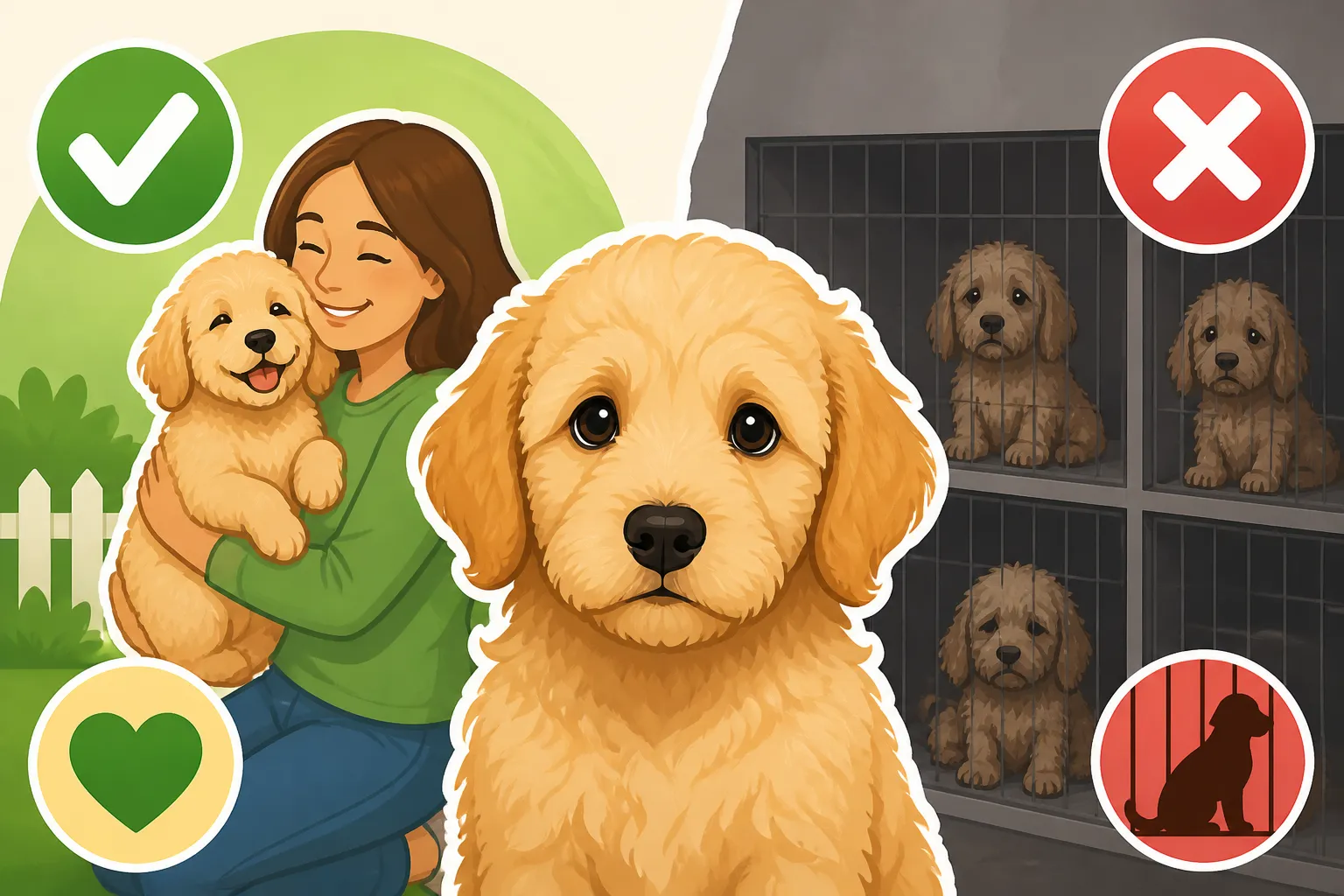
How to Spot a Goldendoodle Puppy Mill
It’s a heartbreaking reality: you’re dreaming of bringing a fluffy, loving Goldendoodle into your home, picturing happy walks and cuddles, only to find yourself facing a situation that feels… off. Many prospective dog owners fall prey to unscrupulous breeders who operate what are essentially puppy mills, often hidden behind slick websites or seemingly innocent classified ads. This guide is here to equip you with the crucial knowledge and red flags to look for, ensuring you can confidently spot and avoid a Goldendoodle puppy mill, protecting both your future pet and your peace of mind.
Understanding the Puppy Mill Landscape for Goldendoodles
When you're searching for a Goldendoodle, the sheer demand for these charming dogs unfortunately makes them a prime target for puppy mills. These aren't loving family breeders; they're commercial breeding operations focused solely on profit, often at the expense of animal welfare. It's crucial to understand what you're up against.
The Definition and Reality of a Puppy Mill
At its core, a puppy mill is a large-scale commercial dog breeding operation where profit takes precedence over the health and well-being of the dogs. This isn't just about a breeder having several litters a year; it's about the conditions. Dogs in puppy mills often live in overcrowded, unsanitary environments, receiving inadequate veterinary care, nutrition, and socialization. The parent dogs, especially, are treated as breeding machines, kept in cages with little to no exercise or human interaction, bred repeatedly until they can no longer produce puppies, and then often discarded. The puppies born in these conditions suffer from poor health, lack of early socialization, and often carry genetic defects due to indiscriminate breeding.
Imagine a Golden Retriever or a Poodle, breeds known for their intelligence, eagerness, and social nature, being confined to a small, wire-bottom cage for their entire lives, never feeling grass under their paws or receiving a gentle stroke. This is the reality for many parent dogs in puppy mills. The puppies, then, come into the world already at a disadvantage, without the crucial early experiences that help them develop into well-adjusted companions. They might be cute and fluffy in a photo, but their start in life can lead to significant behavioral and health challenges later on.
Why Goldendoodles Are Prime Targets for Mass Breeding
Goldendoodles have exploded in popularity over the last few decades, thanks to their friendly demeanor, often low-shedding coats, and adorable teddy-bear looks. This high demand, combined with high prices that Goldendoodle puppies can command, makes them incredibly attractive to puppy mill operators. They see a guaranteed market for their "product," and because Goldendoodles are a crossbreed, there isn't a traditional kennel club registry like the AKC or UKC to enforce breeding standards and health testing requirements. This lack of oversight makes it easier for unethical breeders to cut corners.
When you're looking for a Goldendoodle, you'll often see prices ranging widely, but legitimate breeders who invest in health testing, proper nutrition, and early socialization for their puppies and parent dogs typically have higher costs. Goldendoodle Puppy Prices From $2,000 to $5,000 are not uncommon for a well-bred puppy. Puppy mills might offer slightly lower prices or special "deals," which can be tempting, but they are able to do so by skimping on everything that truly matters for a dog's health and happiness. They capitalize on the public's desire for a Goldendoodle without understanding the difference between a responsible breeder and a mass producer. Their goal isn't to improve the Goldendoodle as a type or ensure healthy, well-adjusted pets; it's purely about turning a quick profit from innocent buyers.
Red Flags Before You Even Visit a "Breeder"
The good news is that many puppy mills reveal themselves long before you ever step foot on their property. There are a number of warning signs you can look for during your initial research and communication that should make you hit the pause button. Trust your gut; if something feels off, it probably is.
Website and Online Presence: Too Good to Be True?
Many puppy mills operate with surprisingly professional-looking websites these days, making it harder to discern. However, some key indicators can still tip you off. Look for a breeder who specializes in one or two breeds, or perhaps a small, select number of crosses like Goldendoodles and maybe one other Doodle type. If a website lists dozens of different breeds or offers puppies year-round with multiple litters of Goldendoodles always available, that's a huge red flag. Responsible breeders typically have waiting lists because they breed less frequently and carefully plan each litter.
Also, examine the photos. Do all the puppies look identical, or are there photos of different litters that seem to have been taken in different locations or at different times, yet they're all for sale? Be wary of stock photos or generic images that don't show the actual parent dogs or the environment where the puppies are raised. A legitimate breeder will proudly display photos of their adult dogs, often with detailed descriptions, and show the puppies interacting in a home setting, not just isolated pictures of individual puppies in cages. Check for transparency: does the website include the breeder's full name, location, and contact information? Vague details or only an email address can be a sign of someone trying to avoid scrutiny.
Communication Style and Questions Asked: A One-Way Street?
When you reach out to a breeder, pay close attention to their communication style and, critically, what they ask you. A responsible breeder will ask you a lot of questions. They'll want to know about your living situation, your experience with dogs, your family lifestyle, how much time you have for a puppy, your vet, and your plans for training and exercise. They're essentially interviewing you to make sure their puppy is going to a good, forever home. This process is often detailed in The Questions a Goldendoodle Breeder Should Answer – and the questions they should ask you.
Conversely, a puppy mill operator will ask very few questions. They might just want to know when you can pick up the puppy and how you plan to pay. They're not interested in the puppy's future welfare, only in making a sale. If a breeder is pushy, tries to rush you into a decision, or implies that if you don't buy the puppy immediately, it will be gone, that's a major warning sign. They might also discourage you from visiting or meeting the parents, or claim the puppies are too young for visitors (which, while true for very young pups, should not be a blanket excuse to never see the facilities). Be cautious of any communication that feels purely transactional rather than focused on finding the right match for both you and the dog.
Health Guarantees and Parent Information: Where Are the Records?
This is a non-negotiable area. A reputable Goldendoodle breeder will be completely transparent about the health of their parent dogs and will offer a written health guarantee for their puppies. They should be able to provide clear documentation of health testing for both the Golden Retriever and Poodle parents, covering conditions common to both breeds like hip and elbow dysplasia, eye conditions (like PRA), and cardiac health. They should have OFA (Orthopedic Foundation for Animals) or PennHIP clearances for hips and elbows, and current eye certifications from a veterinary ophthalmologist. What Health Papers a Goldendoodle Breeder Should Show should always include these.
If a breeder offers a vague "health guarantee" without specifics, or worse, has no mention of health testing for the parent dogs, run the other way. Be particularly wary if they only mention a "vet check" for the puppy – while important, this doesn't replace the critical genetic health screening of the parents. You might also hear them touting "hybrid vigor" as a reason not to test, but The Goldendoodle Hybrid Vigor Claim and Where It Breaks explains why this is often a misconception, especially if parents aren't tested. A puppy mill will often skip these expensive but essential tests to maximize profits, leaving you with a puppy prone to serious, costly genetic conditions.
Pricing and Payment Methods: Unusual Demands
While Goldendoodle puppy prices can vary, be suspicious of prices that seem too low compared to the average. While everyone loves a bargain, deeply discounted Goldendoodles are often a sign of corners being cut. On the flip side, be cautious of breeders who demand full payment upfront before you've even seen the puppy, or insist on cash-only transactions without proper receipts. This can be a tactic to avoid leaving a paper trail.
A reputable breeder will usually require a deposit to reserve a puppy, but the balance is typically paid upon pickup. They should accept various payment methods and provide a clear, written receipt for all transactions. Beware of any breeder who pushes for wire transfers, gift cards, or other non-traceable payment methods, as these are common tactics used in Goldendoodle Puppy Scams and Vanishing Deposits. If the price seems suspiciously low, or the payment method feels off, it's a huge warning sign that you might be dealing with an unethical operation, possibly even a scam.
Warning Signs During a Breeder Visit
Even after careful online vetting, an in-person visit is critical. This is where a lot of the truth comes out. Pay close attention to your surroundings, the dogs, and the breeder's behavior. Don't let cuteness override your critical observation skills.
The Living Conditions of the Dogs: Eyes Wide Open
When you arrive at a breeder's facility, the environment should immediately convey cleanliness, safety, and care. The dogs, both adults and puppies, should live in a clean, well-maintained space that doesn't smell strongly of urine or feces. They should have ample room to move, play, and interact, not be confined to small, individual cages with wire floors. Pay attention to how the space is organized. Is it a home environment where puppies are raised underfoot, or a separate, isolated kennel facility that feels cold and impersonal?
Puppy mills often house dogs in rows of small crates or pens, sometimes in outbuildings or basements with poor ventilation and lighting. You might see dogs standing in their own waste. Look for access to fresh water, appropriate bedding, and toys. A legitimate breeder will have an environment that shows daily cleaning and attention to the dogs' physical and mental needs. If you're told you can only meet the puppies in a separate "viewing room" or off-site location, and not see where they actually live, that's a massive red flag.
The Health and Temperament of the Puppies: More Than Just Fluffy
Observing the puppies themselves can tell you a lot. They should appear healthy, well-fed, and active. Look for bright, clear eyes, clean noses, and no signs of coughing, sneezing, or skin issues. Their coats should be clean and well-maintained. Watch how they interact with their littermates and with you: are they curious, playful, and comfortable being handled? A healthy Goldendoodle puppy should be friendly and outgoing, not shy, fearful, or aggressive. They should have received their initial Goldendoodle Puppy Vaccination Timing and deworming treatments, with records provided.
Puppies from puppy mills often show signs of neglect or illness. They might be lethargic, have discharge from their eyes or nose, have dull coats, or show signs of parasites like a potbelly. Behaviorally, they might be overly timid, shy away from human contact, or show signs of stress like constant scratching or pacing. This is because they haven't had proper nutrition, veterinary care, or crucial early socialization. Even if they appear healthy, puppies from these environments are at a much higher risk for behavioral problems later in life, including fear, anxiety, and aggression, simply because they missed out on vital early exposure to positive human interaction and various stimuli.
Lack of Transparency and Excuses: The Breeder's Dodge
A responsible breeder welcomes questions and provides information freely. They should be able to discuss their breeding philosophy, the health history of their dogs, their vaccination schedule, and how they socialize their puppies. They'll also be transparent about their facility and let you see the puppies interacting with their mother.
If a breeder becomes defensive, evasive, or offers numerous excuses for not showing you certain things, this should trigger your alarm bells. Common excuses include: "The mother is too protective," "The puppies are sleeping," "We have too many visitors today," or "You can only see the puppies in a designated area." Another tactic might be to show you just one puppy in a neutral setting, rather than the entire litter and their environment. Some breeders even claim they live far away or travel a lot, making a visit impossible, which could just be a stall tactic. Any breeder who makes it difficult to see their operation fully or meet the parent dogs is likely hiding something.
The Mother Dog's Presence and Condition: The Most Important Indicator
One of the most telling signs of a puppy mill is the absence or condition of the mother dog. A reputable breeder will always allow you to meet the mother (dam) of the puppies. She should be clean, healthy, and have a good temperament, interacting comfortably with her puppies and the breeder. She should be part of the family, not just a breeding machine. Seeing the mother gives you crucial insight into the genetics, temperament, and health that your puppy might inherit.
In puppy mills, the mother dog is often hidden or kept in poor condition. She might be timid, fearful, or even aggressive due to her living situation and lack of socialization. She might appear underweight, have dull eyes, matted fur, or enlarged mammary glands from constant breeding. If a breeder tells you the mother isn't available to meet ("she's out for a walk," "she's at the vet," "she's shy"), this is an immediate and absolute deal-breaker. No responsible breeder would deny you access to the mother of your potential puppy. If you can only meet the puppies, and not the dam, you have almost certainly encountered a puppy mill.
Here's a quick comparison table to help you keep these points straight:
| Feature | Reputable Breeder | Puppy Mill Operator |
|---|---|---|
| Number of Breeds | Specializes in 1-2 breeds/crosses | Offers many breeds, constant availability |
| Website Photos | Shows parents, home environment, active puppies | Generic photos, isolated puppies, potentially stock |
| Communication | Asks many questions about your home, transparent | Few questions, pushes for sale, evasive |
| Health Testing | Provides OFA/PennHIP, eye clearances for parents | Vague "vet check," no parent testing, "hybrid vigor" excuse |
| Pricing/Payment | Clear pricing, deposit, accepts various payments | Suspiciously low/high prices, cash-only, wire transfer demands |
| Living Conditions | Clean, spacious, home environment, well-socialized | Unsanitary, cramped cages, isolated kennels |
| Puppy Health | Bright eyes, active, playful, vet records provided | Lethargic, sick, timid, potbelly, no records |
| Transparency | Welcomes questions, shows everything | Evasive, defensive, makes excuses not to show things |
| Mother Dog | Available to meet, healthy, good temperament | Hidden, in poor condition, or "unavailable" |
What to Do if You Suspect a Puppy Mill
Spotting a puppy mill can be a jarring experience, especially when you've invested time and emotion into finding a new family member. Your immediate reaction might be to rescue a puppy from those conditions, but it's important to understand the bigger picture.
Walking Away is Always an Option
This is the hardest but most important step: if you suspect you've encountered a puppy mill, do not buy a puppy from them. It feels counterintuitive, like you're abandoning an animal in need, but buying a puppy from a mill directly supports their cruel business model. Every purchase fuels the demand and ensures that more animals will suffer. It's an agonizing decision, but by walking away, you send a clear message that these practices are unacceptable, and you avoid becoming complicit in their operation.
It's natural to feel a strong emotional pull, especially when looking at adorable Goldendoodle puppies. Remember, these operators count on that emotional response to override your logical judgment. Step back, take a deep breath, and prioritize the long-term well-being of dogs everywhere by refusing to contribute to the problem. You might find yourself feeling disheartened, but remind yourself that there are many reputable breeders out there, and also Goldendoodles in rescue who desperately need homes.
Reporting Your Concerns
If you have legitimate concerns about a suspected puppy mill, it's important to report them to the appropriate authorities. Document everything you've seen: photos, videos (if safe to take), breeder names, addresses, website information, and specific details about the conditions of the dogs. Even small details can be helpful.
You can report your concerns to local animal control, the humane society, or relevant animal welfare organizations in your area. Depending on your location, there might also be specific government agencies responsible for inspecting and licensing breeders. The more information you can provide, the better equipped these organizations will be to investigate. While it might feel like a small step, reporting these operations is crucial for holding them accountable and preventing future animal suffering.
Considering Reputable Alternatives
After the disheartening experience of encountering a puppy mill, it's easy to feel overwhelmed. But don't give up on your dream of a Goldendoodle! There are fantastic, responsible breeders who prioritize health, temperament, and ethical practices. When you work with a good breeder, you'll feel supported and confident in your choice. They'll have a clear contract, a robust health guarantee, and often a lifetime return policy if things don't work out.
You might also consider adoption. Doodle rescues exist all over the country, and they often have Goldendoodles of all ages looking for forever homes. While an adopted Goldendoodle might come with its own history, rescues are dedicated to providing thorough vetting, medical care, and temperament assessments to ensure a good match. Organizations like Chewy and other pet supply retailers often partner with local shelters and rescues, providing resources and sometimes even hosting adoption events. Whether you choose a responsible breeder or a rescue, doing your homework and prioritizing ethical practices will ensure you bring home a healthy, happy, and well-adjusted Goldendoodle.
Disclaimer
This article is for general informational purposes only and does not constitute professional advice. Laws, prices and regulations vary by location and change over time. Consult a qualified professional for guidance on your specific situation.