Phantom Goldendoodle Markings Explained
Many prospective Goldendoodle owners find themselves enchanted by the vast array of coat colors and patterns available, and the "phantom" marking is definitely one that turns heads. But what exactly does it mean when a Goldendoodle is described as phantom? This guide will dive deep into this distinctive coat pattern, unraveling its genetic origins, how to recognize it, and what you can expect if you're lucky enough to share your life with one of these uniquely colored pups.
What Are Phantom Markings and Where Do They Come From?
When we talk about phantom markings on a Goldendoodle, we're discussing a specific color pattern that gives the dog a beautifully contrasting, often "designer" look. It’s not a color in itself, but rather how two colors are distributed on the dog's coat. If you’ve ever seen a Rottweiler or a Doberman Pinscher, you've seen phantom markings in action—though they’re officially called "tan points" in those breeds.
The key to understanding phantom Goldendoodles lies primarily with their Poodle ancestry. Golden Retrievers, the other half of the Goldendoodle equation, do not naturally carry the genetics for phantom patterns. This means that for a Goldendoodle to display phantom markings, the Poodle parent (or a Poodle-dominant Goldendoodle parent in multigen crosses) must carry and pass on these specific genes. It’s a direct inheritance from the Poodle side of the family tree, which is why you see so many Poodles, especially Standard Poodles, in phantom patterns.
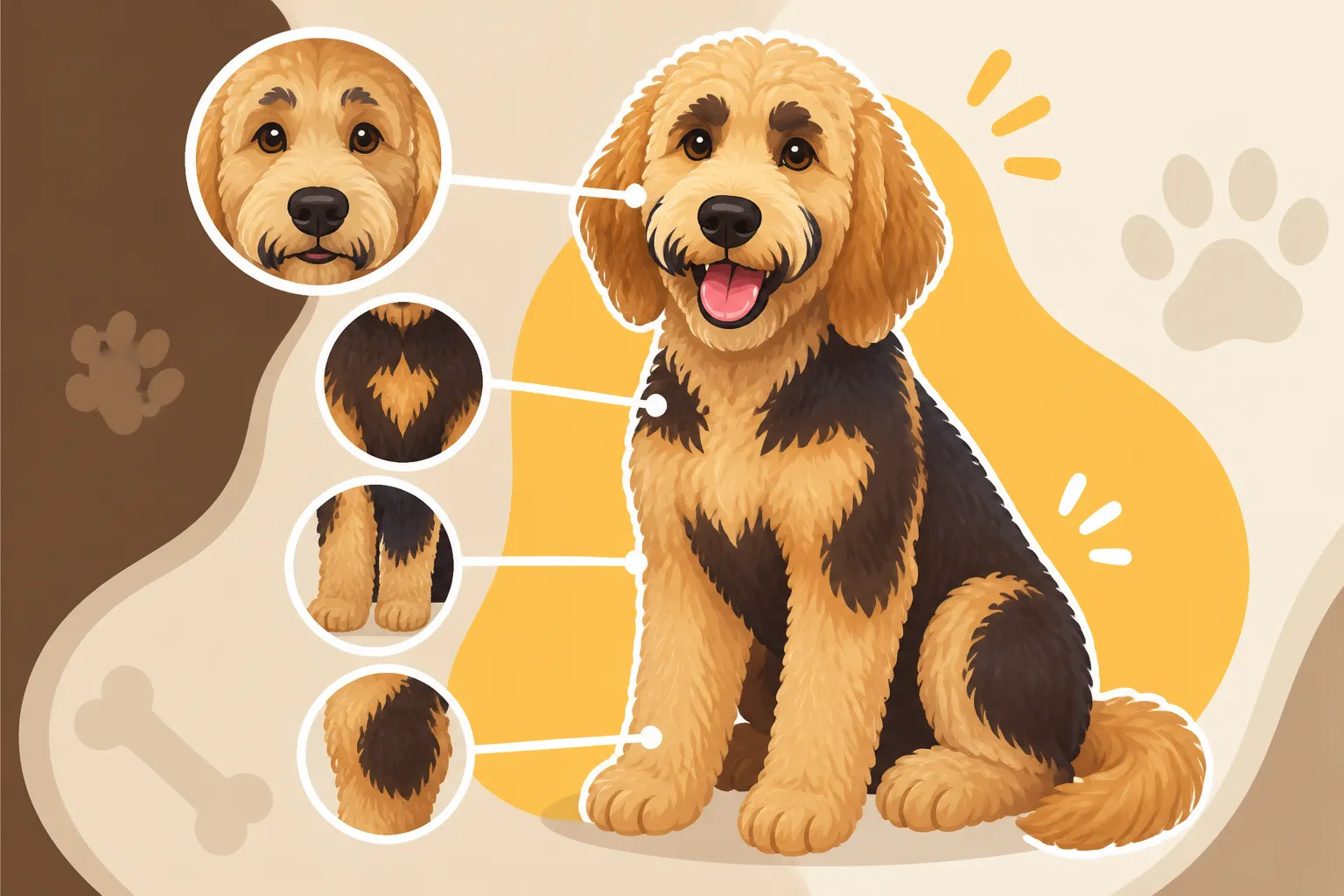
The appearance is quite consistent: a primary, darker base color covers most of the dog’s body, accented by a secondary, lighter color that appears in very specific, symmetrical locations. These "points" usually show up on the eyebrows (giving them a wonderfully expressive look!), the sides of the muzzle, across the chest, on the lower parts of the legs and paws, and underneath the tail. It’s a striking contrast that truly makes these dogs stand out in a crowd.
It's crucial to understand that "phantom" describes a pattern, not a breed or a specific type of Goldendoodle. A phantom Goldendoodle is still a Goldendoodle through and through, exhibiting the same wonderful temperament, intelligence, and range of coat types (wavy, curly, straight) as any other Goldendoodle. The phantom gene simply dictates the aesthetic distribution of their colors. You won't find a difference in personality or health outcomes simply because of these markings. You might be interested in reading What a Goldendoodle Actually Is and Is Not to better understand the breed's foundational characteristics.
Recognizing a Phantom Goldendoodle's Distinctive Look
Identifying a phantom Goldendoodle is all about looking for those characteristic tan point markings against a solid base color. The pattern is quite specific and, once you know what to look for, it's unmistakable.
Common Color Combinations
Phantom Goldendoodles can come in a variety of base colors, with the points always being a lighter shade. Some of the most common and beloved combinations include:
- Black and Tan Phantom: This is perhaps the most classic phantom look, mirroring the Doberman or Rottweiler. The base coat is a deep black, with tan or apricot points.
- Chocolate and Tan Phantom: A rich chocolate brown serves as the base, complemented by lighter tan or cream points. This is a softer, warmer look than the black and tan.
- Red and Apricot Phantom: Here, a vibrant red coat is the dominant color, accented by lighter apricot or cream points. This can be particularly striking, with the points often blending beautifully into the red.
- Silver and Cream Phantom: Less common but equally stunning, a silver base (which often starts black and fades to silver as the dog matures) is highlighted by creamy white or light silver points.
The key is the clear definition and symmetry of these point markings. They aren't splotches or random patches; they are distinct areas of color. For instance, you'll see a clear line where the black on the leg transitions to tan, rather than a blurred or mottled effect.
Pattern Consistency: Phantom vs. Other Patterns
It’s important to distinguish phantom markings from other Goldendoodle coat patterns, as they can sometimes be confused, especially in puppies.
- Not Sable: Sable Goldendoodles often have individual hairs that are tipped with black, giving the coat a shaded appearance, especially on the back. This can sometimes look like phantom markings in puppies, but as the dog matures, the sable often fades or changes, whereas phantom points remain distinct. Sable typically lacks the clear, symmetrical point distribution of a phantom.
- Not Merle: Merle is a completely different genetic pattern that creates mottled patches of diluted color on the coat. While incredibly beautiful, the merle gene can be associated with certain health issues if improperly bred (e.g., breeding two merles together), which is why careful genetic testing is paramount for merle Goldendoodles. Phantom markings carry no such health concerns. If you're curious about different markings, you might want to look into Merle Goldendoodles and the Health Warning.
- Not Parti: Parti Goldendoodles have large, irregular patches of white, combined with one or more other colors. This is a distinct pattern of large blocks of color, not the tan point pattern of a phantom. Parti, Phantom and Merle Goldendoodles delves into this comparison.
Puppy to Adult Coat Changes
Just like with solid colored Goldendoodles, a phantom Goldendoodle's coat can undergo some changes as they mature. Puppies might have less defined points, or the colors might seem a bit muted. As they grow and their adult coat comes in around 8-12 months (a period often referred to as the "coat change"), the phantom markings usually become more pronounced and vibrant. Sometimes, the lighter points might lighten further, or the darker base coat might fade slightly over time, but the pattern itself remains.
A great way to see what your phantom puppy might look like as an adult is to look at photos of the parents, especially the Poodle side, if they are also phantom. The Goldendoodle Coat Change at Eight to Twelve Months offers more insight into this transitional period.
The Genetics Behind Phantom Goldendoodle Coats
Understanding the genetics of a phantom coat can seem a bit like decoding a secret language, but it’s actually quite fascinating and helps explain why these patterns appear. The phantom pattern is primarily governed by genes located on what geneticists call the 'A' (agouti) locus and the 'K' (dominant black) locus.
The A Locus and K Locus: The Dynamic Duo
For a Goldendoodle to express the phantom pattern, two key genetic conditions need to be met:
- The Agouti (A) Locus: This locus determines where and how black pigment is distributed on a dog's hair shafts. For phantom markings, the dog needs to inherit two copies of the 'at' allele (meaning 'tan points') at the A locus. So, the dog's genotype at this locus would be 'atat'. This 'at' allele tells the dog's body to put black pigment on the main body and tan pigment on those specific "point" areas.
- The K (Dominant Black) Locus: This locus is responsible for controlling whether the agouti pattern (like tan points) can even be expressed. To show phantom markings, a dog cannot have the dominant 'K B' allele (which would make the dog solid black or solid chocolate, masking any agouti pattern). Instead, the dog needs to inherit two copies of the 'ky' allele, meaning 'non-dominant black'. So, the dog's genotype at this locus would be 'kyky'. This allows the 'atat' pattern from the A locus to actually be visible.
Essentially, a phantom Goldendoodle is a dog that is 'atat' at the agouti locus and 'kyky' at the K locus. If the dog had even one 'K B' allele, it would be solid colored, regardless of its agouti alleles.
Inheritance from Parents and Predictability
Since the phantom pattern comes from the Poodle lineage, a Goldendoodle puppy can inherit these traits if at least one parent carries the necessary 'at' allele and is 'kyky'. Often, breeders will specifically breed phantom Poodles to Goldens (or phantom Goldendoodles to other Goldendoodles) to produce phantom puppies.
Knowing the genetic makeup of the parent dogs makes the appearance of phantom coats quite predictable. A responsible breeder will have run a comprehensive DNA panel on their breeding dogs. These tests can tell them exactly what alleles each dog carries at the A and K loci, among many others. This allows them to predict with reasonable accuracy which puppies in a litter might be phantom, solid, or parti. This is where a good breeder really shines, as they can explain the genetics of their pairings. Learning about The DNA Panel a Goldendoodle Breeder Should Run can help you understand what information to ask for.
This predictability means that when you see a phantom Goldendoodle puppy, you can be confident that the pattern is genetically sound and won't suddenly disappear or morph into something else. It's a stable genetic trait, provided the parents carried the correct genes.
Living with a Phantom Goldendoodle: Care and Considerations
Bringing a phantom Goldendoodle into your home is an exciting prospect. While their unique markings are a visual treat, their care is essentially the same as any other Goldendoodle, with a few considerations for maintaining their beautiful coat.
Grooming Specifics
The phantom pattern itself doesn't alter a Goldendoodle's grooming needs, but the underlying coat type certainly does. Whether your phantom Goldendoodle has a wavy, fleece, or curly, wool coat will dictate the frequency and intensity of your grooming routine. Regardless of the pattern, Goldendoodles need consistent grooming to prevent matting, especially behind the ears, in the armpits, and around the collar area. You'll want to brush them several times a week, ideally daily, using a good slicker brush and metal comb to ensure you're getting all the way down to the skin.
For phantom Goldendoodles, those lighter points on the face, especially around the muzzle and eyes, might be more prone to staining if not kept clean. Wiping their face after meals or outdoor adventures, and ensuring their water bowl doesn't leave their beard constantly wet, can help. You can find excellent grooming tools and even specific tear stain removers or beard cleansers on sites like Chewy that cater to these needs. Regular professional grooming appointments every 6-8 weeks are still essential to keep their coat healthy and tidy. Knowing Brushing a Goldendoodle Often Enough to Stop Matting is key to a happy, healthy coat.
No Health Implications from Color
One of the great things about the phantom pattern is that, unlike some other coat genes (such as the merle gene, which can be linked to hearing and vision problems if not responsibly bred), the 'at' allele for tan points carries no known health risks. You don't need to worry about any phantom-specific health issues. Your phantom Goldendoodle will be just as healthy as a solid-colored one, assuming they come from reputable, health-tested lines. Their health will be more dependent on the general health predispositions of the Golden Retriever and Poodle breeds, and proper health testing of the parents. For more on health, consider articles like Health Testing Both Goldendoodle Parents Should Have.
Uniqueness and Cost
Phantom Goldendoodles are certainly eye-catching and are often highly sought after for their distinctive appearance. This demand can sometimes lead to breeders charging a premium, though the price of a Goldendoodle is influenced by many factors beyond just color, including size, generation (F1, F1B, multigen), breeder reputation, and health clearances. While a unique coat pattern like phantom can add to a puppy's appeal, it's always most important to choose a breeder focused on health, temperament, and ethical practices, rather than just aesthetics. Remember, the true value of your Goldendoodle comes from their companionship, not just their coat. If you are interested in costs, you can research Whether Rare Goldendoodle Colors Cost More.
Enjoying the Aesthetics
Ultimately, a phantom Goldendoodle is a stunning example of how two wonderful breeds can combine to create something truly unique and beautiful. Their distinctive markings offer a visual delight and add an extra layer of charm to their already endearing personalities. Whether your phantom Goldendoodle is black and tan, chocolate and cream, or any other combination, you’ll have a striking companion whose coat often invites compliments and conversations. Just be ready for people to ask, "What kind of dog is that?!" when you're out and about! Many Goldendoodle owners use Chewy for their everyday needs, from food to toys, to keep their beloved companions happy and healthy.
| Phantom Pattern | Base Color | Point Color | Description |
|---|---|---|---|
| Black & Tan | Deep Black | Tan/Apricot | Classic Doberman-like markings on a black coat. |
| Chocolate & Tan | Rich Chocolate Brown | Tan/Cream | Soft, warm contrast with chocolate body and tan points. |
| Red & Apricot | Vibrant Red | Apricot/Cream | Fiery red body with lighter, often subtle, apricot points. |
| Silver & Cream | Silvery Grey (fades from black) | Cream/Light Silver | Unique, sophisticated look with fading grey and light points. |
| Blue & Cream | Diluted Grey/Blue | Cream/Tan | Rarer dilution of black, with cream or tan points. |
| Cafe Au Lait & Cream | Light Brown/Tan | Cream/White | Diluted chocolate base with light cream markings. |
Disclaimer
This article is for general informational purposes only and does not constitute professional advice. Laws, prices and regulations vary by location and change over time. Consult a qualified professional for guidance on your specific situation.