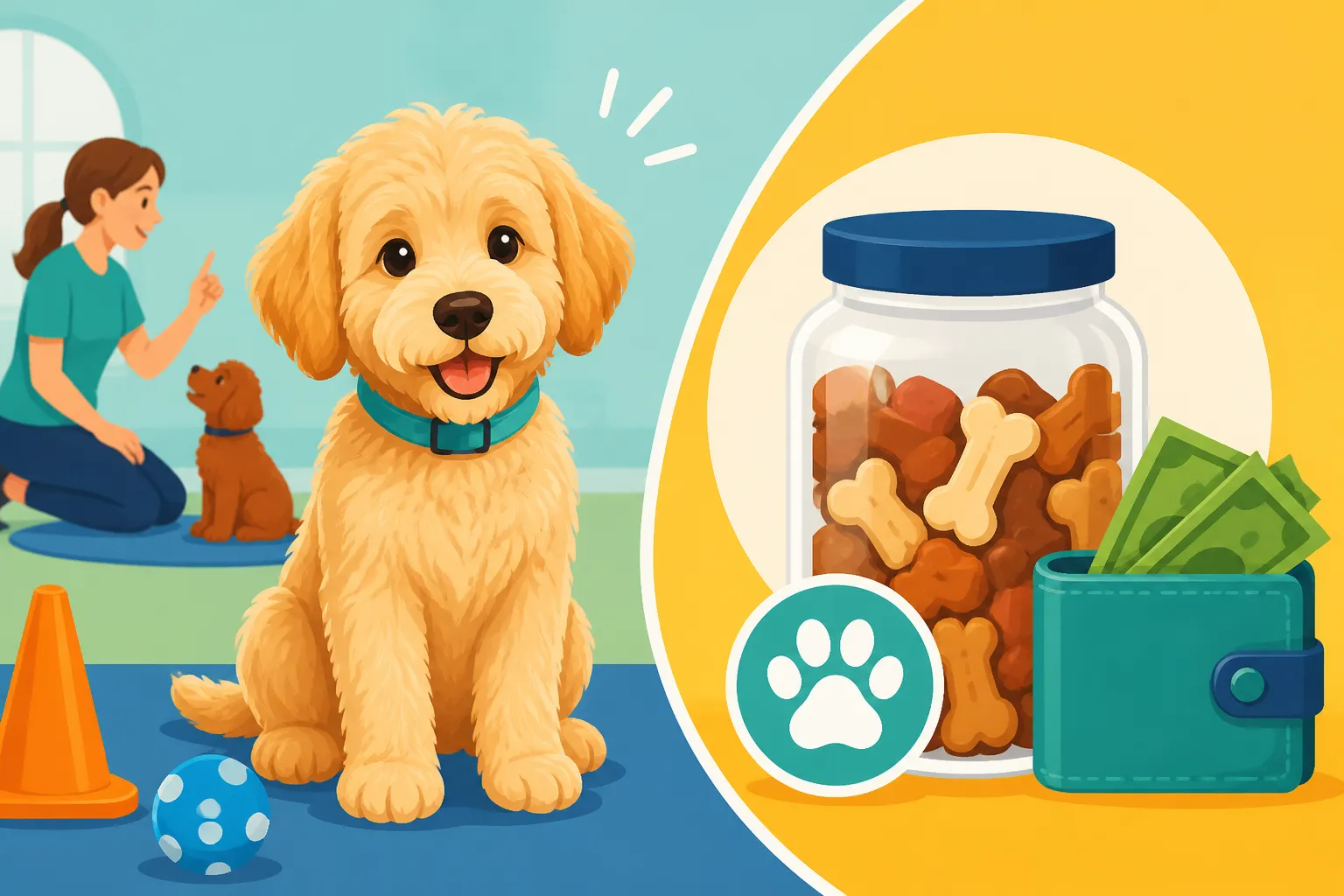
Treat Costs for a Goldendoodle in Puppy Class
Bringing a Goldendoodle puppy home is an absolute joy, but then reality sets in, especially when you sign up for that first puppy class. Suddenly, you realize just how many treats you're going to need to get your enthusiastic fluffball to focus amidst all the exciting distractions of other puppies and new people. The cost of those tiny, delectable morsels can sneak up on you faster than a Goldendoodle can steal a sock, turning what you thought would be a small expense into a significant budget item. This guide will walk you through why those treats are so crucial, how much you can realistically expect to spend, and smart strategies to keep your treat budget from spiraling out of control.
Why Puppy Class Treats Are Different and Cost More
It’s easy to think a few bags of standard kibble will do the trick, but puppy class is a whole different ballgame. In an environment teeming with new sights, sounds, and smells – not to mention a dozen other wiggly puppies – your Goldendoodle needs serious motivation to pay attention to you. This often means a specific type and quantity of treats that come with their own price tag.
The Volume and Frequency of Training Treats
In puppy class, especially during those crucial early weeks, positive reinforcement is the name of the game. This means rewarding every single small step in the right direction, not just the perfectly executed "sit." Think about it: your puppy might get a treat for looking at you, for taking one step in the heel position, for holding a sit for two seconds, or even for just not jumping on another puppy. Every single repetition requires a reward.
Trainers often recommend tiny, pea-sized treats because you'll be giving so many. If you're working on "leave it," "focus," or even just getting through a short attention span exercise, you could easily go through 50-100 treats in a single 45-minute class session, and that's not even counting the practice you'll do at home. Over a 6-8 week class, that adds up to hundreds, if not thousands, of treats. This isn't about spoiling your Goldendoodle; it's about building strong, positive associations with learning and making good choices in distracting environments. The sheer volume makes the cost a real factor.
The "High-Value" Requirement for Goldendoodles
Goldendoodles are smart and eager to please, but they're also highly social and easily excited. In a stimulating setting like puppy class, a plain old piece of kibble might not cut it. You need something that makes your Goldendoodle's eyes light up, something they will literally drop everything for. This is where "high-value" treats come in.
High-value treats are usually soft, smelly, and incredibly palatable. Think tiny pieces of cooked chicken, cheese, hot dogs, or specially formulated soft training treats. These treats often cost more per ounce than your average crunchy biscuit because of their ingredients and preparation. Imagine trying to get your Goldendoodle to ignore a playful Labrador or the scent of another dog's pee on the floor with a bland cookie – it's just not going to happen! You need that extra "oomph" to cut through the distractions and capture their focus. Many owners find that something truly delicious is the only way to get their Goldendoodle to tune into them, especially when they are still learning basic commands like a reliable recall or how to walk politely on a leash.
Trainer Recommendations and Specific Requirements
It's also worth noting that many puppy classes, especially those focused on positive reinforcement and behavior modification, come with their own set of treat guidelines. Some trainers might recommend avoiding crunchy treats because they take too long to chew, breaking the flow of training. Others might ask you to avoid treats with certain common allergens if another puppy in the class has sensitivities.
For instance, a trainer might explicitly say, "Please bring soft, pea-sized treats that your puppy absolutely loves. No hard biscuits." This narrows your options considerably, often pushing you towards premium training treats, freeze-dried options, or even human-grade foods you might prepare yourself. If your Goldendoodle has specific dietary needs, perhaps due to allergies or a sensitive stomach, you might need to seek out limited-ingredient options or single-protein treats, which are almost always pricier. These specific demands, while entirely for the benefit of all the puppies and the training process, certainly impact your treat expenses.
Breaking Down the Treat Budget for Puppy Class
Understanding the why is one thing, but figuring out the how much is often the bigger question. The costs can vary wildly depending on your Goldendoodle's size, your treat choices, and how dedicated you are to practice outside of class.
Estimating Weekly Treat Consumption
Let's do some quick math. Most puppy classes run for 6 to 8 weeks, with one session per week. In a typical 45-60 minute class, you might use 50-100 pea-sized treats. Let's say, conservatively, you use 75 treats per class. That’s 450-600 treats just for class sessions over 6-8 weeks.
Now, add in daily practice at home. Even 15-20 minutes of training spread throughout the day can easily use another 50-75 treats. If you practice at home 5-6 days a week, that’s another 250-450 treats weekly.
Over a 6-week class, that could mean:
- Class treats: 75 treats/week * 6 weeks = 450 treats
- Home practice: 350 treats/week * 6 weeks = 2100 treats
- Total: ~2,550 treats in 6 weeks!
If your Goldendoodle is a larger standard size, they might be able to handle slightly larger treats or simply need more to feel rewarded. A mini or toy Goldendoodle might need even smaller morsels, but the overall count of treats used remains high. When considering how much to set aside for your pup's care, remember that Goldendoodle training sessions and how long to run them often dictate treat consumption.
Comparing Treat Types and Price Points
The world of dog treats is vast, and prices vary widely. Here’s a general breakdown to help you budget:
| Treat Type | Description | Typical Cost Range (per 6-8 oz bag/pack) | Pros for Puppy Class | Cons for Puppy Class |
|---|---|---|---|---|
| Soft Chewy Training Treats | Small, moist, often meat-based, specifically designed for training. | $8 – $15 | High palatability, easy to chew, perfect size. | Can be pricey, sometimes crumbly, limited ingredient options may cost more. |
| Freeze-Dried Treats | Single-ingredient (e.g., chicken, beef liver), very potent aroma and flavor. | $10 – $25 (often smaller bag) | Extremely high-value, very enticing, good for allergies. | Most expensive per ounce, can be messy if not broken small enough. |
| Bacon/Hot Dogs/Cheese | Human food cut into tiny pieces. | $5 – $10 (for raw ingredients) | Very high-value, easily customizable, cost-effective if prepared yourself. | Requires preparation, can be fatty, not shelf-stable. |
| Plain Kibble | Your Goldendoodle's regular food. | $0 (already purchased) | Free, no extra calories. | Often low-value, might not hold attention in class. |
Many owners find themselves turning to online retailers like Chewy for a wide selection and competitive pricing on soft training treats. Brands like Zuke's Mini Naturals, Wellness Soft Puppy Bites, or Stella & Chewy's freeze-dried raw often make the cut for high-value options. For a super high-value boost, some Goldendoodle owners even use fresh pet food options like Ollie, cutting their gently cooked proteins into tiny pieces. This offers both excellent nutrition and irresistible appeal.
Hidden Costs: From Special Diets to Training Pouches
Beyond the treats themselves, there are a few other expenses that can add up during puppy class:
- Hypoallergenic or Limited-Ingredient Treats: If your Goldendoodle has allergies – perhaps showing up as itchy skin or a sensitive tummy – you'll need specialized treats. These often cost significantly more than standard options. For example, treats made with novel proteins like venison or duck can be twice the price.
- Treat Pouches/Bags: You'll need a way to carry all those tiny treats easily accessible during class and home training. A good training pouch that clips to your waist, has a wide opening, and can hold a good quantity of treats is invaluable. While a simple plastic bag works in a pinch, a dedicated pouch (ranging from $10-$30) is far more practical for repeated use and quick rewards.
- Dental Chews/Stuffable Toys: While not directly used in class for training, many Goldendoodle puppies need an appropriate outlet for chewing when they come home, especially after an exciting class. Having durable dental chews or a Kong stuffed with a treat like peanut butter can provide a calming activity. This is particularly important for Goldendoodle puppy nipping at hands, redirecting that mouthiness onto appropriate items.
All these smaller costs add up, so factor them in when you're estimating the full investment into your Goldendoodle's puppy class success.
Strategies to Manage Goldendoodle Puppy Treat Costs
Don't despair about the treat budget! There are plenty of smart ways to make your money go further while still providing your Goldendoodle with the motivation they need to shine in puppy class.
Bulk Buying and Subscription Services
One of the easiest ways to save money on dog treats is to buy in larger quantities. Smaller bags always have a higher unit price. Look for 1-pound or 2-pound tubs of soft training treats if available, or even larger bags of freeze-dried options. Keep an eye out for sales, especially around major holidays, when pet supply stores often run promotions.
Online retailers like Chewy are fantastic for this. Not only do they often have better prices on larger bags, but their autoship options can provide an additional discount. If you know you'll be going through a consistent amount of a particular treat, setting up a recurring order means you never run out, and you save a little money each time. This also ensures you have a steady supply, preventing last-minute, higher-priced impulse buys at local stores.
DIY High-Value Treats at Home
For the absolute highest value at a lower cost, consider making some of your Goldendoodle's training treats yourself. This gives you complete control over ingredients and can be significantly cheaper than buying premium packaged options. Plus, the smell of freshly cooked meat is almost universally irresistible to dogs!
Here are some easy DIY ideas:
- Cooked Chicken Breast: Boil or bake plain chicken breast, then chop it into tiny, pea-sized pieces. It's lean, high in protein, and a huge motivator. You can cook a big batch once a week and freeze portions.
- Hot Dogs: Choose lower-sodium hot dogs (like Hebrew National or Applegate Farms), cut them into quarters lengthwise, then slice into tiny triangles. The smell is incredibly potent.
- Cheese Sticks: Slice string cheese or a block of cheddar into small cubes. Easy, no-cook, and most Goldendoodles adore cheese.
- Frozen Purees: While not great for quick rewards in class, frozen purees (like pumpkin or sweet potato) in a Kong are excellent for keeping your Goldendoodle occupied and happy after a training session or during crate time.
Just be mindful of the total daily calorie intake when using human foods. For an active puppy, these extra calories are usually fine, but for an adult dog or one prone to weight gain, adjust their regular food portion accordingly. Balancing the treats for your Goldendoodle's daily calories by size category is key.
Leveraging Sales and Loyalty Programs
Smart shoppers can significantly reduce their treat expenses by being strategic.
- Sign Up for Email Lists: Many pet stores and online retailers will send out coupons or announce sales to their email subscribers. This is often where you'll find "buy one, get one half off" deals or percentage discounts.
- Loyalty Programs: If you frequent a specific pet store, join their loyalty program. These often offer points for every dollar spent, which can be redeemed for discounts on future purchases. Sometimes they even send birthday treats or special coupons for members.
- Check Clearance Racks: Don't forget to check the clearance sections at your local pet store. Sometimes treats are discounted due to seasonal packaging changes or nearing their "best by" date (which is usually still perfectly safe for consumption for a while longer).
- Utilize Your Trainer: Sometimes, trainers have bulk access to certain professional-grade training treats and might offer them to students at a slight discount. It never hurts to ask!
By combining these strategies, you can ensure your Goldendoodle gets all the high-value motivation they need without completely breaking the bank.
Beyond Treats: Investing in Your Goldendoodle's Training Success
While treats are a crucial component of puppy class, it's important to remember that they're a means to an end: a well-behaved, happy Goldendoodle who understands what you're asking of them. The investment in treats is really an investment in their future.
The Value of Early Training for a Goldendoodle
The foundation laid in puppy class, reinforced with consistent positive rewards, is invaluable. A well-trained Goldendoodle is a joy to live with, less likely to develop problematic behaviors like excessive barking, destructive chewing, or inappropriate jumping. Think about the potential future costs you're avoiding:
- Behavioral Consults: If your Goldendoodle develops severe behavioral issues later on, a certified behaviorist can charge hundreds, sometimes thousands, for consultations and training plans.
- Property Damage: A Goldendoodle that isn't taught appropriate chew toys or isn't well-exercised can chew through furniture, shoes, or even walls, leading to expensive repairs or replacements.
- Vet Bills for Ingested Items: A Goldendoodle who doesn't learn "leave it" might eat something harmful, leading to emergency vet visits, which can easily cost hundreds or thousands of dollars. Having a Goldendoodle puppy vaccination and puppy health checks is important, but preventing avoidable incidents through training is just as vital.
The treats you're using now are building blocks for a lifetime of good behavior, making your Goldendoodle a well-adjusted member of your family and community.
Health Considerations for Frequent Treating
With all those treats, it's natural to worry about your Goldendoodle's waistline and digestive health. This is where quality and moderation come in.
- Calorie Awareness: Be mindful of the calorie content of your chosen treats. If you're giving a lot of high-value treats, reduce your Goldendoodle's regular food portion slightly to avoid accidental weight gain. An overweight Goldendoodle puts extra strain on their joints and can lead to a host of other health problems.
- Ingredient Quality: Opt for treats with wholesome, easily digestible ingredients. Avoid artificial colors, flavors, and excessive fillers. Many commercially available soft training treats are specifically formulated to be low in calories and easy on the stomach. If your Goldendoodle experiences Goldendoodle vomiting and when it matters or Goldendoodle diarrhea lasting more than two days, it might be a sign that the treats are not agreeing with them, and you may need to consult your vet.
- Fresh Food Options: As mentioned earlier, using small pieces of gently cooked fresh food from services like Ollie can be a fantastic way to offer high-value treats without compromising on nutritional quality. Just ensure these are accounted for in their daily diet plan.
If you have concerns about your Goldendoodle's health or any changes after introducing new treats, always consult your veterinarian. While hopefully you won't need it, services like Healthy Paws pet insurance can provide peace of mind for unexpected vet costs, regardless of whether they stem from a treat-related tummy upset or something else entirely.
The Overall Financial Picture of Goldendoodle Ownership
Ultimately, treat costs for puppy class are just one small piece of the larger financial puzzle of Goldendoodle ownership. From the initial Goldendoodle puppy cost and why it's so high to ongoing grooming expenses, food, vet care, and other supplies, these dogs are a significant financial commitment.
Think of the treats as an early, essential investment in shaping a wonderful companion. A well-trained Goldendoodle is a pleasure to take on walks, introduce to guests, and live with every day. The confidence and skills they gain in puppy class, fueled by those delicious motivators, will pay dividends for years to come, strengthening your bond and making your life together much more harmonious.
Disclaimer
This article is intended for informational purposes only and is not a substitute for professional veterinary advice, diagnosis, or treatment. Always seek the advice of your veterinarian or other qualified health provider with any questions you may have regarding a medical condition or treatment for your Goldendoodle.