Walking a Standard Goldendoodle Beside a Child
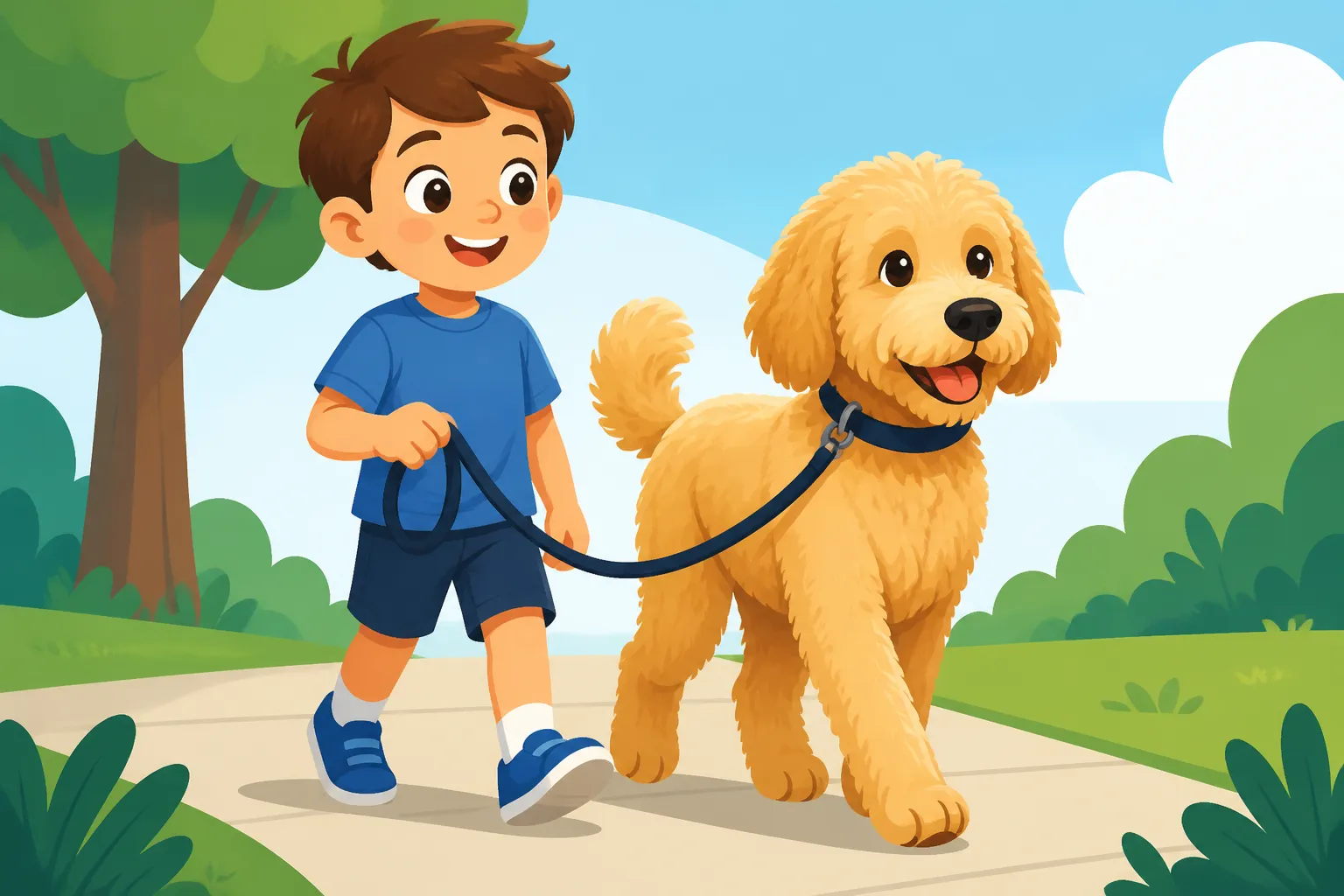
Walking a standard Goldendoodle, with all their joyous enthusiasm and often considerable strength, while simultaneously managing a small child can feel like orchestrating a three-ring circus. It’s a common frustration for many families who adore their fluffy companions but also prioritize their child's safety and a peaceful outing. This guide is here to walk you through practical strategies, training techniques, and gear considerations to make walking your Goldendoodle with your child a calmer, more enjoyable experience for everyone involved.
Understanding the Goldendoodle's Drive on a Leash
Before we dive into solutions, it's crucial to understand why your Goldendoodle might be pulling, especially when there's a world full of exciting smells, squirrels, and other dogs out there. Their lineage, a blend of the active Golden Retriever and the intelligent Standard Poodle, gifts them with incredible energy and a strong desire to explore.
The Retriever's Instinct to Forage Ahead
Golden Retrievers were bred to work ahead of their handlers, flushing out game and retrieving it. This inherent drive means that forging forward, often with their nose to the ground, feels incredibly natural to them. When you add in the Goldendoodle's keen sense of smell, every walk becomes an olfactory adventure, pulling them from one interesting scent to the next. They aren't trying to be disobedient; they're simply following their instincts. This can be particularly challenging when you're trying to keep an eye on a small child who might be easily knocked off balance by a sudden lunge.
The Poodle's Intelligence and Sensitivity
Standard Poodles, while elegant, are also highly intelligent and energetic dogs. They thrive on mental stimulation and can sometimes be quite sensitive to their environment. This intelligence means they can learn quickly, but it also means they can learn undesirable behaviors, like pulling, just as fast if not managed properly. A Goldendoodle might pull harder if they sense your frustration or tension on the leash, creating a vicious cycle. Understanding this sensitivity is key to using positive reinforcement effectively. They want to please you, but they also want to fulfill their natural drives.
Energy Levels and the Need for an Outlet
A standard Goldendoodle is a medium-to-large breed with a significant amount of energy. If they aren't getting enough physical and mental exercise before the walk, they're going to be bursting with pent-up energy, making calm leash manners even harder to achieve. Imagine trying to walk a child who's been cooped up all day – they're going to run and bounce. A Goldendoodle is much the same. A quick sprint in the yard or a vigorous game of fetch before heading out can make a world of difference. Otherwise, all that energy comes out in frantic greetings or pulling to get to the next exciting thing. Goldendoodle Exercise and Mental Work Every Day is a topic many owners find helpful to manage these energy levels.
Essential Training for a Controlled Walk
Training is the cornerstone of safe and enjoyable walks with your Goldendoodle and child. It's not about stifling your dog's joy, but channeling it into polite behavior that ensures everyone's safety. Consistency is absolutely crucial here, and every family member who walks the dog needs to be on the same page.
Mastering Loose Leash Walking
This is perhaps the most fundamental skill. A loose leash means your Goldendoodle is walking beside you without any tension on the lead, allowing for quick corrections and responsiveness. Start training this in a low-distraction environment, like your backyard, before moving to busier areas. Use high-value treats and reward every tiny moment your dog walks nicely by your side. If they pull, simply stop. Don't move forward until the leash loosens. This teaches them that pulling gets them nowhere.
Consider short training sessions multiple times a day. Even five minutes here and there can build muscle memory. Commands like "heel" or "with me" can be invaluable, coupled with a consistent marker word like "yes" or a clicker, followed immediately by a treat. Many online resources, including comprehensive programs like those offered by BAXTER & Bella, provide structured, step-by-step guides for teaching loose leash walking from puppyhood to adulthood.
Teaching "Leave It" and "Watch Me"
These commands are lifesavers when you're navigating sidewalks with a Goldendoodle who spots a discarded snack or a particularly intriguing leaf, all while holding a child's hand.
- "Leave It": Start by placing a low-value treat on the floor and covering it with your hand. When your dog looks away, reward them with a higher-value treat from your other hand. Gradually increase the difficulty, moving to uncovered treats and eventually to distractions outdoors. This teaches impulse control, which is vital for a dog that might lunge at a tempting scent or another dog. Goldendoodle Impulse Control Exercises can provide more detailed steps.
- "Watch Me": This command teaches your dog to make eye contact with you on cue, shifting their focus away from distractions and onto you. Hold a treat near your nose and say "Watch me." When they make eye contact, mark and reward. This is incredibly powerful for regaining your dog's attention when something unexpected happens, like a skateboarder whizzing by or another dog approaching.
Practicing Greetings and Passing Distractions
Goldendoodles are often described as "hyper-friendly," wanting to greet every person and dog they see. While lovely, this can lead to lunging and jumping, which is unsafe when you have a child in tow.
- Controlled Greetings: Teach your Goldendoodle that they don't get to greet every dog or person. When encountering a friendly person or calm dog, ask for a "sit" or "four paws on the floor" before allowing a brief, controlled greeting, if appropriate.
- Passing By: More often, you'll need to teach them to ignore distractions. Use your "watch me" command, create distance from the trigger, and reward heavily for calm behavior as you pass. If your dog pulls or lunges, stop, reset, and try again, rewarding them for even a fraction of a second of calm. This might mean crossing the street or taking a wider berth. Remember, the goal is not to punish the excitement, but to redirect it into desired behaviors.
Safety Strategies for Walking with Children
Walking a Goldendoodle with a child means managing two highly energetic, sometimes unpredictable beings. It requires proactive planning and consistent boundaries for both your dog and your child.
Teaching Children Safe Dog Interactions
Your child plays a critical role in the success of these walks. They need to understand how to behave around the dog, especially during moments of high excitement.
- No Running or Screaming Around the Dog: While normal child behavior, this can easily trigger a Goldendoodle's chase instinct or over-excitement, leading to jumping or playful (but potentially overwhelming) interactions. Teach your child to use a "calm voice" and "slow hands."
- Holding Still for Greetings: If your Goldendoodle jumps, teach your child to stand like a "tree" – still, quiet, hands tucked in. This removes the reward of interaction and teaches the dog that jumping gets them nothing.
- "Let the Dog Be": Teach your child that when the Goldendoodle is lying down, eating, or chewing a toy, they should leave the dog alone. This prevents resource guarding issues and allows the dog to have its personal space.
- Leash Manners for Kids (Age-Appropriate): For older children, you can start teaching them how to hold a leash properly, keeping it loose, and not to pull. However, a small child should never be solely responsible for holding a standard Goldendoodle's leash, even if they're "good." A sudden squirrel sighting could yank the leash right out of their hands, or worse, pull them over.
Managing Two Leashes or One Strong One
If your Goldendoodle is a strong puller, trying to manage a separate leash for them while also holding a child's hand is a recipe for disaster.
- Double Handle Leashes: Many owners find a double-handle leash helpful. It has a standard long handle and a shorter "traffic handle" closer to the clip, allowing you to quickly gain control for close-quarter passes or sudden distractions. You can find these easily on platforms like Amazon.
- Waist Leash for You (with caution): For truly hands-free walking (and only if your Goldendoodle has impeccable loose leash manners), a waist leash can be an option. However, if your Goldendoodle is prone to lunging, this could pull you off balance or injure your back. Use this with extreme caution and only after extensive training.
- Stroller or Wagon for Child: For younger children, a stroller or wagon provides a secure place for them, allowing you to focus more of your physical attention on the dog, especially during the initial training phases. This also prevents them from running off or getting underfoot if the dog makes a sudden move.
Establishing Clear Boundaries and Consistency
Dogs thrive on routine and clear expectations. If one day your Goldendoodle is allowed to pull and the next they're not, it creates confusion.
- Consistent Commands: Ensure everyone in the household uses the same commands and hand signals. If you say "off" for jumping, and your partner says "down," it's not fair to the dog.
- Walk Training Every Time: Every walk, even a short potty break, is a training opportunity. Reinforce good behavior, correct pulling, and practice your commands. Don't just save "good manners" for long walks.
- Designated Walker: For really challenging situations, it might be necessary for one adult to walk the dog and another to walk the child separately, at least until the dog's leash manners are reliably solid. Then, gradually introduce them together, starting with short, controlled outings.
Choosing the Right Gear for Success
The right equipment can be a game-changer, especially when you're dealing with a large, strong Goldendoodle and the added responsibility of a child. It's not a substitute for training, but it can make training easier and provide more control.
Harnesses vs. Collars for Control
For a standard Goldendoodle, especially one that pulls, a flat collar is generally not sufficient for control and can even cause discomfort or injury to their trachea.
- Front-Clip Harnesses: These are often highly recommended for pullers. The leash clips to a ring on the dog's chest. When the dog pulls, it redirects them gently to the side, discouraging forward momentum. Brands like Freedom No-Pull Harness, Easy Walk, or similar styles available on Amazon can be very effective. This type of harness offers better control and reduces strain on the dog's neck, which is essential for consistent training.
- Head Halters (Halti, Gentle Leader): These provide excellent control by redirecting the dog's head, and where the head goes, the body follows. They sit more like a muzzle, which some dogs resist at first, but with proper introduction and positive association (treats!), most dogs accept them. They give you a lot of leverage, which can be invaluable when a strong Goldendoodle decides to lunge while you're holding a child's hand.
- Back-Clip Harnesses: While comfortable and good for dogs who don't pull, a back-clip harness often encourages pulling in a strong Goldendoodle, as it engages their opposition reflex. They're fine for a dog that already walks beautifully, but not ideal for a puller, especially when you need extra control with a child around.
Leash Length and Material
Your leash choice also impacts control and safety.
- Standard 6-Foot Leash: This is generally the most versatile and recommended length. It gives your dog enough room to explore slightly while still allowing you to maintain close control. Avoid retractable leashes entirely, as they offer no control, can teach pulling, and are dangerous when you need to quickly reel in a large dog, especially with a child nearby.
- Material: A comfortable, durable material like nylon or leather is best. Look for a leash with a sturdy clip that won't come undone easily. For a strong Goldendoodle, a thick, braided nylon or leather leash provides a good grip and won't cut into your hands if they do pull unexpectedly.
| Gear Type | Best For | Pros | Cons | Notes |
|---|---|---|---|---|
| Front-Clip Harness | Goldendoodles that pull, general control | Redirects dog's forward momentum; reduces pulling; comfortable for dog | Some dogs find them awkward; can sometimes tangle legs if not fitted well | Excellent starting point for teaching loose leash walking. Look for durable, padded options. |
| Head Halter | Strong pullers, dogs that lunge, high control | Provides significant control; can quickly redirect dog's attention | Many dogs resist at first; requires careful introduction; can look like a muzzle | Best for serious pullers or dogs with reactivity. Always introduce with positive reinforcement. |
| Back-Clip Harness | Dogs with excellent leash manners | Comfortable; easy to put on | Can encourage pulling; offers less control for strong dogs | Not recommended for Goldendoodles that pull, especially when walking with a child. |
| Standard 6-Foot Leash | All dogs, everyday walks | Versatile; good balance of freedom and control; durable | Can still lead to pulling if dog is not trained | Avoid retractable leashes. Choose a comfortable material with a strong clasp. |
| Double-Handle Leash | Any size Goldendoodle, added safety | Offers quick "traffic handle" for close control; good for crowded areas | Can be slightly bulkier | Great for city walks or situations where you need to quickly shorten the leash, such as when Walking a Standard Goldendoodle Beside a Child. |
Reflective Gear for Visibility
Safety extends beyond immediate control. If you walk during dawn, dusk, or at night, reflective gear for both your Goldendoodle and your child is essential.
- Reflective Vest or Collar for Dog: Many harnesses now come with reflective strips, or you can get a separate reflective vest for your Goldendoodle.
- Reflective Clothing for Child: Brightly colored or reflective jackets and shoes for your child increase their visibility to drivers and cyclists.
- Headlamps or Flashlights: Carrying a flashlight can help you see what's ahead and make you more visible.
Remember, the journey to harmonious walks with your Goldendoodle and child is an ongoing one. It requires patience, consistency, and a commitment to positive reinforcement. Start small, celebrate every success, and don't be afraid to seek professional help from a certified dog trainer if you encounter persistent challenges. With the right approach, you can turn those chaotic outings into enjoyable family adventures. Finding a Trainer for a Goldendoodle is often a great next step for families looking for personalized guidance.
Disclaimer
This article is for general informational purposes only and does not constitute professional advice. Laws, prices and regulations vary by location and change over time. Consult a qualified professional for guidance on your specific situation.