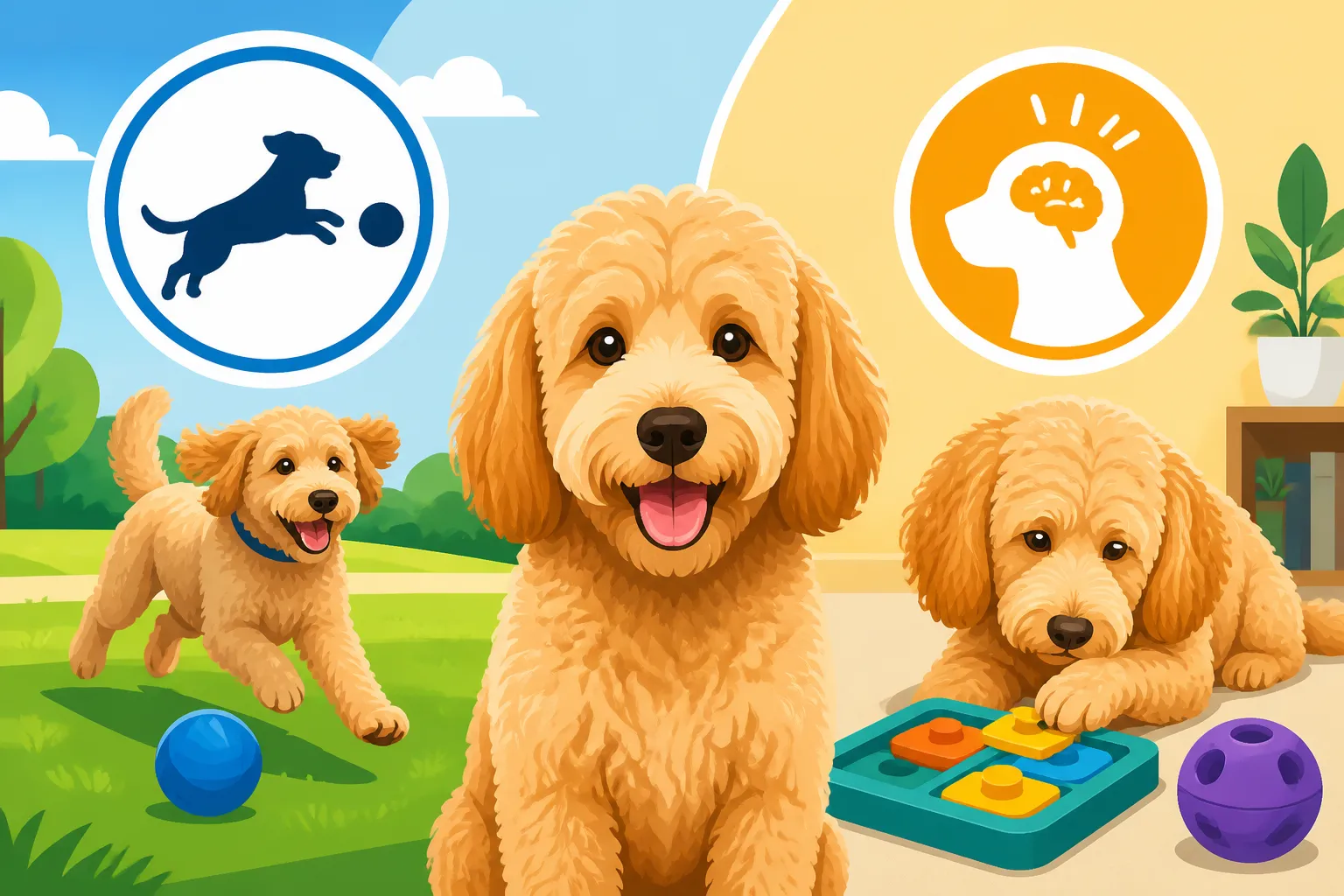
Goldendoodle Exercise and Mental Work Every Day
It’s a common scenario: you’ve just taken your adorable Goldendoodle for what felt like a marathon walk, only to have them return home and immediately start bouncing off the walls, zooming through the house, or worse, finding something mischievous to chew. Many Goldendoodle parents grapple with the relentless energy and sharp minds these dogs possess, feeling like they're constantly trying to keep up or outsmart their furry companions. This guide is here to help you navigate the world of Goldendoodle exercise and mental stimulation, offering practical, empathetic advice on how to effectively tire out both their bodies and their brilliant brains every single day.
Understanding Your Goldendoodle's Drive for Activity
Goldendoodles are a fantastic blend of two highly intelligent and energetic breeds: the Golden Retriever and the Poodle. This means they often inherit a strong desire to be active, to learn, and to be engaged with their human families. It's not just about running around in the yard; it's about channeling that inherent drive in constructive ways. If you've ever felt like your Goldendoodle has an endless battery pack, you're not alone, and it's rooted deeply in their genetic makeup.
The Golden Retriever's Eagerness and Stamina
From the Golden Retriever side, your Goldendoodle likely inherits a boundless enthusiasm for activity, especially anything involving "working" with you. Golden Retrievers were bred to retrieve game for hunters, meaning they have incredible stamina, a strong fetch drive, and a deep desire to please. This translates into a dog that loves to run, jump, swim, and carry things in their mouth. They thrive on tasks and thrive on companionship, meaning a solo run in the yard, while physical, often doesn't satisfy their social and purpose-driven needs. They want to be part of the action, to feel like they have a job, even if that job is just bringing you a toy for the hundredth time.
Many Goldendoodle owners find that their dogs are incredibly biddable, picking up cues quickly, which is a wonderful trait inherited from the Golden Retriever. This eagerness makes them excellent candidates for various dog sports and advanced training, allowing you to harness that natural athleticism and desire to cooperate. Ignoring this part of their heritage can lead to frustration for both you and your Goldendoodle, as their unspent energy can easily turn into destructive behaviors.
The Poodle's Intelligence and Athleticism
Then there's the Poodle influence, which brings an unparalleled level of intelligence and a surprisingly athletic build. Poodles were originally water retrieving dogs, known for their agility, strength, and problem-solving abilities. They are incredibly smart and can get bored quickly if not given enough mental challenges. This isn't a breed content to just lie around all day; they need to use their brains just as much as their bodies.
A Goldendoodle with strong Poodle traits might excel at puzzle toys, learning complex tricks, or even participating in dog agility. Their quick wits mean they can often figure out how to open cabinets, unlatch gates, or strategically get to that dropped snack faster than you can say "leave it." This intelligence, when not properly stimulated, can lead to your Goldendoodle creating their own entertainment, which often doesn't align with your household rules. Understanding this dual heritage is the first step in crafting an effective daily routine that satisfies their holistic needs.
The Essential Daily Physical Exercise for Goldendoodles
Physical exercise is absolutely non-negotiable for a Goldendoodle. Without it, you're not just dealing with a bored dog, but often a stressed one. They need to burn off that physical energy to be calm and content members of your household. However, it's not always about sheer distance; it's also about intensity and engagement.
Daily Walks and Their Purpose
Regular walks are the cornerstone of any Goldendoodle's exercise routine. For many adult Goldendoodles, this means at least 30-60 minutes of brisk walking per day, often split into two sessions. It's not just about mileage; it's also about exploration and sniffing. Dogs learn a lot about their world through their noses, and allowing your Goldendoodle time to sniff around on a walk is a huge mental boost, not just a physical one. Think of it as their daily dose of canine news.
However, a Goldendoodle with a strong pulling habit can make walks a misery. Investing time in Goldendoodle Leash Manners by Size early on is crucial. A front-clip harness can be a game-changer for control without causing discomfort. Remember, a walk where your Goldendoodle is constantly pulling or lunging at everything might be physically tiring, but it's not a relaxed, enriching experience for either of you. The goal is a pleasant, engaging stroll that allows them to move their body and explore their environment safely.
High-Energy Play Sessions
Beyond walks, Goldendoodles thrive on high-energy play. This could be a vigorous game of fetch in a securely fenced yard, a trip to a dog park if your Goldendoodle is well-socialized and tolerant of other dogs, or even just chasing a flirt pole. The key is to engage their natural drive to retrieve and chase. Goldendoodle Fetch and Retriever Drive is strong in most Goldendoodles, making this a fantastic way to burn energy quickly.
Swimming is another excellent, low-impact high-energy activity that many Goldendoodles absolutely adore, thanks to their Poodle and Golden Retriever heritage. If you have access to a safe swimming area, it's a wonderful way to tire them out without putting excessive strain on their joints. Always supervise swimming closely, and ensure they have a comfortable exit point. These types of intense bursts of activity are often more effective at truly wearing them out than a slow, meandering walk, especially for younger, more boisterous Goldendoodles.
Exercise for Growing Goldendoodles
For Goldendoodle puppies, especially those under a year old, excessive forced exercise can actually be detrimental to their developing joints. This doesn't mean they don't need activity, but it needs to be managed carefully. The general rule of thumb is five minutes of structured exercise per month of age, twice a day. So, a four-month-old puppy would get 20 minutes, twice a day. This includes walks, fetch, and controlled play.
Free play in a safe, soft environment, like a grassy yard, is great, but don't overdo long runs or jumping activities until their growth plates have closed. This usually happens between 12 and 18 months, depending on their size. Goldendoodle Puppy Growth Plates by Size Category are still open and vulnerable to injury from too much high-impact activity. Focus on short, engaging play sessions, positive reinforcement training, and socialization during these crucial early months. Quality over quantity is absolutely key here to ensure their long-term joint health.
Why Mental Stimulation is Non-Negotiable for a Goldendoodle
Many Goldendoodle owners quickly realize that a tired body doesn't always equal a tired dog. If their brilliant brains aren't engaged, they can still be restless, destructive, or even bark excessively. Goldendoodles are smart cookies, and they need puzzles and challenges to feel truly satisfied.
The Thinking Work That Actually Tires Them
Have you ever noticed that after a good training session, your Goldendoodle is just as tired, if not more so, than after a long walk? That's because mental work is incredibly draining for dogs. For Goldendoodles, with their Poodle intelligence, this is especially true. They need to solve problems, learn new commands, and engage their cognitive abilities. This isn't just about basic obedience; it's about pushing them a little bit, making them think.
Think beyond "sit" and "stay." Teach them complex tricks like "tidy up your toys" (putting toys in a basket), opening and closing doors, or even finding specific items by name. These activities engage their prefrontal cortex, the part of the brain responsible for planning and problem-solving, which can be far more tiring than just running around aimlessly. The Thinking Work That Actually Tires a Goldendoodle really emphasizes this crucial point.
Puzzle Toys and Snuffle Mats
Puzzle toys are an absolute lifesaver for Goldendoodle parents. These toys require your dog to manipulate them in various ways to get a treat, tapping into their natural scavenging instincts and problem-solving skills. There's a huge variety available on Amazon, from simple treat-dispensing balls to multi-step puzzles. Start with easier ones and gradually increase the difficulty as your Goldendoodle becomes more proficient.
Similarly, snuffle mats are fantastic for engaging their sense of smell. You hide treats deep within the fabric strips, and your Goldendoodle has to sniff them out. This is a low-impact but highly engaging activity that can provide significant mental enrichment. Both puzzle toys and snuffle mats are excellent ways to feed your Goldendoodle their meals, making mealtime an activity rather than just a quick gobble-down, slowing them down and making them think.
Scent Games and Nose Work
Building on the idea of snuffle mats, formal or informal scent games are incredibly enriching for Goldendoodles. Their retriever heritage gives them a good nose, and Poodles are also adept at scent work. You can start simple by hiding treats around the house and encouraging your dog to "find it!" As they get better, you can increase the difficulty, hiding treats in different rooms, under objects, or even outside.
More advanced nose work classes teach dogs to find specific scents, similar to detection dogs. This is a fantastic outlet for their intelligence and natural drives, providing intense mental focus and satisfaction. Even just practicing finding a specific toy by name in another room can be a great way to engage them. These types of activities allow them to use their most powerful sense in a constructive and engaging way, providing immense satisfaction and mental fatigue.
Creative Ways to Integrate Exercise and Mental Work Indoors
Sometimes, the weather doesn't cooperate, or you simply can't get out for a long walk. This doesn't mean your Goldendoodle's day of activity is over. There are plenty of fantastic ways to combine physical and mental exercise right inside your home. It just takes a little creativity!
Indoor Agility and Obstacle Courses
You don't need fancy equipment to set up a fun indoor agility course. Use household items like broomsticks balanced on chairs for jumps (keep them very low to avoid injury, especially for puppies), blankets draped over furniture for tunnels, or cushions for weaving around. Guide your Goldendoodle through the course with treats or a favorite toy. This gets their body moving and their brain working as they navigate the obstacles.
Even practicing simple jumps over a towel or weaving through your legs can be a fun way to burn off steam. This kind of structured play reinforces your bond and keeps their bodies limber. Just be mindful of slippery floors and make sure to use rugs or mats to prevent slips and falls, especially when asking them to accelerate or turn quickly.
Interactive Games and Training Challenges
Indoor games don't always have to be physical. "Hide and Seek" with family members (or even just you!) is a fantastic way to engage their tracking instincts and teach them to stay. One person hides, the other distracts the dog, and then says "find [person's name]!" When your Goldendoodle finds the person, they get a treat and praise. This teaches recall and focus in a fun, engaging way.
You can also create more complex training challenges. For instance, set up a series of small tasks for them to complete in sequence, like "sit, stay, come, touch your nose to my hand, go to your mat." Each completed step earns a small reward. This type of sequential thinking is highly stimulating and exhausting for their clever brains. Online resources, like those offered by BAXTER & Bella, often provide great ideas for these kinds of indoor training games that keep learning fun and engaging.
Treadmill Training and Indoor Fetch
While not for every dog, some Goldendoodles can be safely trained to walk or trot on a dog-specific treadmill. This requires careful introduction and supervision, but it can be a useful tool for physical exercise on days when outdoor activities are impossible. Always start slowly and make it a positive experience with treats and praise. Never force your dog onto a treadmill.
For indoor fetch, choose soft, lightweight toys that won't damage furniture. Roll the toy instead of throwing it high to keep the activity low-impact and prevent your dog from skidding on floors. Use hallways or larger rooms, and incorporate commands like "wait" before the throw and "bring it" after, turning simple fetch into a structured training game. This combines their love of retrieving with impulse control practice.
Structured Training as a Form of Mental and Physical Engagement
Training isn't just about obedience; it's a powerful tool for channeling your Goldendoodle's energy and intelligence into productive behaviors. It provides mental challenges, physical movement, and strengthens the bond between you and your dog. A well-trained Goldendoodle is a happier Goldendoodle.
Obedience and Advanced Cues
Basic obedience is the foundation, but Goldendoodles, with their intelligent Poodle lineage, often thrive on learning advanced cues. Think about teaching them to retrieve specific items by name (like "get your leash" or "bring me your toy"), chaining commands together, or even practicing "place" or "go to your mat" in distracting environments. These kinds of challenges really make them think and focus, which is incredibly tiring.
Consistency is key here. Short, frequent training sessions (5-10 minutes, a few times a day) are far more effective than one long, overwhelming session. Always end on a positive note, even if it's just practicing a simple "sit" perfectly. This ensures your Goldendoodle remains eager to learn and sees training as a rewarding activity. Training Sessions and How Long to Run Them is a great resource for structuring these sessions effectively.
Dog Sports and Activities
Goldendoodles are often naturals for a variety of dog sports. Their athleticism and intelligence make them excellent candidates for:
- Agility: Navigating obstacle courses requires both physical prowess and quick thinking. It’s a fantastic outlet for their energy and brainpower.
- Obedience/Rally: These competitive sports showcase their ability to follow commands and work as a team with their handler.
- Dock Diving: If your Goldendoodle loves to swim and retrieve, dock diving is a blast, combining both elements in an exciting sport.
- Scent Work/Nose Work: As mentioned, their strong noses make them perfect for finding hidden scents, a truly mentally exhausting activity.
- Therapy Work: Their friendly and gentle nature, combined with good training, can make them wonderful therapy dogs, providing a different kind of "work" that is incredibly rewarding.
Exploring these options can provide a structured outlet for their drives and give them a "job" to do. Even if you don't compete, taking classes for these sports provides invaluable training and enrichment.
Impulse Control Exercises
One of the biggest challenges with an energetic Goldendoodle can be their impulse control. They want to greet every person and dog, grab every dropped crumb, and jump on every visitor. Integrating impulse control exercises into their daily routine provides crucial mental work and teaches them self-regulation.
Games like "leave it" (ignoring a tempting item), "wait" (before eating, before going out a door), and "stay" (for increasing durations and distractions) are paramount. Goldendoodle Impulse Control Exercises are vital, not just for good manners, but for teaching them to manage their excitement and make thoughtful choices. This mental effort of holding back is incredibly tiring for them. Practicing these in short, fun bursts throughout the day can significantly reduce overall hyperactivity and help them settle more easily.
Tailoring Exercise to Your Goldendoodle's Age and Size
Just like people, Goldendoodles have different exercise needs at different life stages and depending on their size. What works for a bouncy puppy won't be suitable for a senior dog, and a standard Goldendoodle needs a different routine than a toy Goldendoodle.
Puppy Exercise Needs
As mentioned earlier, Goldendoodle puppies have delicate growth plates. Over-exercising them with forced runs, long hikes, or repetitive jumping can cause serious, lifelong orthopedic issues. Their exercise should be primarily self-directed play in a safe environment, along with short, structured walks.
Focus on socialization, short training sessions, and appropriate play with other vaccinated puppies. Puppy classes are excellent for this, as they provide a safe, supervised environment for play and learning. Remember that mental stimulation from learning new things and exploring new environments is just as, if not more, important than physical exertion for a growing puppy. A tired puppy after a mental workout is less likely to get into trouble.
Adult Goldendoodle Exercise (Standard, Medium, Mini, Toy)
Once your Goldendoodle is fully grown (around 12-18 months, depending on size), their exercise needs will stabilize. However, these needs vary significantly by size category:
- Standard Goldendoodle: These larger dogs typically need at least 60 minutes of vigorous exercise daily, often more. This could be a long walk, a run, intense fetch, or swimming. They also need significant mental stimulation to keep their large brains engaged.
- Medium Goldendoodle: While slightly smaller, they still have plenty of energy. Expect around 45-60 minutes of daily activity, including walks, play, and mental challenges.
- Mini Goldendoodle: Don't let their smaller size fool you; Mini Goldendoodles often have surprising energy levels. They usually need 30-45 minutes of active exercise daily, plus plenty of mental games.
- Toy Goldendoodle: The smallest Goldendoodles still need daily activity, around 20-30 minutes of walking and playtime, but they are generally less demanding physically than their larger counterparts. However, their sharp Poodle brains still require consistent mental engagement.
Regardless of size, every adult Goldendoodle benefits from a mix of physical and mental activities. A useful guide is Adult Goldendoodle Exercise by Size Category, which helps break down the specific requirements for each.
| Goldendoodle Size | Approximate Weight (lbs) | Daily Structured Exercise (minutes) | Key Focus Areas |
|---|---|---|---|
| Toy | 10-25 | 20-30 | Short walks, indoor games, puzzle toys |
| Mini | 26-35 | 30-45 | Walks, fetch, advanced tricks, agility |
| Medium | 36-50 | 45-60 | Brisk walks, running, hiking, sports |
| Standard | 51-90+ | 60+ | Long runs, swimming, intense fetch, advanced training |
This table provides a general guideline. Always observe your individual dog's energy levels and adjust accordingly.
Senior Goldendoodle Adjustments
As your Goldendoodle ages (typically after 7-9 years), their exercise needs will naturally change. They might not have the stamina for long runs or intense fetch sessions, and joint pain or other health issues can limit their mobility. It's crucial to adjust their routine to keep them comfortable and happy.
Switch to shorter, more frequent, and gentler walks. Focus on low-impact activities like slow sniffing walks in the park, gentle swimming, or soft fetch with lightweight toys. Mental stimulation remains incredibly important, so continue with puzzle toys and scent games, perhaps making them a bit easier. Regular vet check-ups are essential to manage any pain or conditions like Senior Goldendoodle Mobility and Arthritis, ensuring you're not pushing them too hard. The goal is to keep them active and engaged without causing discomfort or injury.
Recognizing When Your Goldendoodle Needs More (or Less) Activity
Your Goldendoodle can't tell you in words that they're bored or over-exercised, but they'll certainly show you through their behavior. Learning to read these cues is vital for their well-being and your peace of mind.
Signs of Under-Exercised Goldendoodles
If your Goldendoodle isn't getting enough physical and mental stimulation, you'll likely see a range of behaviors that might seem naughty, but are actually just cries for help. Common signs include:
- Destructive Chewing: Targeting furniture, shoes, or anything they shouldn't. This is a classic sign of boredom and pent-up energy.
- Excessive Barking: Barking at every little sound, out the window, or just for attention.
- Zoomies (Inappropriate Bursts of Energy): Running wildly around the house, especially after you've just come back from a short walk.
- Nipping and Mouthing: Especially in younger Goldendoodles, if they're still mouthy long after puppyhood, it can be a sign they need more outlets for their energy.
- Restlessness/Inability to Settle: Pacing, whining, or constantly nudging you for attention, even after being "exercised."
- Hyper-Greeting: Jumping on everyone who comes through the door, inability to contain excitement. Frantic Greeting Behavior in a Goldendoodle is often a sign of insufficient daily outlets.
If you're seeing these behaviors consistently, it's a strong indicator that you need to re-evaluate your Goldendoodle's daily routine and likely increase both the quantity and quality of their physical and mental engagement.
Signs of Over-Exercised Goldendoodles
While less common with Goldendoodles, it is possible to over-exercise a dog, especially a growing puppy or a senior dog. It's important to recognize these signs to prevent injury or burnout.
- Limping or Stiffness: After exercise, or favoring a limb. This is an immediate red flag and requires veterinary attention.
- Excessive Panting and Fatigue: Beyond what's normal for the activity level, or an inability to cool down.
- Loss of Interest in Play: A normally enthusiastic Goldendoodle suddenly refusing to engage in favorite games.
- Irritability or Snappiness: Feeling overtired can make dogs grumpy, just like it does for humans.
- Dehydration or Heat Exhaustion: Especially in warm weather or with dogs with thick coats, these are serious concerns. Always provide fresh water and watch for signs of overheating.
It's a delicate balance, but by observing your Goldendoodle closely, you can typically find the sweet spot that keeps them healthy, happy, and well-behaved. Pay attention to changes in gait, appetite, and general demeanor.
Avoiding Common Pitfalls in Goldendoodle Exercise Routines
Even with the best intentions, it's easy to fall into common traps when planning your Goldendoodle's exercise routine. Understanding these pitfalls can help you avoid frustration and ensure your dog is truly getting what they need.
Relying Solely on a Fenced Yard
Many Goldendoodle owners believe that having a large, fenced yard is enough to meet their dog's exercise needs. While a yard is certainly a huge bonus, relying on it for all physical activity is a common mistake. Most Goldendoodles, if left to their own devices in a yard, will either lie in the sun, bark at squirrels, or dig holes. They rarely engage in the sustained, intentional exercise they need without human interaction.
Your Goldendoodle needs you to be an active participant in their exercise. This means throwing a ball for fetch, engaging in a game of chase, or going for structured walks beyond the fence line. A yard is a great place for supervised free play and potty breaks, but it's not a substitute for a dedicated exercise routine that includes you.
Neglecting Mental Stimulation for Physical Over-Exertion
This is perhaps the most significant pitfall for Goldendoodle owners. They are so good at being active that owners often focus exclusively on physical exercise, thinking that if their dog just runs more, they'll be tired. But as we've discussed, a Goldendoodle's brain needs just as much, if not more, work than their body. A Goldendoodle who has run five miles but hasn't had to think or solve a problem can still be a bouncing, restless mess indoors.
Prioritize a balance. A good rule of thumb is that 15-20 minutes of intense mental work can be as tiring as 30-60 minutes of physical exercise for a Goldendoodle. Incorporate puzzle toys, training sessions, and scent games daily. Don't forget that Why Physical Exercise Alone Never Tires a Goldendoodle is a fundamental truth for these intelligent dogs.
Inconsistent Routines and Lack of Structure
Dogs thrive on routine and predictability, and Goldendoodles are no exception. An inconsistent exercise schedule can lead to confusion and anxiety for your dog, making them less likely to settle. If one day they get an hour-long hike and the next they only get a 10-minute potty break, their internal clock gets disrupted, and they'll likely be restless on the "off" days.
Strive for a consistent daily schedule for walks, play, and training. This doesn't mean it has to be rigid down to the minute, but having a general framework helps your Goldendoodle understand what to expect. Predictability reduces stress and helps them regulate their energy levels. Even on busy days, try to squeeze in a puzzle toy or a short training session to maintain some mental engagement.
Ignoring Early Warning Signs of Health Issues
Sometimes, a sudden change in your Goldendoodle's energy levels or behavior isn't just about their routine; it could be a sign of an underlying health issue. A dog who suddenly becomes lethargic, reluctant to play, or shows signs of pain during exercise needs a vet visit, not just more pushing. Similarly, a dog with an unexplained increase in energy or destructive behavior could be dealing with stress or other issues.
Be vigilant about observing your Goldendoodle for any signs of discomfort, lameness, or changes in their usual enthusiasm. Their thick coats can sometimes hide lumps or injuries, so regular hands-on checks are important. Early detection of issues like Goldendoodle Hip Dysplasia at 15 to 20 Percent or Goldendoodle Arthritis After the Age of Eight can make a huge difference in managing their comfort and mobility. Always consult your veterinarian if you have concerns about their health or ability to exercise.
Disclaimer
This article is for general informational purposes only and does not constitute professional advice. Laws, prices and regulations vary by location and change over time. Consult a qualified professional for guidance on your specific situation.