Whether a Goldendoodle’s Retrieve Drive Chases Cats
It’s a tale as old as time, or at least as old as the domestication of dogs and cats: the family dog, full of boundless energy, and the family cat, a creature of serene, sometimes aloof, independence. When you bring a Goldendoodle into a home that already has a feline resident, or vice-versa, one of the biggest anxieties for new owners is often how these two very different creatures will coexist. Specifically, many wonder if that strong retrieve drive Goldendoodles inherit from their Golden Retriever lineage will translate into an unrelenting chase of poor Fluffy. It’s a valid concern, and navigating the nuances of their interactions is key to a peaceful, multi-species home, which is exactly what this guide will help you achieve.
Understanding the Goldendoodle's Inherited Drives
When we talk about Goldendoodles, we're really talking about a fascinating blend of two distinct breeds: the Golden Retriever and the Poodle. Each parent breed contributes a unique set of instincts and behaviors to their offspring, and understanding these can shed a lot of light on why your Goldendoodle might act the way it does around your cat. It's not always as simple as "they love to chase," but rather a complex interplay of inherited traits.
The Golden Retriever's Natural Retrieve Drive
Golden Retrievers, as their name suggests, were bred for retrieving. This means they have an innate desire to chase, catch, and carry things back to their handler. Historically, this was for retrieving game birds, but in a domestic setting, it translates into a love for fetch, a strong interest in moving objects, and often, an energetic pursuit of anything that runs away from them. This drive is deeply ingrained; it's part of what makes them such eager and playful companions. If your cat darts across the room, it's not a stretch to imagine how this instinct might kick in. The fast movement of a cat can trigger that natural inclination to pursue, not necessarily with malice, but with a pure, unadulterated "let's play!" energy. They see a moving target, and their Golden side lights up with the urge to engage.
However, it's crucial to remember that this "chase" is often part of their play drive, not a predatory one. A Golden Retriever is generally a soft-mouthed dog, meaning they are bred to carry delicate game without damaging it. This usually extends to how they interact with other animals and people, showing a gentle demeanor. Still, their sheer enthusiasm and size can be overwhelming for a smaller, more skittish cat, even if the dog's intentions are entirely benign.
The Poodle's Intelligence and Energy
On the other side of the Goldendoodle equation, we have the Poodle. Poodles are highly intelligent, agile, and often possess a surprising amount of energy. They were originally water retrievers, too, so they also have a history of chasing and retrieving, though perhaps with a different style than a Golden. Their intelligence means they are quick learners, both of good habits and bad. If chasing the cat proves to be a fun and rewarding game (even if only in the dog's mind), a Poodle-brained Goldendoodle will quickly pick up on this and repeat the behavior.
Poodles can also be quite sensitive and prone to certain anxieties, which might manifest as excessive barking or, in some cases, an over-excitement that leads to chasing. The combination of high intelligence and abundant energy means that a bored Goldendoodle, one that isn't getting enough mental stimulation or physical exercise, might look for "jobs" around the house. And what's more engaging than a live-action chase scene involving the family cat? It's important to recognize that What a Goldendoodle Inherits From Each Parent Breed can vary wildly, leading to different mixes of these traits in each individual dog.
Distinguishing Between Play Drive and Prey Drive
It's easy for us as humans to project our fears onto a situation, especially when we see our beloved dog chasing our equally beloved cat. We immediately worry about the cat's safety. However, understanding the difference between a dog's play drive and its prey drive is absolutely fundamental to managing these interactions and ensuring everyone feels secure.
Signs of Playful Chasing
Playful chasing is typically characterized by a more relaxed body posture, often accompanied by "play bows" (front end down, rear end up), a wagging tail (though sometimes a stiff tail wag can indicate over-arousal), and open-mouthed, loose body language. The dog might nip gently, but without intent to harm, and the chase often involves stopping and starting, taking turns, and inviting the cat to engage. Think of it like two puppies tumbling around – it's all about interaction and having fun. The Goldendoodle might bark excitedly or vocalize in a higher pitch, trying to elicit a response from the cat.
The goal for the Goldendoodle in this scenario isn't to capture or harm the cat, but simply to interact and have a good time. They might follow the cat, pounce playfully, or even try to herd them. If the cat runs, it often serves as an invitation for the dog to continue the game, reinforcing the behavior. This is where training and management become critical, because even well-intentioned play can become overwhelming or frightening for a cat, leading to stress, fear, or even defensive aggression from the feline.
Recognizing True Prey Drive
True prey drive, on the other hand, looks very different and is much more concerning. This is when the dog's instinct to hunt, catch, and potentially kill is activated. Signs of prey drive include a low, stealthy stalk; a fixed, intense stare with dilated pupils; stiff body language; ears pinned back; and sometimes a low growl or focused silence. The chase will be relentless and purposeful, often with no play bows or invitations to interact. The dog will be singularly focused on the cat, ignoring commands or attempts to interrupt its behavior.
If a Goldendoodle exhibits true prey drive towards a cat, the situation is serious and requires immediate intervention from a qualified professional. This is not about play; it's about a deep-seated instinct that, if unchecked, can lead to injury or worse for the cat. While Goldendoodles are generally not considered a high prey-drive breed compared to some terriers or sighthounds, individual dogs can vary, and it's essential to recognize these signs early. You might also notice a Goldendoodle showing intense interest in small prey outdoors, like squirrels or rabbits, which can be an indicator of a stronger underlying prey drive. It's a spectrum, and understanding where your Goldendoodle falls is key to managing their interactions safely.
| Behavior Trait | Playful Chasing (Often Benign) | Prey Driven Chasing (Concerning) |
|---|---|---|
| Body Language | Loose, bouncy, play bows, wiggly butt, open mouth, soft eyes | Stiff, low to the ground, stalk, fixed stare, ears back, tense |
| Vocalizations | Excited barks, high-pitched whines, happy panting | Silent focus, low growls, intense grunts |
| Intent | Interaction, invitation to play, fun, attention | Catching, incapacitating, hunting instinct, single-minded |
| Responsiveness | Can often be redirected with commands or toys | Ignores commands, highly focused, difficult to interrupt |
| Cat's Reaction | Might tolerate, swat playfully, or run to higher ground | Extreme fear, defensive aggression, desperate escape attempts |
| Follow-through | Stops and starts, may lose interest if cat disengages | Relentless pursuit until cat is caught or escapes entirely |
Training Strategies to Manage Goldendoodle-Cat Interactions
Successfully integrating a Goldendoodle and a cat often boils down to proactive training and careful management. It's not about forcing them to be best friends, but about teaching your Goldendoodle appropriate boundaries and giving your cat the security they need. Consistency is your best friend here, and everyone in the household needs to be on the same page.
Early Socialization and Positive Reinforcement
The journey to a peaceful multi-pet household starts the moment you bring your Goldendoodle puppy home. Exposing them to a wide variety of sights, sounds, people, and, yes, other animals (in a controlled, positive way) is crucial for building a well-adjusted dog. This early socialization helps them learn what is normal and how to react appropriately. While it’s hard to generalize for every Goldendoodle, the goal is to make cats a normal, non-exciting part of their environment.
When introducing a Goldendoodle to a cat, always keep initial interactions short, supervised, and positive. Reward your Goldendoodle heavily for calm behavior around the cat, even if it's just looking at the cat and then looking back at you. This is where high-value treats come in handy. Never force an interaction, and make sure both animals have an easy escape route. Using positive reinforcement methods, like those taught in programs like BAXTER & Bella, can be incredibly effective because Goldendoodles are eager to please and respond well to rewards rather than punishment. Positive Reinforcement and Why It Suits a Goldendoodle is key to building trust and encouraging desired behaviors.
Building Impulse Control and Redirection
A Goldendoodle with good impulse control is a Goldendoodle less likely to go tearing after the cat at full speed. Training commands like "Leave It," "Stay," and "Look at Me" are absolutely invaluable. "Leave It" can be taught by placing a treat on the floor and rewarding your dog for not eating it until given permission. You can then generalize this to the cat: if your Goldendoodle starts to fixate, a firm "Leave It" followed by a reward for disengaging can work wonders.
"Look at Me" teaches your dog to make eye contact with you on command, effectively breaking their focus on whatever distraction they were eyeing. This is a powerful tool for redirecting their attention away from the cat and back to you. Practice these commands frequently in various environments, gradually increasing distractions. When your Goldendoodle does try to chase, immediately interrupt the behavior (a quick leash correction, a loud clap) and redirect them to an appropriate toy or a different activity. You can even keep a basket of interactive toys from a retailer like Amazon nearby to grab their attention instantly. The idea is to make not chasing the cat more rewarding and chasing the cat less rewarding, or at least less fun. Goldendoodle Impulse Control With Food on the Floor is a great starting point for this type of training.
Ensuring Adequate Exercise and Mental Stimulation
A tired Goldendoodle is often a well-behaved Goldendoodle. These dogs are intelligent and energetic, meaning they require both physical and mental stimulation to prevent boredom-induced mischief, which can absolutely include cat chasing. Daily walks, runs, and engaging playtime in the yard are essential. For a standard Goldendoodle, we're talking about a good 30-60 minutes of vigorous exercise each day, split into a couple of sessions.
Beyond physical activity, Goldendoodles thrive on mental challenges. Puzzle toys, snuffle mats, scent work, and learning new tricks can be just as tiring, if not more so, than a long walk. A dog that has had its mind and body exercised is far less likely to decide that the cat's tail is the most exciting thing in the house. If you're struggling to incorporate enough mental work, consider Nose Games to Play With a Goldendoodle Indoors or Trick Training as Goldendoodle Mental Work. These activities tap into their natural intelligence and drive in a positive, redirected way, making them less likely to invent their own, less desirable games.
Creating a Harmonious Multi-Pet Household
Even with the best training, the physical setup of your home and your ongoing management strategies will play a huge role in fostering a peaceful environment where both your Goldendoodle and your cat can thrive. It’s about creating boundaries, ensuring safety, and building trust over time.
Establishing Cat Safety Zones and Escape Routes
One of the most important things you can do for your cat is to provide them with safe spaces where your Goldendoodle cannot reach them. This means vertical territory: cat trees, shelves, window perches, and furniture that your cat can jump onto but your dog cannot. Cats feel much more secure when they have an easy escape route and high ground from which to observe the world (and your Goldendoodle) safely.
Consider using baby gates or pet barriers to create "dog-free" zones within your home where your cat can eat, sleep, and use their litter box in peace. A cat flap leading to a utility room or a cat-only door can be incredibly useful. Food bowls, water dishes, and litter boxes should always be in areas inaccessible to your Goldendoodle, as dogs can be tempted by cat food and, let's be honest, litter box "snacks" are a thing. By giving your cat control over their environment and ensuring they always have an easy out, you reduce their stress and build their confidence, which in turn can lead to more relaxed interactions with your dog. You can find a wide variety of gates and barriers on Amazon to fit your home's layout.
Supervised Interactions and Gradual Integration
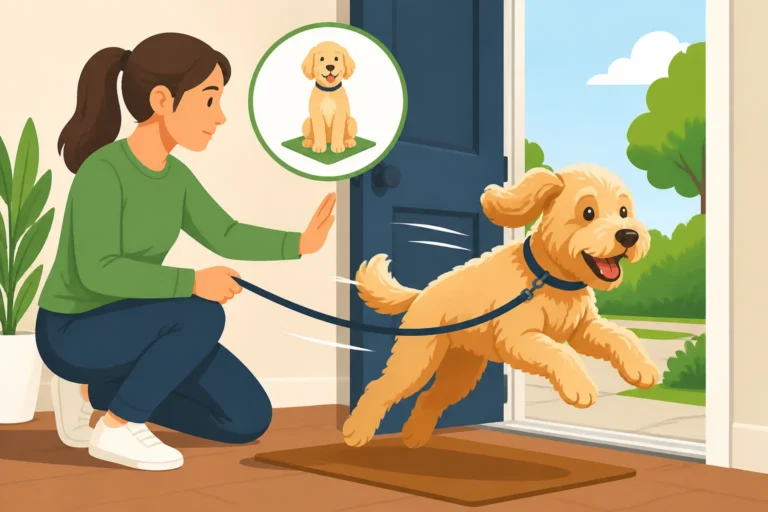
Never leave your Goldendoodle and cat unsupervised until you are absolutely certain they can coexist peacefully. This can take weeks, months, or even longer, depending on the personalities involved. During supervised interactions, keep your Goldendoodle on a leash, even indoors, especially in the early stages. This allows you to immediately interrupt any unwanted chasing behavior and reinforce calm interactions.
The key is gradual integration. Start with short, positive sessions and slowly increase the duration as both animals become more comfortable. Praise and reward your Goldendoodle for ignoring the cat or for calm, respectful curiosity. Reward your cat with treats in the Goldendoodle’s presence so they associate the dog with positive experiences. If either animal shows signs of stress (hissing, growling, hiding, excessive panting, lip licking), end the session and try again later. This process requires patience, but it’s crucial for building a solid foundation of trust and respect between your pets. Remember that What a Goldendoodle Puppy Must Meet Before Sixteen Weeks includes exposure to all sorts of things, and a cat should ideally be one of them, but careful introduction is always needed.
When to Seek Professional Help
Even with the best intentions and consistent effort, sometimes the dynamic between a Goldendoodle and a cat can be challenging. If you observe any signs of true prey drive, aggression (from either animal), extreme fear, or if you're simply not making progress towards peaceful coexistence, it's time to call in a professional. A certified professional dog trainer or a veterinary behaviorist can assess the specific situation in your home, help identify triggers, and develop a customized training plan.
They can provide expert guidance on behavior modification techniques, management strategies, and, if necessary, recommend medication to help manage anxiety or reactivity in either pet. Don't feel like a failure if you need to bring in help; it’s a sign that you’re committed to the well-being of all your furry family members. They have experience with complex multi-species households and can offer insights you might not have considered. Finding a trainer who works with Goldendoodles specifically and understands their unique blend of traits can be incredibly beneficial. Finding a Trainer Who Works With Goldendoodles is a good resource to get started.
Ultimately, while a Goldendoodle’s retrieve drive can indeed spark an interest in chasing cats, it doesn't automatically mean disaster. With understanding, consistent training, and thoughtful management, many Goldendoodles and cats can learn to live together, often forming surprisingly strong bonds, or at least a respectful, peaceful coexistence. It takes effort, but the harmony it brings to your home is absolutely worth it.
Disclaimer
This article is for general informational purposes only and does not constitute professional advice. Laws, prices and regulations vary by location and change over time. Consult a qualified professional for guidance on your specific situation.