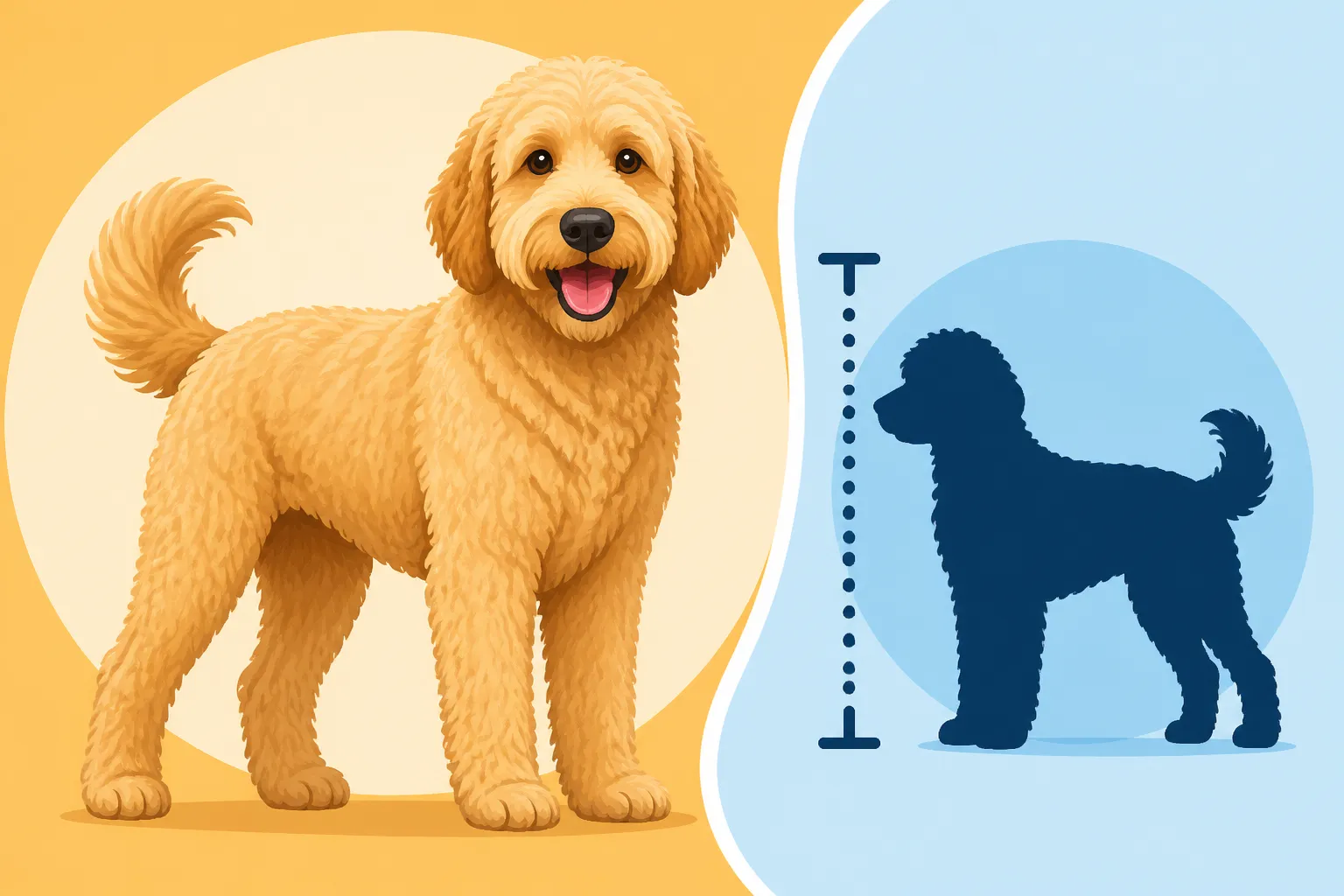
How Tall a Standard Goldendoodle Stands
One of the most exciting, yet sometimes confusing, parts of bringing home a Goldendoodle puppy is trying to picture just how big they'll get. You might be dreaming of a medium-sized companion, only to find yourself with a gentle giant, or perhaps you're hoping for a robust, standard-sized dog, but the numbers online just don't seem to match up. This guide aims to demystify the height of a Standard Goldendoodle, explaining what you can realistically expect and why there's so much variation.
Defining "Standard" in Goldendoodle Sizes
When we talk about Goldendoodle sizes, it’s important to remember that we’re not dealing with the strictly defined parameters of a recognized purebred dog. Goldendoodles are a hybrid, a wonderful cross between a Golden Retriever and a Poodle, and because of this, their size categories are more fluid and often based on the Poodle parent's size. "Standard" is the largest category, but even within that, there's a spectrum, which can be a bit frustrating if you're looking for a precise measurement.
The Poodle's Influence on Goldendoodle Size Categories
The Poodle parent plays the most significant role in determining the ultimate size category of a Goldendoodle. Golden Retrievers are fairly consistent in their size range, usually falling into what would be considered a "Standard" size for a Goldendoodle. However, Poodles come in Standard, Miniature, and Toy varieties, and it's this Poodle contribution that truly dictates whether you get a Toy, Mini, Medium, or Standard Goldendoodle. For a "Standard" Goldendoodle, the Poodle parent will almost invariably be a Standard Poodle, known for its impressive stature.
Without the regulating body of a breed club, terms like "Standard Goldendoodle" are more of a guideline from breeders rather than a hard-and-fast rule. A good breeder will be able to tell you the size of both parent dogs, which is your best indicator. You'll often see Goldendoodle size charts, but remember these are averages. It’s not uncommon for individual dogs to fall slightly outside these ranges. If you're really interested in the details, you might want to read more about The Four Goldendoodle Sizes and How They Are Set.
Why "Standard" Isn't as Standard as You Think
The very nature of a crossbreed means that while parents provide a good indication, there's always a bit of genetic lottery involved. Even if both parents are robust Standard Poodles and Golden Retrievers, their offspring can sometimes surprise you. Think of it like human siblings; they share the same parents, but one might be significantly taller or shorter than the other. Genes don't always combine in perfectly predictable ways.
This variability is especially true in early generations like F1 (first generation, 50% Golden, 50% Poodle) where the genetic blend is more of a toss-up. In later generations, such as F1b (75% Poodle, 25% Golden Retriever) or Multigen, breeders often aim for more consistency by carefully selecting breeding pairs with established size patterns. However, even then, nature loves a good surprise! This inherent unpredictability is part of the charm (and challenge) of Goldendoodles.
Average Height Ranges for Standard Goldendoodles
So, let's get down to the numbers you've been waiting for. When we talk about how tall a Standard Goldendoodle stands, we're generally referring to their height at the shoulder, also known as the withers. This is the highest point of the shoulder blades, not the top of their head.
Typical Height at the Withers
A fully grown Standard Goldendoodle typically stands between 21 to 24 inches tall at the withers. Some might be a little shorter, pushing closer to 20 inches, while others can stretch up to 25 or even 26 inches. This range is usually achieved by about 12 to 18 months of age, though some large males might continue to fill out in chest and bone density for a bit longer.
It’s a good idea to consider both the male and female ranges when you're looking. Males tend to be on the taller end of the spectrum, generally falling into the 22-24 inch range, while females might be closer to 21-23 inches. However, these are just tendencies, and you can absolutely have a taller female or a slightly shorter male. If you're curious about how this compares to their weight, you might find more details in The Standard Goldendoodle at Fifty to Ninety Pounds.
Factors Influencing a Standard Goldendoodle's Final Height
Several factors contribute to where within that 21-24 inch range your Goldendoodle might land. It's not just about what genes they have, but how those genes express themselves.
- Parental Size: This is, hands down, the biggest predictor. If both the Golden Retriever and Standard Poodle parents are on the larger side of their respective breeds, it's highly probable their Goldendoodle offspring will also be taller. Conversely, if the parents are at the lower end of their breed's standard size, their puppies might also lean towards the shorter end of the Goldendoodle "standard" range. A reputable breeder will always provide information on the size of the sire and dam.
- Genetics Beyond Parents: While immediate parentage is key, the genetic history stretching back several generations can also play a role. Sometimes, a recessive gene for a larger or smaller size might pop up unexpectedly, even if the immediate parents are perfectly average. This is part of the "hybrid vigor" mystery that makes Goldendoodles so unique, yet sometimes unpredictable.
- Nutrition and Health During Growth: Proper nutrition during puppyhood is crucial for healthy development. A well-balanced diet, especially formulated for large breed puppies (to prevent too rapid growth that can harm joints), ensures they reach their genetic potential. Conversely, poor nutrition or chronic illness during their growth phase can stunt their development and prevent them from reaching their full mature height. Brands available on Chewy, for example, offer a wide range of large breed puppy foods designed to support optimal bone and joint development without excessive weight gain.
- Sex of the Dog: As mentioned, males generally tend to be taller and heavier than females within the same litter, although individual variation can sometimes blur these lines.
Here's a quick look at how Standard Goldendoodles fit into the overall size picture:
| Goldendoodle Size Category | Height at Withers (Approx.) | Weight (Approx.) | Poodle Parent (Typical) |
|---|---|---|---|
| Toy | Under 15 inches | 10-25 pounds | Toy Poodle |
| Mini | 15-18 inches | 25-35 pounds | Miniature Poodle |
| Medium | 18-21 inches | 35-50 pounds | Miniature or Moyen Poodle |
| Standard | 21-24+ inches | 50-90+ pounds | Standard Poodle |
Remember, these are average ranges. You might meet a "Medium" that's on the taller side of the range, effectively being almost as tall as a shorter "Standard" Goldendoodle. This overlap is why getting clear information from your breeder about the parent dogs is so vital.
Why Height Varies Even Among Standard Goldendoodles
It can be baffling to see two "Standard" Goldendoodles that look quite different in stature. You might have visited a breeder who showed you parents that seemed tall, then your puppy grows up to be a bit shorter, or vice versa. This isn't usually a sign of poor breeding, but rather a reflection of the intricate genetic dance happening beneath the surface, a dance unique to hybrid dogs.
Genetic Blending and Unpredictable Outcomes
The very concept of a Goldendoodle relies on combining two distinct purebred lines: the Golden Retriever and the Poodle. Each breed carries a vast array of genes, and when they mix, you get a new set of possibilities. This is where the term "hybrid vigor" comes in, suggesting a general robustness, but it also means a wider range of physical traits compared to purebreds. For height, this means some Goldendoodles inherit more of the "tall" genes from both sides, while others might get a more moderate mix. This is why even within one litter, you can see noticeable differences. For instance, you might notice one puppy is stockier and taller, while another is slightly leaner and a bit shorter, even if they're both destined to be "Standard."
Sometimes, people expect the F1 generation (50% Golden, 50% Poodle) to be the most "balanced" in terms of inheriting traits, but often, it's the most unpredictable because of how genes randomly combine. Later generations, where breeders might breed a Goldendoodle back to a Poodle (F1b) or breed two Goldendoodles together (F2, Multigen), are often aimed at achieving more consistent traits, including size and coat type. However, even with the best intentions and careful breeding, genetic variability is always a factor. If you've ever wondered about why one puppy in a litter can be so different from another, you might find Why Two Goldendoodle Litter Mates Finish Different Sizes an interesting read.
The Role of Growth Plates and Development
A Goldendoodle puppy isn't just a mini version of its adult self. They go through significant growth spurts and developmental stages. Their bones lengthen from areas called growth plates, which are made of cartilage and gradually ossify (turn into bone) as the puppy matures. These growth plates close at different ages depending on the size of the dog, generally later for larger breeds. For a Standard Goldendoodle, growth plates might not fully close until 12 to 18 months of age, which means they are still growing and developing during this period.
During this crucial growth phase, factors like exercise, diet, and even small injuries can impact how the growth plates develop, potentially influencing their final height. Over-exercising a young Standard Goldendoodle, for instance, can put undue stress on their developing joints and growth plates, which can have long-term health consequences, though it's less likely to dramatically alter their final height. However, ensuring proper nutrition and avoiding excessive impact during these formative months is critical for overall joint health and robust development. For more on this, check out Goldendoodle Growth Plates by Size Category.
Measuring Your Goldendoodle's Height Accurately
Knowing your Goldendoodle's exact height can be useful for various reasons, whether it's for fitting them in a crate, understanding their growth trajectory, or simply satisfying your curiosity. But how do you get an accurate measurement when you're dealing with a wiggly, furry friend?
Simple Steps to Measure Your Dog at Home
Measuring your Goldendoodle’s height, especially if they are a Standard size, can be a two-person job. You'll want them to stand as still and squarely as possible.
- Preparation is Key: Find a flat, level surface, ideally against a wall. Have some treats ready to keep your Goldendoodle's attention. A calm environment helps immensely.
- Get Your Tools: You'll need a measuring tape and a straight edge, like a carpenter's level or a long ruler. Some people even use a piece of flat cardboard or a book.
- Position Your Goldendoodle: Gently guide your dog to stand with all four paws directly under them, not stretched out or tucked in. Their head should be in a natural, upright position, not lowered or craned upwards. This is where a second person can really help, holding a treat at nose level to keep them still.
- Locate the Withers: Feel for the bony protrusion between your dog's shoulder blades. This is the highest point of the shoulder, not the top of their head.
- Measure: Place your straight edge across your dog's withers, ensuring it's perfectly level. Then, measure from the floor straight up to the bottom of the straight edge. Repeat a few times to ensure consistency.
Don't be surprised if your first few attempts yield slightly different results. Patience and plenty of praise (and treats!) will make the process easier for both you and your Goldendoodle.
When to Measure for Best Accuracy
While you can measure your Goldendoodle at any age, the most accurate representation of their "adult" height should be taken once they are fully grown. As discussed earlier, this typically means:
- After 12 months: Many Standard Goldendoodles will have reached most of their height by this point.
- Ideally, 18 months: By 18 months, their growth plates have almost certainly closed, and their skeletal structure is fully mature. This measurement will be the most reliable for their adult height.
Measuring regularly during puppyhood can be fun and helps you track their growth, but understand that these are just snapshots of a rapidly developing body. If you're using a weight chart from Chewy or similar resources, remember that height and weight correlate, but not perfectly. A lean Goldendoodle might be tall but not heavy, and vice-versa. Consistent measurements over time will give you the best picture of their individual growth curve.
Understanding the typical height range for a Standard Goldendoodle helps you prepare for the practicalities of owning a larger dog, from ensuring they have enough space to sleep comfortably (think larger dog beds and crates from retailers like Chewy) to considering the appropriate leash and harness size. It’s all part of the wonderful journey of welcoming a Goldendoodle into your life!
Disclaimer
This article is for general informational purposes only and does not constitute professional advice. Laws, prices and regulations vary by location and change over time. Consult a qualified professional for guidance on your specific situation.