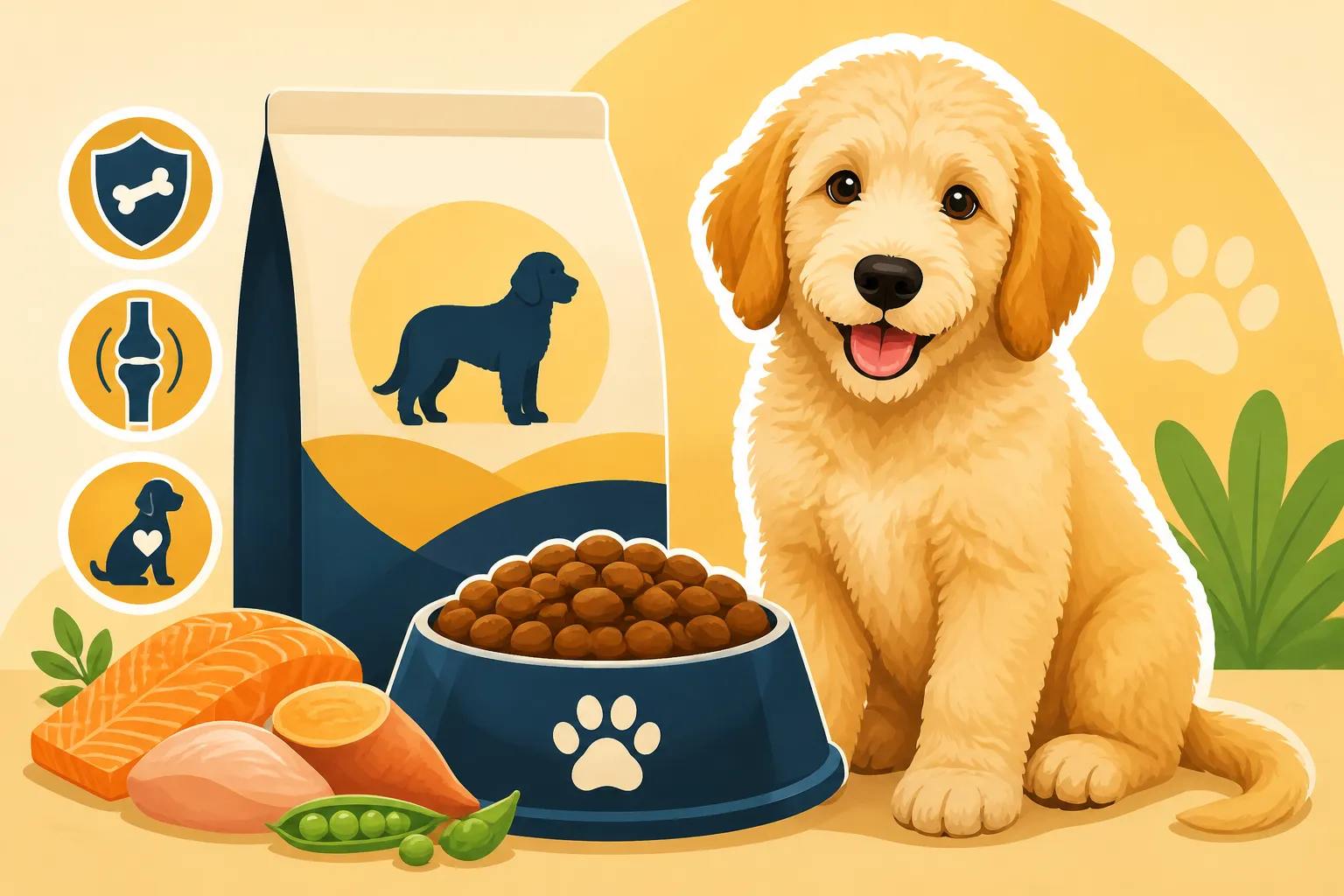
Large Breed Puppy Food for a Standard Goldendoodle
Bringing home a standard Goldendoodle puppy is an exciting time, but it also comes with a unique set of responsibilities, especially when it comes to their diet. Many new puppy parents don't realize that feeding a large breed puppy like a standard Goldendoodle requires a specific approach that differs significantly from feeding a smaller dog. This guide will walk you through why "large breed puppy food" isn't just a marketing gimmick, but a crucial component for ensuring your fluffy friend grows into a healthy adult, helping you navigate the choices and give your Goldendoodle the best start possible.
Why "Large Breed" Matters for Your Goldendoodle Puppy
It might seem counterintuitive to restrict growth in a puppy, but for large breeds, too much of a good thing can actually lead to serious health problems down the road. Standard Goldendoodles can reach 50 to 90 pounds, sometimes even more, and their bones, joints, and ligaments simply aren't designed to handle accelerated growth.
The Pitfalls of Regular Puppy Food for Big Dogs
Standard puppy food, while excellent for smaller breeds, is often formulated with higher calorie counts and different mineral ratios designed to support rapid growth across the board. For a tiny Chihuahua puppy, this rapid growth is perfectly natural and desirable. For a Goldendoodle puppy, however, it's a recipe for trouble. If your standard Goldendoodle puppy grows too quickly, their bones and joints can be subjected to undue stress. Imagine building a house with a frame that's too weak for its eventual size – things are going to creak, groan, and eventually, fail.
This accelerated growth can exacerbate predispositions to conditions like hip and elbow dysplasia, which are already concerns for breeds like the Golden Retriever and Poodle, the Goldendoodle's parent breeds. While you can't prevent genetic conditions purely through diet, you can absolutely influence their severity and onset by managing growth speed. A puppy that grows too fast puts excess strain on developing joints, potentially leading to cartilage damage, poor joint formation, and painful arthritis much earlier in life. It's a critical, yet often overlooked, aspect of responsible large breed puppy care.
Understanding Controlled Growth in Large Breed Formulas
This is where large breed puppy food steps in as a true hero. These specialized formulas are specifically engineered to promote a slower, more controlled growth rate, allowing your Goldendoodle's skeletal system to develop properly and robustly. The key differences lie in their precise nutritional profiles, particularly the balance of calcium, phosphorus, and overall calorie density.
Large breed puppy foods typically have slightly lower calorie content compared to regular puppy foods, preventing your pup from packing on too much weight too quickly. More importantly, they feature carefully controlled calcium and phosphorus levels. An imbalance, especially too much calcium, can interfere with bone remodeling and lead to conditions like osteochondrosis dissecans (OCD), a painful joint disease. Think of it like a carefully calibrated exercise program: it’s not about how fast you get strong, but how soundly you build that strength to last a lifetime. Manufacturers like Purina Pro Plan, Royal Canin, and Eukanuba have dedicated lines specifically formulated for large breed puppies, understanding these intricate needs. This careful balance helps ensure that your Goldendoodle's bones and cartilage develop at a healthy pace, reducing the risk of orthopedic issues.
What to Look For in a Quality Large Breed Goldendoodle Puppy Food
Navigating the pet food aisle can feel like deciphering a secret code, with all sorts of claims and buzzwords. When it comes to your standard Goldendoodle puppy, selecting the right large breed formula means understanding the essentials and sifting through the noise.
Key Nutritional Components
For a growing standard Goldendoodle, the right balance of macronutrients and micronutrients is paramount.
- Protein: Look for a moderate to high protein content, ideally from high-quality animal sources. Protein is fundamental for muscle development, tissue repair, and overall growth. Aim for formulas with 26-30% crude protein, primarily from named meat sources like chicken, lamb, or salmon.
- Fat: Fat provides essential energy and helps with the absorption of fat-soluble vitamins. A moderate fat content, typically 12-18%, is suitable for large breed puppies, providing necessary calories without encouraging excessive weight gain. Look for healthy fats like chicken fat or salmon oil, which also contribute to a healthy coat.
- Calcium and Phosphorus: As mentioned, these are critical. The ideal ratio is typically between 1.1:1 and 1.5:1 (calcium to phosphorus), with calcium levels generally not exceeding 1.5% on a dry matter basis. This precise balance is what helps prevent skeletal problems.
- DHA: Docosahexaenoic acid, an omega-3 fatty acid, is vital for brain and vision development. Many quality puppy foods include DHA, often sourced from fish oil. It's an excellent addition for a smart Goldendoodle puppy who will be going through a lot of learning!
Here's a quick comparison of general nutritional targets for large breed puppy food versus a standard puppy food:
| Nutrient Category | Large Breed Puppy Food (Approximate Dry Matter) | Standard Puppy Food (Approximate Dry Matter) | Why it Matters for Goldendoodles |
|---|---|---|---|
| Protein | 26-30% | 28-32%+ | Supports muscle development without encouraging excessively fast growth. |
| Fat | 12-18% | 15-22%+ | Provides energy efficiently, prevents rapid weight gain. |
| Calcium | 1.0-1.5% | 1.2-2.0%+ | Crucial for controlled bone growth and preventing orthopedic issues. |
| Phosphorus | 0.8-1.2% | 1.0-1.6%+ | Works with calcium for skeletal development; careful balance is key. |
| Calcium:Phosphorus Ratio | 1.1:1 – 1.5:1 | 1.1:1 – 1.8:1 | Optimal ratio minimizes skeletal abnormalities during rapid growth. |
| DHA | Present | Present | Essential for brain and eye development in all puppies. |
| Calorie Density | Lower per cup | Higher per cup | Prevents excessive weight gain, reducing stress on developing joints. |
Ingredients to Prioritize and Avoid
Reading a pet food label can feel like a chore, but it's where you find the real story of what you're feeding your pup.
Prioritize:
- Named Meat Sources First: Look for real meat like "chicken," "lamb," "salmon," or "beef" as the first ingredient. Meat meal (e.g., "chicken meal") is also excellent, as it's a concentrated form of protein after water has been removed.
- Whole Grains/Complex Carbohydrates: Ingredients like brown rice, oats, barley, or sweet potatoes provide sustained energy and fiber. Despite some trends, grains are not inherently bad for dogs unless they have a diagnosed allergy.
- Fruits and Vegetables: These offer natural vitamins, minerals, and antioxidants. Think blueberries, spinach, carrots, and apples.
- Sources of Omega Fatty Acids: Fish oil, flaxseed, and chicken fat contribute to healthy skin, a shiny coat, and cognitive development. Your Goldendoodle's luscious coat will thank you! Omega Oils for a Goldendoodle Coat can also be supported by these ingredients.
Avoid (or be wary of):
- Generic "Meat Meal" or "By-Product Meal": While not always harmful, a specific named source is generally preferred for traceability and quality.
- Excessive Fillers: Ingredients like corn gluten meal or large amounts of wheat can sometimes be used to bulk up food without adding significant nutritional value.
- Artificial Colors, Flavors, and Preservatives: These are unnecessary and can sometimes cause sensitivities. Natural preservatives like mixed tocopherols (Vitamin E) are preferable.
- Unspecified Animal Fat: Again, specificity is key. "Animal fat" is less desirable than "chicken fat" or "beef fat."
Remember, the goal is to provide wholesome, digestible nutrition that supports your Goldendoodle's unique growth needs without overfeeding or causing unnecessary strain.
How to Choose and Transition Your Goldendoodle Puppy's Food
Making the switch to a new food, or even just picking the first one, for your Goldendoodle puppy can feel a bit daunting. There's so much information out there! Let's simplify it and ensure a smooth transition for your furry family member.
Decoding Labels and Brands
When you're standing in the pet store aisle, or browsing online, the sheer volume of options can be overwhelming. Look past the flashy packaging and focus on the nutritional adequacy statement, usually found in small print on the bag. It should clearly state that the food is formulated to meet the nutritional levels established by the AAFCO (Association of American Feed Control Officials) for "growth of large size dogs." This is your primary indicator that the food is appropriately balanced for your Goldendoodle.
Next, revisit the ingredient list and guaranteed analysis we just discussed. Compare protein, fat, calcium, and phosphorus percentages. Don't hesitate to check out reputable pet food review sites or consult your veterinarian for their recommendations. Popular brands that often have excellent large breed puppy formulas include Royal Canin Giant Puppy, Purina Pro Plan Large Breed Puppy, Eukanuba Large Breed Puppy, and Hill's Science Diet Large Breed Puppy. You can often find a wide selection of these on sites like Chewy, which can be super convenient for home delivery. Some newer, fresh-food options like Ollie might also offer recipes suitable for large breed puppies, though you'll need to check their specific formulations and portioning guidelines carefully. For comparing prices or reading customer reviews, Amazon can also be a helpful resource.
The Gentle Art of Food Transition
Once you've chosen the perfect large breed puppy food, resist the urge to switch cold turkey! Your Goldendoodle puppy's digestive system is delicate, and an abrupt change can lead to an upset stomach, vomiting, or diarrhea – not fun for anyone, especially when you're still navigating Goldendoodle Puppy Potty Training by Week. A gradual transition over 7-10 days is key.
Here's a simple step-by-step guide:
- Days 1-2: Mix 25% new food with 75% old food. Your pup might pick around the new bits, but that's okay. They're getting used to the smell and taste.
- Days 3-4: Increase to 50% new food and 50% old food. Observe your puppy's stools. Are they firm and healthy? If not, slow down the transition.
- Days 5-6: Shift to 75% new food and 25% old food. At this point, most of the meal is the new food, and your Goldendoodle should be tolerating it well.
- Days 7-10: By now, your puppy should be eating 100% new food. Continue to monitor for any digestive upset. If everything is smooth, congratulations!
If at any point your Goldendoodle experiences significant diarrhea or vomiting, pause the transition, revert to the previous successful ratio, and consult your vet. Some puppies are just more sensitive than others. Remember that stress, like adjusting to a new home, can also affect their digestion, so patience is key.
Monitoring Your Goldendoodle's Growth and Adjusting Their Diet
Feeding your Goldendoodle puppy isn't a "set it and forget it" process. As they grow, their needs change, and it's essential to continually monitor their body condition to ensure they're thriving without gaining too much weight too quickly. A Goldendoodle Puppy Growth Chart by Size can give you a general idea, but every puppy is an individual.
The Importance of Body Condition Scoring
Because Goldendoodles have such lush, often curly coats, it can be really tough to tell what's going on underneath all that fluff! You can't just look at them and know if they're a healthy weight. This is where body condition scoring (BCS) becomes your best friend. Instead of relying solely on the scale, you'll use your hands to assess their physical condition.
A healthy Goldendoodle puppy should have ribs that are easily felt with light pressure, but not visibly sticking out. When you look down from above, you should see a discernible waistline, and when viewed from the side, their tummy should tuck up slightly, not hang low. If you're struggling to feel those ribs without pressing hard, or if you can't see a waist, your pup might be carrying too much weight, putting undue strain on their developing joints. Conversely, if ribs are sharply visible, or their hips and spine protrude, they may be underweight. Always consult your vet if you have concerns about your puppy's weight or growth rate. Regularly check Goldendoodle Body Condition Under a Thick Coat to ensure their health.
When to Switch to Adult Food
Knowing when to transition your standard Goldendoodle from large breed puppy food to large breed adult food is another critical decision. The general rule of thumb for large breeds is to make the switch between 12 and 18 months of age. This period coincides with the closure of their growth plates, meaning their rapid skeletal growth phase is largely complete.
Transitioning too early can deprive them of essential nutrients needed for final development, while transitioning too late can lead to them getting too many calories, contributing to Goldendoodle Weight Gain and the Strain on Joints. Your veterinarian is the best resource to advise on the precise timing for your individual Goldendoodle, taking into account their specific growth curve and overall health. They can assess your puppy's growth plates during routine check-ups and give you a tailored recommendation. When you do make the switch, use the same gradual transition method over 7-10 days to avoid digestive upset. Remember that adult large breed formulas also have controlled calcium and calorie levels, continuing to support their long-term joint health. Keep an eye on Daily Calories for a Standard Goldendoodle as they transition, as their caloric needs will shift. For example, you might be Dropping a Goldendoodle Puppy to Two Meals a day around this time if you haven't already.
Disclaimer
This article is for general informational purposes only and does not constitute professional advice. Laws, prices and regulations vary by location and change over time. Consult a qualified professional for guidance on your specific situation.