Behind the Ears and the First Goldendoodle Mats
One of the most common and disheartening discoveries a Goldendoodle owner makes is that first, stubborn mat. And almost invariably, it’s not on their back, not on their belly, but tucked right behind those adorable, floppy ears. This isn't just a minor annoyance; it’s a sign that you need to adjust your grooming routine, and this guide is here to walk you through exactly why those ear mats form and how to keep them from taking hold.
Why Behind the Ears Is a Mat Magnet
It's a universal truth among Goldendoodle owners: if you're going to find a mat, chances are it's lurking behind an ear. There's a perfect storm of factors that makes this area such a prime spot for tangles to form and tighten into dense, felt-like pads. Understanding these elements is the first step in winning the battle against mats.
The Anatomy of a Goldendoodle Ear Flap
Think about your Goldendoodle’s ears. They're often thick, furry, and hang close to the side of their head. This creates a warm, slightly humid microclimate underneath the ear flap itself, which can contribute to friction. But more importantly, the hair behind the ear, where the ear attaches to the head, is often much finer and softer than the hair on the rest of their body. It’s almost like the delicate baby hairs around a human's hairline. This delicate texture makes it incredibly prone to tangling and knotting together at the slightest provocation. It’s a stark contrast to the slightly coarser, more resilient hair you might find on their back or legs, which can handle a bit more brushing neglect before forming a full-blown mat. This difference in hair type means it requires a gentler, more frequent approach.
Friction, Moisture, and Fine Hair
Now combine that fine, soft hair with constant friction. Every time your Goldendoodle shakes their head, scratches an itch with a paw, or rolls around on the carpet, those ear flaps are moving, rubbing against the hair behind them. This constant movement is like a tiny, repetitive felting machine, pushing individual hairs together until they intertwine. Add to this any moisture from a drink of water, playing in the rain, or even just a bit of slobber, and you’ve got a recipe for disaster. Moisture makes hair more pliable and thus more likely to mat. If a damp patch of fine hair is then subjected to friction, it can lock together incredibly quickly. Imagine trying to comb wet, tangled hair – it’s much harder than dry hair. The same principle applies here, but on a microscopic level, creating those insidious knots.
The Collar Connection
While not directly on the ear, the area just below and behind the ears is also heavily impacted by collars and harnesses. If your Goldendoodle wears a collar constantly, especially one that fits a little loosely or is made of a rough material, it can create a similar friction zone. As the collar shifts, it rubs against the neck and the hair around the base of the ears, which, as we’ve discussed, is already prime matting territory. This is particularly true if the collar gets wet during a walk or if your dog plays hard and gets sweaty. Even ID tags jingling can contribute to localized matting. It's not uncommon to find a mat forming right where the collar sits snugly behind the ear, and these can be especially painful because they pull on the delicate skin when they tighten. Consider if your dog needs to wear their collar 24/7 or if a harness might distribute pressure more effectively for walks, giving the neck area a break. For more tips on this, check out Armpit and Collar Mats on a Goldendoodle.
Catching Those Sneaky Mats Early
The secret to preventing major matting disasters isn't some magic potion; it's consistency and knowing what to look for. Mats, especially behind the ears, start small and innocent. They become problematic when they’re ignored and allowed to grow.
The Daily Ear Check Routine
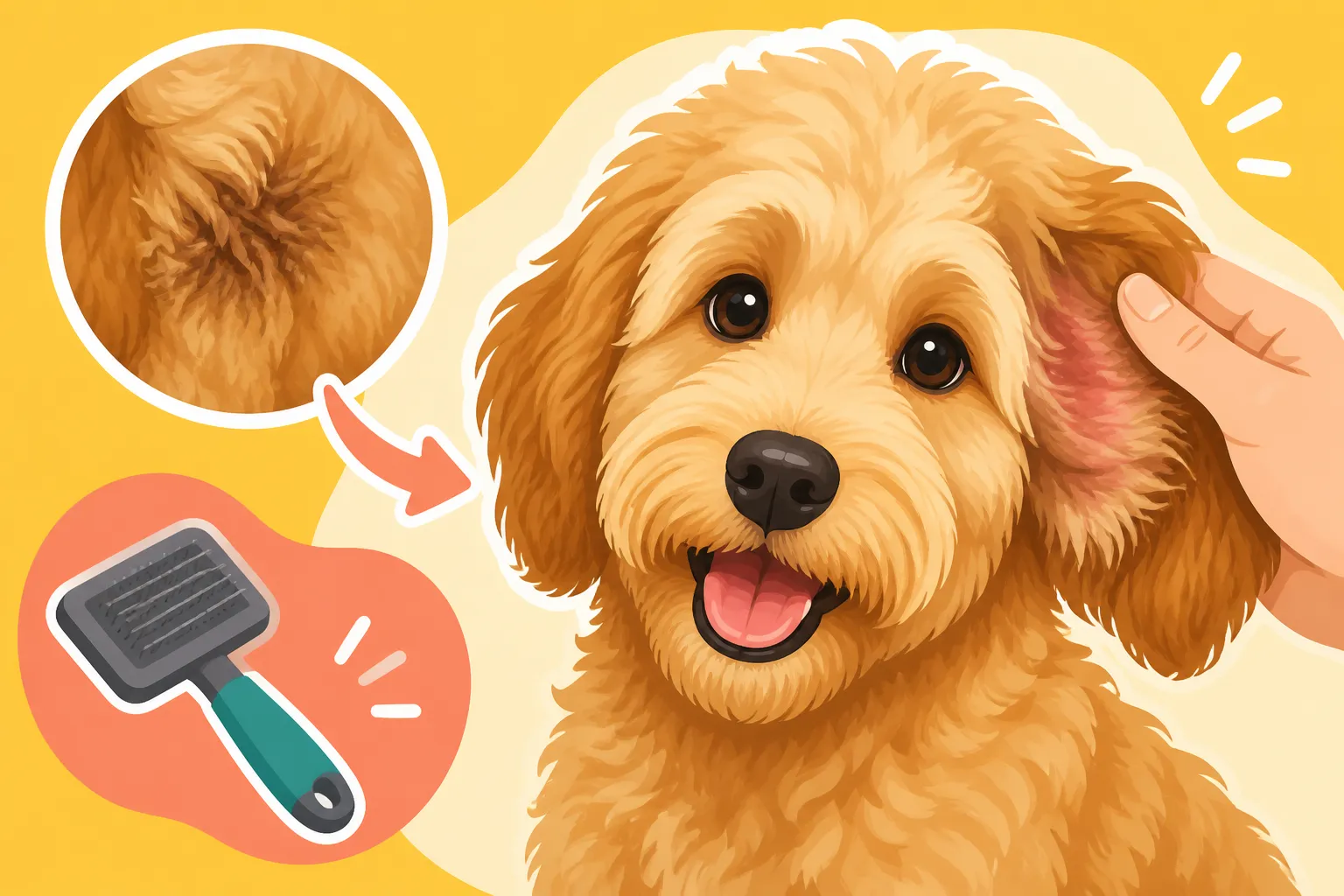
Making a quick ear check part of your daily cuddle or grooming ritual is absolutely crucial. This isn't just about looking; it's about feeling. While you’re petting your Goldendoodle, gently lift their ear flaps and run your fingers through the hair behind and beneath them, all the way down to the skin. Pay close attention to the area where the ear joins the head, and along the jawline where the ear often rests. This tactile inspection is far more effective than just visual scanning, especially on a curly or wavy Goldendoodle coat where small mats can hide incredibly well. It only takes a minute, but it can save you hours of de-matting work (or a costly trip to the groomer for a shave-down). This habit is key to Brushing a Goldendoodle Often Enough to Stop Matting.
What a Budding Mat Feels Like
So, what exactly are you feeling for? You’re not necessarily looking for a solid, hard lump right away. A budding mat often starts as a small tangle or knot, feeling like a little pea-sized lump or a slightly denser patch of hair compared to the surrounding fluff. It might feel a bit coarser or thicker, and your fingers might snag slightly as you run them through. As it progresses, it'll start to feel more like a small wad of cotton, and eventually, it will harden into a dense, felted mass that pulls at the skin. These early-stage tangles are your window of opportunity. They can often be gently teased apart with your fingers or a comb, preventing them from tightening and becoming painful. If you wait until you see a large mat, it's often too late for comfortable de-matting.
| Mat Stage | What it Feels Like | What to Do |
|---|---|---|
| Budding Tangle | Small, soft snag or slight denseness in the hair | Gently tease apart with fingers or a wide-toothed comb |
| Small Knot | Pea-sized, slightly firm, still movable | Use a detangler and comb carefully, section by section |
| Developing Mat | Cotton-wad texture, harder, pulling at skin | Apply detangler generously, work from outside in, or consult groomer |
| Solid Mat | Hard, felted lump, painful to touch, pulls skin | Professional help usually needed; often requires shaving |
Your Toolkit for Tackling Ear Mats
When you do find a mat, even a small one, having the right tools on hand makes all the difference. Don't just grab any old brush; Goldendoodle coats require specific implements to manage their unique texture without causing pain or damage.
Essential Brushes and Combs
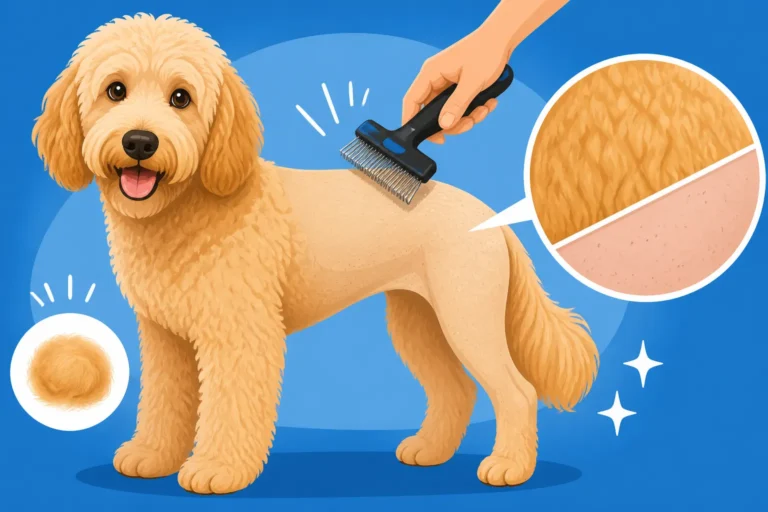
For Goldendoodles, a high-quality slicker brush and a sturdy metal comb are non-negotiable. The slicker brush is excellent for general coat maintenance and for gently working through smaller tangles on the surface. However, for those tricky areas behind the ears, the metal comb is your best friend. Look for a comb with both wide and fine teeth. You’ll use the wider teeth first to separate larger sections of hair, and then the finer teeth to work through smaller tangles, ensuring you get down to the skin. Remember, a brush only glides over the surface; a comb is what truly ensures you’re mat-free down to the roots. The Slicker Brush and Comb a Goldendoodle Needs will give you more details on selecting the right ones. When working on mats, always hold the hair between the mat and the skin to prevent pulling on your dog's delicate skin. You can find excellent options for both on platforms like Chewy or Amazon.
Detangling Sprays and Conditioners
Never, ever try to yank a dry mat out of your Goldendoodle’s coat. It’s painful for them, and it often leads to skin irritation or worse. This is where detangling sprays and leave-in conditioners become invaluable. These products lubricate the hair strands, making it easier for them to slide past each other and for knots to loosen. Spray the mat liberally, ensuring it’s saturated but not dripping wet. Let it sit for a few minutes to really soak in. Then, using your metal comb, start at the very edge of the mat, working tiny sections of hair from the outside in, gently teasing the strands apart. It’s a slow process, requiring patience, but it's much kinder to your dog. For severe mats, a quality detangler like those found on Amazon can make a significant difference. You can learn more about specific products in Detangler Sprays That Help a Goldendoodle.
When Clippers Are the Only Option
Sometimes, despite your best efforts, a mat behind the ear can become too tight, too close to the skin, or too painful to remove with a comb. This is when professional help, or very careful use of clippers, becomes necessary. If a mat is "pancaked" flat against the skin and feels like a solid block, trying to comb it out will only cause extreme pain and potentially tear the skin. In such cases, the kindest and safest approach is to carefully shave it out. However, using clippers around delicate ear skin is risky if you're not experienced. It's very easy to nick the skin, especially when the mat is pulling it taut. If you're unsure, please seek out a professional groomer. They have specialized blades and techniques to safely remove tight mats without injuring your Goldendoodle. Sometimes, even if you can handle other grooming at home, those specific mats need a professional touch.
Preventative Measures and Grooming Routines
The best offense is a good defense when it comes to Goldendoodle mats. Establishing a consistent and thorough grooming routine will save you headaches, heartache, and money in the long run.
Line Brushing the Goldendoodle Ear Area
"Line brushing" is the golden standard for preventing mats, especially in high-friction areas like behind the ears. It's not enough to just brush over the top of the coat; you need to get down to the skin. To line brush:
- Section the Hair: Gently part the hair behind the ear, exposing a "line" of skin.
- Brush from the Skin Out: Using your slicker brush, brush only the small section of hair below the part, brushing away from the skin.
- Work Your Way Up: Move the part slightly higher, exposing another line of skin, and brush that section. Continue this process until you've brushed every hair from root to tip.
- Follow with a Comb: After brushing each section, run your metal comb through it. If the comb slides easily from skin to tip, you’re clear. If it snags, go back with your slicker brush.
This methodical approach ensures you're actually removing any tangles that are forming near the skin, where mats truly begin. This technique is vital, and you can find a more detailed explanation in Line Brushing a Goldendoodle Section by Section. Aim to do this behind the ears daily, or at least every other day. Remember, Why a Goldendoodle Mats in a Week Without Brushing is a harsh reality for many owners.
The Role of Professional Grooming
Even with diligent home grooming, professional grooming appointments are an absolute necessity for most Goldendoodles. A good professional groomer will not only give your Goldendoodle a stylish haircut but will also perform a thorough "blow-out" and line brush that can get through any stubborn spots you might have missed. They have powerful dryers that separate the hair strands, making it easier to comb through, and often catch early mats that you might not even realize were forming. Think of it as a deep clean for your dog's coat. Scheduling regular grooms, typically every six to eight weeks, is crucial for maintaining a healthy, mat-free coat. For more on this schedule, check out Booking a Goldendoodle Groom Every Six to Eight Weeks. These regular visits, while an investment, can actually save you money by preventing costly de-matting fees or even veterinary bills from skin issues under severe mats. If you're wondering about the overall cost, Goldendoodle Grooming Every Six Weeks Adds Up offers a good breakdown.
Keeping Ears Dry and Clean
Beyond brushing, consider the environment around your Goldendoodle's ears. As mentioned, moisture is a matting accelerant. After baths, ensure the hair behind and under the ears is thoroughly dried, ideally with a forced air dryer designed for pets, which helps separate the hair and push out moisture. If your Goldendoodle loves to swim, or if you've been out in the rain, make sure to gently towel dry the area and then brush it out. Cleaning a Goldendoodle Ear Every Week can help you maintain hygiene to prevent infections, which often go hand-in-hand with neglected ear hair. Regular trimming of the hair around the ear canal and on the underside of the ear flap can also improve air circulation and reduce the chance of matting, especially when your Goldendoodle is interacting with toys or other dogs. You’ll want to be comfortable with Handling a Goldendoodle's Feet, Face and Ears for basic at-home trims.
By understanding the unique challenges of the Goldendoodle's coat behind the ears and implementing a consistent, proactive grooming routine, you can keep your furry friend comfortable and mat-free. It takes dedication, but the bond you build during these gentle grooming sessions is priceless.
Disclaimer
This article is for general informational purposes only and does not constitute professional advice. Laws, prices and regulations vary by location and change over time. Consult a qualified professional for guidance on your specific situation.