Lumps Under a Goldendoodle Coat You Cannot See
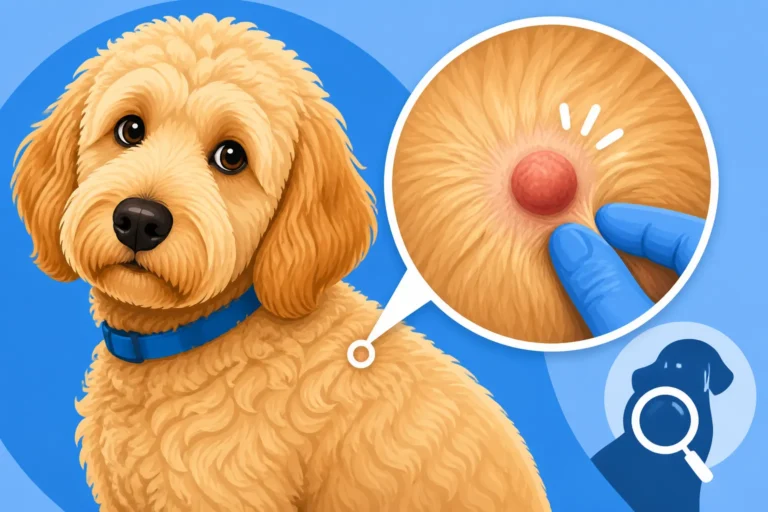
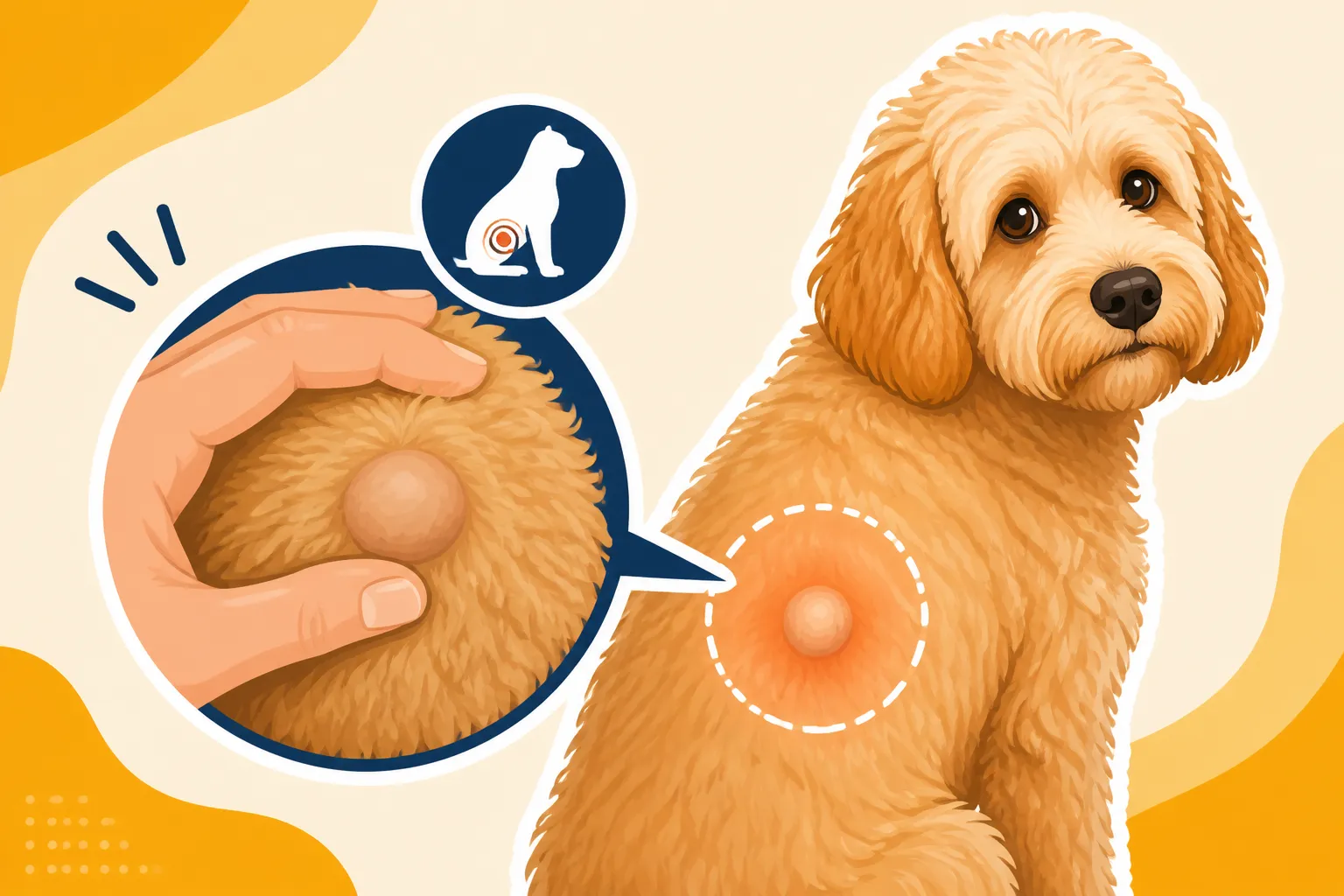
Finding a lump under your Goldendoodle's beautiful, often dense, and curly coat can send a jolt of panic through any dog parent. It's a common worry – you're running your hand over their familiar fluff, and suddenly, there's something new that you can feel but absolutely cannot see. This guide is here to walk you through the realities of discovering hidden lumps, what they might be, how to systematically check your furry friend, and what steps to take next to ensure their health and your peace of mind.
The Challenge of Finding Lumps in a Goldendoodle's Thick Coat
Let's be honest, those luxurious Goldendoodle coats, whether wavy or curly, are fantastic for cuddles and keeping them warm, but they are masters at concealing secrets. This can make regular health checks a real head-scratcher for even the most diligent owner.
Why Goldendoodle Coats Hide Lumps So Well
The very qualities that make a Goldendoodle's coat so appealing – its density, length, and often curly or wavy texture – are precisely what makes it so good at hiding things. Imagine trying to find a small pebble in a thick, shaggy carpet; that's often what it feels like when searching for a lump on your Goldendoodle. Their fur can be several inches long, creating a fluffy barrier that obscures anything beneath. Plus, many Goldendoodles have "furnishings" – the longer hair on their face, ears, legs, and tail – which can be even denser and trickier to navigate. A lump the size of a marble could easily be nestled deep within the fur, escaping visual detection until it's much larger or causes a noticeable change in your dog's gait or behavior.
This isn't a criticism of their wonderful coats, of course! It's just a reality that means Goldendoodle owners need a different approach to physical examination compared to someone with a short-haired breed. You can't just glance over them; you need to get your hands in there and really feel what's going on beneath the surface.
The Anxiety of "What If I Miss Something?"
It's completely normal to feel anxious about the possibility of missing a lump, especially given how sneaky Goldendoodle coats can be. The internet is full of scary stories, and the fear of letting a serious health issue go unnoticed can weigh heavily on a loving owner. You might wonder if you're not checking them enough, or if your technique is wrong. Many Goldendoodle parents share this exact frustration; you want to be proactive, but you also don't want to live in constant worry.
This feeling is amplified because Goldendoodles, like their parent breeds, can be prone to certain conditions. For instance, the Golden Retriever side is known for a higher incidence of various cancers, and Poodles can also develop skin conditions. This inherited predisposition can make any lump discovery feel particularly ominous. The important thing is to transform that worry into action and learn how to perform thorough, regular checks that build your confidence and give you the best chance for early detection.
Different Types of Lumps You Might Feel But Not See
When you do feel something, your mind naturally races through all the possibilities. While only a vet can give a definitive diagnosis, understanding the common types of lumps can help you approach the situation with a little more clarity.
Common Benign Bumps and Growths
Not every lump is cause for immediate panic. Many are benign, meaning they aren't cancerous and often don't require aggressive treatment.
One of the most common types of benign lumps, especially in older Goldendoodles, are lipomas. These are essentially fatty tumors. They feel soft, squishy, and are usually movable under the skin, much like a small bean bag. They tend to grow slowly and rarely cause problems unless they're in a location that interferes with movement or get very large. You might feel one on their chest, belly, or sides. Sometimes, they can feel a bit firmer, but generally, their soft, movable nature is a good indicator.
Another frequent visitor is a sebaceous cyst. These are blocked oil glands under the skin. They often feel like a firm, round bead or pea, and sometimes, if they rupture, they can exude a white, pasty, cheese-like substance. They're usually harmless but can become infected or irritated if your dog licks or chews at them. You might find these anywhere on the body, including in dense areas like the inner thighs or near the tail.
Then there are warts and skin tags, also known as papillomas. While these are often visible on shorter-haired dogs, a Goldendoodle's long coat can completely obscure them. They are usually small, raised, and might have a cauliflower-like texture. They're typically harmless, though they can sometimes get snagged or irritated. You might feel a small, firm bump that seems to be attached directly to the skin's surface rather than deeper within the tissue.
The More Concerning Possibilities
While we hope for the best, it's also crucial to be aware of lumps that could be more serious. Early detection makes a huge difference with these.
Mast cell tumors are unfortunately quite common in dogs, including Golden Retrievers and Poodles, making them a concern for Goldendoodles. These tumors can be tricky because they can appear in many forms – a small, red, itchy bump; a firm lump; or even a soft, fatty-feeling mass. They can also "wax and wane," changing in size over short periods. They are often found on the trunk, limbs, or even internally, and can be quite aggressive. If you find a lump that changes rapidly, seems irritated, or is firm and fixed in place, it's wise to get it checked promptly.
Another type of lump that can feel worrying is an enlarged lymph node, which could indicate a condition like lymphoma. Lymph nodes are part of the immune system and are located in specific areas: under the jaw (mandibular), in the armpits (axillary), in the groin (inguinal), and behind the knees (popliteal). When enlarged, they feel like firm, movable, rubbery lumps, usually symmetrical if multiple nodes are affected. Finding these can be a sign of infection or, more seriously, certain types of cancer. If you're checking your Goldendoodle for lumps, knowing where these nodes are is critical for early detection of conditions like lymphoma signs in a Goldendoodle.
Other types of cancerous lumps, like various sarcomas, can feel firm and might be fixed to underlying tissue. They can appear anywhere on the body. A lump that feels hard, doesn't move easily, or grows quickly should always be investigated by a veterinarian. The critical takeaway here is that you simply cannot tell by touch alone whether a lump is benign or malignant. Only diagnostic testing can provide that answer.
Your Goldendoodle's Monthly "Lump Check" Routine
Given how challenging it is to spot a hidden lump, a regular, hands-on routine is your best defense. This isn't just random petting; it's a deliberate, systematic examination that empowers you to catch anything new as early as possible.
The Importance of a Systematic Approach
Think of it like this: you wouldn't just randomly check your car's oil when you think of it, would you? You have a routine. The same systematic approach applies to checking your Goldendoodle for lumps. A consistent monthly check allows you to become intimately familiar with your dog's body, knowing what feels "normal" and what doesn't. You'll learn the natural contours, muscle groups, and even existing benign bumps they might have. This familiarity makes any new or changing lump stand out much more clearly.
Random petting, while wonderful for bonding, often misses areas that are prone to lumps or are particularly difficult to navigate due to dense fur. A dedicated routine ensures you cover every inch, increasing your chances of early detection and, ultimately, better outcomes if something serious is found. It reduces the stress of "did I check everywhere?" because you know you have a system.
Step-by-Step Guide to a Thorough Examination
The best time for a thorough lump check is when your Goldendoodle is relaxed – perhaps after a nice walk, during a quiet evening cuddle session, or even right after a bath when their fur is wet and lying flatter. Always be gentle and positive, using treats and praise to make it a pleasant experience for both of you.
- Start at the Head and Neck: Begin by gently feeling around their face, muzzle, and under their chin. Move your fingertips along their jawline, checking for any unusual bumps. Then, move to their neck and throat area, feeling for any enlarged lymph nodes. These often feel like firm, movable beans under the skin. Don't forget their ears – gently feel the cartilage and base of the ear canal.
- Move to the Front Legs and Shoulders: Work your way down each front leg, feeling all sides from the shoulder down to the paws. Pay close attention to the armpit area, where another set of lymph nodes resides. Feel along the chest wall.
- Inspect the Body (Trunk): Systematically run your hands over their entire torso, from neck to tail. Use the pads of your fingertips to gently but firmly press and roll the skin and underlying tissue. Imagine you're "line brushing a Goldendoodle down to the skin" but with your fingers. Cover their back, sides, and belly. Be especially diligent in areas where harnesses or collars might rub, as these can sometimes irritate skin or hide small growths.
- Check the Rear Legs and Groin: Repeat the process for their rear legs, feeling from the hip down to the paws. Pay careful attention to the inner thighs and groin area, as this is another common spot for lymph nodes. Goldendoodle joint health by size category can also influence the feel of their hips and knees, so knowing what feels normal in these areas is important. Feel behind each knee for the popliteal lymph node.
- Examine the Tail and Rear End: Finish by checking their tail from base to tip, and gently lift the tail to inspect the area around their anus for any lumps or swelling.
During this entire process, move your fingertips against the direction of hair growth where possible, as this can help you feel things more distinctly. If you come across something, pause, get a better feel for it, and then proceed to the next step.
What to Do When You Find a Lump
Discovering a lump can be unsettling, but your calm, systematic approach continues to be your best asset. The next steps involve documenting your findings and consulting your veterinarian.
Documenting Your Discovery
Once you've identified a lump, don't panic. The very first thing you should do is document it. This information will be invaluable to your veterinarian and help track any changes over time.
Here's what to note:
- Date Found: When did you first notice it?
- Location: Be as precise as possible. "Left side of the chest, just behind the elbow" is much better than "on her side." You can even draw a simple sketch of your dog and mark the spot.
- Size: If possible, measure the lump with a ruler. Even an estimate like "pea-sized," "marble-sized," or "golf ball-sized" is helpful. If it's oddly shaped, describe its dimensions.
- Texture: Is it soft and squishy, or firm and hard? Is it rubbery?
- Movability: Does it move freely under the skin, or does it feel fixed and attached to underlying tissue?
- Pain/Discomfort: Does your Goldendoodle react when you touch it? Do they lick or chew at the area?
- Any Skin Changes: Is the skin over the lump red, irritated, hairless, or ulcerated?
Keep a small notebook or a dedicated note on your phone for these observations. This log will become a crucial part of your Goldendoodle's health record, especially since no Goldendoodle registry holds specific health records in this granular detail.
When to Contact Your Veterinarian
Every new lump should ideally be checked by a veterinarian. While many are benign, only a vet can differentiate between harmless and potentially serious growths. It's always better to be safe than sorry, especially with breeds that have a higher propensity for certain conditions.
You should contact your vet as soon as possible if you notice any of the following:
- Any new lump: Even if it feels small and harmless, it's worth getting an initial opinion.
- A lump that is growing rapidly: Fast growth is often a red flag.
- A lump that changes in texture or appearance: If a soft lump becomes firm, or the skin over it changes, it warrants immediate attention.
- A lump that causes your dog pain, discomfort, or irritation: If your Goldendoodle is licking, chewing, or guarding the area, they're telling you something is wrong.
- A lump that feels hard and fixed to underlying tissue: This can be a sign of a more invasive growth.
- Any enlarged lymph node: As discussed, this can be an indicator of infection or cancer, such as the cancer types a Goldendoodle can inherit.
Don't hesitate to reach out to your vet even if you're just feeling uneasy. They are there to help, and catching issues early can make all the difference. While the cost of vet visits and diagnostics can add up, remember that pet insurance providers like Healthy Paws can often help manage these unexpected goldendoodle surgery and emergency vet costs, allowing you to prioritize your dog's health without undue financial stress.
Diagnostic Steps a Veterinarian Might Take
Once you've scheduled that vet appointment for your Goldendoodle's lump, it's helpful to know what to expect. The diagnostic process is usually a step-by-step approach, starting with the least invasive methods.
Initial Examination and History
When you bring your Goldendoodle in, your veterinarian will start by performing a thorough physical examination. They will carefully feel the lump you've found, assessing its size, shape, texture, movability, and any associated skin changes. They'll also check your Goldendoodle's general health, feeling other lymph nodes, listening to their heart and lungs, and looking for any other signs that might provide clues.
They'll ask you a series of questions, drawing on the documentation you've hopefully kept:
- When did you first notice the lump?
- Has it changed in size or appearance? If so, how quickly?
- Does your dog seem bothered by it?
- Has your dog experienced any other symptoms, such as changes in appetite, energy levels, or behavior?
- What is your Goldendoodle's medical history, including any previous lumps or health issues?
This history-taking helps the vet narrow down the possibilities and decide on the next most appropriate diagnostic steps.
Fine Needle Aspirate (FNA)
Often, the first diagnostic test your vet will recommend is a Fine Needle Aspirate, or FNA. This is a relatively non-invasive procedure that can often be performed during your appointment, sometimes even without sedation, especially if your Goldendoodle is calm.
During an FNA, the vet uses a very thin needle (similar to the one used for vaccinations) to collect a small sample of cells from the lump. These cells are then spread onto a microscope slide and sent to a veterinary pathologist for analysis. The pathologist will examine the cells to determine if they are inflammatory, fatty, or cancerous.
It's important to understand that while FNAs are incredibly useful, they're not always definitive. Sometimes, the sample collected might not be representative of the entire lump, or there might not be enough cells for a conclusive diagnosis. In such cases, the result might be "inconclusive," and your vet might recommend repeating the FNA or moving on to a more invasive diagnostic. However, a clear FNA can often provide a diagnosis of a benign lipoma or cyst, offering immense relief.
Biopsy and Surgical Removal
If the FNA is inconclusive or highly suspicious for a malignant process, your vet might recommend a biopsy. A biopsy provides a larger tissue sample, allowing the pathologist to examine the architecture of the cells and surrounding tissue, which offers a more definitive diagnosis.
There are a couple of types of biopsies:
- Incisional Biopsy: In this procedure, only a small portion of the lump is surgically removed for analysis. This is often done when the lump is large, or its exact nature needs to be confirmed before planning a more extensive surgery.
- Excisional Biopsy: This involves surgically removing the entire lump. If the lump is small and easily accessible, the vet might opt for an excisional biopsy from the start, as it serves both diagnostic and therapeutic purposes.
Both types of biopsies require general anesthesia. After the lump (or a piece of it) is removed, it is sent to a specialized lab for histopathology. The results will tell you whether the lump is benign or malignant, and if malignant, what type of cancer it is and often how aggressive it appears. This information is crucial for determining the best course of treatment, whether that involves further surgery, chemotherapy, or radiation. Understanding these options, as well as the health testing both Goldendoodle parents should have, helps owners make informed decisions throughout their dog's life.
Comparison of Common Lump Characteristics
To help visualize some of the common lumps and their characteristics that you might encounter on your Goldendoodle, here's a quick comparison. Remember, this is for general guidance only, and only a veterinarian can provide an accurate diagnosis.
| Characteristic | Benign Lipoma (Fatty Tumor) | Sebaceous Cyst | Mast Cell Tumor | Enlarged Lymph Node |
|---|---|---|---|---|
| Feel | Soft, squishy, movable | Firm, round, bead-like | Can be varied: firm, soft, rubbery | Firm, movable, rubbery |
| Growth Rate | Slow | Slow, or sudden rupture | Can be rapid, or wax and wane | Can be rapid (infection) or slow (cancer) |
| Location | Anywhere, often trunk, legs | Anywhere on skin | Anywhere, often trunk, limbs | Specific locations: neck, armpits, groin, behind knees |
| Pain/Itch | Usually none | Usually none, unless infected | Often itchy, can be painful | Generally none, but discomfort with severe enlargement |
| Skin Over It | Normal | Normal, or red/inflamed if ruptured | Can be red, ulcerated, swollen | Normal |
| Appearance | Invisible under fur, felt as soft mass | Invisible under fur, felt as firm nodule | Can be visible as red bump, or just felt under fur | Invisible under fur, felt as distinct node |
Prevention and Early Detection Are Key for Goldendoodles
While not all lumps can be prevented, your consistent efforts in proactive care are the best way to safeguard your Goldendoodle's health and ensure any issues are addressed swiftly.
Proactive Care Beyond Lump Checks
Your role as a Goldendoodle parent extends beyond just feeling for lumps; it encompasses a holistic approach to their well-being. Regular veterinary check-ups are paramount. These annual or semi-annual visits allow your vet to perform a professional examination, which includes a thorough palpation for lumps and assessing overall health. They can catch things you might miss, and discuss any changes they observe over time. For senior Goldendoodle vet visits after nine years of age, these checks become even more critical, often including senior blood panels.
Maintaining a healthy weight for your Goldendoodle is also incredibly important. An overweight dog will have a layer of fat that makes it even harder to feel lumps effectively. Keeping them lean not only makes lump detection easier but also reduces the strain on their joints, especially relevant for preventing issues like Goldendoodle weight gain and the strain on joints. A balanced, high-quality diet and consistent exercise routine are foundational to their health, making it easier to notice any subtle changes in their body. You can also explore options like feeding a Goldendoodle by size category to ensure they're getting the right nutrients without overfeeding.
The Goldendoodle Owner's Role in Lifelong Health
Ultimately, you are your Goldendoodle's most important advocate. Their long, happy, and healthy life, including a respectable Goldendoodle lifespan and what a cross really buys you, relies heavily on your attentiveness and commitment. Being observant, trusting your instincts, and not hesitating to involve your veterinarian are your superpowers as a pet parent.
If you ever feel something that concerns you, even if you can't quite identify it, don't downplay it. A quick call or visit to your vet is always the right choice. Remember, early detection of lumps, whether benign or malignant, often leads to simpler treatments and better outcomes for your beloved Goldendoodle. Your hands-on care makes a tangible difference in their quality of life.
Disclaimer
This article provides general information and is not a substitute for professional veterinary advice. Always consult with a qualified veterinarian for any health concerns or before making any decisions about your Goldendoodle's care.