Hearing Loss in a Senior Goldendoodle
It’s heartbreaking to watch our beloved Goldendoodles slow down as they age, and few things are as frustrating or confusing as when they start to seem like they’re ignoring you. You call their name, they don’t respond, and you wonder if they’re being stubborn or if something more serious is at play. This guide is here to help you understand, identify, and compassionately manage hearing loss in your senior Goldendoodle, ensuring they continue to live a full and happy life.
Understanding Hearing Loss in Senior Goldendoodles
Just like humans, dogs experience a gradual decline in their senses as they get older, and hearing is often one of the first things to go. It's not usually an overnight change, which can make it incredibly difficult for us as owners to pinpoint when it truly started.
The Gradual Nature of Age-Related Hearing Decline
When your Goldendoodle reaches their senior years—typically around nine or ten for a standard size, a bit later for minis—you might notice subtle shifts in their responsiveness. At first, it might just be that they don’t come running quite as fast when you call them from another room, or they sleep through a noise that used to get their attention. It’s easy to dismiss this as them being more relaxed, a deeper sleeper, or just a little stubborn in their old age. I know I did with my Goldendoodle, Gus, who used to be so alert he’d hear a chipmunk rustle leaves a block away. Then, suddenly, the mail carrier could ring the doorbell without him stirring from his nap. This isn't stubbornness; it's often the insidious onset of presbycusis, which is just a fancy way of saying age-related hearing loss.
This decline happens because the tiny hair cells within the inner ear, which are responsible for converting sound waves into electrical signals for the brain, start to degenerate. Over time, fewer and fewer of these cells work effectively, particularly those responsible for higher-frequency sounds first. This means your Goldendoodle might still hear low rumbles, like a truck driving by, but miss your voice when you call their name in a higher pitch. It’s a slow, quiet fading, and it’s a natural, albeit challenging, part of the aging process for many dogs. Understanding this helps us approach their "ignoring" not with frustration, but with empathy and a desire to adapt. For more comprehensive insights into caring for your aging companion, check out our guide on Senior Goldendoodle Care After the Age of Nine.
Differentiating Normal Aging from Other Causes
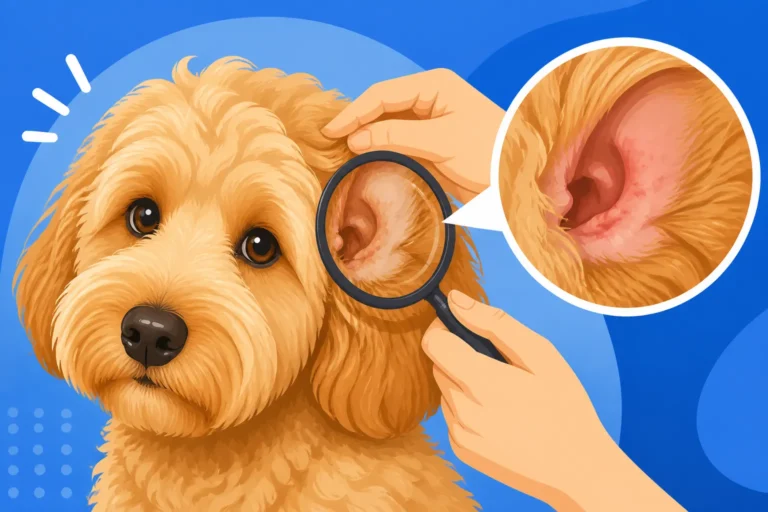
While age is a primary culprit for hearing loss in senior Goldendoodles, it’s absolutely vital to rule out other, potentially treatable, causes. You see, Goldendoodles are particularly prone to certain ear issues due to their adorable, floppy, and often heavily furnished ears. Those long, beautiful locks that frame their faces can actually trap moisture and debris, creating a perfect breeding ground for bacteria and yeast.
Chronic ear infections are a huge problem for many Goldendoodles, and repeated infections, especially if left untreated or not fully resolved, can lead to scarring and damage within the ear canal, ultimately impairing hearing. Sometimes, it's something as simple as a massive buildup of earwax or even a foreign object, like a grass awn, lodged deep in the ear canal. These blockages can significantly reduce sound transmission. Polyps or tumors, though less common, can also grow in the ear canal, physically blocking sound or affecting the delicate structures. If your Goldendoodle has had a history of Goldendoodle Ear Infections Under a Furnished Ear, it's crucial to consider these possibilities. That’s why a trip to the vet is always the first step. They can examine the ear canals with an otoscope, flush out any blockages, or prescribe medication for infections, potentially restoring some hearing or at least preventing further damage. Sometimes, what looks like age-related deafness is actually something solvable!
Recognizing the Signs of Hearing Loss
Spotting the signs of hearing loss in your Goldendoodle can be tricky, especially since they're masters at compensating. They rely heavily on their other senses, like smell and sight, and can be very good at reading our body language. But once you know what to look for, the puzzle pieces often fall into place.
Subtle Behavioral Changes in Early Stages
In the beginning, the signs are often so subtle that you might second-guess yourself. You call your Goldendoodle's name, and they just don't respond, or perhaps they turn their head slightly but don't seem to locate where the sound came from. Remember Gus? His initial signs included sleeping through the postman's notoriously loud truck, a sound that used to send him into a barking frenzy. Or perhaps your Goldendoodle doesn't greet you at the door quite as quickly when you arrive home; instead, they notice you only when you're visually in front of them.
Other common early indicators include:
- Reduced responsiveness to verbal commands: They might still follow hand signals perfectly, but ignore spoken cues they once knew.
- Not waking up to usual household noises: The vacuum cleaner, dropped keys, or even the sound of their food bowl being prepared might no longer rouse them.
- Being startled easily: If you approach them from behind or touch them when they haven't seen you coming, they might jump more than usual because they didn't hear you approach.
- Changes in play: They might not respond to squeaky toys or the sound of a thrown ball until they see it.
It’s easy to think, "Oh, they're just being lazy," but these small changes are often the early whispers of hearing loss. They're not intentionally ignoring you; they simply can't process the sounds anymore. This can be particularly frustrating when you're used to a highly responsive and engaged Goldendoodle, a breed known for its eagerness to please and connection with its family.
More Pronounced Indicators of Significant Loss
As hearing loss progresses, the signs become much more obvious and impactful on your Goldendoodle’s daily life. What started as subtle shifts can become complete unresponsiveness to sound.
Here’s what you might observe:
- Complete unresponsiveness to loud noises: Shouting their name, clapping loudly, or even a sudden bang might elicit no reaction at all.
- Disorientation or confusion: In unfamiliar environments, they might seem more confused or anxious because they're missing auditory cues that help them navigate.
- Increased vocalization: Some deaf dogs start barking or howling more, often louder than before, as they can't hear their own volume. Others might become quieter.
- Difficulty with spatial awareness: They might bump into things if they can't hear warnings or cues.
- Startling easily and being more anxious: This can become a significant issue, as they miss auditory cues that humans take for granted, leading to increased stress in unpredictable situations. Imagine living in a world where things just suddenly appear without warning sounds – it would be terrifying!
It's also worth noting that hearing loss can sometimes coincide with or exacerbate other age-related conditions. For example, a Goldendoodle experiencing Vision Loss in an Old Goldendoodle along with hearing loss will face even greater challenges navigating their world. Similarly, Cognitive Decline in a Goldendoodle Past Ten can sometimes mimic or compound the effects of hearing loss, making it even harder to distinguish between causes. This is why a comprehensive veterinary check-up is paramount to understanding all the factors at play and developing the best support plan for your aging companion.
Managing and Adapting to a Goldendoodle's Hearing Loss
Once you suspect or confirm hearing loss in your senior Goldendoodle, the focus shifts from frustration to adaptation and proactive care. It’s all about finding new ways to communicate and ensuring their safety and comfort.
Communication Strategies and Training Adjustments
Your Goldendoodle, being the intelligent and eager-to-please companion they are, can absolutely learn to communicate effectively even without hearing. They’re already brilliant at reading your body language, and you can harness that skill.
- Hand Signals: This is probably the most effective tool in your new communication arsenal. If your Goldendoodle already knows some commands with hand signals, lean into those. If not, start teaching them from scratch, pairing the visual cue with a treat reward every single time. Consistency is key. For example, a raised hand could mean "stop," a sweeping motion "come," or a pointed finger "sit." You can even find resources online or consult a professional dog trainer who specializes in working with deaf dogs for ideas. Remember, your Goldendoodle wants to understand you; you just need to speak their language now.
- Vibration Collars: These collars don't deliver a shock, but a gentle vibration that can be used as a "tap on the shoulder" equivalent. You can train your Goldendoodle to associate a specific vibration pattern with "look at me" or "come." It's incredibly useful for recall in open spaces where they might not see you.
- Touch Cues: Gentle taps on their shoulder, rump, or back can be used for attention or to initiate movement. For instance, two gentle taps on the shoulder might mean "walk this way," while a single tap could be "sit."
- Exaggerated Facial Expressions and Body Language: Since they'll be relying more on visual cues, be mindful of your expressions and movements. Clear, consistent body language will help them understand your intentions.
The beauty of Goldendoodles is their inherent biddability and intelligence, traits inherited from both the Golden Retriever and Poodle lines. They are quick learners, and with patience and positive reinforcement, they will adapt remarkably well to new communication methods. Just be consistent, calm, and celebratory when they get it right!
Creating a Safe and Predictable Environment
A deaf Goldendoodle needs a world that feels safe and predictable, especially since they can't hear approaching dangers or changes in their environment.
- Never startle them: Always approach your deaf Goldendoodle from the front or side, where they can see you. If they're sleeping, a gentle tap on the bed or floor near them can create a vibration to wake them without alarm. A startling touch can lead to fear-biting, which is entirely preventable.
- Leash Walking is Paramount: Off-leash privileges, even in familiar, seemingly safe areas, become extremely risky. They cannot hear cars, bikes, or other dogs approaching. A secure leash and harness are non-negotiable for their safety when outside your fenced yard.
- Secure Fencing: If you have a yard, ensure the fencing is escape-proof. A deaf dog might not hear you calling them back if they wander too far.
- Visual Markers and Routine: Maintain a consistent daily routine. Dogs thrive on routine, and for a deaf dog, it provides an even greater sense of security. Use visual cues for meal times, walks, and bedtime. For example, visually showing them their leash means "walk," or pointing to their bowl means "dinner."
- Warning Systems: Consider a small bell on your own shoe, so they feel a vibration when you walk nearby. Or, if they're particularly anxious, use a vibrating pet tag or a specific color bandana that signals "I'm coming close."
Creating this predictable and safe haven alleviates their anxiety and allows them to navigate their world confidently, knowing what to expect.
Veterinary Assessment and Support Options
A trip to the veterinarian is always the first, non-negotiable step when you suspect hearing loss. Your vet can conduct a thorough examination to rule out any treatable causes.
- Physical Examination of the Ears: The vet will use an otoscope to look deep into your Goldendoodle's ear canals. They'll check for infections, excessive wax buildup, foreign bodies, polyps, or any other structural abnormalities. If an infection is found, appropriate medication can be prescribed. If it’s just wax, a good cleaning might bring back some hearing.
- BAER Test (Brainstem Auditory Evoked Response): For a definitive diagnosis of hearing loss and to determine its severity, a BAER test is the gold standard. This non-invasive test measures electrical activity in the brain in response to auditory stimuli, similar to an EEG. While not all general practices offer it, they can refer you to a veterinary neurologist or specialty clinic that does. It provides an objective assessment of hearing in each ear.
- Discussion on Quality of Life: If the hearing loss is irreversible, your vet can help you assess your Goldendoodle's overall quality of life and discuss any other age-related concerns. They can also offer advice on environmental enrichment and management strategies. This is a crucial conversation, especially when considering The Last Decisions for an Aging Goldendoodle, ensuring your dog's comfort and well-being remain paramount.
- Hearing Aids for Dogs: Yes, they exist! However, they're not a common solution. Canine hearing aids are expensive, often difficult to fit (especially with a Goldendoodle's ear hair and shape), and many dogs simply won't tolerate them. They are generally only an option for partial hearing loss, not complete deafness, and require significant commitment from the owner. Most owners find adapting communication methods more practical and effective.
- Insurance Coverage: It's worth checking your pet insurance policy, especially if you have a provider like Healthy Paws. Diagnostic tests, like vet visits to check for ear infections or foreign bodies, and any subsequent treatments, might be covered. While age-related presbycusis itself isn't a disease that's "treated," the underlying issues that contribute to hearing loss, or other health problems your senior Goldendoodle might develop, are often covered, which can be a huge relief for unexpected vet bills. Always read your specific policy details carefully. For routine check-ups for senior dogs, remember to schedule Senior Goldendoodle Vet Visits After Nine.
Here's a quick summary of signs and strategies:
| Sign of Hearing Loss | Management Strategy |
|---|---|
| Doesn't respond to name/verbal commands | Implement consistent hand signals |
| Startles easily when approached from behind | Approach from front/side; use gentle vibrations/taps |
| Sleeps through loud noises (doorbell, vacuum) | Use visual cues for waking; avoid sudden movements |
| Disoriented in new environments | Maintain strict leash protocol outside; secure yard |
| Increased or louder vocalization | Seek vet assessment for pain; reinforce calm behavior visually |
| Difficulty locating sounds | Rely on visual communication; maintain predictable routines |
| Prone to Goldendoodle Ear Hair and Chronic Infection | Regular vet checks for ear health; proper cleaning |
Ensuring Quality of Life for a Deaf Senior Goldendoodle
A deaf Goldendoodle can still enjoy a fantastic quality of life. It’s all about focusing on what they can do, rather than what they can’t, and strengthening your bond in new and meaningful ways.
Maintaining Mental and Physical Engagement
Just because they can't hear doesn't mean their brilliant Goldendoodle minds and bodies don't need stimulation. In fact, keeping them engaged is more important than ever to prevent boredom, anxiety, and cognitive decline.
- Scent Work and Nose Games: Goldendoodles have incredible noses, inherited from their retriever ancestry. Scent work is a fantastic way to engage them mentally without relying on hearing. Hide treats around the house and encourage them to sniff them out. You can buy snuffle mats or puzzle toys, or simply hide treats under cups. This activity taps into their natural instincts and is incredibly rewarding for them.
- Puzzle Toys and Lick Mats: These provide mental stimulation and can keep them occupied for extended periods. Filling a KONG with peanut butter or plain yogurt and freezing it offers a long-lasting challenge. Lick mats are great for relaxation and enrichment.
- Gentle Walks and Exploration: While you’ll need to be extra vigilant with a leash, gentle walks are still essential for physical exercise and mental enrichment. Let them sniff and explore their environment. The world of smells is still vibrant for them, and these walks can be incredibly enriching. Vary your routes to keep things interesting, but always prioritize safety.
- Trick Training with Hand Signals: Continue to teach them new tricks or reinforce old ones using only hand signals. This keeps their minds sharp and strengthens your communication. Goldendoodles are smart and love to learn, so don't underestimate their capacity to pick up new visual cues.
- Interactive Play: Engage in visual games like fetch (where they see the ball) or tug-of-war. These activities are great for physical exercise and bonding. Just be sure to get their attention visually before initiating play.
Keeping their minds and bodies active helps prevent boredom, reduces anxiety, and supports their overall well-being. It’s a wonderful way to adapt their routine to their new needs.
Emotional Support and Strengthening Your Bond
The most important thing you can offer your senior Goldendoodle, especially one with hearing loss, is continued love, patience, and reassurance. Their world has changed, and they rely on you more than ever for emotional security.
- Extra Cuddles and Physical Affection: Touch becomes an even more vital form of communication and comfort. More belly rubs, gentle ear scratches, and snuggles on the couch will deepen your bond and provide immense reassurance. Physical contact can tell them, "You are safe, and I am here."
- Be Patient and Understanding: There will be times when communication breaks down, or they seem confused. Approach these moments with patience rather than frustration. Remember, they are not being disobedient; they simply can't hear you.
- Maintain Routines: Predictability is incredibly comforting for a deaf dog. Keep meal times, walk times, and bedtime routines as consistent as possible. This structure helps them feel secure in their day-to-day life.
- Monitor for Anxiety: Deaf dogs can sometimes become more anxious or clingy because they can't hear you move around. Pay attention to signs of stress, such as excessive panting, pacing, or destructive behaviors when left alone. Address these with extra reassurance, a consistent routine, and possibly consulting your vet or a behaviorist if needed.
- Continue Socialization (Safely): Your Goldendoodle still needs social interaction. Introduce them to other calm, friendly dogs and people in controlled environments where you can manage visual cues and ensure they don't get startled. Always inform others that your dog is deaf so they can approach appropriately.
By focusing on these areas, you can ensure your senior Goldendoodle with hearing loss continues to be a cherished, engaged, and happy member of your family. It's a journey of adaptation, but one that ultimately strengthens the incredible bond you share.
Disclaimer
Please remember that the information provided in this guide is for educational purposes only and should not be considered a substitute for professional veterinary advice. Always consult with your veterinarian for any health concerns or before making any decisions about your Goldendoodle's care.