The Length That Gives a Goldendoodle a Teddy Bear Head
Oh, the quest for that perfect Goldendoodle teddy bear head! It's such a common desire, and it's easy to see why. That rounded, soft, perpetually puppy-like look is simply irresistible. However, if you’ve ever tried to achieve it yourself or struggled to explain it to a groomer, you know it’s not always as straightforward as it seems. This guide is going to walk you through exactly what goes into creating that iconic Goldendoodle teddy bear head, from understanding coat types to mastering the right lengths, so you can achieve that adorable look for your furry friend.
Understanding the Goldendoodle Coat and the "Teddy Bear" Look
When we talk about the "teddy bear head" on a Goldendoodle, we're not just talking about a haircut; we're describing a specific aesthetic that plays into the breed's charm. It’s a look that requires a certain level of skill and understanding, both from the groomer and the owner.
What Exactly is a "Teddy Bear Head"?
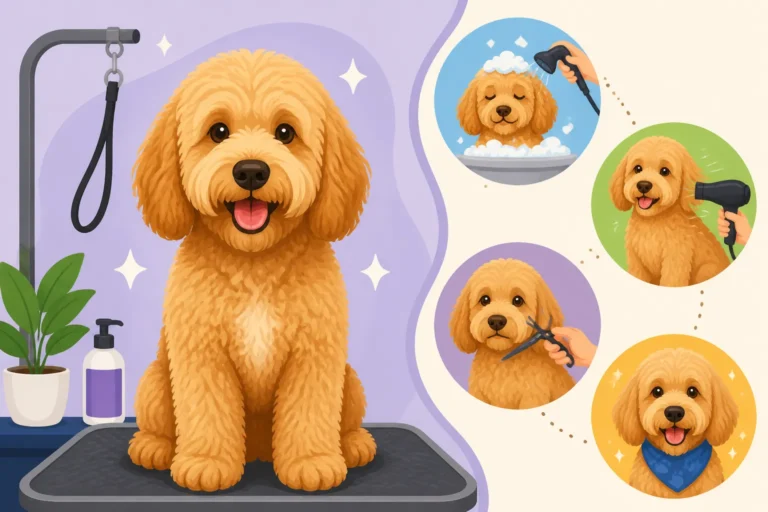
Imagine your childhood teddy bear – soft, rounded edges, a sweet, expressive face, and not a harsh line in sight. That’s precisely the vibe we’re aiming for with a Goldendoodle’s teddy bear head. It's characterized by a fuller, rounded appearance around the muzzle, cheeks, and top of the head. The hair isn't shaved short, nor is it left so long that it becomes shaggy and obstructs the eyes or mouth. Instead, it’s carefully sculpted to enhance the dog's natural endearing features, making them look perpetually youthful and cuddly.
This style avoids the often-seen "poodle cut" where the face is very short, almost shaved, and it also steers clear of the overly shaggy look that can happen if the hair grows out too much, causing it to fall into the eyes and mouth. The goal is a perfect balance – enough length to create that plush, rounded effect, but short enough to be clean, practical, and allow your Goldendoodle to see and eat comfortably. It truly highlights their bright, friendly eyes and those sweet, inquisitive expressions we all love.
The Role of Coat Type in Achieving the Look
Your Goldendoodle’s coat type plays a massive role in how easily you can achieve and maintain the teddy bear look. Goldendoodles aren't a one-size-fits-all when it comes to fur, and knowing what you're working with is half the battle. You might have a Goldendoodle with a straight, wavy, or curly coat, and each presents its own challenges and advantages for this particular style.
Curly Coats: These are often the easiest to sculpt into a teddy bear head. The natural curl provides structure and volume, allowing the groomer to leave a bit more length without it looking messy. The curls tend to hold their shape well, giving that beautiful, rounded appearance that lasts between grooms. Think of it like a natural bounce that helps the hair stand out from the face, creating that plush look.
Wavy Coats: Many Goldendoodles have beautiful wavy coats, which can also work well for the teddy bear cut. However, they might require a slightly shorter length than a very curly coat to maintain the defined rounded shape, as the waves can sometimes lie flatter. They offer a lovely softness, but without the inherent spring of a true curl, they might need more strategic scissor work to keep the desired volume around the face.
Straight Coats: These coats, sometimes called "flat coats," are often the most challenging for the teddy bear look. While they can still be charming, they lack the volume and natural hold of curlier coats. Leaving too much length on a straight coat tends to make it look shaggy and unkempt, rather than rounded and soft. For these coats, a groomer might need to go a bit shorter to create any semblance of shape, and even then, it might lean more towards a tidy, short face than a truly plush teddy bear. If your Goldendoodle has a straighter coat, don't despair, but be realistic that the "teddy bear" might have a slightly different, perhaps less voluminous, interpretation. Regardless of coat type, those signature "furnishings" – the longer hair on the face, beard, and eyebrows that Goldendoodles get from their Poodle parent – are absolutely crucial for achieving that distinct teddy bear appearance. Without them, the face simply can't hold the desired shape.
The Ideal Lengths for a Goldendoodle Teddy Bear Head
Now for the nitty-gritty: what lengths are we actually talking about to get that teddy bear head? This is where many owners get confused, and it’s completely understandable. Blade numbers don't always translate directly to a visual length because of the nuances of different coat textures.
Blade Lengths for the Body and Face
When you talk to a professional groomer, they’ll typically refer to clipper blade lengths or comb attachments, which are used over a standard clipper blade to leave longer hair. For the body of a Goldendoodle, many owners opt for something between a 1/2 inch to 1 inch comb attachment. This keeps the body manageable, prevents matting, and provides a good foundation for the fuller head. However, the face is where the magic really happens for the teddy bear look.
For the head, you'll generally want something a bit longer than the shortest "puppy cut" and definitely longer than a shaved poodle face. Here’s a breakdown of common comb attachment lengths and what they tend to achieve for a teddy bear face:
- 1/2 inch (approximately 13mm): This length will give a tidy, shorter teddy bear look. It’s excellent for dogs with very dense or unruly coats, or for owners who want a very low-maintenance face. It still has softness but is less "fluffy" than longer options.
- 5/8 inch (approximately 16mm): This is a popular choice for a classic, slightly fuller teddy bear look. It leaves enough length to create noticeable rounding while still being practical and easy to keep clean.
- 3/4 inch (approximately 19mm): For Goldendoodles with good coat density and curl, this length can create a wonderfully plush and rounded teddy bear head. It offers more volume and that super-cuddly appearance.
- 1 inch (approximately 25mm): This is on the longer side for a teddy bear face and is usually only achievable on Goldendoodles with very strong curl and robust furnishings. It requires more dedicated at-home grooming to prevent matting but can result in a truly luxurious, soft, and very full teddy bear look.
Important Note: These are general guidelines. A comb attachment that leaves 1 inch of hair on a tightly curled Goldendoodle might look like 3/4 inch on a wavy Goldendoodle because the curls compress differently. This is why clear communication with your groomer is key. Don't just give them a number; describe the look you want. You could tell your groomer you're specifically looking for The Length That Gives a Goldendoodle a Teddy Bear Head.
Maintaining Volume and Shape Around the Face
Achieving that perfectly rounded teddy bear head isn't just about picking a single blade length and going to town. It's often a blend of techniques, with precision scissor work being paramount, especially around those crucial facial features.
The key to volume and shape lies in leaving adequate length in specific areas and then carefully blending. A skilled groomer will use clippers with a longer comb attachment for the general bulk of the face hair, and then switch to scissors to meticulously sculpt the rounded edges.
- Muzzle and Cheeks: This is where you want that soft, pillow-like roundness. Groomers will often leave more length here and then trim and blend, ensuring there are no sharp angles, but rather a gentle curve that follows the natural bone structure. This creates that adorable "snout" effect without being too pointed or too short.
- Top of the Head: To avoid a flat-headed look, the hair on top of the head is typically left longer and blended into the ears and sides of the face. This provides crucial height and volume, completing the rounded silhouette of the teddy bear.
- Around the Eyes: This area requires a delicate touch. You want enough length to contribute to the soft, rounded look, but crucially, the hair must be kept clear of your Goldendoodle's eyes to ensure good vision and prevent irritation. A good groomer will trim this area to create a clear path while maintaining a soft, blended line, avoiding a harsh "bangs" or "bowl cut" appearance.
- The Beard and Eyebrows: These "furnishings" are what give Goldendoodles so much of their character and are vital for the teddy bear look. The beard is usually trimmed to a moderate length, again, rounded and blended to avoid a scraggly look. The eyebrows are typically left a little longer to give that expressive, slightly shaggy brow, contributing to the overall endearing facial structure. Without these, even with the right lengths, the "teddy bear" effect just wouldn't be the same.
Practical Tips for Achieving and Maintaining the Look at Home
Getting that ideal teddy bear head is one thing; keeping it looking fabulous between professional grooms is another challenge entirely. It definitely takes a team effort between you and your groomer!
Communicating with Your Groomer
This is perhaps the single most important piece of advice I can give you. Don’t just drop your Goldendoodle off and say, "Give him a teddy bear cut!" Because what one person thinks is a teddy bear, another might think is too long or too short.
- Bring Photos: This is your best friend. Search online for Goldendoodles with the exact head style you love. Bring several pictures, not just one, as different angles can help. Show your groomer exactly what you like about each photo (e.g., "I love the fullness around the muzzle here," or "I like how the eyes are clear in this one").
- Describe in Detail: Use descriptive words like "rounded," "fluffy," "soft," "not too short around the face," "keep the beard full but tidy." You can specifically request a blade length, like "I'd like a 3/4 inch comb attachment on the face, with hand-scissoring for the rounded look." Don't be afraid to ask for Asking for a Half Inch Goldendoodle Trim if you prefer a shorter version of the look.
- Discuss Your Dog's Coat: Tell your groomer about your Goldendoodle's coat texture and how often you can brush at home. If your dog's coat is prone to matting or you know you can only brush a few times a week, a slightly shorter teddy bear cut will be more realistic and comfortable for your dog in the long run. If your dog comes in matted, the groomer will likely have no choice but to shave the matted areas, making the teddy bear look impossible until new hair grows.
At-Home Maintenance Between Grooms
The teddy bear head, while adorable, is a high-maintenance style. It demands commitment from you, the owner, between salon visits. If you don't keep up with it, those soft, rounded edges will quickly turn into a matted mess.
- Daily Brushing is Non-Negotiable: To keep that length on the face, you absolutely must brush your Goldendoodle's face daily. This isn't just a quick surface brush; you need to line brush, getting right down to the skin to prevent mats from forming. Use a good quality slicker brush and a metal comb. The comb is crucial for finding those hidden tangles that the brush might miss, especially behind the ears, under the chin, and around the muzzle. Check out Brushing a Goldendoodle Often Enough to Stop Matting for a detailed guide. You can find excellent brushes and combs on Chewy or Amazon.
- Clean the Face After Meals: Goldendoodles with full beards tend to get food and water trapped in their facial hair. This isn't just unsightly; it can lead to bacterial growth, skin irritation, and matting. Get into the habit of wiping your Goldendoodle's beard with a damp cloth after every meal and a quick towel dry after they drink.
- Spot Trims (with caution!): If you're comfortable and have blunt-nosed scissors, you can carefully trim any stray hairs that start to fall into your dog's eyes or mouth. However, for anything more extensive, leave it to the professionals. Messing up the blend can ruin the teddy bear shape and take weeks to grow back. Investing in a good pair of Home Grooming Tools a Goldendoodle Actually Needs can help with these minor touch-ups.
Common Challenges and What to Expect
Even with the best intentions and the clearest communication, there are a few realities you need to be prepared for when aiming for and maintaining the Goldendoodle teddy bear head.
The Coat Change and Matting
This is the nemesis of every Goldendoodle owner wanting a long, fluffy coat, especially that teddy bear head. Around 8 to 12 months of age, Goldendoodle puppies go through a significant "coat change." During this period, their soft puppy fur sheds out, and their denser, adult coat grows in. The two different textures intertwine, creating a perfect storm for matting, often seemingly overnight. The Goldendoodle Coat Change at Eight to Twelve Months is a critical period.
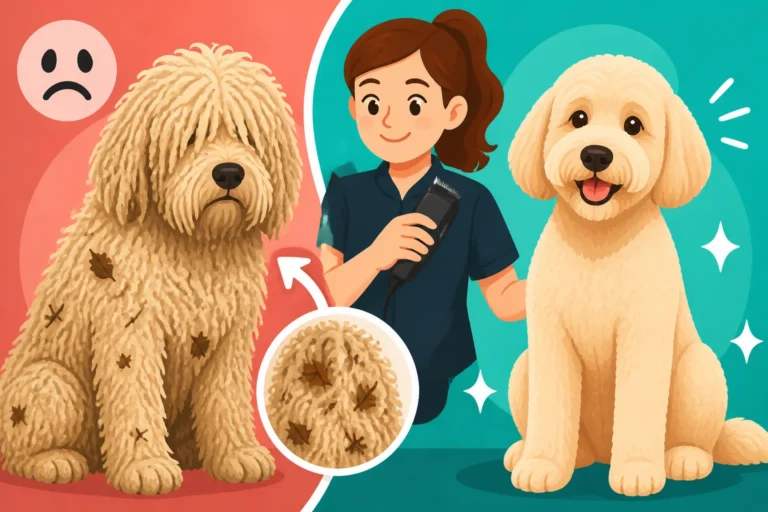
During the coat change, mats can form incredibly quickly, even with daily brushing. If your Goldendoodle's face isn't brushed meticulously and regularly during this time, those adorable long facial hairs will become a solid, painful felt-like mat. A severely matted Goldendoodle must be shaved short for their comfort and health. There's simply no other humane way to remove severe matting. This means saying goodbye to the teddy bear look temporarily. Many owners find it easier to keep their Goldendoodle's coat, including the face, much shorter during this adolescent phase. It's a pragmatic choice that prioritizes your dog's comfort over aesthetics. For more on navigating this tricky time, check out Surviving the Goldendoodle Coat Change and Why a Goldendoodle Suddenly Mats at Nine Months. Remember, Why a Goldendoodle Mats in a Week Without Brushing is a harsh reality for this coat type.
Coat Type and Personal Preference
As we touched on earlier, not all Goldendoodles are created equal when it comes to their coats. A curly-coated Goldendoodle will naturally hold the rounded, voluminous shape of a teddy bear head much better than a Goldendoodle with a straighter, flatter coat. If your Goldendoodle has a less curly coat, you might find that achieving that exact "fluffy teddy bear" look is difficult, and your dog’s face might end up looking more shaggy or requiring a much shorter length to look tidy. This doesn't mean your dog can't look adorable, just that the vision in your head might need a slight adjustment based on their unique genetics.
Ultimately, the best coat length for your Goldendoodle, even for their head, is one that you can realistically maintain between professional grooms and that keeps your dog comfortable. If you’re a busy family and can’t commit to daily face brushing, a shorter, tidier face cut might be a better, more humane option for your dog, even if it’s not the full "teddy bear" you initially envisioned. There are so many beautiful styles for The Three Goldendoodle Coat Types and How to Tell Them, and your groomer can help you find one that works.
Remember, the goal is always a happy, healthy dog first, and a stylish one second. Regular visits to a good groomer – typically every six to eight weeks – are essential for maintaining any longer style, including the teddy bear head. You can plan ahead by checking your favorite online pet store like Chewy or Amazon for recurring orders of high-quality food, and consider nutrition brands like Ollie that can contribute to a healthy, strong coat from the inside out.
| Blade/Comb Attachment Length | Approximate Look on a Goldendoodle Face (Wavy/Curly Coat) | Maintenance Level (for face) | Common Use Case |
|---|---|---|---|
| 1/2 inch (13mm) | Shorter, tidy teddy bear; soft but less voluminous | Moderate | Good for denser coats, warmer weather, or busy owners |
| 5/8 inch (16mm) | Classic teddy bear; nice roundness and softness | Moderate to High | Most popular length for a distinct teddy bear look |
| 3/4 inch (19mm) | Fuller, plush teddy bear; more volume and fluff | High | Best for curly coats, requires diligent daily brushing |
| 1 inch (25mm) | Very full, luxurious teddy bear; maximum fluffiness | Very High | Reserved for very curly, well-maintained coats; prone to mats |
This article is for general informational purposes only and does not constitute professional advice. Laws, prices and regulations vary by location and change over time. Consult a qualified professional for guidance on your specific situation.