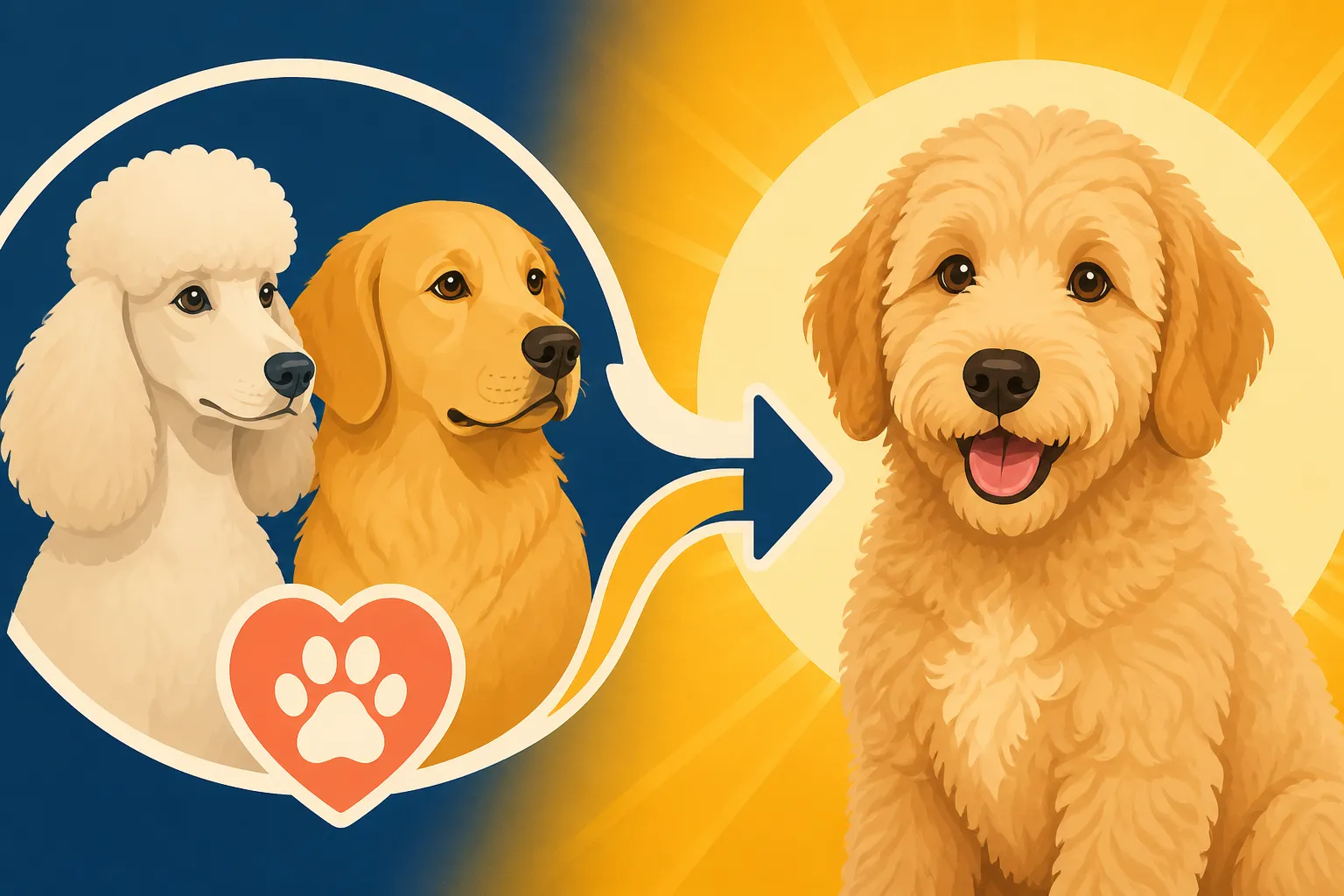
The 1969 Cross That Prefigured the Goldendoodle
When we talk about Goldendoodles today, most people picture a fluffy, friendly family dog, a happy-go-lucky companion that fits into almost any home. But have you ever wondered where this beloved crossbreed actually came from? It wasn't always about finding a cute, low-shedding pet. In fact, the story of the Goldendoodle, or at least its prefiguring cross, starts with a very different, very serious purpose, born out of a real need to serve people with disabilities.
Understanding the origins helps us appreciate why certain traits became so desirable, and why the Poodle and Golden Retriever were chosen in the first place. It also sheds light on the challenges early breeders faced, long before the "designer dog" craze took hold. Let's delve into the fascinating history, tracing the threads back to a crucial cross in 1969 that set the stage for the Goldendoodle we know today.
The Original Impetus: A Need Beyond "Doodles"
It’s easy to look at the Goldendoodle today and assume its creation was purely about combining two popular breeds to get a cute, low-shedding family pet. But the reality is far more profound, rooted in a pressing need for a specific type of assistance dog. Back in the mid-20th century, service dog organizations were doing incredible work, but they faced a significant hurdle: finding suitable dogs for visually impaired individuals who also suffered from dog allergies. This wasn't a trivial problem; for many, a guide dog was a lifeline to independence, and allergies could tragically block that path.
The existing guide dog breeds, like Golden Retrievers and Labrador Retrievers, were fantastic for their temperament and trainability, but they shed. A lot. And with shedding comes dander, the primary trigger for most dog allergies. The dream was a dog with the intelligence, biddability, and calm demeanor of a retriever, but with the hypoallergenic qualities of a Poodle. This wasn't about marketing; it was about opening up opportunities for people who desperately needed them.
The Guide Dog Challenge: Finding a Hypoallergenic Service Dog
Imagine the frustration: you need a guide dog to navigate your world, to maintain your independence, but every time you're around one, your eyes itch, your nose runs, and you struggle to breathe. This was the exact dilemma facing many individuals in the late 1960s. Guide dog schools were keenly aware of this issue and were actively seeking solutions. They knew the Poodle possessed many desirable traits – its keen intelligence, its athletic build, and, crucially, its non-shedding coat. However, purebred Poodles, while brilliant, often lacked the strong "will to please" and the robust, unwavering temperament that characterized the best Golden Retriever guide dogs. They could be a bit more aloof, a little less driven by handler focus in a distracting environment.
The challenge was to find a way to combine the best of both worlds without compromising the critical traits needed for guide work. It wasn't just about avoiding allergic reactions; it was about ensuring the dog could perform complex tasks reliably and safely in all sorts of public settings, day in and day out. This serious, functional goal was a far cry from the modern quest for a specific coat color or generation.
Early Breeding Programs and Their Goals
So, how did they approach this? Rather than simply throwing two dogs together, reputable organizations began methodical breeding programs. Their primary goal was clear: create a working dog that retained the Poodle's low-shedding coat and keen intelligence, while inheriting the Golden Retriever's exceptional temperament, biddability, and calm focus. They weren't aiming for a specific "look" or a catchy name. They were focused on functionality and health.
These early programs would have meticulously selected parent dogs from both breeds, not just for their physical health but also for their proven temperamental stability. They would have looked at generations of lineage to ensure the Golden Retriever parents came from strong working lines, and that the Poodles were not only intelligent but also had a steady, unflappable nature. The results were likely varied, as is common with early crosses, but the promise was there: a dog that could potentially serve those with allergies. While the popular "Labradoodle" story often gets the credit for the first deliberate Poodle cross for service work in 1989, it’s important to recognize that similar crosses, including Golden Retriever-Poodle mixes, were being explored even earlier, quietly laying foundational knowledge. These endeavors, like the one in 1969, were driven by genuine necessity, not commercial trend.
The Poodle's Contribution: Brains and Low-Shedding
When you think about the Goldendoodle's intelligence and its often-touted "hypoallergenic" coat, you're really seeing the strong influence of the Poodle. This wasn't accidental. The Poodle was chosen as one half of the early cross not for its fancy haircuts or show ring glamour, but for very practical, functional reasons crucial to the service dog world. Breeders understood that if they wanted a dog that was trainable, smart, and wouldn't trigger severe allergies, the Poodle was indispensable.
The Poodle brings centuries of selective breeding for intelligence and a unique coat structure. It's a breed that excels in dog sports, learning complex commands with ease, and is known for its problem-solving abilities. This mental agility is a huge asset in any working dog role, and it's a significant part of What a Goldendoodle Takes From the Poodle.
The Poodle as a Working Dog's Ancestor
It’s easy to forget that beneath the elegant exterior, the Poodle is a highly capable working dog. Historically, Poodles were water retrievers, tasked with fetching fowl from icy waters. This required not just physical prowess but also considerable intelligence, focus, and a willingness to work closely with a human handler. They needed to remember complex retrieves, navigate difficult terrain, and remain steadfast in challenging conditions.
This working heritage means that Poodles are inherently trainable and eager to learn. They thrive on mental stimulation and excel when given a job to do. For early guide dog programs, this was gold. They weren't looking for a dog to sit pretty; they needed a partner that could quickly grasp new commands, adapt to changing situations, and demonstrate sound judgment. The Poodle's sharp mind meant that the offspring of such a cross would likely inherit a significant capacity for learning and retention, crucial for the rigorous training a guide dog undergoes. This is part of the deep well of intelligence we see in so many Goldendoodles today.
Understanding the Poodle's Coat and Allergen Profile
The Poodle's coat is arguably its most distinctive feature from an allergy perspective. It's a single coat, dense and curly, that sheds minimally. Instead of falling out all over the house, loose hairs tend to get caught in the surrounding curls. This means less dander (tiny flakes of skin that attach to hair) is released into the environment, which is the primary trigger for most dog allergies, not the hair itself. This is why Poodles are often considered "hypoallergenic," although it's important to clarify that Why No Goldendoodle Is Truly Hypoallergenic and no dog is 100% allergen-free.
For the 1969 cross, this trait was paramount. Combining the Golden Retriever's desirable temperament with the Poodle's low-shedding coat offered the best chance to create a guide dog that allergy sufferers could live with. The aim was to reduce the allergic load significantly, making it possible for individuals to have a service dog without constant discomfort or health risks. This focus on the coat, combined with the Poodle's intellect, made it the ideal partner for the Golden Retriever in this groundbreaking endeavor. Many Goldendoodle owners today, whether they have allergies or not, appreciate this low-shedding quality, which often translates into less vacuuming and easier home maintenance.
The Retriever's Role: Temperament and Trainability
While the Poodle brought intelligence and a low-shedding coat to the table, the Golden Retriever was chosen for an equally critical set of traits: its unparalleled temperament, biddability, and willingness to work closely with humans. These qualities are what make Golden Retrievers such beloved family pets and exceptional service dogs in their own right. Early breeders understood that without this foundation, even the smartest, lowest-shedding dog wouldn't be suitable for the demanding role of a guide dog.
The Golden Retriever's disposition is legendary – known for being friendly, patient, eager to please, and incredibly tolerant. These are the very characteristics that make a dog a reliable and comforting partner for someone who depends on them for daily navigation and safety. It's a fundamental part of What a Goldendoodle Takes From the Golden Retriever, forming the emotional core of the Goldendoodle's appeal.
The Golden Retriever's Famous Disposition
Golden Retrievers are practically synonymous with "friendly dog." They are renowned for their gentle nature, their patience with children, and their general affability towards strangers and other animals. This makes them inherently less prone to fear-based aggression or anxiety, which are critical considerations for any dog intended to work in public spaces and interact with many different people. A guide dog simply cannot be reactive or easily spooked.
Beyond mere friendliness, Golden Retrievers possess a strong "desire to please" their handlers. This biddability, or willingness to comply and cooperate, is a cornerstone of their trainability. They genuinely enjoy working with people and are highly motivated by praise and positive reinforcement. This trait significantly speeds up training and makes the dog a more engaged and responsive partner. For an early program aiming to produce reliable guide dogs, harnessing this inherent good nature was absolutely essential to ensure the resulting cross would be calm, trustworthy, and able to adapt to various situations without becoming stressed or distracted.
Retriever Instincts in a Service Role
The clue is right there in the name: "Retriever." These dogs were originally bred to retrieve game for hunters, often over long distances and through challenging terrain. This selective breeding instilled in them a strong drive to carry objects gently in their mouths (the "soft mouth"), a fantastic nose for scent, and an incredible focus on their handler's commands, even amidst distractions. These instincts translate beautifully into a service role.
For a guide dog, a steady retrieve is invaluable, whether it's picking up dropped keys, fetching an item from a shelf, or holding a leash calmly. Their inherent desire to work and their strong bond with their human companion make them highly attentive partners. The physical robustness of the Golden Retriever also ensures they can handle the daily demands of guide work, providing a steady presence and capable assistance for many years. Combining this physical and instinctual capability with the Poodle's intellect and coat was the strategic move that underpinned the 1969 cross, laying the groundwork for a dog that could truly make a difference in people's lives.
The Outcome of Early Crosses: Unpredictability and Promise
When you cross two distinct purebreds, especially in the first generation (F1), you're essentially rolling the genetic dice. While the goal of the 1969 cross was noble and specific, the reality of genetics meant that the initial results wouldn't be uniform. Some puppies would lean more Poodle, some more Golden, and others would be a true blend. This unpredictability, particularly in terms of coat characteristics and temperament consistency, was a significant challenge for early breeders aiming for a consistent outcome for service work.
Despite these variations, the early crosses showed immense promise. They demonstrated that it was possible to combine desirable traits from both breeds, offering a glimpse into the future potential of such a hybrid. This period was all about observation, learning, and refining the approach, rather than mass-producing a "designer dog." It’s an important lesson for anyone considering a Goldendoodle today, especially when looking at Why an F1 Goldendoodle Is the Least Predictable Healthwise.
The Challenge of F1 Generation Predictability
The first generation cross, often called an F1 Goldendoodle today, is a 50/50 blend of a purebred Golden Retriever and a purebred Poodle. While this sounds straightforward, genetically, it's anything but predictable. Think of it like a human sibling pair: they share the same parents, but can look wildly different, have different personalities, and even different hair colors. The same applies to dogs.
In an F1 litter, you might find puppies with:
- Coat Types: Some might have the straighter, shedding coat of a Golden Retriever; others might have the curly, low-shedding coat of a Poodle; and many will land somewhere in the middle with a wavy "fleece" coat. This was a major hurdle for allergy sufferers.
- Temperament Blends: While all puppies would likely inherit some degree of friendliness, the exact mix of Poodle sensitivity or Golden Retriever biddability could vary. Some might be more independent, others more "velcro."
- Size and Structure: Even within the same litter, physical traits like bone structure and adult size could show more variation than within a purebred litter.
This genetic lottery meant that early programs couldn't guarantee every puppy would meet the stringent requirements for a guide dog, especially regarding a consistent low-shedding coat. This is why multi-generational breeding later became so important for increasing predictability.
What Early Breeders Learned About Hybrid Vigor
Despite the unpredictability of individual traits, early crosses did demonstrate a phenomenon known as "hybrid vigor" or heterosis. This is the increased strength, health, and often vitality found in the offspring of two distinct genetic lines. In simple terms, by mixing the genes of two different breeds, you often get a wider genetic pool, which can reduce the incidence of specific inherited diseases that might be more prevalent in highly inbred purebred lines.
However, it's crucial to understand that hybrid vigor isn't a magic bullet that guarantees perfect health, and its effects can be complex. While an F1 Goldendoodle might indeed benefit from a broader gene pool, they are still susceptible to conditions found in both parent breeds. For example, if both Golden Retrievers and Poodles are prone to hip dysplasia, a Goldendoodle can still inherit that predisposition. Early breeders learned that while hybrid vigor offered some advantages, it certainly didn't negate the need for rigorous health testing of parent dogs. The observation of robust health in some of these initial crosses, however, undeniably added to the appeal and potential of these Poodle-Retriever mixes. It’s why topics like The Goldendoodle Hybrid Vigor Claim and Where It Breaks remain so important for prospective owners to understand fully.
From Service Dog to Companion: The Shift to the "Goldendoodle"
The initial crosses around 1969 were primarily driven by a functional need in the service dog world. However, as these dogs became more visible and their wonderful temperaments and appealing coats became known, public interest began to shift. The concept of a "hypoallergenic" and friendly family dog started to capture imaginations, slowly moving the Poodle-Retriever mix from the specialized niche of assistance animals into the mainstream pet market. This transition wasn't immediate, but it undeniably happened, eventually leading to the widespread popularity of what we now call the Goldendoodle.
This evolution from a practical working dog to a highly sought-after companion animal highlights how societal needs and preferences can shape the destiny of a particular crossbreed. The stage was set, thanks to those initial efforts to solve a real problem for people with allergies.
The Public's Demand for Low-Shedding Family Dogs
As the word slowly spread about these Poodle-Retriever crosses, a different kind of demand began to emerge: families wanted friendly, intelligent dogs that didn't shed as much as traditional Retrievers. Many households loved the Golden Retriever's disposition but struggled with the constant battle against dog hair and dander, especially those with mild allergies. The idea of a dog that combined the best of both worlds – the Golden's heart with the Poodle's coat – was incredibly appealing.
People weren't necessarily seeking a guide dog anymore; they wanted a beloved family member who could integrate seamlessly into their homes. This rising public interest truly fueled the transition from experimental working dog to a desired companion animal. Breeders, both responsible and less so, began to meet this demand, consciously or unconsciously riding the wave of popularity that would eventually lead to the "Doodle" phenomenon. This shift in focus changed the breeding landscape, prioritizing pet-suitable traits alongside health and temperament. The convenience of a lower-shedding coat, which meant less hair on furniture and clothes, became a major selling point for families nationwide, often leading them to consider Whether a Goldendoodle Suits the Home You Have.
How the Idea of the "Doodle" Took Hold
The term "Goldendoodle" itself, along with the broader "Doodle" craze, really started to take hold in the 1990s, building on the groundwork laid by earlier crosses, including the more widely publicized Labradoodle from Australia. Once the idea of combining the Poodle's coat with another popular breed's temperament gained traction, it wasn't long before the Golden Retriever, with its universally adored qualities, became the next natural partner.
The "Doodle" branding captured the imagination of the public, suggesting a playful, intelligent, and low-maintenance pet. People were looking for something special, and the Goldendoodle fit the bill perfectly. It was perceived as a "best of both worlds" dog: smart enough to train easily, friendly enough for any family, and with a coat that, while requiring significant grooming, offered the promise of less shedding than a purebred Golden Retriever. Companies like Chewy even began to cater specifically to this burgeoning market, offering specialized grooming tools, foods, and accessories designed for the unique needs of Goldendoodles and other Doodles.
The demand exploded, transforming what began as a humble attempt to create a service dog for allergy sufferers into one of the most popular and recognizable hybrid dogs in the world. It’s a remarkable journey from a niche, functional cross in 1969 to the cherished companion animal that graces countless homes today.
Health Considerations: A Modern Perspective
While the early crosses prioritized functional health for service work, the explosion of the Goldendoodle's popularity as a companion animal has brought new health considerations to the forefront. Modern Goldendoodle owners often grapple with common health issues seen in both parent breeds, emphasizing the critical role of responsible breeding and comprehensive health testing. It's no longer enough to hope for hybrid vigor; understanding potential inherited conditions is key.
The reality is that a Goldendoodle can inherit health predispositions from either the Golden Retriever or the Poodle side, or even conditions common to both. This is why thorough research and choosing a breeder who prioritizes genetic health testing are paramount. The journey from the 1969 cross highlights how understanding genetic risks has evolved alongside the breed's popularity.
Common Inherited Conditions from Parent Breeds
When you bring a Goldendoodle into your home, you're essentially embracing the genetic legacy of both Golden Retrievers and Poodles. This means being aware of the health concerns common to both. For instance, both parent breeds are known to be susceptible to certain orthopedic conditions. Goldendoodle Hip Dysplasia and the OFA Numbers are important because hip issues are a concern in both Golden Retrievers and Standard Poodles. Similarly, elbow dysplasia can also affect both.
Beyond joint issues, Goldendoodles can inherit other serious conditions. The Poodle side can contribute to problems like Addison's disease, an endocrine disorder, and certain eye conditions such as Progressive Retinal Atrophy (PRA). Golden Retrievers, unfortunately, are predisposed to various forms of cancer, making The Cancers a Goldendoodle Can Inherit a crucial topic for owners. Other conditions include thyroid disease, heart defects, and certain skin allergies. This is why breeders should be transparent about the health history of their lines and provide proper health clearances for both parent dogs.
The Importance of Genetic Health Testing for Goldendoodles
Given the potential for inheriting conditions from two different breeds, genetic health testing becomes absolutely non-negotiable for responsible Goldendoodle breeding. Relying on "hybrid vigor" alone, especially as generations move beyond F1, is simply not enough. Reputable breeders should conduct a battery of tests on their breeding stock to minimize the risk of passing on debilitating genetic diseases.
These tests typically include:
- Orthopedic Evaluations: Such as OFA (Orthopedic Foundation for Animals) clearances for hips and elbows, and patella (kneecap) evaluations, especially for smaller Goldendoodles.
- Eye Exams: Annual eye exams by a veterinary ophthalmologist, with specific genetic tests for conditions like PRA.
- Cardiac Screening: To check for inherited heart conditions.
- Thyroid Function Tests: To identify predispositions to thyroid disease.
- Genetic DNA Panels: These panels, offered by companies like Embark or Paw Print Genetics, screen for a wide array of breed-specific genetic diseases known to affect Poodles and Golden Retrievers, such as Von Willebrand disease, certain forms of PRA, and more.
A breeder who cannot or will not provide documented proof of these health clearances for both parents should raise a significant red flag. While no test can guarantee a puppy will be perfectly healthy throughout its life, these measures drastically reduce the risk of inheriting serious, preventable conditions. Understanding these tests and asking the right questions is vital for any prospective Goldendoodle owner, ensuring you're doing everything you can to bring home a healthy companion. The commitment to such testing helps distinguish reputable breeders from those simply capitalizing on the "Doodle" trend.
Goldendoodle Generations and Coat Types
The story of the 1969 cross primarily involved an F1, or first-generation, mix. However, the Goldendoodle journey didn't stop there. To address the coat unpredictability and other challenges inherent in F1s, breeders began developing different generations. Understanding these generations and the resulting coat types is crucial for anyone considering a Goldendoodle today, especially if you have allergy concerns or specific grooming preferences.
Each generation represents a deliberate breeding choice, often aimed at enhancing certain desirable traits, particularly the low-shedding coat that was so important even in those early service dog crosses. This is where Goldendoodle Generations From F1 to Multigen really come into play.
The Evolution from F1 to Multi-Generational Crosses
As we discussed, the F1 Goldendoodle, a direct cross between a purebred Golden Retriever and a purebred Poodle, yields highly variable results in terms of coat. While some F1s might have the coveted wavy or curly low-shedding coat, others can have a straighter, more shedding coat closer to a Golden Retriever. This unpredictability, which was a challenge for the 1969 service dog efforts, continued to be a hurdle for families seeking truly "hypoallergenic" pets.
To increase predictability, especially regarding the coat, breeders began introducing subsequent generations:
- F1b Goldendoodle: This is an F1 Goldendoodle bred back to a purebred Poodle (often called "backcross"). This generation is typically about 75% Poodle and 25% Golden Retriever. The increased Poodle genetics usually result in a curlier, lower-shedding coat, making them a popular choice for allergy sufferers. Why an F1b Goldendoodle Loses Some Hybrid Vigor is a consideration here, as the genetic diversity is slightly reduced.
- F2 Goldendoodle: This results from breeding two F1 Goldendoodles together. Genetically, this is another roll of the dice, and coat types can be even more varied than F1s, with some puppies exhibiting flat, shedding coats.
- Multi-Generational (Multigen) Goldendoodles: These are Goldendoodles bred to other Goldendoodles for several generations (e.g., F1b x F1b, or F2 x F2). The goal here is to consistently produce specific traits, particularly the low-shedding, wavy or curly "fleece" or "wool" coats, and consistent temperament. This requires careful selection over multiple generations.
Each generation has its own set of characteristics and considerations, impacting everything from coat care to potential genetic diversity.
Matching Coat Type to Lifestyle and Allergy Needs
The coat type of a Goldendoodle is a significant factor in how much grooming it will need and how suitable it might be for allergy sufferers. The 1969 cross was fundamentally about achieving a functional, low-allergy coat, and that goal continues to drive much of the breeding today.
Here's a breakdown of what different coat types mean:
- Flat/Straight Coat: This coat type is most similar to a Golden Retriever's, and it will shed. While it might be beautiful, it's generally not recommended for allergy sufferers and requires regular brushing to prevent tangles. This is less common in later generations but can appear in F1s or F2s.
- Wavy/Fleece Coat: This is the most common and often desired Goldendoodle coat. It's soft, shaggy, and tends to shed minimally. This coat requires regular brushing (daily or every other day) to prevent matting, as it can easily tangle. It's often a good choice for those with mild allergies, but individual reactions can still vary. Many products found on Chewy are designed to help maintain this coat type, from slicker brushes to detangling sprays.
- Curly/Wool Coat: This coat type is closest to a Poodle's, featuring tight curls. It is the least likely to shed and is often the best option for people with moderate to severe dog allergies. However, it requires the most intensive grooming, including daily brushing to prevent severe matting that can lead to skin issues and discomfort for the dog. Professional grooming every 6-8 weeks is essential for these coats.
Choosing the right generation and understanding the implications of the coat type for grooming and allergy management is a major decision for prospective Goldendoodle owners. It underscores how the initial focus on a low-shedding coat for service dogs evolved into a key characteristic sought by countless families today.
The Goldendoodle's Place in History: A Legacy
The 1969 cross that prefigured the Goldendoodle wasn't just a random pairing; it was a deliberate, problem-solving endeavor rooted in compassion and a desire to help those in need. While the specific details of that exact program might be lost to history's mists, its spirit lives on in every Goldendoodle wagging its tail today. It laid the foundation for understanding how the Poodle and Golden Retriever genetics could combine, paving the way for the "Doodle" phenomenon that would sweep the nation decades later.
From the functional service dog candidate to the cherished family companion, the Goldendoodle's journey is a testament to purposeful breeding, happy accidents, and the enduring human desire for canine partnership. It reminds us that behind every popular breed or crossbreed lies a story, often far more meaningful than simple commercial trends.
The Foundation for Modern Goldendoodle Breeding
The early attempts to cross Golden Retrievers and Poodles, like the one in 1969, provided invaluable lessons that continue to influence modern Goldendoodle breeding practices. These pioneers showed that combining these two breeds could indeed yield intelligent, biddable dogs with the potential for low-shedding coats. They highlighted the variability of the F1 generation and the promise of hybrid vigor, albeit with its limitations.
Modern reputable Goldendoodle breeders build upon this historical knowledge. They understand the importance of carefully selecting parent dogs, not just for their physical traits but for their health clearances, temperament, and genetic lineage. They use multi-generational breeding to achieve greater consistency in coat type and temperament, recognizing the lessons learned about predictability. They aim to produce dogs that embody the best qualities of both parent breeds – the Golden Retriever's affable nature and the Poodle's intelligence and coat characteristics – all while striving for genetic health. This careful, thoughtful approach, often using tools and resources found on platforms like Chewy, is a direct legacy of those initial, earnest efforts.
What a Goldendoodle Is and Is Not in the Grand Scheme
Ultimately, understanding the 1969 cross helps us answer the fundamental question of What a Goldendoodle Actually Is and Is Not. It is a thoughtful, purposeful crossbreed, born from a desire to meet a specific human need, not an accidental mutt. It is a dog that carries the genetic blueprint of two highly respected purebreds, chosen for their intelligence, temperament, and coat qualities. It is not a purebred dog, and therefore lacks the breed standards and consistent genetic profiles that come with centuries of closed-book breeding. Why a Goldendoodle Is a Cross and Not a Breed is a key distinction that remains true, despite the Goldendoodle's immense popularity.
The Goldendoodle is a testament to the idea that sometimes, the best solution comes from combining strengths. Its existence is a powerful reminder that the relationship between humans and dogs is constantly evolving, driven by needs, aspirations, and the undeniable bond we share. The 1969 cross, though perhaps unheralded at the time, was a pivotal moment in this ongoing story, setting the stage for the beloved Goldendoodle we cherish today.
| Trait Category | Priority in 1969 Cross (Service Dog) | Priority in Modern Goldendoodle (Companion Dog) |
|---|---|---|
| Primary Goal | Create a guide dog for allergy sufferers | Create a low-shedding, friendly family pet |
| Coat Type | Consistent low-shedding/hypoallergenic for allergy mitigation | Varied (wavy/curly often preferred), less shedding for cleanliness |
| Temperament | Calm, biddable, intelligent, unfazed by distractions, handler-focused | Friendly, playful, intelligent, good with families, adaptable |
| Health | Robust health, able to withstand physical demands of service work | General good health, genetic testing for common breed issues |
| Trainability | High intelligence, eager to please, quick learner for complex tasks | Intelligent, eager to please, easy to train for obedience/tricks |
| Socialization | Must be bomb-proof in all public environments, safe with strangers | Generally friendly, good with children/pets, adapts to home life |
Disclaimer
This article is for general informational purposes only and does not constitute professional advice. Laws, prices and regulations vary by location and change over time. Consult a qualified professional for guidance on your specific situation.