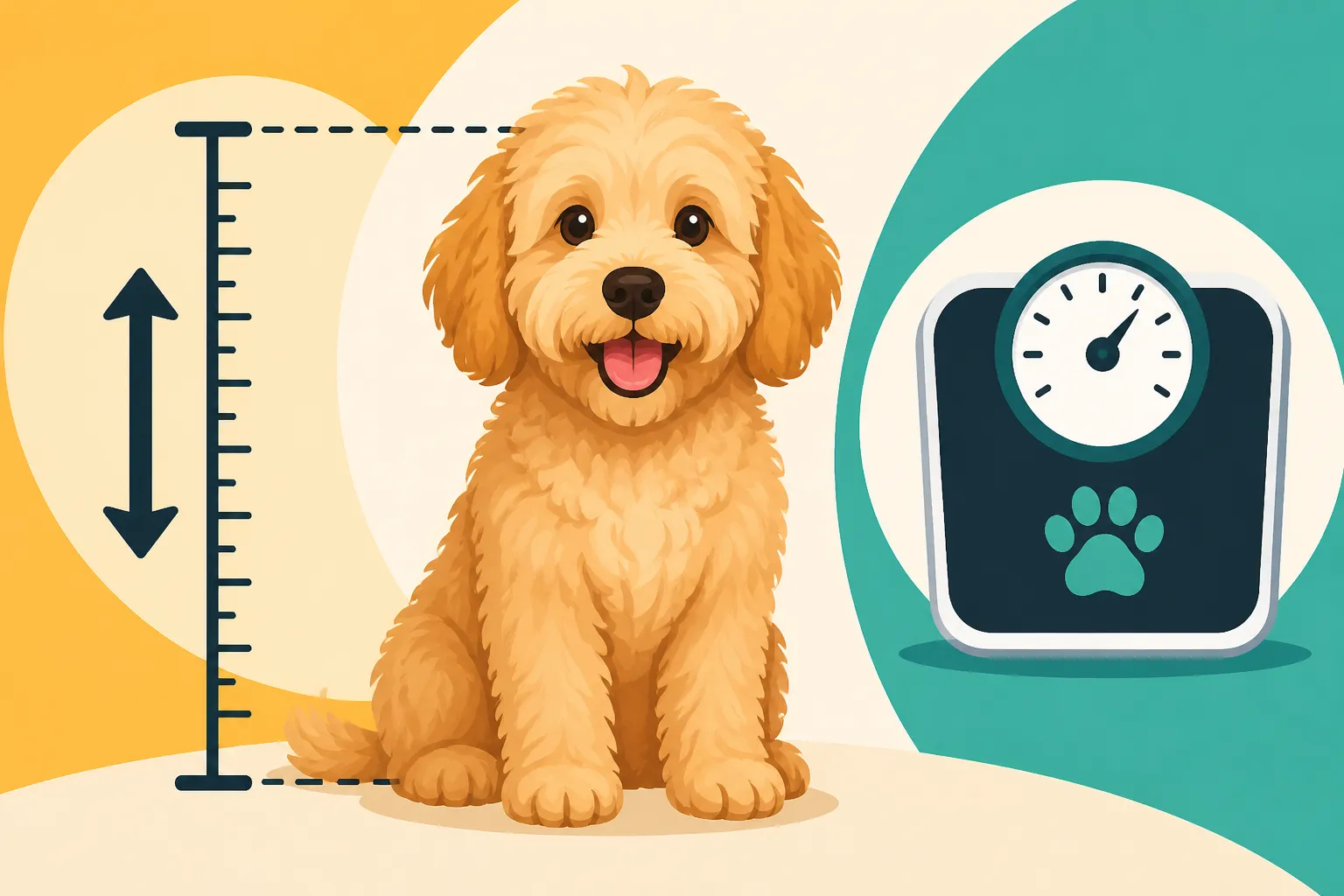
Mini Goldendoodle Height and Weight
It's incredibly frustrating when you're trying to figure out the perfect size Goldendoodle for your family, only to find conflicting information everywhere you look. You're trying to visualize if a "mini" will truly fit your apartment or be a manageable size for your kids, and the sheer variation in reported weights and heights can make you feel like you're playing a guessing game. This comprehensive guide is here to cut through the confusion and give you a realistic understanding of what to expect when it comes to the height and weight of a Mini Goldendoodle.
Defining the Mini Goldendoodle Category
When you hear "Mini Goldendoodle," what exactly comes to mind? For many, it's a Goldendoodle that’s smaller than the traditional "Standard," but not quite tiny enough to be considered "Toy." The truth is, there isn't one universally accepted, official definition because, let's remember, the Goldendoodle isn't a recognized breed by major kennel clubs like the American Kennel Club. This lack of a breed standard means that what one breeder calls "mini," another might categorize slightly differently, leading to a good deal of the confusion you might be experiencing.
The Range of "Mini" – It's Not a Single Size
Generally speaking, when Goldendoodle breeders and enthusiasts refer to a Mini Goldendoodle, they are talking about a dog that stands somewhere between 14 to 17 inches tall at the shoulder and weighs approximately 25 to 35 pounds. However, it's really important to view these figures as a range rather than a strict, unyielding rule. You might encounter a Mini Goldendoodle that leans closer to the "toy" side at 20 pounds, or one that pushes into "medium" territory at 40 pounds and 18 inches. This variability is a natural part of crossbreeding, especially when you consider the genetic contributions of two distinct parent breeds, the Golden Retriever and the Poodle. It's not like purebreds where you have very precise size standards; with Goldendoodles, there's a lot more fluidity, which can be both exciting and a little nerve-wracking if you have a very specific size in mind.
Consider for a moment if you're looking at a litter of Mini Goldendoodle puppies. You might see some that are noticeably smaller than others, even at just a few weeks old. Those smaller puppies might maintain that size difference into adulthood, or they could have a sudden growth spurt later on, completely changing the adult weight you anticipated. It’s a bit like predicting how tall a child will be based on their parents – you can make an educated guess, but there are always exceptions. This is why paying attention to the parents' sizes and genetic history, rather than just the label "mini," becomes so crucial.
The Role of the Poodle Parent in Miniaturization
The key to understanding how Goldendoodles achieve their "mini" status lies almost entirely with the Poodle side of their family tree. Golden Retrievers are consistently large dogs, so to reduce the size of the offspring, breeders introduce a Miniature Poodle into the mix. For an F1 Mini Goldendoodle, you'll typically have a Golden Retriever bred with a Miniature Poodle. The Miniature Poodle itself has a fairly defined size range, usually standing between 10 to 15 inches tall and weighing 10 to 15 pounds. This significantly smaller stature is what pulls the Goldendoodle's size down from the Golden Retriever's much larger build.
When you start looking at F1b (first-generation backcross) or multigen Mini Goldendoodles, the lineage gets a bit more complex. An F1b Mini Goldendoodle might be the result of breeding an F1 Goldendoodle back to a Miniature Poodle. This often increases the Poodle genetics (making it roughly 75% Poodle), which can contribute to a more consistently smaller size, but also typically results in a curlier coat and even less shedding potential. However, even with this increased Poodle influence, there's still a genetic lottery at play. One pup in an F1b litter might take strongly after its Miniature Poodle grandparent, while another might inherit more of the Golden Retriever's size genes from its F1 Goldendoodle parent. This is a topic explored further in How the Poodle Parent Sets Goldendoodle Size.
Predicting Your Mini Goldendoodle's Adult Size
It's completely normal to want to know, as accurately as possible, how big your adorable Goldendoodle puppy will get. You might be planning for a specific living situation, or perhaps you just want to make sure you buy the right size crate from Chewy. While there's no crystal ball, you can make some pretty good educated guesses by looking at several factors. Understanding these elements can help manage your expectations and prepare for the Goldendoodle you bring home.
Puppy Growth Charts and Their Limitations
Many prospective Goldendoodle owners turn to puppy growth charts or online calculators, which often provide estimates based on a puppy's current age and weight. These tools can be helpful starting points, suggesting, for instance, that a Mini Goldendoodle puppy weighing X pounds at 8 weeks might reach Y pounds as an adult. However, it’s crucial to understand that these are estimates. They don't account for individual genetic variations, growth spurts, or slower development. Two puppies of the same weight at 8 weeks from the same litter could end up quite different in size as adults, simply because of how their unique genetic makeup expresses itself.
For example, a puppy that seems to be growing quickly in its early weeks might suddenly slow down, while a seemingly smaller puppy could have a later growth spurt. Factors like diet and overall health can also play a minor role, though genetics are the primary driver. While using a growth chart to get a general idea is fine, don't stake all your hopes on it being perfectly accurate for your specific puppy. Always ask your breeder about their experience with previous litters from the same parents and what their adult sizes typically achieved. You might find more specific guidance in Goldendoodle Puppy Growth Chart by Size.
Genetics and What a Breeder Can (and Can't) Promise
The most reliable indicator of your Mini Goldendoodle's adult size comes down to genetics, specifically the size of the parent dogs and their lineage. A reputable breeder will always be transparent about the height and weight of both the Golden Retriever (or Goldendoodle) dam and the Miniature Poodle (or Goldendoodle) sire. If you have access to information about the grandparents, that's even better, as it gives you a fuller picture of the genetic potential. If both parents are on the smaller side of their respective "mini" categories, chances are their offspring will also trend smaller. Conversely, if one parent is at the upper end of "mini" or even considered "medium," there's a higher likelihood that some puppies in the litter will exceed the typical mini size.
A good breeder won't make absolute guarantees about adult size, because even with careful planning, nature can throw curveballs. They can, however, provide informed estimates based on their experience with their lines and the known genetics. They might also advise you on how a puppy's current size compares to its littermates and what that might suggest for its future growth. Always consider that the range for "mini" is wide, and be prepared for your puppy to fall anywhere within that spectrum, or even slightly outside it. This genetic variability is also Why Two Goldendoodle Litter Mates Finish Different Sizes is such a common phenomenon.
Why Mini Goldendoodle Sizes Can Disagree
It can be bewildering when you're looking at different breeder websites or talking to various owners, and everyone seems to have a slightly different idea of what a "Mini Goldendoodle" actually is in terms of physical dimensions. One person swears their 15-inch, 22-pound dog is a mini, while another refers to their 18-inch, 40-pound companion by the same classification. This isn't necessarily because anyone is wrong; it's a reflection of the unique circumstances surrounding designer dog breeds like the Goldendoodle.
No Breed Standard Means No Fixed Definition
The primary reason for the widespread disagreement on Goldendoodle sizing, particularly for the "mini" category, is the simple fact that Goldendoodles are not a recognized breed by any major kennel club. Organizations like the American Kennel Club (AKC) establish breed standards that meticulously define everything from coat color and texture to temperament, and, crucially, specific height and weight ranges for different size classifications within a breed. Without such a standard, Goldendoodle breeders operate based on a general consensus and their own breeding programs. This means that while most agree that a Mini Goldendoodle is smaller than a standard and larger than a toy, the exact inches and pounds can fluctuate from one breeder to the next.
This lack of a universal standard is why you might see a breeder define "Mini" as 14-17 inches and 25-35 pounds, while another might stretch that to 13-18 inches and 20-40 pounds. Both are acting within accepted, albeit informal, norms within the Goldendoodle community. It's not a conspiracy, but rather an outcome of the Goldendoodle's status as a crossbreed still in development. This makes your research and direct communication with breeders even more important to ensure you understand their specific size classifications. For more on this, you might want to read Why Goldendoodle Size Charts Disagree.
The Impact of Breeding Generations
Another significant factor contributing to size variation and disagreement across the "mini" category is the Goldendoodle's generational breeding. Different generations—F1, F1b, F2, Multigen—can have varying degrees of genetic predictability, which in turn affects size.
-
F1 Mini Goldendoodles: These are the first cross between a purebred Golden Retriever and a purebred Miniature Poodle. While the Miniature Poodle contributes the smaller size genes, the Golden Retriever's larger genes are also very present. This 50/50 split can sometimes lead to a wider range of sizes within a single F1 litter, as some puppies might favor the Golden Retriever's size more than others. You could end up with an F1 "mini" that's closer to 40 pounds or even a bit more.
-
F1b Mini Goldendoodles: This generation involves breeding an F1 Goldendoodle back to a Miniature Poodle. With approximately 75% Poodle genetics, F1bs often exhibit more consistency in size, usually landing more reliably within the 20-35 pound range. The increased Poodle influence tends to "pull" the size down more uniformly.
-
Multigen Goldendoodles: These are Goldendoodles bred from two Goldendoodle parents (e.g., F1b x F1b, or F2 x F2). While multigen breeding aims for greater predictability in traits like coat and temperament, size can still vary depending on the specific genetic contributions of the parent Goldendoodles and their ancestors. Breeders carefully select parents to maintain desired sizes, but there's always a chance for a "throwback" to a larger ancestor in some pups.
Understanding these generational differences is crucial when you're selecting your puppy. If size consistency is a top priority for you, researching the generation and the specific genetic background offered by a breeder will be key. This knowledge helps you make an informed decision and ensure the "mini" Goldendoodle you welcome into your home aligns with your expectations.
Here's a general guide to Goldendoodle size categories, keeping in mind these are approximate ranges:
| Size Category | Approximate Height (at shoulder) | Approximate Weight |
|---|---|---|
| Toy Goldendoodle | Under 14 inches | 10 – 25 pounds |
| Mini Goldendoodle | 14 – 17 inches | 25 – 35 pounds |
| Medium Goldendoodle | 17 – 21 inches | 35 – 50 pounds |
| Standard Goldendoodle | Over 21 inches | 50 – 90+ pounds |
When you're preparing for a Mini Goldendoodle, thinking about their potential adult size is important for more than just bragging rights. It impacts everything from the size of the dog bed you'll need (plenty of options at Chewy!) to the amount of food they'll consume. A Goldendoodle on the smaller end of the mini spectrum will have different dietary and exercise needs than one leaning towards medium. For instance, a 25-pound mini might thrive on daily walks and indoor play, while a 35-pound mini might appreciate a bit more vigorous outdoor activity to stay happy and healthy. Joint health is also a consideration; while Mini Goldendoodles are generally robust, maintaining a healthy weight is key for all dogs, especially as they age, as discussed in Goldendoodle Joint Health by Size Category. Remember, even if your Goldendoodle is "mini," they still need appropriate-sized toys and gear to prevent choking hazards or wear and tear.
The Factors Influencing Mini Goldendoodle Size Variability
Beyond the general definitions and generational breeding, several other elements can contribute to why Mini Goldendoodles display such a range in height and weight. It’s a tapestry woven with genetic threads, environmental influences, and even a bit of pure chance. For potential owners, understanding these nuances can better prepare you for the wonderful, albeit sometimes unpredictable, journey of owning a Goldendoodle.
Genetic Dominance and Recessive Traits
Even within the carefully planned breeding of Goldendoodles, the way genes express themselves can be quite varied. Size is a complex polygenic trait, meaning it's influenced by multiple genes rather than just one. While a Miniature Poodle parent is chosen specifically for its smaller stature, it still carries genes for larger size from its own ancestors, and these can sometimes be passed on to offspring. Similarly, a Golden Retriever, even if bred with a mini Poodle, will pass on its inherent larger size genes. This genetic lottery means that some puppies in a litter might inherit a stronger combination of "small" genes, while others might get more "large" genes, resulting in dogs of noticeably different sizes even from the same parents.
It's not uncommon to see a runt in a litter that remains significantly smaller, or a pup that surprises everyone by outgrowing its expected "mini" designation. This is the beauty and challenge of hybrid vigor, which can make predicting exact outcomes less straightforward than with purebred dogs that have been selectively bred for generations to conform to a tight standard. The mix of two distinct gene pools ensures diversity, but also means that absolute predictability in size is simply not achievable.
Nutrition and Environment in Early Life
While genetics set the blueprint for a Goldendoodle's potential size, environmental factors, particularly nutrition during crucial growth phases, can also play a role in how that potential is realized. Overfeeding a puppy, especially with calorie-dense foods not appropriate for their size category, can lead to accelerated growth. While this might seem appealing, it's generally not healthy. Rapid growth, especially in larger or potentially larger breeds, can put undue stress on developing bones and joints, potentially exacerbating issues like hip or elbow dysplasia later in life. That's why choosing the right puppy food, tailored to your Goldendoodle's expected adult size (even if approximate), is important. Many brands available on Chewy offer formulas specifically for large breed puppies, which manage growth rates more appropriately.
Conversely, a puppy experiencing nutritional deficiencies or significant health issues during its critical growth period might not reach its full genetic potential for size. Stress and illness can also impact growth. This underscores the importance of providing a balanced diet and regular veterinary care from the moment you bring your puppy home. A healthy start, with proper nutrition and a low-stress environment, allows your Goldendoodle to grow according to its natural genetic programming without unnecessary hindrances or accelerations.
Practical Implications of Size Variation
For owners, understanding this size variability in Mini Goldendoodles has several practical implications. First, it means being flexible. If you’re dead set on a dog that absolutely cannot exceed 30 pounds, you’ll need to work very closely with a reputable breeder who can show you a solid history of producing Goldendoodles consistently within that range. Secondly, it influences your purchasing decisions for supplies. While you might initially buy a small crate for a young Mini Goldendoodle puppy, be prepared to upgrade if they start heading towards the higher end of the size spectrum. Similarly, larger dogs will need more food, meaning higher recurring costs for your chosen dog food, even if it's a great value brand you find on Chewy.
Moreover, a larger mini might have different exercise requirements. A 35-pound Goldendoodle, for instance, might be more inclined to robust play and longer walks than a 25-pound one. This affects your daily routine and activity planning. It also impacts interactions within the home, particularly with small children or elderly family members; a dog weighing 35-40 pounds can still be quite sturdy and energetic. Ultimately, embracing the range of the Mini Goldendoodle means you're open to a wonderful companion who will bring joy, regardless of whether they land at 25 pounds or closer to 40.
Disclaimer
This article is for general informational purposes only and does not constitute professional advice. Laws, prices and regulations vary by location and change over time. Consult a qualified professional for guidance on your specific situation.