How the Goldendoodle Created a Designer Dog Market
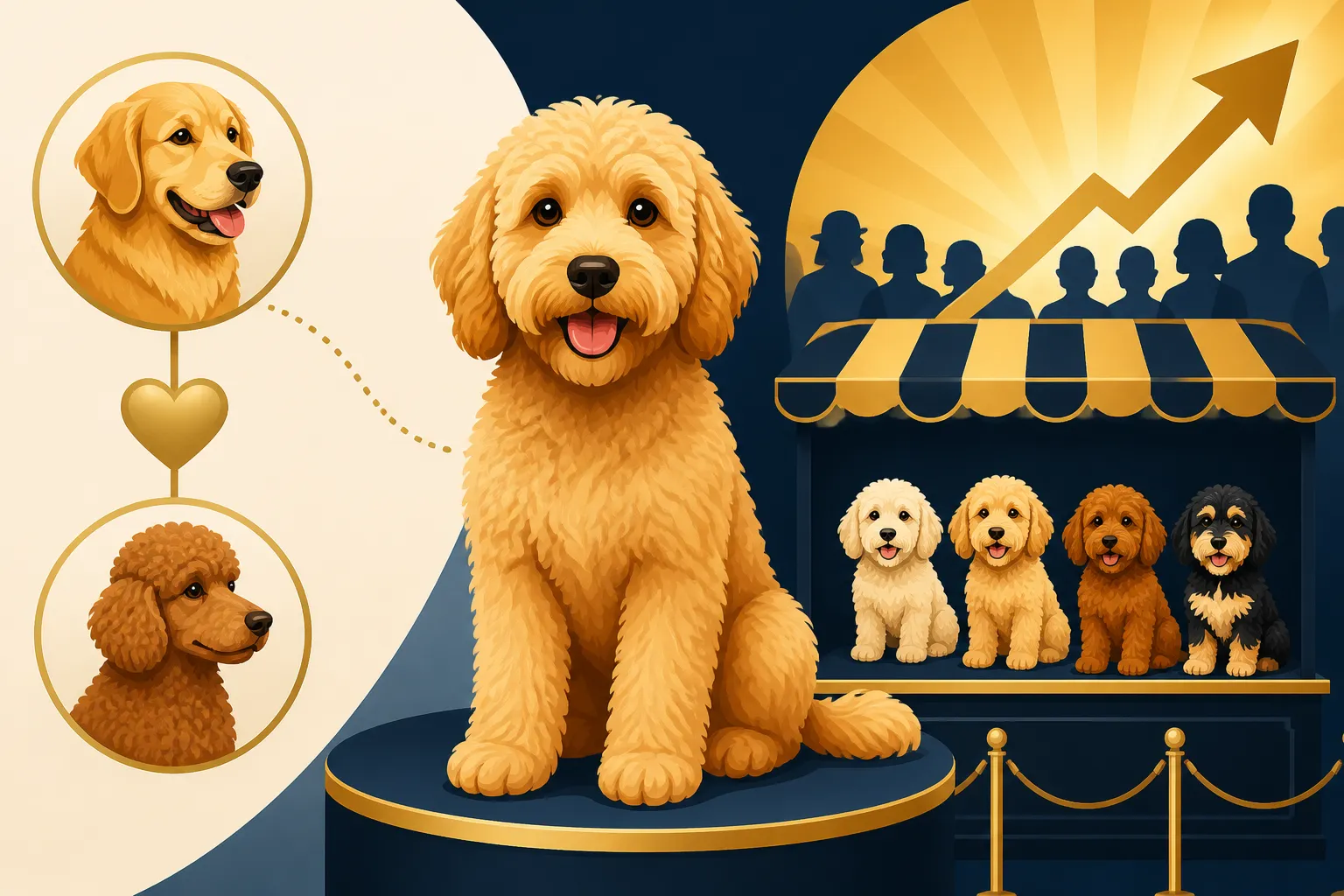
It's easy to look around today and see a world absolutely brimming with "Doodle" dogs. From Labradoodles to Bernedoodles, Cavapoos to Sheepadoodles, these charming crossbreeds are everywhere. But have you ever stopped to wonder how we got here? How did this explosion of adorable, often fluffy, mixed-breed dogs come to dominate the pet landscape and create an entirely new segment of the canine market? The answer, my friends, largely lies with one particular curly-coated sweetheart: the Goldendoodle. This guide is going to walk you through how the Goldendoodle, perhaps unintentionally, became the unwitting architect of the modern designer dog market, changing how many people view and acquire their furry family members.
The Accidental Spark: Goldendoodles and the Dawn of Designer Dogs
Before the Goldendoodle, the concept of a "designer dog" as we understand it today—a deliberate cross between two purebreds with a catchy portmanteau name—was largely unheard of. Oh sure, mixed breeds have always existed, and purposeful crosses for specific working traits have a long history, but the idea of creating a cross specifically for pet homes, driven by a desire for certain aesthetic and temperamental traits, was still nascent. The Goldendoodle stepped onto this stage and, almost overnight, captured hearts and imaginations, proving that there was a massive demand for something different.
From Guide Dog Experiment to Family Favorite
The genesis of the Goldendoodle, much like its Labradoodle cousin, wasn't initially about creating a cuddly family pet for the masses. It was rooted in a very practical need: a guide dog for visually impaired individuals with allergies. The idea was to combine the intelligence and trainability of the Poodle with the biddability and gentle nature of the Golden Retriever. This thoughtful intention led to what we now know as the F1 Goldendoodle – a first-generation cross that offered a blend of traits.
What happened next was quite organic, yet revolutionary. People started seeing these intelligent, friendly, and often lower-shedding dogs and realized they weren't just exceptional working animals; they made incredible companions. The news spread by word of mouth, through early internet forums, and the idea of this "new" kind of dog, one that combined the best of two beloved breeds, began to take hold. It resonated deeply with families who loved Golden Retrievers but struggled with the shedding, or admired Poodles but preferred a different aesthetic. The 1989 Guide Dog Cross Behind Every Goldendoodle really set the stage for this new direction.
The Allure of the "Hypoallergenic" Promise
One of the most significant factors driving the Goldendoodle's early popularity, and consequently the designer dog market, was the widespread belief that they were "hypoallergenic." Poodles are known for their low-shedding coats, which can be less irritating for some allergy sufferers. The hope was that by crossing a Poodle with a Golden Retriever, you'd get a dog with the Golden's wonderful personality but the Poodle's allergy-friendly coat.
While the term "hypoallergenic" is often a misnomer, as no dog is truly 100% allergen-free (allergens come from dander, saliva, and urine, not just hair), Goldendoodles can be a better fit for some people with mild allergies, particularly those with curlier, more Poodle-like coats. This promise, however imperfect, tapped into a huge, underserved market of dog lovers who had previously been shut out of pet ownership due to allergies. People were desperate for a dog they could live with comfortably, and the Goldendoodle seemed to offer that golden ticket. This perceived benefit fueled demand significantly, even if the reality for individual dogs and people was often more nuanced.
The Goldendoodle's Meteoric Rise and Market Impact
The Goldendoodle didn't just become popular; it became a phenomenon. Its rise wasn't just about being a cute dog; it was about perfectly timing a cultural shift in pet ownership and demonstrating a new commercial viability for crossbreeding. This laid the groundwork for countless other "Doodle" varieties to follow.
The Perfect Storm of Traits and Timing
Several elements converged to make the Goldendoodle the perfect candidate to kickstart the designer dog market. Firstly, their temperament is generally fantastic: friendly, intelligent, eager to please, and playful. These traits come from both parent breeds and make them wonderful family pets. Secondly, their appearance is undeniably charming – a fluffy, teddy-bear-like look that appeals to a wide demographic. Thirdly, the aforementioned "hypoallergenic" claim, even if often misunderstood, was a powerful marketing tool.
Beyond these intrinsic qualities, the timing was crucial. The late 20th and early 21st centuries saw a growing interest in dogs as true family members, not just working animals or backyard pets. People were willing to invest more time, money, and emotional energy into finding the "perfect" companion. The internet also played a huge role in How Goldendoodles Spread Through the 1990s, allowing breeders to connect with potential owners across vast distances and for information (and hype) to disseminate rapidly. Suddenly, a crossbreed wasn't just a "mutt"; it was a bespoke, carefully selected companion.
The Untapped Demand for a "New" Kind of Dog
For decades, the purebred dog market, governed by kennel clubs like the AKC, defined what a "dog" was in the public consciousness. Breeds had strict standards, pedigrees, and predictable traits. While this system has its merits, it also meant that certain combinations of traits, or a specific aesthetic, were simply unavailable. The Goldendoodle effectively broke this mold.
It showed that there was a massive, untapped demand for dogs that combined traits in novel ways, or offered variations on popular themes. Owners weren't just looking for a dog that could be registered; they were looking for a dog that fit their lifestyle and met their specific needs or preferences. This shift in consumer desire was monumental. It signaled that people were willing to look beyond traditional registries and embrace a new category of canine companion, often at a premium price. If you browse online at a pet supply store like Chewy, you'll see entire sections now dedicated to "Doodle" specific products, from brushes to food tailored to their needs, showcasing this market's substantial footprint. Why Goldendoodles Sit Among America's Most Wanted Dogs speaks volumes about this demand.
The Birth of a New Breeding Niche
With high demand came a new niche for breeders. Traditionally, breeders focused on purebreds, adhering to breed standards and working within kennel club frameworks. The Goldendoodle, however, existed outside these traditional structures because, as a first-generation cross, it wasn't recognized as a "breed." This created a new kind of breeder: one focused on producing specific crossbreeds for the pet market.
This niche rapidly expanded. Many ethical breeders saw the genuine benefits and demand for Goldendoodles, focusing on health testing parent dogs and ensuring good temperaments. However, the lack of traditional oversight also opened the door for less scrupulous individuals, leading to concerns about puppy mills and backyard breeders who saw only profit in the booming market. This dual nature of the new breeding niche—both innovation and potential pitfalls—is a defining characteristic of the designer dog market the Goldendoodle helped create.
What "Designer Dog" Really Means in the Goldendoodle Era
The term "designer dog" itself is a product of the Goldendoodle's popularity. It imbues these crossbreeds with a sense of intentionality, uniqueness, and even luxury. But beyond the catchy name, what does it truly signify for owners, and what are the broader implications?
Understanding the Crossbreed vs. Purebred Distinction
At its core, a "designer dog" like the Goldendoodle is a crossbreed, meaning it has two purebred parents of different breeds. This is distinct from a purebred dog, which has parents of the same recognized breed, or a "mutt" or mixed breed, which typically has a more unknown or varied ancestry. The distinction is crucial for understanding the designer dog market. Why a Goldendoodle Cannot Be Called a Breed highlights this fundamental difference.
The appeal of the designer dog lies in the promise of "hybrid vigor" – the idea that crossing two different genetic lines can lead to healthier, more robust offspring than purebreds, which sometimes suffer from genetic issues due to limited gene pools. While hybrid vigor can offer benefits, it's not a guarantee, and a Goldendoodle can still inherit health issues from either or both parent breeds. Understanding that What Crossbreed Means for a Goldendoodle on Paper is key to managing expectations and making informed choices.
The Pros and Cons for Owners and Breeders
For owners, the Goldendoodle and subsequent designer dogs offered a wider array of choices. They could potentially get a dog with a specific combination of traits that wasn't available in purebreds, or one that might alleviate certain allergy concerns. Many families rave about their Goldendoodles' loving nature and intelligence, finding them to be truly ideal companions.
However, there are also cons. Predictability can be an issue. Unlike purebreds, where traits are generally more stable across a litter, Goldendoodle puppies, especially in earlier generations, can vary widely in coat type, size, and even temperament, depending on which parent's genes are more dominant. This means the "hypoallergenic" coat you hope for might not materialize, or the size could be different than expected. For breeders, the market allows for innovation and meeting demand, but also carries the responsibility of transparently educating buyers about the realities of crossbreeding.
Regulatory Gaps in a Booming Market
One of the significant challenges created by the designer dog boom is the lack of standardized regulation compared to purebred dog breeding. Traditional kennel clubs offer a framework of rules, ethical guidelines, and registration processes for purebreds, including health testing recommendations. Because Goldendoodles aren't a recognized breed, they don't fall under these established umbrella organizations.
This regulatory gap means that the quality and practices of Goldendoodle breeders can vary wildly. While groups like the Goldendoodle Association of North America (GANA) have emerged to provide some standards, membership is voluntary, and enforcement can be limited. This puts a greater onus on prospective owners to do their due diligence, extensively research breeders, and ask for health clearances for both parent dogs. Without this critical research, buyers risk supporting unethical operations that prioritize profit over the health and welfare of their dogs. It’s why resources like Chewy, which feature customer reviews on products, can be a small signal of trust, but can’t replace thorough breeder vetting. This lack of oversight and potential for exploitation is a major point of concern for groups like Why Some Vets Dislike the Goldendoodle Boom.
The Ever-Expanding Doodle Universe
The success of the Goldendoodle opened the floodgates. Once it was clear that there was a strong market for intentional crossbreeds combining Poodles with other popular family dogs, the "Doodle" trend exploded. The Goldendoodle didn't just create a market; it created an entire category of dogs.
From Goldendoodle to Every-Doodle Imaginable
After the Goldendoodle demonstrated its immense popularity and market viability, breeders quickly realized the formula could be applied to almost any combination. Soon, we saw the rise of the Labradoodle (another early entrant), followed by the Bernedoodle (Bernese Mountain Dog x Poodle), Aussiedoodle (Australian Shepherd x Poodle), Cavapoo (Cavalier King Charles Spaniel x Poodle), Maltipoo (Maltese x Poodle), and countless others. Each new "Doodle" offered a unique blend of parent breed traits, often with the promise of a low-shedding coat and a charming personality.
This expansion has fundamentally changed the pet retail landscape. Walk into any major pet store or browse online at places like Chewy, and you'll find an abundance of toys, grooming tools, and even specialized food lines that cater to the unique needs of these Poodle crosses. This extensive "Doodle-verse" wouldn't exist in its current form without the pioneering success of the Goldendoodle paving the way. The Goldendoodle Against Other Doodle Crosses showcases just how varied the market has become.
The Ethical Considerations of Rapid Expansion
While the proliferation of Doodles offers more choices for prospective owners, it also brings significant ethical considerations. The rapid expansion of the designer dog market, fueled by demand, can lead to less responsible breeding practices. When profit becomes the primary motivator, health testing, genetic screening, and proper puppy socialization can fall by the wayside.
It's vital for anyone considering a designer dog to understand that a catchy name and a cute appearance are not substitutes for responsible breeding. The Goldendoodle, and its Doodle brethren, require as much, if not more, scrutiny of their breeders than purebreds, precisely because they lack a single, overarching breed club or registry with mandatory health schemes. This often means learning to read Reading a Goldendoodle Parent's OFA Record or understanding a DNA panel yourself. The market that the Goldendoodle created demands highly educated consumers to protect animal welfare.
The Enduring Legacy of the Goldendoodle's Influence
The Goldendoodle's influence on the canine world is undeniable and enduring. It redefined what a desirable family dog could be, moving beyond the strictures of purebred registries and popularizing the intentional crossbreed. It demonstrated that a "designer" label, combined with perceived benefits and appealing aesthetics, could command significant public interest and financial investment.
Today, the designer dog market is a permanent fixture. It offers diversity, but it also places a greater responsibility on individual owners to seek out ethical breeders and understand the unique needs and potential challenges of crossbreeds. The Goldendoodle's journey from a humble guide dog experiment to a global phenomenon truly illustrates How the Goldendoodle Created a Designer Dog Market and reshaped our relationship with dogs in the 21st century.
Here's a quick look at some key aspects of the designer dog market that the Goldendoodle pioneered:
| Feature | Purebred Dog Market | Designer Dog Market (Goldendoodle Era) |
|---|---|---|
| Primary Goal | Adherence to Breed Standard | Specific Trait Combination, Aesthetics |
| Regulation/Oversight | Kennel Clubs (AKC, UKC, etc.) | Voluntary Associations, Breeder Discretion |
| Genetic Predictability | High (within breed standards) | Moderate to High (varies by generation) |
| "Hypoallergenic" Claim | Rare (except specific breeds) | Common (due to Poodle influence) |
| Naming Convention | Established Breed Names | Portmanteau Names (e.g., Goldendoodle) |
| Price Point | Varies widely by breed/line | Often premium for popular crosses |
Disclaimer
This article is for general informational purposes only and does not constitute professional advice. Laws, prices and regulations vary by location and change over time. Consult a qualified professional for guidance on your specific situation.