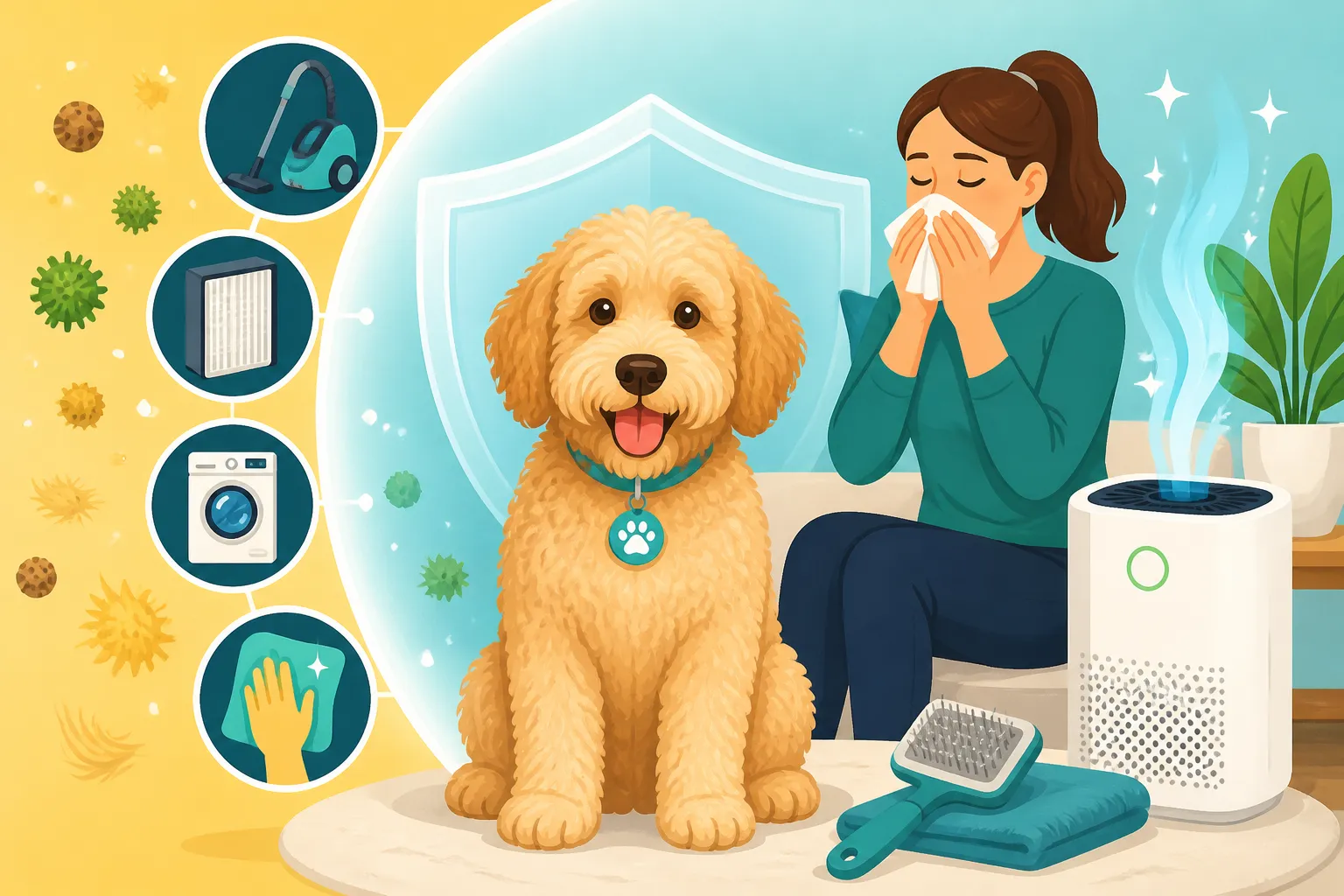
Managing Dog Allergens in a Goldendoodle Household
Bringing a Goldendoodle into your life is pure joy, but for families with allergies, that joy can sometimes come with a persistent sniffle, itchy eyes, or even worse. It's a real bummer when you've fallen head over heels for their charming personality and soft coat, only to find that your allergies are still acting up despite the "hypoallergenic" promise. This guide is all about navigating that reality, offering practical, realistic strategies to help manage dog allergens in your Goldendoodle household so everyone can breathe a little easier and enjoy life with your beloved furry friend.
Understanding Goldendoodle Allergens Beyond the Fluff
When you first hear "Goldendoodle," often the next word is "hypoallergenic." It's a massive selling point, and frankly, a huge reason why so many families with allergy sufferers choose this wonderful crossbreed. But the truth is, no dog is truly 100% hypoallergenic, and understanding why that is, and what actually causes allergies, is the first crucial step in managing them in your home.
It's Not Just Shedding: The Real Culprits
The biggest misconception out there is that dog allergies are caused by hair. While hair can certainly carry allergens, it's not the primary source. The real culprits are specific proteins found in a dog's dander (tiny flakes of skin), saliva, and urine. These microscopic particles contain proteins like Can f 1, which is the main allergen that triggers reactions in sensitive individuals. When your Goldendoodle licks their coat, the saliva dries, and those allergenic proteins become airborne or settle on surfaces. Even if your dog sheds very little hair, they are still shedding dander, producing saliva, and urinating, which means allergens are present.
Think about it: even a hairless dog still has skin and saliva! So, while a low-shedding coat can help keep some allergens from spreading as widely because fewer hairs are carrying them around, it doesn't eliminate the source. This is why many people find themselves scratching their heads when their "hypoallergenic" Goldendoodle still triggers their sniffles. It's not a flaw in your dog or a failure on your part; it's just the nature of how dog allergies work. You can learn more about this by reading Can f 1 and Where a Goldendoodle Carries Allergens.
Why a Goldendoodle Can Still Trigger Allergies
Goldendoodles are a mix of Golden Retrievers and Poodles. While Poodles are often touted as low-shedding, they absolutely produce dander and saliva, which are allergen sources. Golden Retrievers, on the other hand, are known for their beautiful, shedding coats and higher allergen load. When you mix the two, you get a beautiful dog, but also a genetic lottery when it comes to coat type and allergen production. Some Goldendoodles may inherit more of the Poodle's low-shedding coat traits, while others might lean more towards the Golden Retriever side, even within the same litter.
The term "hypoallergenic" often creates a false sense of security. Allergists will tell you that it's a misnomer, and most will caution against relying on it. While many individuals with mild allergies can live comfortably with a Goldendoodle, it's never a guarantee. The amount of allergen protein a specific dog produces varies widely, even among Goldendoodles of the same generation and size. It’s also crucial to remember that individuals react differently to different allergen levels. What one person tolerates, another might struggle with immensely. This is why it's always recommended for prospective owners to spend time with the specific dog they intend to adopt, if possible, before bringing them home. For a deeper dive, check out Why No Goldendoodle Is Truly Hypoallergenic and What Allergists Say About Goldendoodles.
Strategic Cleaning for an Allergy-Friendly Home
Once you understand that allergens are invisible and pervasive, you realize that managing them requires a multi-pronged attack on your home environment. It's not just about cleaning more; it's about cleaning smarter and creating strategic zones to minimize exposure.
Tackling Airborne and Surface Allergens
Allergens float in the air and settle on every surface imaginable. Dusting, vacuuming, and washing are your frontline defenses, but consistency and the right tools make all the difference.
- Vacuuming with a HEPA filter: Regular vacuuming is critical. Aim for at least two to three times a week, especially in areas your Goldendoodle spends a lot of time. Your regular vacuum might just be kicking allergens back into the air. Invest in a vacuum cleaner with a certified HEPA (High-Efficiency Particulate Air) filter. These filters are designed to capture tiny particles, including dander, preventing them from recirculating. Make sure to vacuum carpets, rugs, and even upholstered furniture.
- Dusting and wiping surfaces: Dust all hard surfaces regularly with a damp cloth or an electrostatic duster that traps particles, rather than just moving them around. Think about tables, shelves, windowsills, and even walls. Allergenic proteins can cling to anything. Wipe down hard floors frequently with a damp mop.
- Washing bedding and soft furnishings: This is a big one. Dog beds should be washed weekly, if not more often, in hot water. The same goes for any blankets, throws, or slipcovers your Goldendoodle uses. For human bedding, aim for weekly washing in hot water as well, especially if your dog sleeps in your room (which we'll discuss setting boundaries around shortly!). Consider allergen-proof covers for pillows and mattresses, similar to what you'd use for dust mite allergies.
- Air purifiers: Place HEPA air purifiers in key rooms where your Goldendoodle spends time, and especially in bedrooms if you allow your dog there. These devices continuously filter airborne particles, significantly reducing the concentration of allergens in the air. Look for models with a high CADR (Clean Air Delivery Rate) for the size of your room.
- Consider removing carpets: Carpets are notorious traps for allergens. If possible, replace carpeting with hard flooring like wood, tile, or laminate, which are much easier to clean thoroughly. If removing carpets isn't an option, ensure you're vacuuming very frequently and consider professional carpet cleaning a few times a year.
It might sound like a lot of work, but integrating these tasks into a regular routine makes them less daunting. For more insight into how different levels of cleaning impact allergen levels, take a look at Allergen Levels Measured in Goldendoodle Homes.
Redrawing Boundaries: Where Allergens Live and Don't
Creating "dog-free zones" is a highly effective strategy for managing allergies, particularly in the most personal spaces of your home.
- The bedroom as a sanctuary: The most important dog-free zone is often the allergic person's bedroom. Even if your Goldendoodle is perfectly behaved, keeping them out of this room means significantly reducing the allergen load in the place where you spend eight hours or more each day. Keep the bedroom door closed at all times. Use that HEPA air purifier in the bedroom and wash all bedding frequently. This creates a refuge where your body can recover overnight.
- Furniture boundaries: Decide which furniture your Goldendoodle is allowed on. If they're allowed on sofas or chairs, consider using washable slipcovers or blankets that can be easily removed and laundered regularly. Better yet, train them to stay off the furniture entirely, giving your human seating areas a much-needed allergen break.
- Managing allergens in vehicles: If your Goldendoodle rides in the car with you, allergens will accumulate there too. Use washable car seat covers or dedicated dog hammocks. Vacuum the car regularly, and if possible, use a portable HEPA air purifier during drives.
- Entryway routine: Establish a routine where your Goldendoodle is wiped down (paws and coat) with a damp cloth or a special grooming wipe every time they come in from outside. This helps remove pollen, dust, and environmental allergens they might pick up, reducing the amount they track into your home.
This isn't about loving your dog less; it's about making your shared living environment sustainable for everyone. These boundaries provide crucial breaks from allergen exposure, which can significantly reduce overall allergy symptoms.
Goldendoodle Grooming: Your First Line of Defense
Grooming isn't just about keeping your Goldendoodle looking fabulous; it's a powerful tool in your allergen management arsenal. Because allergens reside on the skin and coat, regular and thorough grooming directly impacts the amount of dander and saliva protein distributed throughout your home.
The Critical Role of Regular Brushing and Bathing
Your Goldendoodle's coat, whether wavy or curly, is a magnet for dander and other environmental allergens. Consistent home grooming is non-negotiable for allergy sufferers.
- Frequent brushing: Aim to brush your Goldendoodle at least every other day, and ideally daily. The key is to brush down to the skin to remove loose hair and dander before it has a chance to shed and spread. Perform brushing outdoors if weather permits, or in an easily cleaned area like a tiled bathroom, to prevent released allergens from settling throughout your home. A good slicker brush followed by a metal comb will be your best friends. This also helps prevent matting, which can trap even more dander close to the skin. This regular routine is detailed further in Brushing a Goldendoodle Often Enough to Stop Matting.
- Bathing routines: While you don't want to over-bathe and dry out your dog's skin, a regular bathing schedule can significantly reduce allergens. Bathing every 2-4 weeks with a gentle, hypoallergenic, veterinarian-approved shampoo helps wash away dander and saliva proteins. Make sure to rinse thoroughly to avoid skin irritation, and then dry your Goldendoodle completely. A good quality shampoo designed for sensitive skin or those that promote a healthy coat can make a big difference. Check out Shampoo That Suits a Goldendoodle Coat for more specific product considerations. Remember, a healthy coat is a less dander-producing coat.
This consistent grooming schedule not only benefits your allergies but also keeps your Goldendoodle's coat healthy and prevents painful mats. It's a win-win for everyone!
Professional Grooming and Ear Care for Allergy Management
Sometimes, what you can do at home isn't enough, or your Goldendoodle just doesn't cooperate with extensive home grooming. That's where professional groomers come in.
- Leveraging professional groomers: Professional groomers have the tools, expertise, and often powerful blow dryers to thoroughly clean your Goldendoodle's coat, removing a significant amount of dander, loose hair, and trapped allergens. They can give your dog a deep wash and trim that you might not be able to replicate at home. Scheduling professional grooms every 6-8 weeks is often recommended for Goldendoodles, especially those with curlier coats prone to matting. You might even consider scheduling this more frequently if your allergies are severe. Clearly communicate your allergy concerns to your groomer so they can take extra care. For timing and expectations, read Booking a Goldendoodle Groom Every Six to Eight Weeks.
- Ear care and overall hygiene: While not directly related to dander, good ear care prevents infections that can lead to excessive head shaking or scratching, potentially releasing more allergens. Goldendoodles often have "furnished" ears, meaning hair grows inside and around the ear canal, making them prone to infections if not properly maintained. Regular cleaning and attention to their ears can prevent issues. Discuss with your vet or groomer whether ear plucking is appropriate for your Goldendoodle, as opinions vary. What's crucial is keeping them clean and dry. A neglected ear can become a persistent problem, impacting your dog's comfort and your peace of mind. Regular attention to Goldendoodle Ear Care Under All That Hair is vital.
Here's a quick overview of how different grooming strategies contribute to allergen reduction:
| Strategy | Frequency | Allergen Reduction Impact | Notes |
|---|---|---|---|
| Daily Brushing | Daily / Every Other Day | High – Removes loose dander, hair, and external allergens | Do outdoors if possible. Use slicker brush & comb. |
| Regular Bathing | Every 2-4 Weeks | Moderate-High – Washes away dander and salivary proteins | Use gentle, hypoallergenic shampoo. Rinse and dry thoroughly. |
| Professional Grooming | Every 6-8 Weeks (or more) | High – Deep cleaning, dander removal, coat maintenance | Communicate allergy concerns. Essential for mat-prone coats. |
| Paw/Coat Wiping (Entryway) | Every Entry to Home | Moderate – Reduces tracked-in outdoor allergens & some dander | Use damp cloth or pet wipes. Focus on paws and lower legs/belly. |
| Ear Cleaning | Weekly / As Needed | Indirect – Prevents infections that can increase scratching/shedding | Consult vet on plucking. Keep ears dry and clean. |
Personal Strategies and Environmental Adjustments
Beyond cleaning and grooming, there are personal habits and dietary considerations that can further reduce your exposure to allergens and promote a healthier environment for everyone in your Goldendoodle household.
Personal Care for Allergic Family Members
Even with the best cleaning and grooming routines, some allergens will always be present. Adopting a few personal habits can make a big difference for allergic individuals.
- Handwashing: Make it a habit to wash your hands immediately after petting your Goldendoodle. This simple act removes allergens from your skin before you can accidentally transfer them to your face, eyes, or mouth.
- Changing clothes: If you've had a particularly enthusiastic play session with your Goldendoodle, or they've been cuddling extensively, consider changing your clothes. Allergens can cling to fabric, and fresh clothes can provide a welcome break from exposure. Keep a set of "dog-free" clothes if you have a dog-free zone.
- Over-the-counter allergy relief: For mild to moderate allergies, over-the-counter antihistamines, nasal sprays, or eye drops can provide symptomatic relief. It's always a good idea to discuss these options with your doctor or pharmacist to find what works best for you and ensure there are no contraindications with other medications.
- Consider a humidifier: In dry climates, dander can become more easily airborne. A humidifier can help by adding moisture to the air, which can cause dander particles to settle more quickly, reducing their airborne presence. Just be sure to keep the humidifier clean to prevent mold growth.
Remember that managing allergies is often a long game, and it's about reducing your overall exposure load. These personal habits, combined with home and dog care, create a much more tolerable environment. Before you brought your Goldendoodle home, you might have even tried Spending Time With a Goldendoodle Before Buying to gauge your reaction, but even that doesn't always prepare you for daily living.
Dietary Considerations and Supplements
While diet won't eliminate allergens, a healthy Goldendoodle with healthy skin and coat tends to shed less dander and hair. What your Goldendoodle eats can play a role in their skin health.
- High-quality diet: Feeding your Goldendoodle a high-quality, balanced diet provides the nutrients necessary for healthy skin and a shiny coat. Look for foods with good sources of animal protein and healthy fats. Poor nutrition can lead to dry, flaky skin, which means more dander. Some Goldendoodles can also have food allergies that manifest as itchy skin, leading to more scratching and dander. If you suspect a food allergy, consult your vet for an elimination diet.
- Omega fatty acids: Supplements rich in omega-3 and omega-6 fatty acids can be incredibly beneficial for skin and coat health. These often come in the form of fish oil or flaxseed oil. A healthy skin barrier is less prone to dryness and flaking, which in turn means less dander. You can often find these as supplements or incorporated into high-quality dog foods available from places like Chewy. Always discuss any new supplements with your veterinarian before adding them to your Goldendoodle's regimen. A strong, healthy coat and skin contribute to less shedding of problematic dander. You can learn more about this in Omega Oils for a Goldendoodle Coat.
By combining these proactive environmental and personal strategies, along with a focus on your Goldendoodle's overall health and grooming, you can significantly reduce the allergen burden in your home. It's an ongoing effort, but the joy and companionship your Goldendoodle brings are truly worth it.
Disclaimer
This article is for general informational purposes only and does not constitute professional advice. Laws, prices and regulations vary by location and change over time. Consult a qualified professional for guidance on your specific situation.