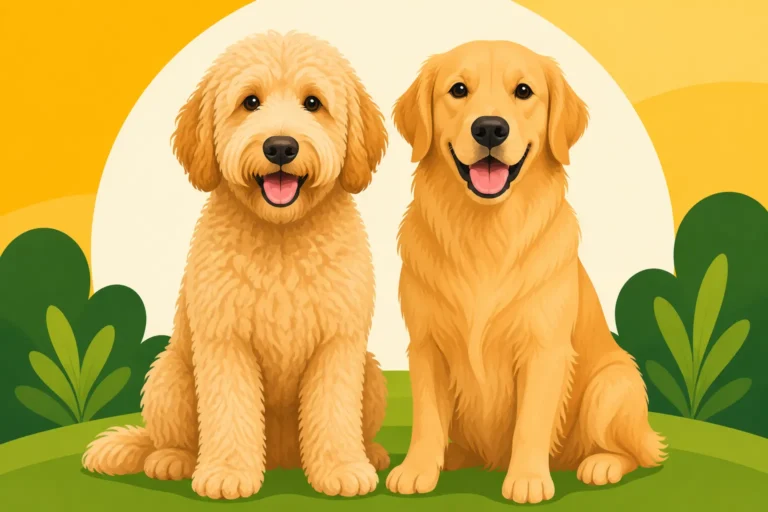
The Goldendoodle Against Other Doodle Crosses
Stepping into the world of "Doodle dogs" can feel like walking into a bustling market with a million different options shouting for your attention. From Goldendoodles to Labradoodles, Bernedoodles, and countless others, it's easy to feel overwhelmed and unsure which furry friend is truly the right fit for your family and lifestyle. This comprehensive guide is here to help you navigate the sea of Doodle crosses, focusing on the beloved Goldendoodle and offering direct comparisons to popular alternatives so you can make an informed, confident decision.
Understanding the "Doodle" Phenomenon: Why So Many Choices?
The sheer number of Poodle crossbreeds on the scene these days can make your head spin. It seems like every other week there's a new "oodle" or "poo" popping up, each with adorable names and promises of hypoallergenic coats and friendly dispositions. But what’s really behind this explosion of Doodle varieties, and how do you even begin to make sense of it all?
The Allure of the Poodle Cross
It all starts with the Poodle, a dog breed that, let's be honest, often gets a bad rap for being "fussy" or "showy." But beneath that elegant exterior lies a highly intelligent, athletic, and surprisingly hardy working dog with a non-shedding, low-allergen coat. When breeders started crossing Poodles with other popular breeds, the goal was often to combine the Poodle's desirable coat and smarts with the beloved temperaments of breeds like the Golden Retriever or Labrador. This promised a dog that might be less prone to shedding and better for allergy sufferers, while retaining the friendly, biddable nature of a retriever.
The early crosses were an exciting prospect for many families. Imagine the intelligence and low-shedding qualities of a Poodle blended with the universally adored, gentle nature of a Golden Retriever. It sounded like a dream come true, didn't it? For many, it was, and the initial success stories fueled the fire, making these new crosses incredibly sought after. People who loved the idea of a family dog but struggled with allergies finally saw a glimmer of hope.
This focus on the Poodle's coat, combined with its keen intelligence and trainability, made it the perfect candidate for creating "designer dogs." The idea was that you could get the best of both worlds: a dog with the sweet disposition of a Golden Retriever or the outgoing nature of a Labrador, but without the constant tumbleweeds of hair. This fundamental appeal is what kickstarted the entire Doodle craze and continues to drive the demand for these delightful crossbreeds today.
The Proliferation of Doodle Breeds
Once the Goldendoodle and Labradoodle gained traction, it was only a matter of time before other breeders started experimenting. If crossing a Poodle with a Golden Retriever produced such wonderful results, why not try a Bernese Mountain Dog? Or an Australian Shepherd? Or a Great Dane? The possibilities seemed endless, and soon, the market was flooded with new "designer" breeds, each with its own catchy name. It became a bit of a free-for-all, with demand often outpacing ethical breeding practices.
This rapid expansion meant that while some crosses were well-considered, others might have been more about novelty or capitalizing on a trend. Without established breed clubs or health registries for these crosses, there was little oversight. Owners soon learned that the traits weren't always a guaranteed blend; sometimes you'd get a dog that leaned heavily towards one parent, sometimes a wild card. This unpredictability became a hallmark of the Doodle world, adding both excitement and a layer of risk for prospective owners.
The marketing around these new Doodle breeds often highlighted their cuteness and the promise of a "hypoallergenic" pet, sometimes overshadowing the extensive research and responsible breeding required to produce healthy, well-tempered puppies. Names like "Cavapoo," "Maltipoo," and "Sheepadoodle" became household terms, each suggesting a unique combination of traits, but all united by their Poodle heritage. It’s a testament to the Poodle's versatility and the public's desire for a specific type of companion.
The Lack of Breed Standardization
One of the biggest differences between a purebred dog and any Doodle cross is the lack of breed standardization. A Golden Retriever breeder adheres to specific standards set by kennel clubs like the AKC, which dictate everything from temperament to physical appearance and health testing requirements. For Doodles, there's no such overarching standard. This means that two Goldendoodles, even from the same generation, can look wildly different, have vastly different temperaments, and come from parents with wildly different health clearances.
This lack of standardization isn't necessarily a bad thing if you're working with a highly reputable breeder who is transparent about their lines and health testing. However, it does mean that buying a Doodle requires much more careful research on your part. You can't just assume that a "Goldendoodle" will always have a specific coat type or temperament; you have to look at the individual parent dogs and their lineage. You really need to ask tough questions about Health Testing Both Goldendoodle Parents Should Have and understand what those results mean.
Without recognized breed clubs, there are no mandatory health schemes that all breeders must adhere to. This puts the onus entirely on the buyer to do their due diligence, ask for proof of health testing for both parent breeds, and understand the potential genetic risks. This is why you'll often hear experienced Doodle owners stress that a good breeder is more important than the "Doodle" name itself. The unpredictability of traits and health outcomes can be a significant challenge for unsuspecting buyers who assume all Doodles are created equal.
The Goldendoodle: A Closer Look at Its Core Appeal
The Goldendoodle truly captured the hearts of many, arguably becoming the most popular of all the Doodle crosses. Its enduring appeal lies in the specific blend of two incredibly beloved parent breeds, creating a dog that embodies many of the traits modern families seek in a companion.
The Golden Retriever and Poodle Blend
At its heart, the Goldendoodle is a mix of the Golden Retriever and the Poodle. The Golden Retriever contributes its famously friendly, loyal, and biddable nature. They are known for being excellent family dogs, patient with children, and eager to please. This is the half that makes a Goldendoodle inherently sweet and sociable. They thrive on being part of the family unit, often following you from room to room just to be close. Their natural retrieving instinct also comes from this side, making fetch a favorite game for many.
Then there's the Poodle, bringing its undeniable intelligence, elegant gait, and that prized low-shedding coat. Poodles are incredibly smart and athletic, often excelling in canine sports and obedience. They contribute a sharp mind and a capacity for learning that makes Goldendoodles generally easy to train. Why a Goldendoodle Learns Faster Than Most Crosses This combination of a Golden's eagerness to please and a Poodle's keen intellect creates a dog that is often highly responsive and quick to pick up new commands and routines.
When these two breeds come together, you often get a dog that combines the best qualities of both: the Golden's warm, affectionate disposition with the Poodle's cleverness and distinctive coat. This blend often results in a Goldendoodle that is not only smart and easy to train but also incredibly social, forming strong bonds with its human family. You can learn more about What a Goldendoodle Inherits From Each Parent Breed to understand the specific genetic contributions.
Temperament and Trainability
Goldendoodles are celebrated for their generally sunny dispositions and their desire to be involved in everything their family does. They are often described as "people pleasers," which makes them a joy to train with positive reinforcement. They pick up cues quickly and love having a job to do, whether it's learning complex tricks or simply bringing you their leash for a walk. Their high intelligence means they need mental stimulation as much as physical exercise to stay happy and out of trouble. Puzzle toys, training sessions, and interactive games are all excellent ways to engage their minds.
However, no dog is perfect, and Goldendoodles can come with their own set of challenges. Their strong desire for human companionship can sometimes manifest as Goldendoodle Separation Anxiety From Both Parent Lines if they aren't properly acclimated to alone time from a young age. They are also known for their enthusiastic greetings, which often include jumping up to say hello. While endearing when they're puppies, this quickly becomes problematic as they grow larger. Addressing Goldendoodle Jumping and the Impulse Control Problem early with consistent training is essential.
Their inherent friendliness means they usually get along well with children and other pets, provided they are properly socialized from puppyhood. They thrive in homes where they are considered part of the family and receive consistent attention and affection. This makes them fantastic companions for active families, individuals who work from home, or retirees looking for an engaging and loving partner.
Coat Types and Hypoallergenic Claims
Perhaps the most talked-about aspect of the Goldendoodle, and indeed all Doodles, is their coat. Goldendoodles can have a range of coat types, from straight (often called "hair" coats), to wavy (often called "fleece" coats), to curly (often called "wool" coats). The curlier the coat, the less likely it is to shed, which is why many people seek out F1B or Multigen Goldendoodles with more Poodle influence. However, it's crucial to understand that even a non-shedding coat requires significant grooming.
The term "hypoallergenic" is often applied to Goldendoodles, but it's a bit misleading. No dog is truly 100% hypoallergenic, as allergies are triggered by dander, saliva, and urine, not just hair. Dogs with low-shedding coats simply release less dander into the environment. While many allergy sufferers find they can live comfortably with a Goldendoodle, some will still react. It’s always best to spend time with Goldendoodles before committing if allergies are a concern.
Regardless of the specific coat type, all Goldendoodles require regular grooming. Those beautiful curls and waves are prone to matting if not brushed frequently and thoroughly. This isn't just a cosmetic issue; mats can be painful, pulling on the skin and leading to skin infections. You'll need to be dedicated to Brushing a Goldendoodle Often Enough to Stop Matting and invest in quality grooming tools. Professional grooming every 6-8 weeks is also a must, which is a significant ongoing expense. Understanding The Three Goldendoodle Coat Types and How to Tell Them is vital before you even bring a puppy home.
Goldendoodle vs. Labradoodle: The Classic Comparison
When people first start researching Doodles, the choice often comes down to the Goldendoodle and the Labradoodle. They are both retriever-Poodle crosses, leading many to believe they are virtually identical. While they share many similarities, there are subtle yet important distinctions rooted in their parent breeds.
Origin Stories and Core Differences
The Labradoodle actually predates the Goldendoodle as a recognized cross, originating in Australia in the late 1980s. The initial goal was to create a hypoallergenic guide dog for a visually impaired woman whose husband had dog allergies. The Labrador Retriever was chosen for its excellent temperament and trainability for service work, and the Poodle for its low-shedding coat. The Goldendoodle followed soon after, applying the same crossbreeding principle with a Golden Retriever.
The core difference, then, lies in the specific retriever parent. The Labrador Retriever is known for its high energy, strong retrieve drive, and sometimes more independent or boisterous nature compared to the Golden. While Goldens are famously eager to please, Labs can be equally biddable but with a slightly more robust energy level and a drive that can sometimes be all-consuming. This subtle difference in the retriever influence can lead to variations in the resulting Doodle's personality and needs.
Think of it this way: both are fantastic family dogs, but the Labrador side can bring a touch more "go, go, go" and a bit less of the Golden's almost universally soft demeanor. These nuances mean that while both are intelligent and friendly, a Labradoodle might be more inclined to chase a ball endlessly, while a Goldendoodle might be content with a slightly less intense retrieving session, preferring to snuggle on the couch afterwards.
Temperament and Activity Levels
Both Goldendoodles and Labradoodles are generally friendly, intelligent, and eager to please, making them highly trainable. However, Labradoodles often inherit a higher energy level and a more intense retrieving drive from their Labrador parent. This can mean they require a bit more structured exercise and mental stimulation to prevent boredom and destructive behaviors. They might be more prone to constantly seeking out toys or engaging in vigorous play sessions.
Goldendoodles, while still energetic and playful, often have a slightly softer, more laid-back demeanor. They are incredibly adaptable and, while they love a good run or a game of fetch, they are often just as happy to settle down for cuddles. This isn't to say a Goldendoodle won't have energy, but it might be more easily managed for some households. Goldens are known for their gentle nature, which often translates to their Doodle offspring.
Ultimately, both breeds need substantial daily exercise and mental engagement. Neglecting these needs in either a Goldendoodle or a Labradoodle can lead to hyperactivity, nuisance barking, or destructive chewing. However, if you're looking for a dog that truly lives for the retrieve and has a seemingly endless battery, a Labradoodle might be slightly more likely to fit that bill. If you prefer a dog that's a bit more "chill" while still being active, a Goldendoodle might lean that way.
Grooming and Coat Expectations
When it comes to grooming, Goldendoodles and Labradoodles are largely on par, requiring significant commitment. Both can have hair, fleece, or wool coats, and both are susceptible to matting if not brushed regularly and professionally groomed every 6-8 weeks. There's a common misconception that Labradoodles are inherently "more hypoallergenic" or have "better" coats than Goldendoodles, but this isn't necessarily true. The coat type is determined by genetics from both parent Poodles and Retrievers, and it varies greatly within both crosses.
The Australian Labradoodle, in particular, has been bred for many generations with the goal of creating more consistent coat types (often a low-shedding fleece or wool) and standardized temperaments. This means you might find more consistency in coat type within an Australian Labradoodle line than with some Goldendoodle lines, especially first-generation Goldendoodles (F1). However, a well-bred Goldendoodle from a responsible breeder will also prioritize healthy, manageable coats.
Regardless of which Doodle you choose, you need to budget for significant grooming expenses, or commit to learning how to do much of it yourself. Goldendoodle Grooming as the Biggest Line in the Budget is a very real statement that applies equally to Labradoodles. Both breeds will need regular brushing, baths, ear cleaning, and professional trims to keep their coats healthy and mat-free. The idea that one is magically easier to groom than the other is largely a myth; daily maintenance is key for both.
Goldendoodle vs. Bernedoodle: Size, Temperament, and Coat Differences
Moving beyond the retriever crosses, the Bernedoodle offers a very different set of traits due to its Bernese Mountain Dog heritage. If you're considering a larger, more imposing, yet still friendly Doodle, the Bernedoodle often comes to mind.
Bernese Mountain Dog Influence
The Bernedoodle is a cross between a Bernese Mountain Dog and a Poodle. The Bernese Mountain Dog is a large, sturdy working dog known for its striking tricolor coat, loyal disposition, and calm, affectionate nature. They are often described as "gentle giants" and are very devoted to their families. However, they are also prone to certain health issues, particularly various forms of cancer and joint problems, and have a comparatively shorter lifespan than many breeds.
This means that Bernedoodles are typically much larger than Goldendoodles, especially Standard Bernedoodles. While you can find Mini Bernedoodles, the sheer size of the Bernese parent means even these can be quite substantial. The Bernese influence also brings that distinctive tri-color pattern (black, white, and rust) which is highly sought after in Bernedoodles, though solid colors are also possible. This is a stark contrast to the more uniform cream, apricot, or red colors commonly seen in Goldendoodles.
So, if you're looking for a physically imposing dog with a strong presence and striking looks, the Bernedoodle might catch your eye. However, be prepared for a larger dog with different potential health considerations and a temperament that, while sweet, can be a bit more independent or stubborn than a Goldendoodle.
Temperament and Trainability
Bernedoodles generally inherit the loving, goofy nature of the Bernese and the intelligence of the Poodle. They are often very devoted and gentle, making them good family dogs, particularly if socialized well. They can be a bit more aloof with strangers than the universally friendly Goldendoodle, sometimes taking a bit longer to warm up, which isn't necessarily a bad thing. However, they can also inherit a stubborn streak from the Bernese side, which means training might require more patience and consistency than with an eager-to-please Goldendoodle.
Where a Goldendoodle often lives to make you happy, a Bernedoodle might first consider "what's in it for me?" This doesn't mean they aren't trainable; it just means you'll need to be consistent, clear, and make training fun and rewarding. Their sheer size also means that early leash training and manners are paramount. You don't want a 90-pound dog pulling you down the street!
In terms of activity, Bernedoodles are generally less frantic than Goldendoodles. They enjoy their walks and playtime but are often quite content to chill out at home afterward. This can make them a good fit for families who enjoy activity but don't need a dog that demands constant, high-intensity exercise. Goldendoodles often have a more consistently "on" switch for play and mental engagement, whereas a Bernedoodle might be more inclined to nap after a good walk.
Health Concerns and Lifespan
This is where the Bernedoodle often has a significant differentiator from the Goldendoodle. The Bernese Mountain Dog breed has a tragically short average lifespan, often only 6-8 years, largely due to high rates of cancer. While crossing with a Poodle can introduce some The Goldendoodle Hybrid Vigor Claim and Where It Breaks, it doesn't eliminate the genetic predisposition entirely. Bernedoodles still face a higher risk of certain cancers and orthopedic issues common to large breeds.
Goldendoodles, while not immune to health issues (like hip and elbow dysplasia, certain cancers from the Golden side, and Addison's disease from the Poodle side), generally have a longer average lifespan than Bernedoodles, typically 10-15 years. This is a significant consideration for families who are looking for a long-term companion. It's vital for Bernedoodle breeders to conduct extensive health testing on both parent breeds to try and mitigate these risks, but it's a battle against very strong genetic predispositions. You should always insist on seeing The DNA Panel a Goldendoodle Breeder Should Run for parents.
When evaluating a Bernedoodle, researching the health history of the Bernese parent's lines is paramount. Responsible breeders will be very open about this. While the idea of a gentle giant is appealing, the potential for heartbreak due to health issues and a shorter lifespan is a real factor to weigh carefully. A Goldendoodle, by comparison, often offers a more predictable How Long Goldendoodles Usually Live.
Goldendoodle vs. Sheepadoodle and Aussiedoodle: High Energy and Unique Needs
If you thought Goldendoodles were active, prepare for a whole new level of energy and specific breed traits when considering Sheepadoodles and Aussiedoodles. These crosses bring in working dog heritage, which translates to a vastly different set of needs for their owners.
Old English Sheepdog and Australian Shepherd Traits
The Sheepadoodle is a cross between an Old English Sheepdog (OES) and a Poodle. Old English Sheepdogs are large, shaggy, intelligent, and famously playful dogs with a strong herding instinct. They are boisterous and can be quite strong-willed, with a coat that demands immense grooming. The Aussiedoodle, on the other hand, is a cross between an Australian Shepherd and a Poodle. Australian Shepherds are renowned for their incredible intelligence, intense energy, agility, and strong herding and protective instincts. They are dogs that thrive on having a job to do.
Compared to the Golden Retriever, both the OES and the Australian Shepherd introduce a much stronger working drive and often a more independent, sometimes demanding, temperament. Goldens were bred to retrieve game and work alongside hunters in partnership, making them inherently biddable. OES and Aussies were bred to manage livestock, which requires independent decision-making, boundless energy, and sometimes a protective or "bossy" streak. These are not dogs that are content to simply lounge around the house.
So, while Goldendoodles embody a general desire to please and be friendly, Sheepadoodles and Aussiedoodles often bring a more intense focus, a need for mental engagement that goes beyond basic obedience, and a potential for specific herding behaviors. If you're looking for a dog to actively partner with in sports or work, these Doodles might be a fit, but they require a very committed owner.
Activity Levels and Mental Stimulation
This is where the biggest distinction lies. Goldendoodles definitely need daily exercise and mental stimulation – at least an hour or two of walks, playtime, and training. Goldendoodle Exercise and Mental Work Every Day is non-negotiable for their well-being. However, Sheepadoodles and Aussiedoodles often take this to an extreme. An Australian Shepherd, for example, can easily run for miles and still be ready for more. Their Poodle half, also being an active working dog, only amplifies this.
These dogs typically require at least 1-2 hours of strenuous physical exercise daily, often more, coupled with significant mental work. This isn't just a walk around the block; it means hiking, running, agility, flyball, or intensive training sessions that challenge their intelligent minds. Without adequate outlets for their energy and working drives, Sheepadoodles and especially Aussiedoodles can become bored, anxious, and destructive. They might chew up furniture, bark incessantly, or develop obsessive behaviors.
A Goldendoodle might enjoy a good game of fetch in the yard for 30 minutes and then be happy to nap. An Aussiedoodle might play fetch for 30 minutes, and then stare at you, ball still in mouth, clearly asking "What's next?" They often need a "job" – whether it's agility, herding games, scent work, or advanced obedience – to feel fulfilled. This makes them unsuitable for more sedentary lifestyles or homes where owners cannot commit to intense daily engagement.
Grooming and Potential Behavioral Quirks
Grooming for Sheepadoodles, in particular, can be even more demanding than for Goldendoodles. The Old English Sheepdog's coat is incredibly dense, thick, and prone to matting, and when combined with the Poodle's curl, it becomes a formidable grooming challenge. Daily, thorough line brushing is often necessary, along with frequent professional grooming appointments. Aussiedoodle coats vary greatly, but many also require extensive care.
Beyond grooming, the herding parent breeds introduce specific behavioral quirks. Australian Shepherds and Old English Sheepdogs were bred to manage livestock, which means they can exhibit herding behaviors like nipping at heels (especially children), circling, or trying to "herd" family members. They can also be more watchful or protective of their families than the more generally outgoing Goldendoodle, sometimes leading to reactivity if not properly socialized.
For families with small children, the herding instinct can be a significant consideration, as puppies might try to "herd" toddlers by nipping. While these behaviors can be managed with consistent training, they are inherent to the breed and require understanding and patience from owners. Goldendoodles, generally, do not possess these strong herding instincts, making them a more straightforward choice for many family dynamics.
Beyond the Big Names: Other Doodle Crosses to Consider
The Doodle world is vast, and beyond the Goldendoodle, Labradoodle, and Bernedoodle, there's a myriad of other crosses, each with its own unique blend of traits. It's exciting to explore these options, but it's also crucial to apply the same careful scrutiny you would to any dog.
The Ever-Expanding Doodle Family
It seems like every other day there's a new combination emerging. You might encounter Cockapoos (Cocker Spaniel + Poodle), Cavapoos (Cavalier King Charles Spaniel + Poodle), Maltipoos (Maltese + Poodle), Irishdoodles (Irish Setter + Poodle), Springerdoodles (Springer Spaniel + Poodle), Pyredoodles (Great Pyrenees + Poodle), and even Saint Berdoodles (Saint Bernard + Poodle). Each of these aims to combine the Poodle's intelligence and low-shedding qualities with the specific characteristics of another breed.
For example, a Cavapoo or Maltipoo might appeal to someone looking for a much smaller, lower-energy companion than a Goldendoodle, suitable for apartment living and needing less strenuous exercise. A Pyredoodle or Saint Berdoodle, on the other hand, would be massive dogs, inheriting the guardian instincts of their respective parent breeds, making them very different in temperament from a sociable Goldendoodle.
The sheer variety means that there's likely a Doodle cross out there to suit almost any lifestyle, but the greater the number of crosses, the more important it becomes to avoid falling for trendy names and instead focus on the individual dogs involved. The further you stray from the more established Goldendoodle or Labradoodle lines, the greater the potential for unpredictability in temperament, health, and coat.
Researching the Parent Breeds is Crucial
The single most important piece of advice when considering any Doodle cross is to thoroughly research both parent breeds. Don't just rely on the "Doodle" label or a cute photo. Understand the fundamental characteristics of each parent: their typical size, energy levels, grooming needs, common health issues, and inherent temperamental traits.
For instance, if you're looking at an Irishdoodle, you need to know about the high energy and strong prey drive of the Irish Setter, not just the Poodle's smarts. If a Schnoodle (Schnauzer + Poodle) catches your eye, investigate the Schnauzer's terrier-like stubbornness and alertness. This in-depth understanding will give you a much clearer picture of what to expect from the cross. Remember, the puppy is a genetic lottery, inheriting a mix of traits from both sides, and you could end up with a dog that leans heavily towards one parent you didn't fully research.
Always prioritize ethical breeders who are transparent about their breeding practices, openly share health clearances for both parents, and are willing to discuss the specific traits and health predispositions of their parent lines. Don't be shy about asking for specific OFA Clearances on a Goldendoodle Sire and Dam or similar documentation for other breed crosses. A good breeder will educate you about the realities of their dogs, not just the romanticized version. You want a breeder who cares more about the health and temperament of their puppies than simply capitalizing on the "Doodle" trend.
Identifying Your "Must-Have" Traits
Before even looking at specific Doodle crosses, sit down and make a realistic list of your "must-have" and "can't-have" traits in a dog. Be brutally honest with yourself about your lifestyle, time commitment, and living situation.
| Trait Category | Must-Have (Example) | Can't-Have (Example) |
|---|---|---|
| Size | Medium (25-50 lbs) | Giant (80+ lbs) |
| Energy Level | Moderate, daily walks | Extremely high, needs hours of intense exercise |
| Grooming | Low-shedding, willing to brush weekly | High-shedding, constant matting risk |
| Temperament | Very friendly, good with kids | Prone to separation anxiety, aggressive |
| Trainability | Eager to please, responds well to positive training | Stubborn, difficult to motivate |
| Vocalization | Quiet indoors | Excessive barking |
| Health | Parents health tested for common issues | Unknown health history, significant breed risks |
Once you have this list, you can then evaluate which parent breeds, and therefore which Doodle crosses, are most likely to produce a dog that aligns with your criteria. For example, if "extremely high energy" is a "can't-have," you might rule out Aussiedoodles. If "giant size" is a "can't-have," a Bernedoodle might not be your best bet. If "very friendly, good with kids" is a "must-have," a Goldendoodle often shines.
Remember that a crossbreed means you have a blend, not a guarantee. Even within the same litter, puppies can inherit different combinations of traits. This makes the breeder's knowledge of their specific lines and the temperament of the individual parents incredibly important. A good breeder will match puppies to families based on these traits, rather than letting you pick purely on looks.
Making Your Choice: Factors Beyond the "Doodle" Name
Ultimately, choosing a dog, whether purebred or a cross, is about finding the right companion for your unique circumstances. While the "Doodle" name might grab your attention, the true success of the adoption lies in a deeper alignment of needs and expectations.
Lifestyle Compatibility is Key
Before you even start looking at breeds, take a long, honest look at your daily life. How much time do you genuinely have for exercise? A Goldendoodle, for instance, needs consistent daily walks and playtime, about an hour or more, to be content. If you're a busy professional working long hours, will you have the energy to come home and give them that attention, or will they be stuck inside all day? What about grooming? If you can't commit to regular brushing and professional appointments, a Doodle with a high-maintenance coat might quickly become a matted, unhappy dog.
Your living situation also plays a huge role. While a Goldendoodle can adapt to Goldendoodles in Apartments Without a Yard if exercised sufficiently, a massive Pyredoodle might feel cramped without ample space. The dynamic of your family, including children and other pets, is another crucial consideration. A Goldendoodle's typically gentle and patient nature often makes them a great fit for Goldendoodles With Children and Other Pets, but a high-drive working Doodle might need more careful management.
It’s easy to fall in love with the idea of a dog, but living with one is a long-term commitment. Don't underestimate the time, energy, and financial resources required. A mismatch in lifestyle is one of the leading causes of dogs ending up in shelters, and Doodle rescues are unfortunately seeing more and more surrendered dogs from owners unprepared for the reality of their care.
Prioritizing Health and Responsible Breeding
No matter which Doodle cross you're considering, the importance of choosing a responsible, ethical breeder cannot be overstated. This is even more critical for crossbreeds where there's no official registry overseeing health standards. A good breeder will conduct comprehensive health testing on both parent dogs for genetic conditions common to their respective breeds. For Goldendoodles, this means testing for hip and elbow dysplasia, eye conditions like PRA, and heart issues, among others. You should always ask to see proof of these screenings.
Don't settle for a breeder who only offers a "health guarantee" without transparently sharing the health test results of their breeding dogs. Guarantees are often limited and don't replace the proactive testing that prevents problems. Be wary of breeders who offer many different "Doodle" types, sell puppies without asking you extensive questions, or allow you to pick a puppy based purely on color or perceived "hypoallergenic" qualities. These can be red flags for How to Spot a Goldendoodle Puppy Mill.
A responsible breeder will be passionate about their dogs, knowledgeable about genetics, and focused on breeding healthy, well-tempered puppies. They should be able to explain their breeding goals, why they chose a particular sire and dam, and what health clearances both parents have. They should also provide references, allow you to visit their facility (or conduct thorough video calls), and have a clear contract. This due diligence protects not only you but also the puppies they bring into the world.
The Commitment of Dog Ownership
Bringing any dog into your home is a huge commitment, spanning many years. For a Goldendoodle, this could easily be 10-15 years. You're not just buying a puppy; you're committing to its care, training, health, and happiness for its entire life. This includes significant financial responsibilities beyond the initial purchase price.
Between high-quality food, regular grooming, routine veterinary care, parasite prevention, training classes, and unexpected emergency vet bills, the annual cost of owning a Goldendoodle is substantial. What a Goldendoodle Costs a Year With Grooming In can easily run into the thousands. It's wise to budget for these ongoing expenses, or consider pet insurance to help cover unforeseen medical costs. Twelve Years of Goldendoodle Bills Added Up can be a truly eye-opening figure, so planning is essential.
If a purebred dog isn't for you, or if you prefer a crossbreed, consider adopting from a reputable rescue organization. Doodle rescues exist across the country, dedicated to rehoming Doodles whose previous owners were unprepared for their needs. Adopting a Goldendoodle From Doodle Rescue can be a wonderfully rewarding experience, giving a second chance to a dog in need. No matter what kind of Doodle you choose, ensure you're ready for the full, joyful, and sometimes challenging journey of dog ownership.
Disclaimer
This article is for general informational purposes only and does not constitute professional advice. Laws, prices and regulations vary by location and change over time. Consult a qualified professional for guidance on your specific situation.