Multigen Goldendoodles and Coat Consistency
If you've ever felt utterly bewildered by Goldendoodle coat types, especially when trying to understand what you'll get beyond an F1 or F1b, you're absolutely not alone. The promise of a "non-shedding" or "hypoallergenic" coat often comes with a huge asterisk, and the reality can be a tangled mess of unexpected shedding and endless grooming challenges. This guide is going to peel back the layers of multigen Goldendoodles, diving deep into what breeders are aiming for with coat consistency and, more importantly, what you can realistically expect when you bring one home.
What Exactly Is a Multigen Goldendoodle?
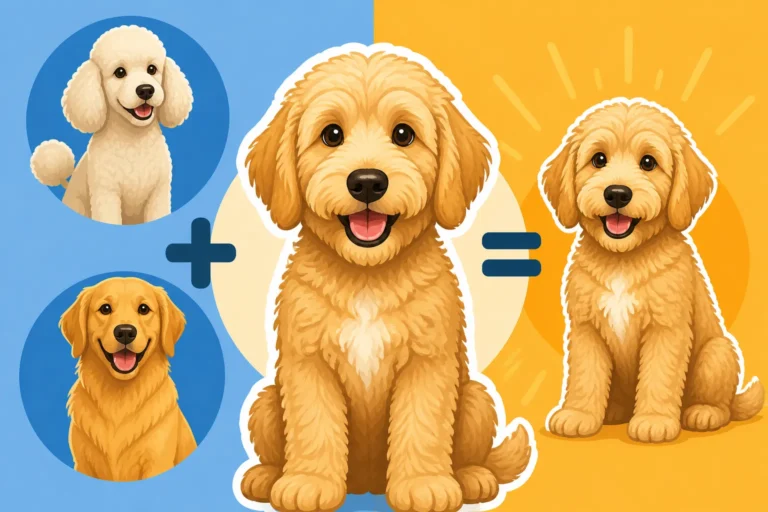
Let's clear up some common confusion right off the bat. When we talk about Goldendoodles, we often hear terms like F1, F1b, F2, and then suddenly, "multigen." It can feel like a secret code, and for many prospective owners, it simply adds to the stress of choosing a puppy. An F1 Goldendoodle is a first-generation cross – a purebred Golden Retriever bred to a purebred Poodle. An F1b is an F1 Goldendoodle bred back to a Poodle (or sometimes a Golden Retriever), making it 75% Poodle and 25% Golden Retriever, or vice-versa. An F2 is a breeding of two F1 Goldendoodles.
Now, a multigen Goldendoodle is where the generations go beyond F2. It's essentially a Goldendoodle that has Goldendoodle parents who themselves had Goldendoodle parents, and so on, for at least three or more generations of Goldendoodle-to-Goldendoodle breeding. This isn't just a fancy name; it signifies a very specific intent by breeders. Their goal with multigen breeding is to stabilize certain traits, particularly coat type and temperament, that can be highly variable in earlier generations. Think of it like trying to refine a recipe. The first few times you try it, you might get wildly different results. But after many iterations, carefully selecting the best ingredients and techniques each time, you start to get a much more consistent, predictable outcome.
For those of us who adore the Goldendoodle but have been burned by unexpected shedding or wildly varied temperaments in earlier crosses, the concept of a multigen can feel like a beacon of hope. Breeders aren't just crossing two different dogs and hoping for the best; they're working with a deeper understanding of the genetic makeup of their breeding stock, aiming to produce puppies that more reliably carry the desired Goldendoodle traits, especially the famous low-shedding, wavy, or curly coat. Understanding What a Goldendoodle Actually Is and Is Not helps clarify why this generational progression is so important for predictability.
The Quest for Predictability: Why Multigen for Coat Consistency?
The primary driver behind breeding multigen Goldendoodles is the pursuit of predictability, especially when it comes to their coats. If you've ever seen an F1 Goldendoodle litter, you know you can get everything from a dog that looks almost like a Golden Retriever with minimal furnishings (and often sheds quite a bit) to one that looks very Poodle-like with tight curls and virtually no shedding. This wide variation is Why an F1 Goldendoodle Is the Least Predictable Healthwise and coat-wise.
Breeders aiming for multigen status are trying to stack the genetic deck in their favor. They are typically selecting breeding dogs that consistently express the traits they want – specifically, the 'furnishings' gene (which gives Goldendoodles their iconic beard and eyebrows) and the curl gene, both of which are dominant. By ensuring that both parents in a multigen pairing carry two copies of these desired genes (meaning they are homozygous), the chances of their offspring inheriting these traits become significantly higher. This is the scientific explanation for why a multigen theoretically offers a more consistent coat.
The ideal multigen Goldendoodle coat is often described as a soft fleece or wool, wavy to curly, and most importantly, low to non-shedding. This is a huge draw for people with allergies, though it’s crucial to remember that Why No Goldendoodle Is Truly Hypoallergenic in the absolute sense. However, a multigen Goldendoodle with a reliably low-shedding coat can make a world of difference for many allergy sufferers. Breeders will often conduct DNA Coat Testing on a Goldendoodle to confirm the genetic makeup of their breeding dogs, looking for specific markers that indicate the presence of furnishings (F/F) and a low-shedding gene (+/+ at the shedding locus). This allows them to make more informed decisions, hopefully producing puppies with the coveted consistent coat. The table below illustrates the general expectation of coat predictability across generations:
| Goldendoodle Generation | Parentage | Typical Coat Predictability | Shedding Potential | Grooming Needs (General) |
|---|---|---|---|---|
| F1 | Golden Retriever x Poodle | Highly Variable | Low to Moderate/High | Moderate to High |
| F1b | F1 Goldendoodle x Poodle | More Predictable (Poodle-like) | Low to Very Low | High |
| F2 | F1 Goldendoodle x F1 Goldendoodle | Variable (can revert) | Low to Moderate | Moderate to High |
| Multigen | Goldendoodle x Goldendoodle (3+ gens) | Highly Predictable | Very Low to Non-shedding | High |
The goal isn't just about reducing shedding; it's also about achieving a uniform texture and curl pattern that is highly desirable and often easier to manage, provided you commit to regular care. When breeders are able to consistently produce puppies with these characteristics, it offers a level of assurance that simply isn't present in earlier generations, which is why multigens often command a premium price and have longer waiting lists.
The Real-World Experience: Unpacking Coat Consistency in Multigen Goldendoodles
While the genetic intent behind multigen Goldendoodles is to achieve greater coat consistency, it's vital to approach this with realistic expectations. Genetics, even when carefully managed, can still throw curveballs. You might be hoping for that perfectly wavy, non-shedding fleece coat, but occasionally, even a multigen can surprise you. I've known owners who brought home a multigen puppy expecting one type of coat, only to watch it develop into something slightly different during The Goldendoodle Coat Change at Eight to Twelve Months.
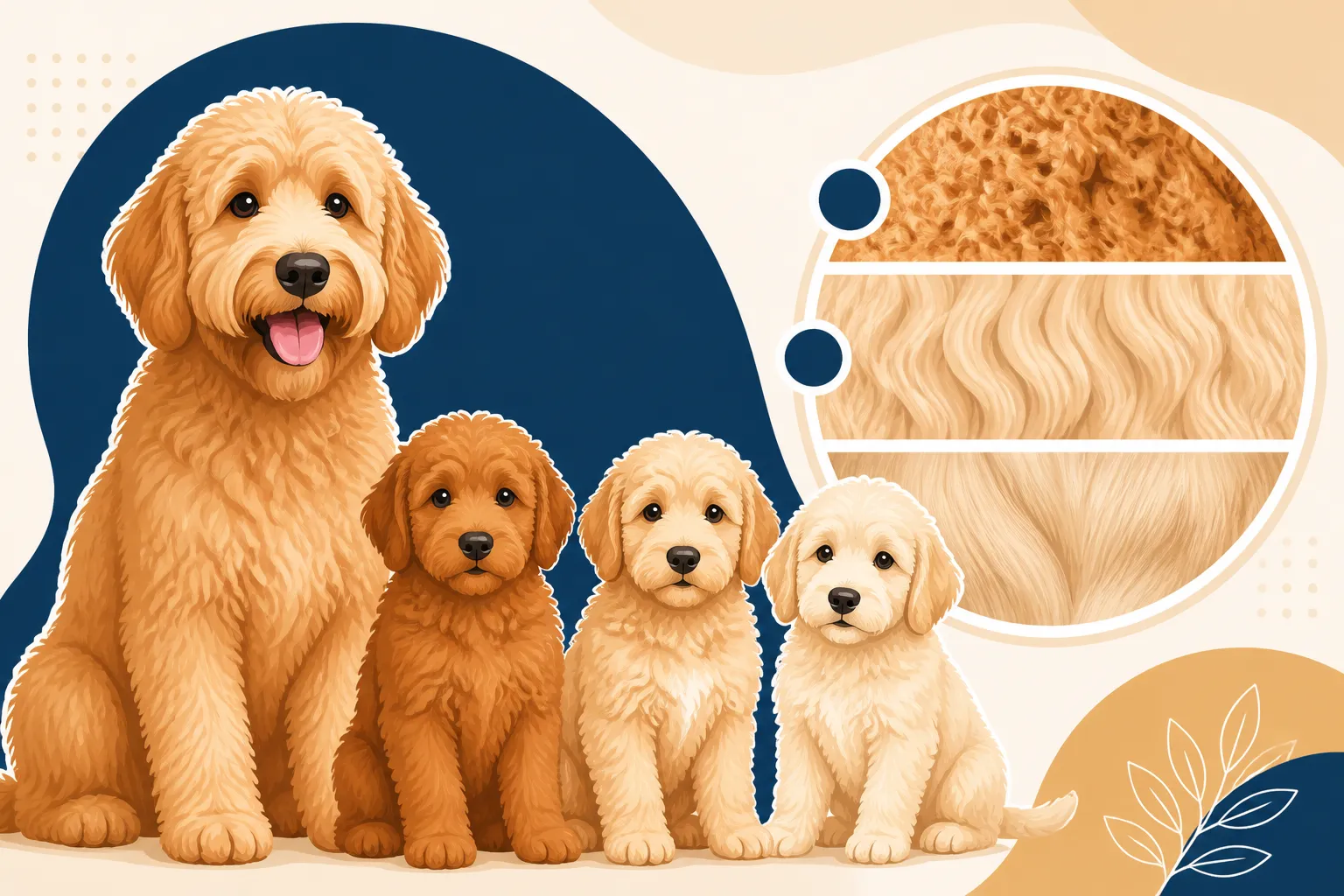
There are a few reasons for this continued variability, even in multigens. First, genetic recombination isn't a perfect science. Even if both parents carry the "right" genes, there's always a slight chance of unexpected combinations. Second, some coat traits are polygenic, meaning they are influenced by multiple genes, not just one or two. This makes complete predictability incredibly challenging. While a multigen is more likely to have a consistent coat, it's never a 100% guarantee. You might still see differences in curl tightness, texture, or even shedding levels within a single multigen litter. Some might lean more towards a Poodle-like wool, others towards a looser fleece.
What does this mean for you, the prospective Goldendoodle owner? It means that even with a multigen, you still need to be prepared for commitment to grooming. No Goldendoodle is truly maintenance-free. If you’re getting a puppy, try to see the parents' coats, and ask the breeder about the coat types of previous litters. Reputable multigen breeders will be transparent about their lines and what they typically produce. For example, some might consistently produce more tightly curled dogs, while others specialize in the loose, wavy fleece. Understanding The Three Goldendoodle Coat Types and How to Tell Them can help you communicate your preferences to a breeder and better assess a puppy's potential.
Regardless of the exact curl or texture, all multigen Goldendoodles with furnishings will require significant grooming. This isn't just about aesthetics; it's about health and comfort. That lovely, low-shedding coat loves to mat, especially in areas like behind the ears, under the collar, and in the armpits. You'll need to be dedicated to Brushing a Goldendoodle Often Enough to Stop Matting, which often means daily or every-other-day sessions, fully line-brushing down to the skin. Tools from places like Chewy are essential here – a good slicker brush and a sturdy metal comb are non-negotiable. Skipping these crucial steps will inevitably lead to painful mats that often require a professional groomer to shave your dog down, costing you more in dematting fees and potentially causing discomfort to your beloved companion. Remember, Goldendoodle Grooming Every Six Weeks Adds Up, but it's a non-negotiable expense for the comfort of your furry friend.
Ultimately, while multigen breeding significantly increases the odds of getting a Goldendoodle with a consistent, low-shedding coat, it’s not a magic bullet that removes all variability or all grooming responsibility. The best approach is to find a transparent, experienced breeder who performs genetic testing and can show you clear examples of the coats their multigen lines produce. Be prepared to still put in the work, because a Goldendoodle coat, no matter how perfectly bred, is a commitment.
Disclaimer
This article is for general informational purposes only and does not constitute professional advice. Laws, prices and regulations vary by location and change over time. Consult a qualified professional for guidance on your specific situation.