Diseases Both Goldendoodle Parent Breeds Share
It's incredibly frustrating when you bring home a Goldendoodle, often with the expectation of a healthier dog thanks to "hybrid vigor," only to find yourself facing some of the same health challenges that plague their parent breeds. While Goldendoodles can be wonderful, loving companions, it's a common misconception that simply being a crossbreed makes them immune to genetic conditions. The reality is far more nuanced, and this guide will walk you through the significant diseases that both Golden Retrievers and Poodles share a predisposition for, helping you understand what to watch out for and how to be a proactive owner.
The Myth of Automatic Hybrid Health and Shared Risks
Many people hear the term "hybrid vigor" and imagine a dog that's practically bulletproof when it comes to health. It's a lovely thought, and sometimes, with very distinct parent breeds, you do see a boost in overall robustness. However, it's not a magic shield, especially when the two parent breeds – in this case, the Golden Retriever and the Poodle – actually share susceptibility to several of the same genetic conditions. This overlap means your Goldendoodle can, unfortunately, inherit these predispositions from both sides of their family tree.
Understanding Hybrid Vigor and Its Limits
Hybrid vigor, also known as heterosis, generally refers to the increased strength, growth, and fertility of hybrids compared to the purebred parent lines. In dogs, the idea is that by mixing two different breeds, you reduce the likelihood of inheriting recessive genes for specific diseases, because the chance of both parents carrying the same problematic recessive gene is theoretically lower. But here's the kicker: this benefit largely diminishes, or even disappears entirely, when the disease in question is common to both parent breeds. Think of it like this: if both your parents have a tendency for high blood pressure, you're still likely to inherit that tendency, even if they come from different family backgrounds. The Goldendoodle, as a first-generation cross (F1), might initially benefit somewhat from a broader gene pool, but the claim that they always gain health over purebreds, particularly in later generations, often breaks down under scrutiny. For a deeper dive into this, you might find our article, "The Goldendoodle Hybrid Vigor Claim and Where It Breaks," particularly illuminating.
When Genetic Predispositions Overlap
When a genetic disease is found in both Golden Retrievers and Poodles, it's not a matter of one breed "diluting" the other's risk. Instead, it doubles the potential pathways for the Goldendoodle to inherit that condition. Breeders who don't perform comprehensive health testing on both parent dogs before breeding are essentially rolling the dice, and unfortunately, it's the puppies and their future families who bear the brunt of that gamble. You're bringing together two breeds that, despite their differences, have some unfortunate common ground in their genetic health profiles. This is precisely why understanding "Health Testing Both Goldendoodle Parents Should Have" is so crucial for any prospective owner.
Common Orthopedic Challenges Shared by Goldens and Poodles
Orthopedic problems are a significant concern for many dog breeds, and Goldendoodles are no exception. Both Golden Retrievers and Poodles, especially the Standard Poodle, are prone to certain joint conditions, which means Goldendoodles can easily inherit these painful issues.
Hip Dysplasia: A Persistent Problem
Hip dysplasia is a condition where the hip joint doesn't form correctly, leading to a loose joint that can eventually cause arthritis, pain, and lameness. It's a notoriously common issue in Golden Retrievers, with a significant percentage of the breed affected. Standard Poodles also have a known predisposition to hip dysplasia, although generally at a lower rate than Goldens. When you combine these two, your Goldendoodle faces a real risk. A Goldendoodle struggling with hip dysplasia might show signs like reluctance to jump, difficulty getting up, or a bunny-hopping gait when running. Early diagnosis and management are key, but the costs of treatment can be substantial, making reliable pet insurance, like plans from Healthy Paws, a wise investment for many owners. For more specific statistics, our piece on "Goldendoodle Hip Dysplasia at 15 to 20 Percent" delves into the numbers.
Elbow Dysplasia: Another Joint Concern
Similar to hip dysplasia, elbow dysplasia is a complex condition involving multiple developmental abnormalities in the elbow joint. It's also prevalent in both Golden Retrievers and Standard Poodles, meaning it's another significant orthopedic concern for Goldendoodles. Symptoms can include lameness in a front leg, stiffness, and pain, particularly after exercise. Detecting elbow dysplasia early often involves X-rays, and treatment can range from medication and physical therapy to surgery, depending on the severity. It's truly heartbreaking to see a young, active Goldendoodle suddenly become uncomfortable due to these inherited joint issues. Understanding "Goldendoodle Elbow Dysplasia From Both Parent Breeds" provides more context on this challenging condition.
Patellar Luxation in Smaller Goldendoodles
While hip and elbow dysplasia are often associated with larger breeds, patellar luxation – or a dislocating kneecap – is a more common concern in smaller dogs, like Miniature and Toy Poodles. However, it can also be found in larger Poodles and, to a lesser extent, Golden Retrievers. This means that Mini and Toy Goldendoodles, in particular, are at a heightened risk, but even a Standard Goldendoodle isn't entirely immune. A dog with patellar luxation might skip or hop while running, or even hold up a leg for a few steps. The condition is graded from 1 to 4, with higher grades often requiring surgical intervention to correct the alignment of the kneecap. It’s definitely something to be aware of, especially if you're considering a smaller variety of Goldendoodle. Our article "Patellar Luxation in a Mini Goldendoodle" offers detailed insights into this specific issue.
Eye Conditions That Can Affect Both Lines
Vision is incredibly important for a dog's quality of life, and unfortunately, Goldendoodles can inherit several eye conditions from their parent breeds. Some of these are insidious, progressing slowly before you even realize there's a problem.
Progressive Retinal Atrophy PRA: The Shared Vision Threat
Progressive Retinal Atrophy (PRA) is a group of genetic diseases that cause the degeneration of the retina, leading to eventual blindness. Both Golden Retrievers and Poodles are known carriers of different forms of PRA. This means a Goldendoodle can inherit a form of PRA from either parent, or even from both if the specific genetic mutations are shared or complement each other. The insidious nature of PRA often means early signs, like night blindness, might go unnoticed until the disease has significantly progressed. Thankfully, DNA testing is available for several forms of PRA, which is why responsible breeders meticulously screen their breeding stock. If a breeder isn't transparent about these genetic tests, it should be a red flag. To understand the specifics of testing, look into "Progressive Retinal Atrophy and the Goldendoodle Eye Test." It’s a vital piece of information for any Goldendoodle owner.
Cataracts Beyond Old Age
While cataracts are commonly associated with aging in dogs, some forms are genetically inherited and can appear much earlier in life. Both Golden Retrievers and Poodles are predisposed to various types of hereditary cataracts. These can range from small, benign opacities that don't significantly affect vision to dense cataracts that can cause severe vision impairment and even blindness. Unlike PRA, which is a retinal issue, cataracts affect the lens of the eye, making it cloudy. Early-onset cataracts, particularly, can be distressing for both the dog and owner, potentially requiring surgical removal to restore vision. Regular eye examinations by a veterinary ophthalmologist are crucial for early detection. The financial implications of diagnosing and treating serious eye conditions like cataracts are another reason why having a robust pet insurance plan, such as those offered by Healthy Paws, can provide immense peace of mind. For further information, check out "Goldendoodle Cataracts and Vision Loss."
Other Significant Health Concerns to Watch For
Beyond the joint and eye issues, several other important health conditions are shared between Golden Retrievers and Poodles, which can impact your Goldendoodle. These are often less immediately obvious but can significantly affect their health and lifespan.
Von Willebrand Disease: A Bleeding Disorder
Von Willebrand Disease (vWD) is an inherited bleeding disorder caused by a deficiency in Von Willebrand factor, a protein necessary for normal blood clotting. Both Standard Poodles and Golden Retrievers are known to carry and be affected by vWD, which makes it a shared concern for Goldendoodles. Dogs with vWD may experience excessive bleeding after injury or surgery, nosebleeds, or even bleeding from the gums. In mild cases, it might go unnoticed until a significant event, like an elective surgery, brings it to light. Thankfully, a DNA test is available to identify affected dogs and carriers. This is another crucial test good breeders will perform to ensure they aren't passing on this potentially life-threatening condition. Our article, "Von Willebrand Carried Down Both Goldendoodle Lines," explains the specifics of this disorder.
Thyroid Disease: A Common Endocrine Issue
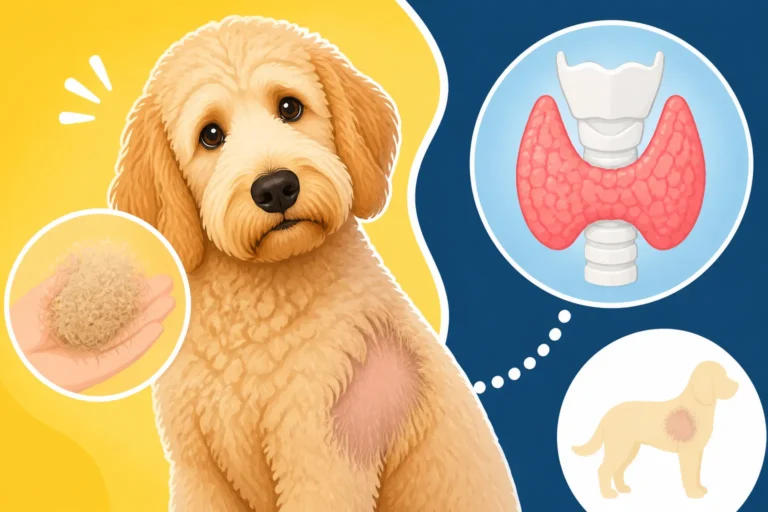
Hypothyroidism, a condition where the thyroid gland doesn't produce enough thyroid hormone, is surprisingly common in both Golden Retrievers and Poodles. Therefore, Goldendoodles are also at risk. Symptoms can be vague and varied, including weight gain without an increase in appetite, lethargy, hair loss (often symmetrical and non-itchy), dull coat, and intolerance to cold. Because the symptoms can mimic other conditions, diagnosis often requires blood tests to check thyroid hormone levels. Once diagnosed, hypothyroidism is typically managed with daily medication for the rest of the dog's life. While manageable, it's a chronic condition that requires consistent veterinary care and monitoring. For more on the signs, you can refer to "Thyroid Disease and a Goldendoodle Losing Coat."
Dental Issues, Especially in Smaller Goldendoodles
While not always immediately recognized as a shared "disease" in the same vein as genetic disorders, dental health is a significant and often overlooked area where both Golden Retrievers and Poodles can present challenges, which then carry over to Goldendoodles. Golden Retrievers are generally prone to tartar buildup and gum disease, partly due to their genetic makeup and partly due to individual dental hygiene practices. Poodles, particularly the smaller varieties (Mini and Toy), often have dental crowding due to their longer muzzles combined with a full set of teeth that might be slightly too large for their jaw, leading to misalignment and increased risk of periodontal disease. When these traits combine in a Goldendoodle, especially a Mini or Toy, you can end up with a dog highly susceptible to dental problems. This includes premature tartar, gingivitis, and retained puppy teeth. Regular brushing, dental chews, and professional dental cleanings under anesthesia are essential for maintaining your Goldendoodle's oral health and preventing more serious issues down the line. To delve deeper into this specific concern, our article, "Dental Crowding in a Toy Goldendoodle Mouth," offers more information.
Summary of Shared Health Concerns
To give you a clearer picture, here's a table summarizing the shared health concerns we've discussed, along with their general impact and how they are typically screened.
| Condition | Shared Parent Breed Predisposition | Impact on Goldendoodle | Common Screening/Diagnosis |
|---|---|---|---|
| Hip Dysplasia | Golden Retriever, Poodle | Pain, lameness, arthritis, reduced mobility | X-rays (OFA/PennHIP) |
| Elbow Dysplasia | Golden Retriever, Poodle | Pain, lameness, stiffness in front limbs | X-rays (OFA) |
| Patellar Luxation | Poodle (especially smaller), Golden Retriever | Skipping, hopping, pain, potential lameness | Physical examination |
| Progressive Retinal Atrophy (PRA) | Golden Retriever, Poodle | Progressive vision loss, eventually blindness | DNA test, annual eye exams (CERF/OFA Eye) |
| Cataracts | Golden Retriever, Poodle | Cloudy lens, impaired vision, potential blindness | Annual eye exams (CERF/OFA Eye) |
| Von Willebrand Disease (vWD) | Golden Retriever, Poodle | Excessive bleeding, bruising, increased surgical risk | DNA test |
| Hypothyroidism | Golden Retriever, Poodle | Lethargy, weight gain, hair loss, skin issues, behavioral changes | Blood tests (thyroid panel) |
| Dental Issues | Golden Retriever, Poodle | Tartar buildup, gum disease, tooth loss, pain, bad breath | Regular veterinary dental exams, home care |
Being aware of these shared predispositions isn't meant to scare you, but rather to empower you as a Goldendoodle owner. It highlights the importance of choosing a reputable breeder who prioritizes genetic health testing and provides transparent health records for both parent dogs. Even with the best breeding practices, no dog is guaranteed perfect health, so staying vigilant about your Goldendoodle's well-being and maintaining a good relationship with your veterinarian is paramount. This proactive approach, coupled with a solid pet insurance plan from providers like Healthy Paws, can help you manage any health challenges that may arise, ensuring your beloved Goldendoodle lives the happiest, healthiest life possible. Remember, the journey with your Goldendoodle is a partnership, and their health is a shared responsibility.
Disclaimer
Please note that this article provides general information and should not be considered a substitute for professional veterinary advice. Always consult with a qualified veterinarian for any health concerns or before making any decisions about your Goldendoodle's care or treatment. Individual results and experiences may vary.