Whether a Goldendoodle Is Healthier Than a Purebred
It's a common and completely understandable hope that when you combine two beloved breeds like the Golden Retriever and the Poodle, you'll get a dog that's not only charming and intelligent but also inherently healthier. Many people are told that Goldendoodles are "healthier than purebreds" due to something called "hybrid vigor," but the reality is far more nuanced and, frankly, often misunderstood. This guide will dive deep into the health landscape of Goldendoodles, exploring the truth behind hybrid vigor, the specific health concerns they can inherit from their parent breeds, and most importantly, what truly dictates a Goldendoodle's health, so you can make informed decisions.
The Truth About Hybrid Vigor and Goldendoodle Health
When you first hear about hybrid vigor, or heterosis, it sounds like a magical shield against all genetic woes. The idea is that by mixing two different genetic pools, you reduce the chances of inheriting recessive genetic diseases that might be common in a single purebred line. While this concept holds some truth in a very specific context, it's frequently oversimplified and misapplied to Goldendoodles, leading many prospective owners to have unrealistic expectations about their dog's long-term health. The frustration comes when that seemingly "healthier" crossbreed ends up with significant health issues, leaving owners feeling misled.
What Hybrid Vigor Actually Means for Goldendoodles
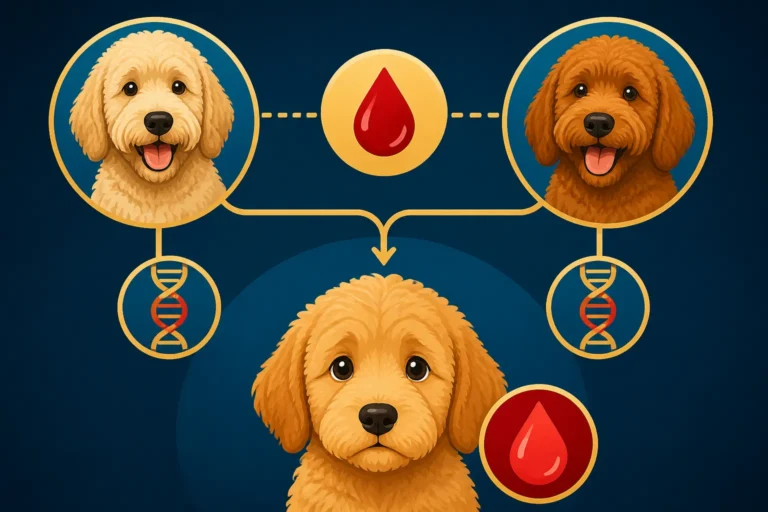
Hybrid vigor, in its purest scientific sense, refers to the increased vigor, health, or productivity shown by hybrid offspring, especially in the first generation (F1) from genetically distinct parents, compared to either parent line. For a Goldendoodle, an F1 means a 50/50 cross between a purebred Golden Retriever and a purebred Poodle. The theory is that if the Golden Retriever parent carries a recessive gene for a specific disease that the Poodle parent doesn't carry, and vice versa, then the F1 offspring won't express either disease. They might be carriers, but they won't typically suffer from the condition because they have one healthy dominant gene from the other parent.
This is where the nuance really kicks in. This protective effect only works for recessive genetic diseases where the parent breeds have different genetic predispositions. It doesn't mean a Goldendoodle is immune to all diseases or even any disease. It simply means that for a specific recessive condition, if one parent is clear and the other is a carrier, the puppies will likely be carriers but not affected. The key here is the different genetic predispositions and knowing what those are through testing. Without testing, it's a genetic lottery, and assuming a "mutt" is healthier than a purebred is a dangerous generalization.
Why Hybrid Vigor Isn't a Guarantee for Goldendoodle Health
The biggest pitfall with the hybrid vigor claim for Goldendoodles is when it's used as a blanket statement. It often implies that simply being a crossbreed automatically makes a dog healthier, regardless of the parents' health. This couldn't be further from the truth. If both the Golden Retriever and Poodle parents carry the same recessive disease gene – and there are several conditions common to both breeds – then hybrid vigor offers absolutely no protection. Their offspring would still have a 25% chance of inheriting two copies of that recessive gene and developing the disease. This is a critical point that is often missed in casual discussions about doodle health.
Furthermore, hybrid vigor generally refers to the F1 generation. Once you start breeding Goldendoodles to Goldendoodles (F2 generation) or back-crossing to a Poodle or Golden (F1b, F1bb), the genetic diversity that might have conferred some advantage begins to diminish. The further removed you get from the initial F1 cross, the more likely you are to concentrate certain genes, potentially increasing the risk of inherited diseases. This is explored further in The Goldendoodle Hybrid Vigor Claim and Where It Breaks. A lack of rigorous health testing in Goldendoodle breeding programs, which unfortunately is common due to the lack of breed club oversight, can easily negate any potential benefits of hybrid vigor. In essence, a Goldendoodle is only as healthy as its parents, and good breeding practices are paramount, regardless of generation.
Inherited Health Risks from Both Parent Breeds
The idea that a Goldendoodle simply "dodges" all the health bullets of its parent breeds is a comforting thought, but it's not based in reality. Instead, a Goldendoodle is essentially a genetic mosaic, a blend of two distinct breeds, and can inherit any of the health conditions prevalent in either the Golden Retriever or the Poodle line. This means understanding the health predispositions of both parents is crucial, not just assuming the cross will magically prevent problems. The disappointment for many owners comes when they realize their Goldendoodle is battling issues they thought were only associated with purebreds.
Golden Retriever Contributions to Goldendoodle Health
Golden Retrievers, while beloved for their friendly disposition, come with some significant health concerns that Goldendoodles can absolutely inherit. One of the most heartbreaking and prevalent issues is cancer. Golden Retrievers have a higher incidence of certain cancers, including lymphoma, hemangiosarcoma, and mast cell tumors. This elevated cancer risk is a well-documented genetic predisposition in the breed, and unfortunately, a Goldendoodle can carry this same vulnerability. Learning about Cancer Risk a Goldendoodle Carries From the Golden Side is essential for any potential owner.
Beyond cancer, joint issues are another major concern. Hip and elbow dysplasia are relatively common in Golden Retrievers. These are painful, debilitating conditions where the hip or elbow joint doesn't form correctly, leading to arthritis and lameness. A Goldendoodle has the potential to inherit these structural issues directly from its Golden Retriever lineage. Even if one parent has excellent hips, the genetic predisposition can still exist. This is why looking into details like Goldendoodle Hip Dysplasia at 15 to 20 Percent is so important when researching breeders.
Poodle Contributions to Goldendoodle Health
Poodles, intelligent and elegant as they are, also bring their own set of health challenges to the Goldendoodle genetic makeup. One serious condition that is more prevalent in Poodles (especially Standard Poodles) is Addison's Disease, also known as hypoadrenocorticism. This is an endocrine disorder where the adrenal glands don't produce enough hormones, leading to a variety of vague symptoms that can be hard to diagnose until a crisis occurs. A Goldendoodle can certainly inherit this predisposition from its Poodle parent, making it vital for owners to be aware of Addison's Disease a Goldendoodle Gets From the Poodle.
Eye conditions are another area of concern from the Poodle side. Progressive Retinal Atrophy (PRA) is a degenerative eye disease that ultimately leads to blindness. Both Standard and Miniature Poodles can carry genes for different forms of PRA. A Goldendoodle can inherit these genes, leading to vision impairment later in life. Understanding Progressive Retinal Atrophy Carried by Both Goldendoodle Lines is crucial. Additionally, bloat (Gastric Dilatation-Volvulus or GDV), a life-threatening condition where the stomach twists, is a risk for deep-chested breeds like the Standard Poodle, and therefore, for larger Goldendoodles.
Conditions Shared by Both Parent Breeds
It’s important to remember that not all health concerns neatly divide between the Golden Retriever and Poodle sides. Some conditions are unfortunately found in both breeds, meaning a Goldendoodle could inherit genes for these conditions from either parent. This is where the concept of hybrid vigor completely falls apart, as there's no "dilution" of risk if both parent breeds share the same vulnerability.
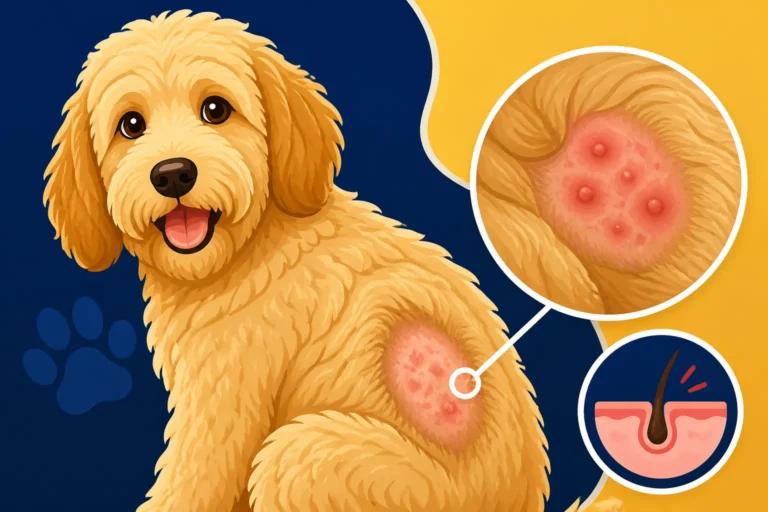
For instance, certain eye conditions beyond PRA, such as cataracts, can affect both Golden Retrievers and Poodles, meaning a Goldendoodle has a double chance of inheriting this predisposition. Similarly, various forms of patellar luxation (slipping kneecaps) and other joint issues, though perhaps more prominent in one breed, can appear in both. Skin and coat issues, too, can stem from either side; Golden Retrievers are prone to allergies and hot spots, while Poodles can have sebaceous adenitis. Therefore, a Goldendoodle can manifest a wide array of skin problems. Understanding that Goldendoodles can inherit a multitude of conditions from either parent, or even shared vulnerabilities, highlights the complexity of their health profile and the importance of truly comprehensive health testing on both parents.
| Health Condition | More Prevalent in Golden Retriever Line | More Prevalent in Poodle Line | Can Affect Both Lines | Impact on Goldendoodle |
|---|---|---|---|---|
| Cancer (Lymphoma, HSA) | High | Moderate | Yes | Increased risk |
| Hip Dysplasia | High | Moderate | Yes | Moderate to high risk |
| Elbow Dysplasia | Moderate | Moderate | Yes | Moderate risk |
| Addison's Disease | Low | High | No | Moderate risk |
| Progressive Retinal Atrophy | Moderate (different forms) | High (different forms) | Yes | Moderate to high risk |
| Bloat (GDV) | Moderate | High | No | Moderate risk (esp. Standards) |
| Patellar Luxation | Moderate | Moderate | Yes | Moderate risk |
| Hypothyroidism | Moderate | Moderate | Yes | Moderate risk |
| Allergies & Skin Issues | High | Moderate | Yes | Moderate to high risk |
The Critical Role of Responsible Breeding and Health Testing
Given the complex genetic soup that is a Goldendoodle, the idea that they are "healthier than purebreds" simply because they are a cross is a dangerous generalization. The actual health of a Goldendoodle is almost entirely dependent on the health of its individual parents and the responsible breeding practices employed. This is where your power as a prospective owner truly lies: in demanding transparency and evidence of rigorous health screening. Sadly, many people skip this step, lured by promises of hypoallergenic coats or superior health, only to face significant veterinary bills down the line.
Understanding Health Testing for Goldendoodle Parents
Responsible breeders, whether they breed purebreds or Goldendoodles, understand that health testing isn't optional; it's fundamental. For Goldendoodles, this means both the Golden Retriever parent and the Poodle parent should undergo a battery of health clearances before they are ever bred. These tests are designed to screen for the genetic and orthopedic conditions known to affect each breed.
Key health clearances for a Golden Retriever parent typically include:
- OFA (Orthopedic Foundation for Animals) or PennHIP certifications for hips and elbows: These evaluate the structural integrity of the joints to screen for dysplasia.
- Eye clearances: Annual exams by a board-certified veterinary ophthalmologist to screen for conditions like PRA and cataracts.
- Cardiac clearances: Exams by a board-certified veterinary cardiologist to screen for inherited heart conditions.
- DNA testing: For conditions like Ichthyosis, Progressive Retinal Atrophy (PRA-prcd, PRA1, PRA2), and Von Willebrand Disease (vWD).
For a Poodle parent, essential clearances include:
- OFA or PennHIP certifications for hips and elbows.
- Patella evaluations: Especially for Miniature and Toy Poodles, to check for luxating patellas.
- Eye clearances: Annual exams by a veterinary ophthalmologist.
- Cardiac clearances: By a veterinary cardiologist.
- DNA testing: For Progressive Retinal Atrophy (PRA-prcd, DM), Von Willebrand Disease (vWD Type I), and Neonatal Encephalopathy with Seizures (NEwS). Additionally, Addison's disease testing, though complex, is an important consideration for Poodles.
It's not enough for a breeder to say their dogs are tested; they should be able to provide verifiable documentation from these organizations. You should be able to look up the results of OFA Clearances on a Goldendoodle Sire and Dam and understand them. Furthermore, a comprehensive The DNA Panel a Goldendoodle Breeder Should Run provides crucial insights into recessive genes. Remember, a Goldendoodle's health is directly tied to the health of its lineage.
The Dangers of Unscreened Goldendoodle Breeding
Unfortunately, the popularity of Goldendoodles has led to a surge in breeders who prioritize profit over health. These unscrupulous breeders often skip essential health testing because it's expensive and time-consuming. They might rely on the myth of hybrid vigor, telling prospective owners that their crossbreed puppies are naturally healthier and don't require the same rigorous screening as purebreds. This is a massive red flag.
When parents aren't health-tested, you're essentially gambling with your puppy's future health. You have no way of knowing if they carry genetic predispositions for debilitating diseases that will manifest as the puppy grows. This can lead to heartbreaking diagnoses and astronomical veterinary bills for conditions like severe hip dysplasia requiring surgery, or managing chronic illnesses like Addison's Disease. Many owners find themselves unprepared for these financial and emotional burdens. This is why Why Testing Beats the Word Hybrid on a Goldendoodle is perhaps the most important takeaway for anyone considering a Goldendoodle. Without proper health screening, you could end up with a dog that is less healthy than a responsibly bred purebred.
What to Ask a Goldendoodle Breeder About Health
Finding a reputable Goldendoodle breeder means asking tough questions and expecting transparent, verifiable answers. Don't be shy; a good breeder will welcome your inquiries and be proud to share their health protocols. Here are some key questions:
- "Can I see the OFA and/or PennHIP certifications for both parents?" Look for ratings like "Good" or "Excellent" for hips, and "Normal" for elbows.
- "What eye clearances have both parents had, and can I see the results from a board-certified ophthalmologist?" These should be current, ideally within the last year.
- "Have both parents had cardiac clearances by a board-certified cardiologist?"
- "What DNA panels have you run on the parents, and can I see the results?" You're looking for parents who are "clear" or "non-affected" for conditions like PRA, vWD, Ichthyosis, and NEwS. A "carrier" parent is acceptable if bred to a "clear" parent, but both being carriers for the same gene is a serious concern.
- "What is your health guarantee, and what does it cover?" A good health guarantee typically covers genetic diseases for at least two years.
A reputable breeder will not only provide this documentation but will also be able to explain what each test means and how they use the results to make informed breeding decisions. They should also be transparent about the Goldendoodle Lifespan and What a Cross Really Buys You based on their lines. They should be able to discuss the health history of their dogs' lineage, not just the parents. If a breeder is vague, defensive, or dismisses the importance of health testing with talk of "hybrid vigor," it's a strong indicator to look elsewhere. Choosing a Goldendoodle from thoroughly health-tested parents significantly increases your chances of bringing home a truly healthy companion, and could save you from hefty unexpected vet costs that even robust insurance plans like those from Healthy Paws might not fully cover, especially if a condition is deemed pre-existing. It's an investment in a lifetime of wellness for your furry friend.
Long-Term Health Management for Goldendoodles
Bringing a Goldendoodle into your home is a long-term commitment, and while genetics play a huge role in their predisposition to certain ailments, day-to-day care and proactive management are equally critical for their overall health and lifespan. Many common Goldendoodle health issues, like ear infections or dental problems, can often be managed or even prevented with consistent care. The joy of a healthy Goldendoodle is immense, and maintaining that health requires diligent effort throughout their lives.
Preventing Common Goldendoodle Ailments
Goldendoodles are prone to certain common issues that, while not life-threatening, can significantly impact their quality of life and your budget if not addressed proactively. One of the most frequent complaints Goldendoodle owners have is dealing with ear infections. Their floppy, often heavily furnished ears create a warm, moist environment perfect for yeast and bacteria to thrive. This means consistent ear cleaning is a must. Regular checks and cleaning, especially after swimming, can drastically reduce the incidence of ear infections. If your Goldendoodle gets frequent infections, an insurance provider like Healthy Paws can be a lifesaver for recurring vet visits and medications. Knowing how to perform Cleaning a Goldendoodle Ear Before It Gets Infected is a crucial skill for any owner.
Another area that often gets overlooked until it becomes a problem is dental health. Like many dogs, Goldendoodles can develop tartar buildup, gum disease, and even retained puppy teeth, particularly in smaller varieties. Daily tooth brushing, dental chews, and regular professional dental cleanings are vital to prevent painful dental disease. Neglecting dental care can lead to more serious health issues, including infections that spread throughout the body.
Maintaining a Healthy Weight and Active Lifestyle
Obesity is a silent killer in dogs, leading to or exacerbating a host of health problems, including joint issues, diabetes, and heart disease. Goldendoodles, especially those with fluffy coats, can sometimes hide weight gain until it's quite advanced. It's incredibly important to feed your Goldendoodle a high-quality, balanced diet appropriate for their size and activity level, and to carefully monitor their calorie intake. Measuring food portions precisely, rather than free-feeding, is an excellent strategy.
Regular exercise is non-negotiable for a Goldendoodle. They are active, intelligent dogs who thrive on physical and mental stimulation. Daily walks, playtime, and engaging activities like fetch or puzzle toys not only keep them physically fit but also prevent boredom-related behavioral issues. A well-exercised Goldendoodle is a happier, healthier Goldendoodle. For senior Goldendoodles, maintaining mobility becomes paramount, and adjusting exercise to accommodate conditions like arthritis is key. Exploring ways to provide Goldendoodle Exercise for Body and Mind will keep them thriving at every age.
The Value of Regular Veterinary Care and Insurance
Even the healthiest Goldendoodle benefits immensely from consistent preventive veterinary care. Annual wellness exams allow your vet to catch potential issues early, ensure vaccinations are up to date, and provide personalized advice on nutrition, exercise, and parasite prevention. As your Goldendoodle ages, these check-ups become even more critical, often including senior panels to monitor organ function and screen for age-related conditions.
Considering pet insurance, such as a plan from Healthy Paws, is a pragmatic step for any Goldendoodle owner. While no one wants to imagine their furry family member getting sick or injured, the reality is that accidents and illnesses can happen, and veterinary care can be incredibly expensive. A good pet insurance policy can help offset the costs of unexpected surgeries, chronic disease management, and emergency care, giving you peace of mind and the ability to make healthcare decisions based on what's best for your dog, rather than solely on your wallet. This is especially true given the genetic predispositions Goldendoodles carry, making Goldendoodle Pet Insurance for a Dog With No Breed Papers a wise investment. Proactive care and financial preparedness are essential components of ensuring your Goldendoodle lives a long, healthy, and happy life.
Disclaimer
This article is for general informational purposes only and does not constitute professional advice. Laws, prices and regulations vary by location and change over time. Consult a qualified professional for guidance on your specific situation.