PennHIP Against OFA for a Goldendoodle
It can feel overwhelming, right? You're looking into bringing a Goldendoodle into your family, and suddenly you're drowning in acronyms like "OFA" and "PennHIP" when all you really want to know is if your future furry friend will be healthy. Understanding the differences between these two primary hip evaluation methods is crucial for any prospective Goldendoodle owner or responsible breeder, and this guide is here to demystify it all for you.
Understanding Goldendoodle Hip Health Concerns
Bringing home a Goldendoodle is a dream for many, filled with visions of happy walks and endless cuddles. However, like all breeds, and especially those derived from larger purebreds, Goldendoodles can be susceptible to certain genetic conditions. Hip dysplasia is one of the most significant orthopedic challenges that breeders and owners face, making understanding parent screening absolutely essential.
Why Hip Dysplasia Is Such a Big Deal for Goldendoodles
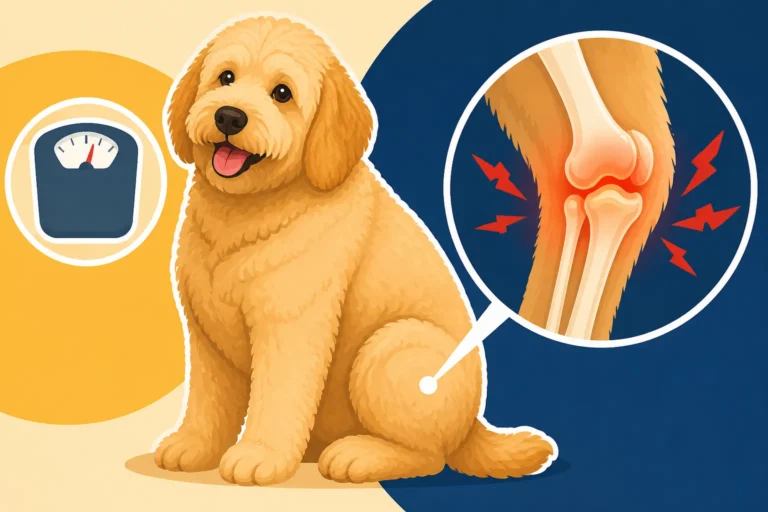
Hip dysplasia is a fancy term for a condition where the hip joint doesn't form properly, leading to a loose joint. This looseness allows the ball (the top of the femur) and socket (part of the pelvis) to grind and rub instead of sliding smoothly. Over time, this constant friction causes wear and tear, pain, and eventually degenerative joint disease, or arthritis. For a Goldendoodle, whose parent breeds – the Golden Retriever and the Poodle – both have a predisposition to this condition, the risk is very real. Estimates suggest that Goldendoodle Hip Dysplasia at 15 to 20 Percent, which is a significant number.
Imagine your lively Goldendoodle, full of zest and a love for running, suddenly struggling to get up, limping after a walk, or even crying out in pain. This isn't just about discomfort; it severely impacts their quality of life, their ability to play, and their overall happiness. Many dogs with severe hip dysplasia require costly surgeries or lifelong pain management, which can be heartbreaking and financially draining for families who simply weren't prepared for it. This makes it incredibly important for breeders to be transparent and proactive in their health testing.
The Importance of Parent Screening
This is where informed breeding practices truly shine. Since hip dysplasia is largely hereditary, the best way to reduce its incidence in future generations is by carefully screening the parent dogs before they are ever bred. Think of it like a puzzle: if both parents have strong, healthy hips, the chances of their puppies inheriting sound hips are significantly higher. If one or both parents have dysplastic hips, even mild cases, they can pass on those genes to their offspring, continuing the cycle of pain and potential suffering.
Responsible breeders understand this and invest time and money into health testing. They aren't just looking at the immediate health of the sire and dam; they are actively working to improve the breed's health lineage. This commitment goes beyond just looking at the parent's physical appearance or temperament; it delves into their genetic makeup and structural integrity. You might hear breeders talking about OFA Clearances on a Goldendoodle Sire and Dam, which is a good sign they’re doing their due diligence. By making sure potential parent dogs are clear of this debilitating condition, they're giving every puppy the best possible start in life, reducing the heartache for future owners and ensuring a lifetime of joyful mobility.
Diving Deep into OFA Certification for Goldendoodles
The Orthopedic Foundation for Animals (OFA) is probably the most widely recognized and oldest system for evaluating canine orthopedic health in North America. When you start looking for Goldendoodle puppies, OFA certifications are often what you'll encounter first, especially from breeders who've been around for a while.
What OFA Hip Evaluations Entail
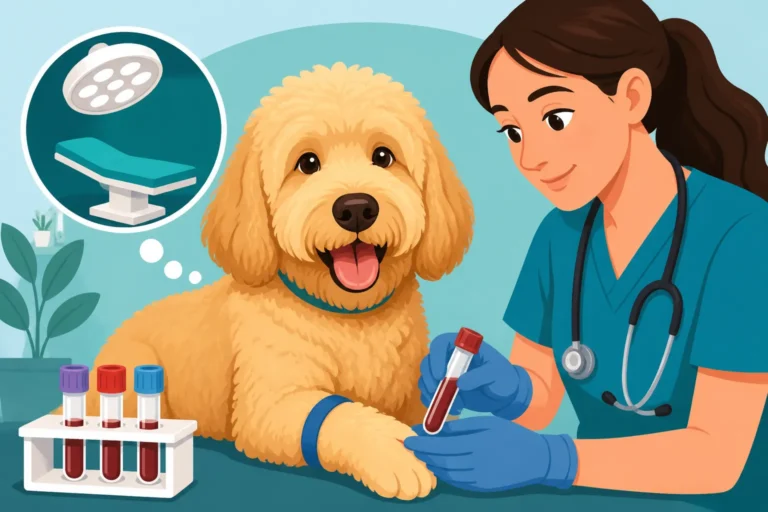
The OFA hip evaluation process is fairly straightforward, though it requires precise execution. A dog's hips are X-rayed, typically under sedation to ensure proper positioning, which is absolutely critical for an accurate reading. This single, specific X-ray view is then submitted to the OFA. What happens next is what makes OFA unique: three independent, board-certified veterinary radiologists review the X-ray. Each radiologist assigns a grade based on seven criteria, assessing the hip joint's conformity.
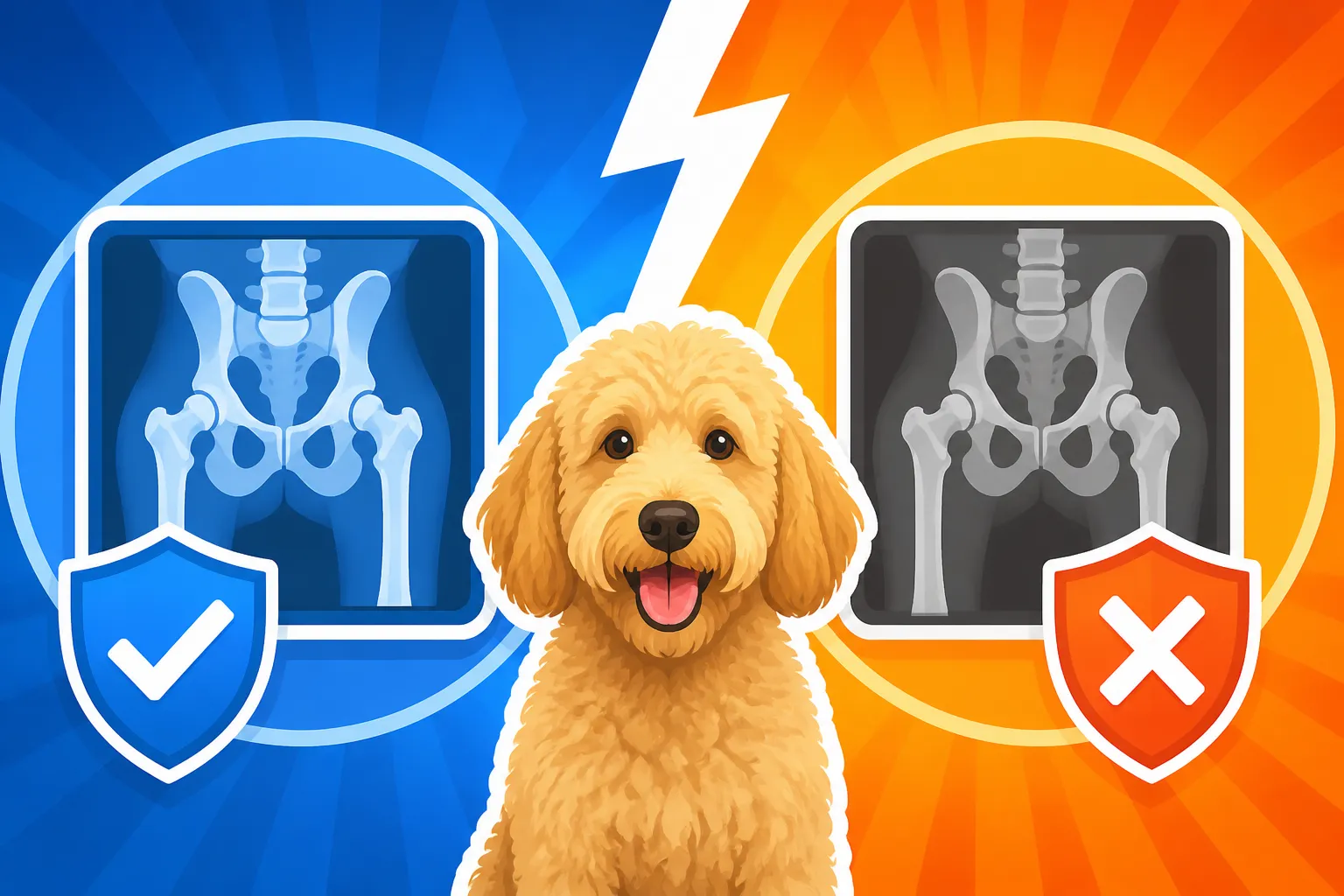
The final OFA certification is a consensus of these three expert opinions, resulting in one of seven possible classifications: Excellent, Good, Fair, Borderline, Mild, Moderate, or Severe. Only dogs receiving an Excellent, Good, or Fair rating are considered "pass" or "certifiable" for breeding purposes. The results are public and searchable on the OFA website, which provides a layer of transparency. It's also important to note that the OFA hip evaluation can only be performed on dogs that are 24 months of age or older, as their hips are considered fully developed by that point. This waiting period ensures that the assessment reflects the adult hip structure rather than still-developing puppy joints. When you see a Goldendoodle breeder showcasing their dogs, they often highlight these pass ratings, sometimes even with a link to the OFA public database. You can learn more about Goldendoodle Hip Dysplasia and the OFA Numbers to understand the statistics and categories involved.
Pros and Cons of OFA for Goldendoodle Breeders
The OFA system has been the gold standard for decades, and for good reason. Its most significant advantage is its widespread acceptance and the sheer volume of data it has accumulated over the years. Most veterinarians are familiar with the OFA protocol, and many breeders find it easy to submit X-rays. The public database allows prospective puppy buyers to verify health clearances, promoting accountability among breeders. Plus, the system is relatively cost-effective compared to some other advanced imaging techniques. For a Goldendoodle breeder, showing an OFA "Good" or "Excellent" score is often seen as a mark of quality and commitment to health. Many Goldendoodle owners want to know Reading an OFA Hip Result on a Goldendoodle Parent to ensure they are making the right choice.
However, the OFA method isn't without its drawbacks. One of the primary criticisms is its subjective nature. While three radiologists offer a consensus, the grading itself is based on visual interpretation, which can sometimes lead to slight variations in opinion. A dog might be rated "Good" by one and "Fair" by another. The requirement for dogs to be 24 months old also means breeders have to wait two years before they can confidently breed a dog, potentially delaying their breeding program or making breeding decisions based on parents whose own hip status isn't yet fully certified. Perhaps the most significant limitation is that the OFA evaluation focuses on existing conformational abnormalities and the presence of degenerative joint disease, rather than directly measuring hip laxity – which is a primary indicator of future dysplasia development. It provides a snapshot of the hip's current state, but doesn't quantify how loose the joint actually is, which many argue is key to truly predicting hip dysplasia risk.
Exploring PennHIP: A Different Approach to Goldendoodle Hips
While OFA has been a long-standing fixture, PennHIP offers a different, and in some ways, more advanced approach to evaluating hip health. Developed at the University of Pennsylvania, it's gaining traction among breeders looking for a more objective and predictive assessment of hip laxity.
How PennHIP Works: More Than Just One X-ray
Unlike the single X-ray view used in OFA, the PennHIP method requires three distinct radiographic views to thoroughly assess a dog's hips. The first is a standard extended view, similar to the OFA X-ray, to look for degenerative joint disease. The second is a "compression" view, where the femurs are pushed into the hip sockets, showing how tight the joint can get. The third, and perhaps most crucial, is the "distraction" view. For this, a specialized device is used to gently push the femurs out of the hip sockets. This measures the amount of passive hip laxity – essentially, how loose the hip joint is.
This distraction index (DI) is the core of the PennHIP evaluation. A certified PennHIP veterinarian (who undergoes specialized training and certification) takes these X-rays, and they are then submitted to the PennHIP analysis center. The DI is a quantifiable measurement, expressed as a number between 0 and 1. A DI closer to 0 indicates very tight hips (less laxity), while a DI closer to 1 indicates very loose hips (more laxity). The beauty of PennHIP is that it can be performed on dogs as young as 16 weeks of age. This early assessment gives breeders a significant advantage, allowing them to make informed breeding decisions much earlier in a dog's life. It provides a highly objective and statistical measure of a dog's risk for developing hip dysplasia later on, going beyond just looking at current conformation.
PennHIP's Advantages and Disadvantages for Goldendoodles
The primary advantage of PennHIP is its objectivity and its ability to directly measure hip laxity, which is scientifically proven to be a strong predictor of future hip dysplasia. Because it's a quantitative measurement (the DI), there's less room for subjective interpretation compared to the OFA grading system. The ability to test Goldendoodles as young as 16 weeks is also a huge plus for breeders. This means they can identify potential issues much earlier, avoiding the time and expense of raising a dog to two years only to find out it shouldn't be bred. For a breeder striving to reduce hip dysplasia in their lines, PennHIP offers a powerful tool to select breeding stock with demonstrably tighter hips. For Goldendoodle Joint Health by Size Category, understanding these early indicators can be paramount.
However, PennHIP does come with its own set of considerations. For starters, it generally costs more than an OFA evaluation, partly due to the more complex procedure and the specialized training required for the veterinarians performing it. Not all veterinarians are PennHIP certified, so finding a clinic that offers the service might require a bit more searching, especially in rural areas. While the DI is objective, interpreting what constitutes an "acceptable" DI can sometimes be less intuitive for the average puppy buyer than a simple "Good" or "Excellent" grade. Breeders usually provide percentile rankings, showing how a dog's hips compare to other dogs of the same breed. Despite these minor hurdles, many serious Goldendoodle breeders who are dedicated to long-term health improvements view PennHIP as a superior tool for preventing hip dysplasia, sometimes even supplementing it with other health screenings like The DNA Panel a Goldendoodle Breeder Should Run.
Comparing OFA and PennHIP: Which is Better for Your Goldendoodle?
So, you've heard about both systems, but how do they stack up against each other, and which one should you, as a Goldendoodle enthusiast, prioritize when looking for a puppy? It's not always a clear-cut answer, as both have their merits.
Key Differences in Methodology and Age of Testing
Let's break down the core distinctions between OFA and PennHIP in a handy table, making it easier to see at a glance why breeders might choose one over the other, or even decide to use both.
| Feature | OFA Hip Evaluation | PennHIP Evaluation |
|---|---|---|
| Primary Focus | Conformational abnormalities and signs of arthritis | Quantifiable hip laxity (looseness) |
| Age for Testing | 24 months or older | 16 weeks to 4 months of age, then any age after that |
| Number of X-rays | 1 extended view | 3 views: extended, compression, and distraction |
| Result Type | Subjective grades (Excellent, Good, Fair, etc.) | Objective Distraction Index (DI) with percentile rank |
| Predictive Power | Identifies existing disease/conformation | Predicts susceptibility to developing hip dysplasia |
| Cost | Generally lower | Generally higher |
| Veterinarian | Any licensed vet can take X-rays | Requires PennHIP-certified veterinarian |
As you can see, the methods are quite different. OFA tells you about the current state of the hip joint's formation after two years of growth, focusing on the absence of degenerative disease and good conformation. PennHIP, on the other hand, tells you about the risk of developing hip dysplasia by measuring the actual looseness of the joint, and it can do so much earlier. This distinction is crucial for understanding what each certification truly represents.
Interpreting Results: What Breeders Should Look For
When a Goldendoodle breeder presents you with health clearances, understanding what those results actually mean is paramount. For OFA, you want to see ratings of "Excellent," "Good," or "Fair." Anything less than "Fair" (e.g., Borderline, Mild, Moderate, Severe) means the dog should not be bred. A reputable breeder will only breed dogs with passing OFA scores. The higher the score (Excellent being the best), the better the hip conformation, theoretically reducing the risk of passing on poor genes.
With PennHIP, interpreting the Distraction Index (DI) is a little different. The DI is a number between 0 and 1. A DI of 0.3 or less is generally considered to indicate a low risk of hip dysplasia. However, PennHIP also provides a percentile ranking for the specific breed. For example, if a Goldendoodle has a DI of 0.4 and is in the 80th percentile, it means that 80% of other Goldendoodles in the database have tighter hips. Breeders using PennHIP are typically aiming for dogs with DI scores in the tighter half of the breed's range (meaning a lower percentile number), indicating superior hip conformation. They're looking for dogs whose DIs are better than the breed average. It's not just about the raw number, but how that number compares to the rest of the Goldendoodle population.
Making an Informed Choice: A Breeder's Perspective
From a breeder's perspective, the choice between OFA and PennHIP often comes down to their philosophy and goals for their breeding program. Many established breeders still rely heavily on OFA due to its long history and wide acceptance, especially if their lines consistently produce excellent OFA scores. For them, "Reading an OFA Hip Result on a Goldendoodle Parent" is a well-understood and reliable process.
However, a growing number of progressive Goldendoodle breeders are turning to PennHIP, sometimes even using it in addition to OFA. They appreciate PennHIP's objectivity and its ability to identify hip laxity early on, allowing them to make informed breeding decisions before a dog reaches two years of age. Some breeders might use PennHIP on all their potential breeding stock to get an early assessment of genetic predisposition and then follow up with OFA at 24 months for public certification and confirmation of adult hip health. This dual approach offers the most comprehensive picture of a dog's hip health. Ultimately, a responsible Goldendoodle breeder will be transparent about their testing methods, clearly explain the results, and prioritize the health of their puppies above all else, no matter which system they predominantly use.
Beyond Testing: Lifelong Hip Health for Your Goldendoodle
While choosing a puppy from health-tested parents is the absolute best start, hip health isn't just about genetics. A Goldendoodle's lifestyle, diet, and overall care play a huge role in maintaining healthy joints throughout their life. Even the best genetics can be undermined by poor care, and conversely, excellent care can sometimes mitigate mild predispositions.
Early Signs of Hip Issues and What to Do
Even with the most meticulous health testing, no guarantee is absolute. It's crucial for Goldendoodle owners to be vigilant and recognize the early signs of potential hip issues. These can be subtle at first. You might notice your Goldendoodle having difficulty getting up after resting, or a slight stiffness, especially in the morning or after exercise. They might show reluctance to jump, climb stairs, or engage in their usual playful activities. A "bunny hop" gait, where both hind legs move together, can also be a sign. Sometimes, you'll observe a decrease in activity level or an unusual lameness in one or both hind legs. Pain upon touch or reduced range of motion in the hip area are also indicators.
If you notice any of these signs, don't delay – schedule an appointment with your veterinarian immediately. Early diagnosis is key. Your vet will perform a physical exam, which may involve manipulating the hip joints to check for pain or laxity, and will likely recommend X-rays to get a clear picture of the joint''s condition. While it can be scary, remember that prompt veterinary attention can lead to earlier interventions, better pain management, and potentially slower disease progression, giving your Goldendoodle a better quality of life.
Lifestyle Factors That Support Healthy Hips
You have more control over your Goldendoodle's hip health than you might think! One of the most critical factors is maintaining a healthy weight. Extra pounds put immense strain on joints, exacerbating any existing hip laxity or accelerating the progression of arthritis. Talk to your vet about the ideal body condition for your Goldendoodle and stick to a feeding regimen that keeps them lean. When we talk about Goldendoodle Weight and the Load on Its Joints, it's not just about looks, it's about crucial biomechanics.
Appropriate exercise is another cornerstone. While Goldendoodles need regular activity, avoid high-impact, repetitive activities, especially during puppyhood when growth plates are still open. Instead, opt for controlled, moderate exercise like leash walks, swimming (which is fantastic for joints!), and gentle play. Avoid activities that involve excessive jumping or sharp turns. Joint supplements, like glucosamine and chondroitin, can also be beneficial, particularly as your Goldendoodle ages. Products specifically for Joint Support Dosed to Goldendoodle Size Category are available and can help support cartilage health. Discuss these with your vet to find the right dosage and type for your dog. For older Goldendoodles, especially those showing signs of Goldendoodle Arthritis After the Age of Eight, physical therapy, hydrotherapy, and anti-inflammatory medications can make a significant difference in comfort and mobility. Many owners find that pet insurance plans, such as those offered by Healthy Paws, can be invaluable for covering the costs associated with chronic conditions like hip dysplasia and the ongoing treatments it often requires. It's always wise to research what The Goldendoodle Conditions Insurers Exclude when choosing a policy.
Disclaimer
The information provided in this article is for general informational purposes only and is not a substitute for professional veterinary advice. Always consult with a qualified veterinarian or animal healthcare professional for diagnosis, treatment, and medical advice regarding your Goldendoodle's health.