Bloat Warning Signs in a Standard Goldendoodle
One of the most terrifying emergencies a dog owner can face is bloat, or Gastric Dilatation-Volvulus (GDV). For those of us with a wonderful, large Goldendoodle in our lives, the fear is even more palpable, as their deep-chested build puts them at a higher risk. This guide is dedicated to breaking down the critical warning signs, helping you understand why your beloved Goldendoodle is susceptible, and what immediate actions you must take to protect them from this life-threatening condition.
Understanding Bloat (Gastric Dilatation-Volvulus) in Goldendoodles
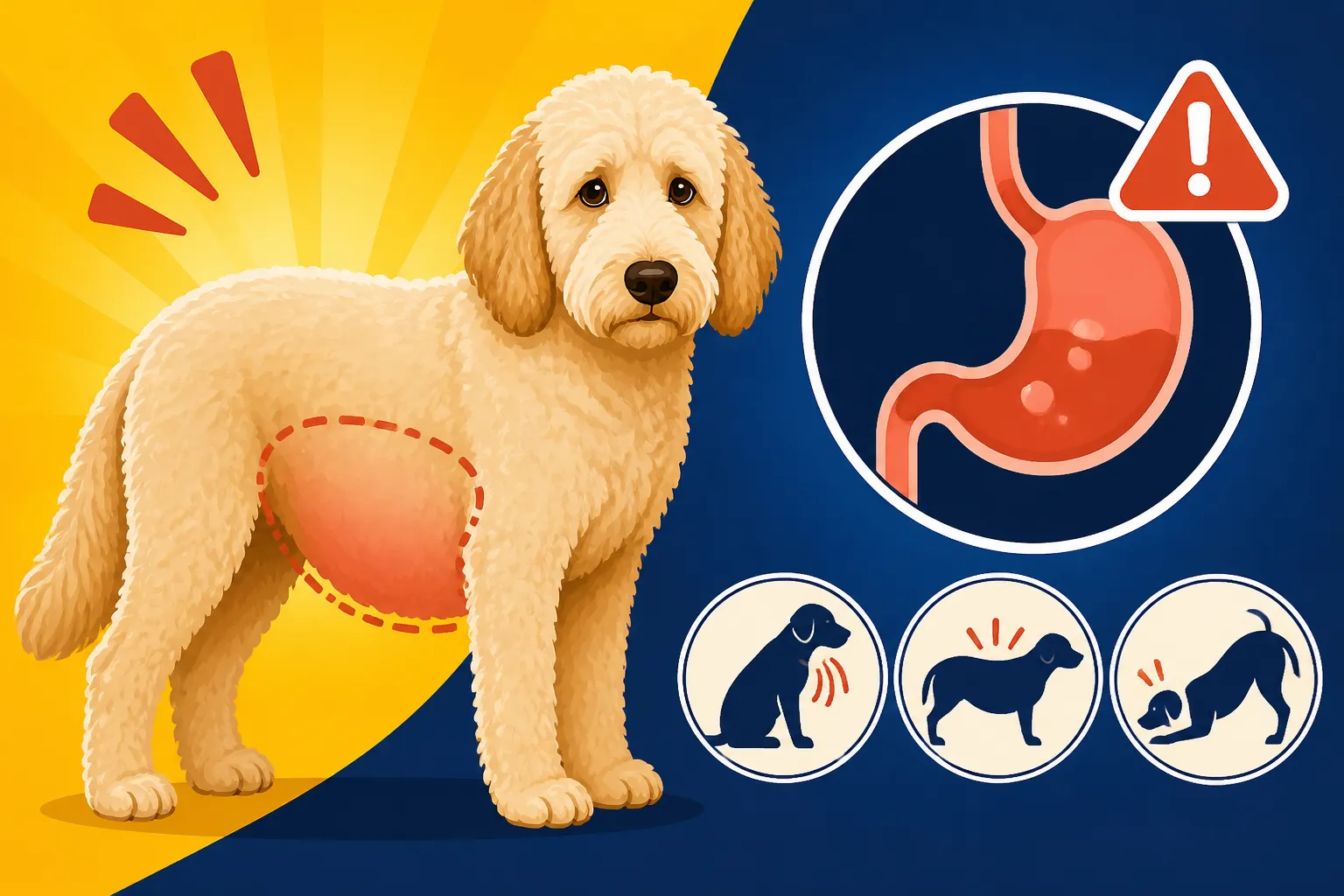
When we talk about bloat, we're not just referring to a little gas or indigestion. Gastric Dilatation-Volvulus (GDV) is a severe, rapidly progressing condition where your dog's stomach fills with gas, food, or fluid (dilatation) and then twists (volvulus). This twisting cuts off both the entrance and exit to the stomach, trapping everything inside. It also compromises blood flow to the stomach and often other vital organs, leading to shock and potential death if not treated immediately. It’s an absolute race against time, and knowing what you're up against is the first step in being prepared.
What is GDV and Why is it So Serious?
Imagine your Goldendoodle's stomach swelling up like a balloon, unable to release the pressure. That's the dilatation part. Then, picture that balloon twisting on its axis. This torsion not only traps gas and fluid, causing immense pain and abdominal distension, but it also pinches off major blood vessels. The spleen, which sits near the stomach, can also become twisted and damaged. This cascade of events quickly leads to a dangerous drop in blood pressure, organ damage, and eventually, cardiac arrest. Many owners describe the onset as incredibly sudden, turning a happy, healthy dog into one in severe distress within a matter of minutes to an hour or two. This isn't something that can wait until morning; it's a true veterinary emergency.
The stomach tissue itself can start to die from lack of blood flow, releasing toxins into the bloodstream. Even if surgery is successful, there are significant risks of heart arrhythmias and other complications post-operatively. The gravity of GDV cannot be overstated; it’s one of the few conditions where immediate veterinary intervention is literally the difference between life and death for your furry family member.
Why Standard Goldendoodles Are at Higher Risk
It’s a cruel irony that our beloved standard Goldendoodles, known for their joyful and often goofy personalities, carry a higher predisposition to GDV. The primary culprits are their size and body shape. Standard Goldendoodles typically weigh between 50 and 90 pounds and possess a deep, narrow chest conformation. This body type, which they inherit from both the Golden Retriever and Standard Poodle lines, creates a larger cavity for the stomach to distend and twist within. Think of it like a long, cylindrical balloon being more prone to twisting than a round, squat one.
While exact percentages vary, large and giant breed dogs with deep chests like Great Danes, Weimaraners, German Shepherds, and Standard Poodles are well-documented to be at elevated risk. Since Goldendoodles are a cross between a Golden Retriever and a Poodle, they unfortunately inherit this susceptibility. Genetics play a role, but factors like eating habits, activity levels around meals, and even stress can also contribute. It's not just a random occurrence; there are anatomical and behavioral patterns that put our larger Doodles in a vulnerable position. Understanding that this risk is inherent in their genetics, much like certain joint issues such as Goldendoodle Hip Dysplasia at 15 to 20 Percent, means we must be extra vigilant.
Recognizing the Early Warning Signs of Bloat
Catching bloat early is paramount. It’s not always obvious, and sometimes the most subtle changes can be the most critical clues. As a Goldendoodle parent, you spend a lot of time observing your dog, and tuning into these cues can save their life. Don't second-guess yourself if something feels off; trust your instincts.
Visible Physical Changes
These are often the more apparent signs, but even they can be missed if you're not looking closely. The classic sign of bloat is a distended or swollen abdomen. This usually appears on the left side of the dog’s body, behind the rib cage, but it can be hard to spot in Doodles with a thick, curly coat. Feel your dog's belly; it might feel tight or drum-like. This swelling can progress very rapidly.
Another tell-tale sign is unproductive retching or dry heaving. Your Goldendoodle will look like they are trying to vomit, their body convulsing, but nothing or very little comes up. This is because the twisted stomach prevents anything from passing. This can be frantic, repeated attempts, or more subtle, quiet retching. Excessive drooling can also accompany this, as they feel nauseous and distressed. You might also notice a pale gum color as their body goes into shock. Don't confuse normal vomiting with the desperate attempts of dry heaving that signify bloat.
Behavioral Red Flags
Bloat causes immense discomfort and pain, and your Goldendoodle will likely show clear behavioral changes. Restlessness and pacing are common. They might be unable to lie down comfortably, constantly shifting positions, standing up, then trying to lie down again. They might also appear hunched, as if trying to relieve abdominal pressure.
Many dogs will seek attention and comfort, nudging you or whining. Others might withdraw, trying to hide their pain, which is common for dogs feeling unwell. If your usually outgoing Goldendoodle suddenly becomes quiet, lethargic, or unresponsive, especially after eating or a period of activity, it's a huge red flag. Excessive panting without exertion or increased heart rate can also be signs of pain and shock. Don't dismiss a sudden change in demeanor, especially if it's coupled with any physical signs.
Subtle Indicators You Might Miss
Sometimes, the initial signs are much more subtle and can easily be overlooked. Your Goldendoodle might just seem "off." Perhaps they're refusing food or water, even their favorite treat. They might show signs of anxiety, constantly looking at their flank, or appearing generally uneasy. A change in breathing pattern, becoming shallower or more labored, could be a very early sign of distress. They might lick their lips repeatedly or seem to have trouble swallowing.
If your Goldendoodle, who usually loves their daily playtime, suddenly seems reluctant to move or engage in Goldendoodle Exercise for Body and Mind, even a short walk, it's worth paying attention. Small changes in their posture, like standing with their front legs wider apart or stretching excessively in an attempt to relieve abdominal pressure, can also be subtle indicators. Because these dogs are often so stoic, any departure from their normal cheerful self warrants immediate investigation, especially if they’ve just eaten or had a vigorous play session. Remember, with bloat, every minute counts, so even vague unease should prompt a call to your vet.
Immediate Action and Emergency Protocols
The moment you suspect bloat, time is your most precious commodity. There is no waiting, no "let's see if it gets better." This is a full-blown emergency, and your swift, decisive action is critical for your Goldendoodle's survival.
What to Do the Moment You Suspect Bloat
First and foremost, do not hesitate. Grab your phone and call your veterinarian immediately. If it's after hours, call the emergency veterinary hospital closest to you. Clearly state that you suspect Gastric Dilatation-Volvulus (bloat) and are on your way. This allows them to prepare for your arrival, often having staff ready to stabilize your dog the moment you walk through the door. Provide them with any symptoms you've observed, such as dry heaving, abdominal swelling, or restlessness.
While on the phone, stay calm, or as calm as you can manage. Panicking helps no one. Get your Goldendoodle into the car as quickly and safely as possible. If you have someone else with you, one person can drive while the other monitors your dog. Avoid giving food or water, as this can worsen the situation. Your primary goal is to get to emergency care as fast as humanly possible. The prognosis for dogs with GDV dramatically decreases with every hour of delay.
Preparing for a Vet Visit
Before you rush out the door, take a moment, if safe to do so, to jot down a few key pieces of information for the vet. When did you first notice symptoms? What exactly were those symptoms? When was the last time your Goldendoodle ate, drank, or relieved themselves? What food do they typically eat? Do they have any known medical conditions or are they on any medications? This information will be invaluable to the veterinary team, who will be trying to assess your dog's condition rapidly.
During the car ride, try to keep your Goldendoodle as comfortable as possible. Speak to them reassuringly, but avoid excessive petting or excitement that might further stress them. If they are showing signs of pain, be cautious when handling, as even the sweetest Goldendoodle might snap when in excruciating discomfort. Your vet team will need to perform X-rays to confirm the diagnosis, administer IV fluids to combat shock, and likely prepare for emergency surgery. Understanding the financial implications can be overwhelming in the moment, but it's important to remember that pet insurance providers like Healthy Paws can often provide significant help with emergency costs.
Surgical Intervention and Prognosis
If bloat is confirmed, your Goldendoodle will almost certainly require emergency surgery. The procedure, called a gastropexy, involves de-rotating the stomach (untwisting it) and then tacking it to the abdominal wall. This tacking is crucial because it helps prevent future episodes of volvulus, though it doesn't prevent the stomach from dilating with gas.
The prognosis for GDV depends heavily on how quickly treatment is initiated and the extent of the damage to the stomach and other organs. If caught very early and the dog is stable, the survival rate can be quite high. However, if there's extensive tissue necrosis (death of stomach tissue) or if the dog is in profound shock, the risks are much higher, and complications can arise even after successful surgery. This is why vigilance and rapid action are so critical. Even after surgery, there's a recovery period involving pain management, IV fluids, and careful monitoring for complications like heart arrhythmias. It's a difficult road, but one that many Goldendoodles successfully navigate with prompt and expert care.
Preventive Measures for Standard Goldendoodles
While bloat can strike unexpectedly, there are several proactive steps you can take to significantly reduce your standard Goldendoodle's risk. These measures focus on managing their feeding habits and activity levels, particularly around mealtimes.
Feeding Practices to Reduce Risk
One of the most impactful changes you can make involves how and when your Goldendoodle eats. Instead of one large meal, break their daily food allowance into two or three smaller meals throughout the day. This reduces the amount of food and gas in the stomach at any given time, lessening the chance of distension. For example, if your Goldendoodle eats 4 cups of food a day, offer 2 cups in the morning and 2 in the evening, or even 1.3 cups three times a day. You can get more details on portioning by checking out our guide on Feeding a Goldendoodle by Size Category.
Consider using a slow-feeder bowl or a puzzle feeder. Many Goldendoodles, especially those with strong Golden Retriever appetites, tend to "inhale" their food. Slowing down their eating pace reduces the amount of air they swallow along with their food, which contributes to gas buildup. Some studies have suggested that elevated food bowls might increase bloat risk for certain deep-chested breeds, while others show no significant link or even a benefit for older dogs with neck or joint issues. Given the conflicting information, it's often safer to feed from floor level unless your vet specifically recommends an elevated bowl for other health reasons.
Managing Exercise Around Meal Times
Another critical preventive strategy is to manage your Goldendoodle's activity levels around meals. Avoid vigorous exercise, running, or high-intensity play for at least an hour before and two hours after they eat. The jostling and increased activity can potentially cause the stomach, especially a full one, to shift and twist. Imagine going for a sprint right after a big dinner; it's uncomfortable and risky for us, too!
This means scheduling walks, training sessions, and playtime carefully. A leisurely stroll to the potty is fine, but anything more strenuous should be postponed. If your Goldendoodle is particularly energetic, perhaps a quiet puzzle toy or a chew in their crate could occupy them during this post-meal rest period. By adhering to this simple rule, you can significantly mitigate one of the common triggers for bloat. This is particularly relevant for active dogs, and managing their energy is key to overall health, as discussed in Goldendoodle Exercise for Body and Mind.
Considering a Preventive Gastropexy
For standard Goldendoodles, especially those with a family history of bloat or if you’re already planning a spay or neuter procedure, a preventive gastropexy is something worth discussing with your veterinarian. This elective surgery permanently tacks the stomach to the abdominal wall, preventing it from twisting. While it doesn't stop the stomach from filling with gas (dilatation), it eliminates the more dangerous "volvulus" component.
Many vets recommend considering this procedure for at-risk breeds when they are already undergoing another abdominal surgery, like spaying or neutering, as it can be done at the same time, reducing the need for a separate anesthetic event. The decision to pursue a preventive gastropexy is a personal one that should be made in consultation with your vet, weighing the risks and benefits for your individual Goldendoodle. While insurance plans like Healthy Paws may not cover preventive procedures, understanding the potential costs for emergency bloat surgery (which can be thousands of dollars) often makes the preventive measure seem like a worthwhile investment in your dog’s long-term health and your peace of mind. Our article on Whether a Goldendoodle Needs a Preventive Gastropexy delves deeper into this option.
Table: Goldendoodle Bloat Warning Signs & Actions
| Category | Warning Signs | Immediate Action |
|---|---|---|
| Physical | – Distended, hard, drum-like abdomen (often on left side) | – Call emergency vet immediately. |
| – Unproductive retching/dry heaving (trying to vomit, but nothing comes up) | – State suspicion of bloat. | |
| – Excessive drooling, pale gums, rapid shallow breathing, increased heart rate | – Get to the clinic without delay. | |
| Behavioral | – Restlessness, pacing, inability to get comfortable, trying to lie down/stand | – Do NOT give food or water. |
| – Whining, moaning, signs of pain | – Collect relevant info (last meal, symptoms, meds). | |
| – Hunched posture | – Remain calm for your dog. | |
| – Lethargy, weakness, collapse | – Prepare for immediate surgery if diagnosed. | |
| Subtle | – General uneasiness, anxiety, looking at flank | |
| – Refusal to eat or drink | ||
| – Reluctance to move or play |
Disclaimer
The information provided in this article is for educational purposes only and is not intended to be a substitute for professional veterinary advice, diagnosis, or treatment. Always seek the advice of your veterinarian or other qualified health provider with any questions you may have regarding a medical condition. Never disregard professional veterinary advice or delay in seeking it because of something you have read in this article.