Whether a Goldendoodle Needs a Preventive Gastropexy
The sudden, terrifying onset of bloat, or Gastric Dilatation-Volvulus (GDV), is a nightmare scenario for any dog owner, and for those of us with Goldendoodles, the worry can feel even more acute given their deep-chested build. Deciding whether a preventive gastropexy is the right choice for your beloved companion is a significant concern, filled with questions about risk, surgery, and long-term health. This comprehensive guide will walk you through everything you need to know to make an informed decision, offering a clear understanding of what bloat entails, how gastropexy works, and all the factors to consider for your unique Goldendoodle.
Understanding Gastric Dilatation-Volvulus GDV in Goldendoodles
Gastric Dilatation-Volvulus (GDV), more commonly known as bloat, is a life-threatening condition that can affect dogs, particularly large and deep-chested breeds. For Goldendoodle owners, understanding this emergency is paramount because our furry friends, inheriting traits from both Golden Retrievers and Poodles, fall squarely into the higher-risk category. It's not just a "tummy ache"—it's a critical medical emergency that demands immediate attention.
What is Bloat and Why is it So Dangerous
At its simplest, bloat begins when a dog's stomach fills rapidly with gas, food, or fluid, causing it to distend, or "dilate." This initial stage, Gastric Dilatation, can be painful and uncomfortable, but it's the second part, Volvulus, that turns it into a deadly race against time. Volvulus occurs when the distended stomach twists upon itself, sometimes 180 to 360 degrees. This twisting cuts off the blood supply to the stomach and spleen, traps gas and food inside, and prevents anything from entering or leaving the stomach. The pressure from the enlarged stomach also restricts blood flow back to the heart, leading to shock and organ damage. Without immediate veterinary intervention, bloat is almost always fatal. The speed at which this can progress from mild discomfort to a life-threatening emergency is truly staggering, often happening in a matter of hours.
The sheer speed and devastating impact of GDV are what make it such a terrifying prospect. As the stomach twists, it can damage the diaphragm, making it difficult for the dog to breathe. Toxins begin to build up in the deprived tissues, and when the stomach is eventually untwisted, these toxins can flood the bloodstream, leading to further complications, including cardiac arrhythmias, kidney failure, and a condition called reperfusion injury. Even with emergency surgery, the mortality rate for GDV can range from 15% to 30%, highlighting the severity and complexity of this condition.
Why Goldendoodles Carry a Higher Risk
Goldendoodles inherit their predispositions from both sides of their family tree. Golden Retrievers are known to be at a moderate to high risk for bloat, and Standard Poodles are also among the breeds statistically overrepresented for GDV. When you combine the genetic traits of these two breeds, especially their deep, narrow chest conformation, it creates a recipe for increased risk in a Standard Goldendoodle. While smaller Goldendoodles, such as Mini or Toy sizes, generally have a lower risk due to their different body proportions, it's still not entirely absent. The deeper the chest relative to its width, the more "room" the stomach has to potentially twist when distended.
Beyond their physical build, certain factors common in Goldendoodle households can contribute. Many Goldendoodles are active dogs, prone to gulping food, drinking large amounts of water too quickly, or engaging in strenuous exercise immediately after eating. These behaviors can introduce excess air into the stomach or cause it to move abnormally. While there's no single cause for bloat, the combination of genetic predisposition and behavioral factors means that Goldendoodle owners need to be particularly vigilant. Understanding their lineage helps us grasp why preventative measures and awareness, as discussed in our piece on Bloat Risk in a Standard Goldendoodle, are so crucial.
Recognizing the Urgent Signs of Bloat
Catching bloat early is absolutely critical for a positive outcome. As a Goldendoodle owner, you are your dog's first line of defense. The signs can progress quickly, so knowing what to look for and acting immediately are literally life-saving. The most common and urgent signs include:
- Distended or Swollen Abdomen: Your dog's belly might look noticeably larger, tight, or feel hard to the touch, especially on the left side. This isn't always obvious under a thick Goldendoodle coat, so regular physical checks are important.
- Non-Productive Retching or Dry Heaves: Your dog will try to vomit but nothing, or very little, comes up. This is a hallmark sign and indicates something is blocking the normal passage of material from the stomach.
- Restlessness and Pacing: Dogs in pain or discomfort often can't settle. They might pace, shift positions, or seem unusually anxious.
- Excessive Drooling: Due to nausea and discomfort, a dog experiencing bloat may drool more than usual.
- Pain and Discomfort: Your Goldendoodle might whine, groan, or show signs of pain when you try to touch their abdomen.
- Weakness or Collapse: As the condition worsens and shock sets in, your dog may become weak, stumble, lie down, and be unable to get up, or even collapse. Their gums might appear pale, and their heart rate could be rapid.
If you observe any combination of these symptoms, do not wait. Even if you're unsure, it's always better to err on the side of caution and head to an emergency veterinary clinic immediately. A delay of even 30 minutes can significantly worsen the prognosis. Time is truly of the essence when dealing with GDV. Knowing when Goldendoodle Vomiting and When It Matters can differentiate between a mild upset stomach and a full-blown emergency.
Exploring the Preventive Gastropexy Procedure
For Goldendoodle owners whose dogs are at a higher risk of bloat, a preventive gastropexy is often considered. This surgical procedure offers a significant layer of protection against the most dangerous aspect of bloat: the twisting of the stomach. It's a proactive measure designed to prevent a potential emergency from ever reaching its most critical stage.
How Gastropexy Works to Prevent Twisting
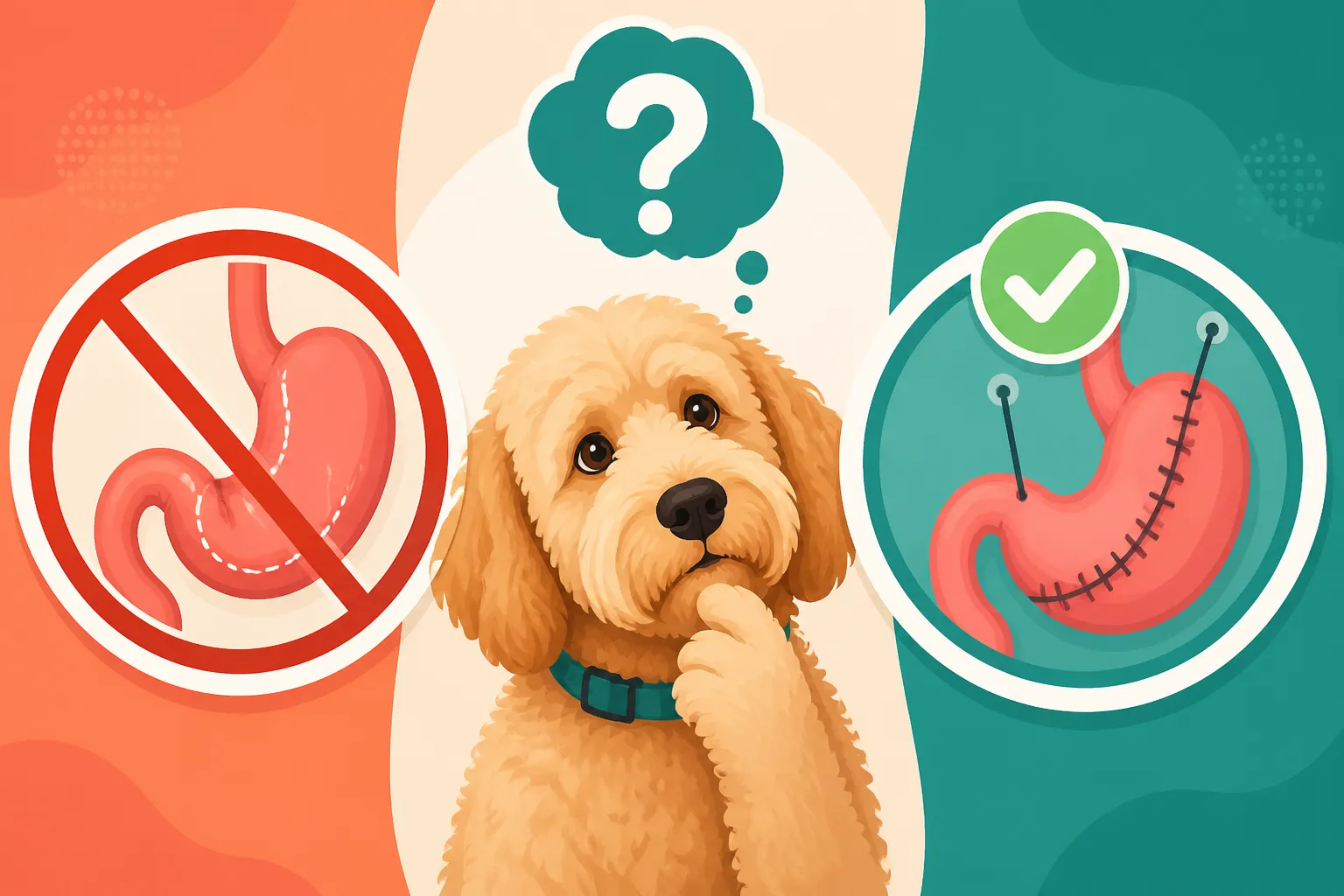
A gastropexy is a surgical procedure where the stomach is permanently attached to the abdominal wall. Think of it like tacking down a loose tablecloth to prevent it from sliding around. This attachment prevents the stomach from rotating or twisting (volvulus) if it ever dilates. It's crucial to understand that a gastropexy does not prevent the stomach from dilating (filling with gas). Your Goldendoodle could still experience gastric dilatation, which can be uncomfortable and might still require veterinary attention to relieve the gas. However, by preventing the twist, it eliminates the most life-threatening component of GDV, which is the cutting off of blood supply and the rapid progression to shock and organ damage.
The goal of the procedure is to create a strong, permanent adhesion between a specific part of the stomach (the pyloric antrum, usually) and the inner lining of the abdominal wall. Over time, scar tissue forms, creating a sturdy bond. This simple but effective mechanical solution drastically reduces the risk of your Goldendoodle succumbing to fatal bloat. For many owners, this offers immense peace of mind, knowing that while a trip to the vet for gas might still be necessary, the immediate, deadly threat of a twisted stomach has been largely mitigated. It's a foundational step in managing the specific health risks that Goldendoodles can inherit from their parent breeds.
Surgical Approaches: Traditional vs. Minimally Invasive
When considering a gastropexy for your Goldendoodle, you'll generally encounter two main surgical approaches: the traditional open abdominal surgery and the minimally invasive laparoscopic technique. Both aim to achieve the same permanent attachment of the stomach, but they differ significantly in execution, recovery time, and associated costs.
- Traditional Open Abdominal Gastropexy: This involves a larger incision in the abdomen, allowing the surgeon direct visualization and access to the stomach and abdominal wall. The surgeon manually sutures the stomach to the body wall. This method has been performed for decades, is highly effective, and is often done concurrently with a spay or neuter procedure, which also requires an abdominal incision. The recovery period for an open gastropexy is typically longer, with more post-operative pain and a larger scar, due to the more extensive tissue manipulation.
- Laparoscopic Gastropexy: This is a less invasive technique, often performed by veterinary specialists. It involves one to three small incisions through which a camera (laparoscope) and specialized instruments are inserted. The surgeon views the internal organs on a monitor and uses the instruments to perform the stomach-tacking procedure. The benefits of laparoscopic surgery include significantly less pain, smaller scars, and a much faster recovery time, as the muscle layers are not cut as extensively. However, it usually requires specialized equipment and expertise, which can increase the cost and may not be available at all veterinary clinics. Some procedures may even be "laparoscopic-assisted," starting minimally invasive and converting to a small open incision if needed.
The choice between these methods for your Goldendoodle will depend on factors like your veterinarian's recommendation, their surgical capabilities, your dog's overall health (considering aspects like Anesthesia Risk for a Toy Goldendoodle if applicable), and your budget. Discussing the pros and cons of each with your vet is crucial to determine the best path forward for your specific situation.
Key Factors for Deciding on a Goldendoodle Gastropexy
The decision to pursue a preventive gastropexy for your Goldendoodle is a personal one, influenced by a multitude of factors unique to your dog, your family, and your lifestyle. It's not a one-size-fits-all answer, and careful consideration of all aspects is essential.
Assessing Your Goldendoodle's Individual Risk Profile
While Goldendoodles, especially Standard ones, are generally considered a higher-risk breed for bloat, not every individual dog faces the exact same level of danger. A thorough assessment of your Goldendoodle's specific risk profile can help you and your veterinarian make an informed decision.
- Size and Conformation: Standard Goldendoodles, typically weighing 50-90 pounds with deep, narrow chests, carry the highest risk. Medium Goldendoodles (35-50 pounds) have a moderate risk, while Mini (26-35 pounds) and Toy Goldendoodles (under 25 pounds) generally have a lower, but not zero, risk due to their smaller stature and proportionally wider chests. If you have a larger Goldendoodle, their physical build inherently elevates their risk.
- Family History: If either of your Goldendoodle's purebred parents (Golden Retriever or Poodle) had a history of bloat, or if any of their siblings or close relatives experienced it, your dog's genetic predisposition might be higher. This information can be challenging to obtain from breeders, but if available, it's a valuable piece of the puzzle.
- Eating Habits: Is your Goldendoodle a fast eater or a gulper? Do they drink water voraciously after meals or exercise? These behaviors can increase the ingestion of air and contribute to stomach distension. Using slow feeder bowls or elevated bowls (though the efficacy of elevated bowls for prevention is debated in research) might mitigate some of these behavioral risks, but for an aggressive eater, the underlying risk might still be there.
- Temperament and Stress Levels: Highly anxious or stressed dogs may be more prone to digestive issues, including bloat. While a gastropexy won't solve underlying anxiety, it can remove one major health concern for a high-strung Goldendoodle.
- Age: Bloat can occur at any age, but it becomes more common as dogs get older, typically after the age of two. If you're considering a gastropexy, it's often recommended to perform it when the dog is still young and healthy, ideally at the time of their spay or neuter. You can learn more about appropriate timing in our article on Neuter Timing That Depends on Goldendoodle Size.
A frank discussion with your vet about these points will help paint a clearer picture of your Goldendoodle's personal risk.
Weighing the Benefits Against Surgical Realities
The primary benefit of a preventive gastropexy is undeniable: it significantly reduces the likelihood of a life-threatening gastric volvulus. For owners of high-risk Goldendoodles, this peace of mind is invaluable. It means that if their dog's stomach does distend, it is far less likely to twist, giving them more time to seek veterinary care for the gas relief and avoiding the most dangerous aspect of the condition. This can save lives and prevent immense suffering.
However, it's crucial to acknowledge that gastropexy is still a surgical procedure, and all surgeries carry inherent risks. These can include:
- Anesthesia Risks: While generally safe, anesthesia always carries a small risk, especially for certain individuals or those with underlying health conditions, like a Heart Murmurs Found in a Goldendoodle Puppy. Your vet will conduct pre-surgical bloodwork and a physical exam to minimize these risks.
- Infection: Any incision site can become infected, though this is rare with proper sterile technique and post-operative care.
- Pain and Discomfort: There will be a recovery period involving some pain and discomfort, requiring pain medication and restricted activity. This can last for several weeks, meaning careful management to prevent your Goldendoodle from jumping or running too soon.
- Complications at the Surgical Site: While rare, complications like dehiscence (surgical wound opening) or adhesions (scar tissue forming abnormally) can occur.
- Cost: The procedure itself can be costly, ranging from hundreds to a few thousand dollars, depending on the surgical method (open vs. laparoscopic), location, and veterinarian's fees. This is a considerable investment, but potentially less than the cost of emergency bloat surgery.
Balancing these surgical realities against the profound benefit of preventing a fatal emergency requires careful thought and a candid conversation with your veterinary team.
The Financial Aspect and Pet Insurance Considerations
The cost of a preventive gastropexy can be a significant factor in the decision-making process. As mentioned, prices vary widely based on geographical location, the veterinary practice, and the chosen surgical method (traditional open surgery typically being less expensive than laparoscopic). On average, you might expect to pay anywhere from $400 to $1,500 for a standalone preventive gastropexy, with laparoscopic procedures often on the higher end. If performed concurrently with a spay or neuter, the total cost might be slightly less as your Goldendoodle is already under anesthesia and undergoing an abdominal entry.
Comparing this to the cost of emergency bloat surgery, which can easily run from $2,000 to $7,000 or more, a preventive gastropexy can be seen as a long-term investment in your Goldendoodle's health and your peace of mind. Emergency surgery involves not only the gastropexy but also emergency stabilization, addressing potential organ damage, extended hospitalization, and intensive post-operative care, which quickly adds up.
This is where pet insurance can play a crucial role. Many pet insurance providers, such as Healthy Paws, offer coverage for preventive procedures like gastropexy, especially if your dog is considered a high-risk breed. It's vital to check your specific policy details, including waiting periods and what preventive care benefits are included. Some plans might cover a portion of the cost, while others might only cover emergency treatment. Enrolling your Goldendoodle in pet insurance early, ideally as a puppy, can ensure that preventive surgeries like gastropexy, or unexpected emergencies, are covered once waiting periods are met. Understanding Goldendoodle Pet Insurance for a Dog With No Breed Papers can provide more insight into how crossbreeds are typically covered. While an investment upfront, having pet insurance can make the financial burden of managing your Goldendoodle's health much more manageable over their lifetime. A good pet insurance plan from a provider like Healthy Paws can truly be a lifesaver in more ways than one, offering peace of mind for both routine and unexpected health challenges.
Beyond Surgery: Comprehensive Bloat Prevention Strategies
Even if you opt for a preventive gastropexy, or if your Goldendoodle's risk profile doesn't warrant surgery, a holistic approach to bloat prevention is always a wise strategy. Many daily habits and environmental factors can influence your Goldendoodle's risk, and by addressing these, you can further safeguard their health.
Optimizing Feeding Practices and Meal Routines
How and what your Goldendoodle eats can significantly impact their risk of bloat. Thoughtful feeding practices are a cornerstone of prevention.
- Smaller, More Frequent Meals: Instead of one large meal a day, consider feeding two or three smaller meals. This reduces the amount of food in the stomach at any given time, making severe distension less likely.
- Slow Down Eating: Many Goldendoodles are enthusiastic eaters and can gulp down their food too quickly, ingesting a lot of air in the process. Invest in a slow feeder bowl, a puzzle feeder, or place a large, heavy object (like a clean rock or a designated dog toy) in their regular bowl to force them to eat around it. You can also scatter their food in a clean, designated area, turning mealtime into a scavenger hunt, which also provides mental enrichment.
- Avoid Elevated Bowls (Mostly): While elevated bowls were once recommended to prevent bloat, current research, including a large study by Purdue University, suggests they might actually increase the risk in large and giant breeds. It's generally safer to feed your Goldendoodle on the floor unless there's a specific medical reason (like neck arthritis) recommended by your vet to use an elevated bowl.
- Limit Water Intake Around Meals: Don't restrict water entirely, but encourage your Goldendoodle to drink small amounts more frequently throughout the day, rather than allowing them to gulp down a large volume immediately before or after a meal. Remove the water bowl for an hour before and after meals if your dog is prone to rapid drinking, or offer ice cubes.
- Consider Diet Quality: While there isn't definitive scientific proof that specific diets directly cause or prevent bloat, a high-quality, easily digestible food is always a good choice for overall canine health. Look for foods with whole ingredients and avoid excessive fermentation-inducing ingredients if your dog seems prone to gas. Our guide on Feeding a Goldendoodle by Size Category offers more insights into nutritional considerations.
Implementing these simple adjustments to your Goldendoodle's feeding routine can go a long way in reducing stomach stress and minimizing bloat risk.
Managing Exercise and Stress Around Mealtimes
Beyond food, a Goldendoodle's activity level and emotional state around mealtime are also critical factors to consider in bloat prevention.
- Restrict Exercise Before and After Meals: Strenuous activity, such as running, jumping, or intense play, immediately before or after eating, can increase the risk of bloat. A full stomach bouncing around during high-impact activity is more likely to twist. Aim for a quiet period of at least an hour before and two hours after meals. A leisurely potty walk is fine, but intense exercise, fetching, or dog park visits should be timed carefully.
- Minimize Stress: Stress can impact digestion and increase the likelihood of bloat. Try to keep meal times calm and consistent. If your Goldendoodle is anxious, create a peaceful eating environment away from household commotion or other pets. Major life changes, travel, or visits to new places can be stressful, so be extra mindful of feeding routines during these periods.
- Keep Your Goldendoodle Hydrated Throughout the Day: While you want to limit excessive drinking around meal times, ensuring constant access to fresh water throughout the day is crucial. Dehydration can cause a dog to drink too much too quickly when water is finally available, increasing bloat risk. A Goldendoodle’s active nature, as discussed in Goldendoodle Exercise for Body and Mind, means they will need consistent hydration.
- Regular, Moderate Exercise: Maintaining a healthy weight and good muscle tone through regular, moderate exercise is beneficial for overall health and can indirectly support digestive function. Avoid extreme bursts of activity, especially after eating.
By thoughtfully managing your Goldendoodle's activity and stress levels in conjunction with their feeding, you create a more secure environment against the threat of bloat. This layered approach to prevention offers the best defense.
Making an Informed Decision with Your Veterinary Team
The decision about preventive gastropexy is deeply personal and should always be made in close consultation with your trusted veterinarian. They are your primary resource for understanding your Goldendoodle's specific health needs and risks.
Collaborating with Your Vet on a Personalized Plan
Your veterinarian possesses the medical knowledge and experience to guide you through this complex decision. They will consider your Goldendoodle's age, overall health, body condition, and any existing medical conditions (like those mentioned in Goldendoodle Health Testing by Size Category) when assessing the risks and benefits of surgery. Don't hesitate to ask every question you have, no matter how small it may seem.
During your consultation, your vet might:
- Perform a thorough physical examination.
- Discuss your Goldendoodle's family history, if known.
- Review your Goldendoodle's lifestyle, including eating habits, exercise routine, and any known stressors.
- Provide a detailed explanation of the gastropexy procedure, including the different surgical techniques available and their associated recovery times.
- Outline the potential risks of surgery and anesthesia, and how they plan to mitigate them.
- Discuss the expected costs, including pre-surgical bloodwork, the procedure itself, and post-operative medications.
- Help you weigh your Goldendoodle’s individual risk factors against the benefits of the surgery, offering a recommendation based on their clinical expertise.
It’s an active partnership. Your input about your Goldendoodle's behavior and your comfort level with surgery is just as important as the vet's medical assessment. Together, you can create a personalized health plan that aligns with your Goldendoodle's needs and your family's resources.
Living with the Decision: Peace of Mind or Vigilance
Ultimately, whether you choose to proceed with a preventive gastropexy or decide against it, understanding how to live with that decision is crucial.
If you opt for gastropexy:
- You'll gain significant peace of mind knowing that the most life-threatening aspect of bloat has been addressed.
- You will still need to be vigilant for signs of gastric dilatation (stomach distension without twisting), as this can still occur and be painful, requiring vet attention to relieve the gas.
- Post-operative care is paramount. Carefully follow your vet's instructions regarding activity restrictions, wound care, and medication to ensure proper healing.
If you decide against gastropexy:
- You must commit to heightened vigilance. Learn all the signs of bloat (swollen abdomen, non-productive retching, restlessness) and know where your nearest 24-hour emergency veterinary clinic is located.
- Strictly implement all non-surgical preventive strategies, such as slow feeding, timing exercise around meals, and managing stress.
- Be prepared to act immediately if you suspect bloat. Time is the most critical factor in emergency GDV cases, and hesitation can be fatal. This includes understanding the subtle cues of Goldendoodle Diarrhea Lasting More Than Two Days or other digestive upsets that could precede or accompany bloat.
The goal is always to provide the best possible care for your Goldendoodle, ensuring they live a long, healthy, and happy life, free from preventable suffering. No matter your decision, regular vet check-ups and open communication with your veterinary team are the cornerstones of responsible Goldendoodle ownership.
| Factor to Consider | High Risk (Gastropexy often recommended) | Moderate Risk (Discuss with Vet) | Lower Risk (Gastropexy less common) |
|---|---|---|---|
| Goldendoodle Size | Standard (50-90+ lbs) | Medium (35-50 lbs) | Mini/Toy (Under 35 lbs) |
| Chest Conformation | Deep and narrow chest | Moderately deep chest | Proportionally wider chest |
| Eating Habits | Guzzles food/water, eats rapidly | Eats moderately fast | Eats slowly, drinks calmly |
| Family History of Bloat | Known bloat in parent/sibling breeds or lines | Unknown or distant bloat history | No known bloat history |
| Concurrent Surgery | Spay/Neuter or other abdominal surgery planned | No other immediate surgery planned | No other immediate surgery planned |
| Owner Peace of Mind | High anxiety about bloat risk | Some concern, but willing to manage risk | Low anxiety, comfortable with vigilance |
| Financial Preparedness | Pet insurance (e.g., Healthy Paws) covers surgery, budgeted for cost | Limited insurance/budget, but understands emergency costs | Fully prepared for emergency costs if needed |
Disclaimer
This article is for general informational purposes only and does not constitute professional advice. Laws, prices and regulations vary by location and change over time. Consult a qualified professional for guidance on your specific situation.