Progressive Retinal Atrophy and the Goldendoodle Eye Test
Few things are as heartbreaking as realizing your beloved Goldendoodle is struggling to see, especially when it seems to come out of nowhere. Many Goldendoodle parents worry about their dog's long-term health, and vision loss from conditions like Progressive Retinal Atrophy (PRA) is a significant concern that can deeply impact their quality of life. This comprehensive guide will walk you through everything you need to know about PRA in Goldendoodles, from understanding its genetic roots to interpreting eye test results and providing the best care for your furry family member.
Understanding Progressive Retinal Atrophy in Goldendoodles
It's natural to feel a pang of anxiety when you hear about serious genetic conditions. Progressive Retinal Atrophy, often shortened to PRA, sounds intimidating, and for good reason. It’s a group of inherited eye disorders that slowly, relentlessly, rob dogs of their sight. For Goldendoodle owners, understanding this condition is paramount, as both parent breeds – the Golden Retriever and the Poodle – are known carriers of various forms of PRA.
What PRA Actually Is
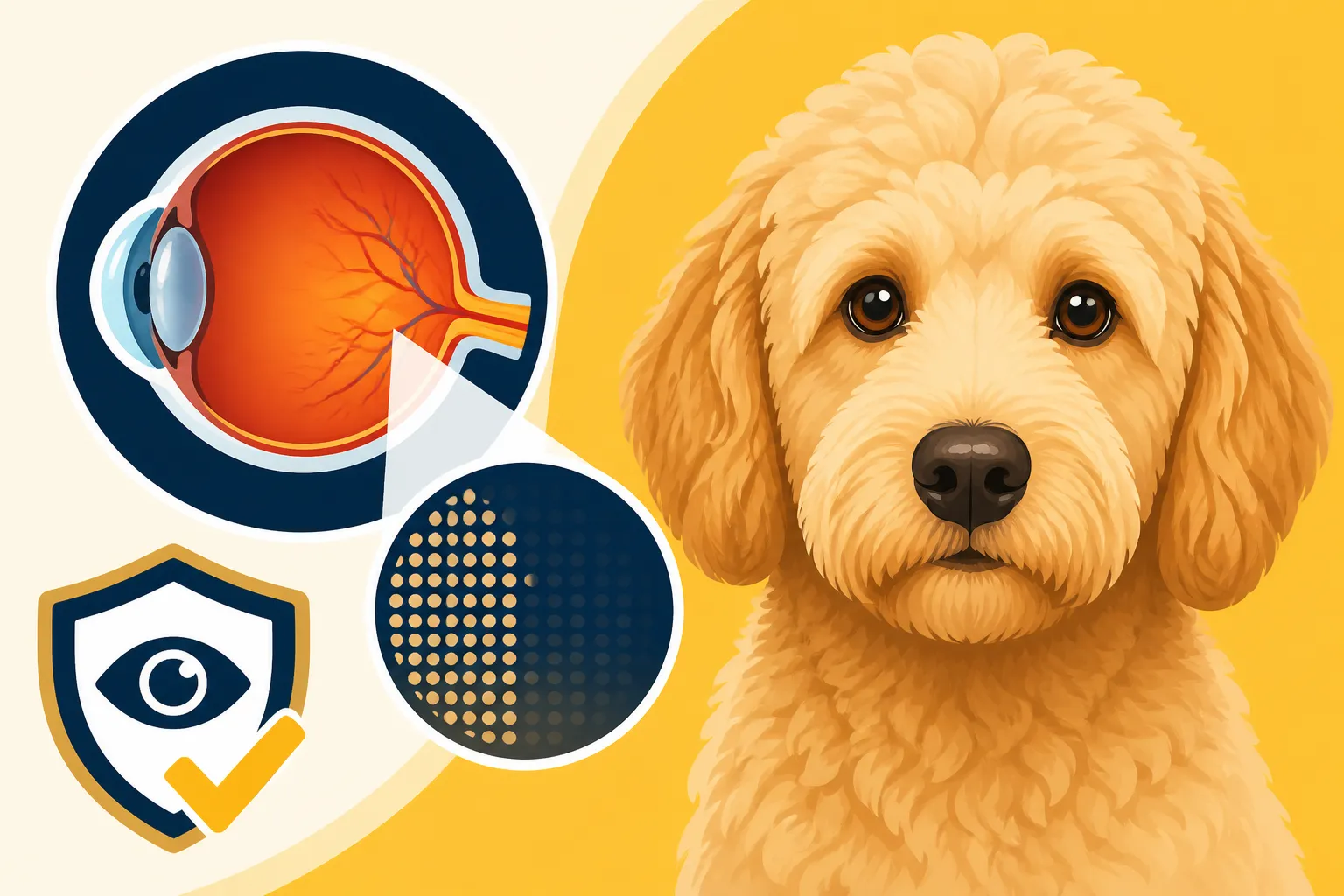
At its core, Progressive Retinal Atrophy is a degenerative disease affecting the photoreceptor cells in your dog's retina. Think of the retina as the film in a camera; it captures light and sends those signals to the brain to form an image. Photoreceptor cells, specifically rods and cones, are responsible for this vital function. Rods handle low-light vision and detect motion, while cones are all about bright light and color perception. With PRA, these cells gradually break down and die, leading to progressive vision loss. The disease isn't painful, which is a blessing, but it is irreversible. It usually starts subtly, often with night blindness, and slowly advances until total blindness sets in. The timeline can vary greatly depending on the specific type of PRA and the individual dog, but it's a journey that can span months or even years.
The Genetic Link in Goldendoodles
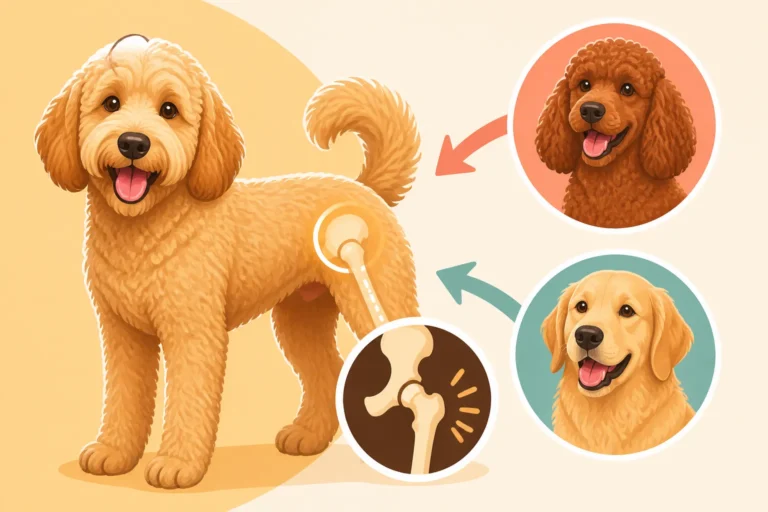
The genetic landscape of PRA can feel like a labyrinth, but it's crucial to grasp for Goldendoodle owners. The specific genes responsible for various forms of PRA are present in both the Golden Retriever and Poodle lines. For instance, the Miniature Poodle and Standard Poodle, common contributors to the Goldendoodle, can carry prcd-PRA (progressive rod-cone degeneration). On the other hand, Golden Retrievers are known for GR-PRA1 and GR-PRA2 (Golden Retriever PRA 1 and 2), among others. When you cross these two breeds, you blend their genetic predispositions.
Most forms of PRA are inherited in an autosomal recessive manner. This means a dog needs to inherit two copies of the defective gene – one from each parent – to actually develop the disease. If a Goldendoodle inherits only one copy, they are considered a "carrier." A carrier won't develop PRA themselves, but they can pass the gene on to their offspring. This is why it's so incredibly important for breeders to understand and test for these specific genetic markers. Without proper screening, two carrier parents could unknowingly produce a litter where 25% of the puppies are affected, 50% are carriers, and 25% are clear. You can learn more about What a Goldendoodle Inherits From Each Parent Breed and how these genetic traits manifest.
Recognizing the Early Signs of PRA and How It Progresses
One of the most challenging aspects of PRA is its insidious nature. It progresses slowly, and dogs are masters at adapting, making it difficult for owners to spot the initial signs. Often, by the time you notice something is truly amiss, the disease may have already advanced significantly.
Night Blindness The First Clue
The earliest and most common symptom of PRA is night blindness, or nyctalopia. This happens because the rod photoreceptor cells, responsible for low-light vision, are usually the first to degenerate. You might start noticing subtle changes in your Goldendoodle's behavior as dusk falls or in dimly lit rooms. Perhaps they become hesitant to venture into the backyard after dark, even if it was a favorite activity just weeks before. They might bump into furniture they usually navigate with ease, or become more cautious on stairs when the lights are low. Some owners report their dogs being more startled by unexpected noises at night, as they can't rely on their vision to orient themselves. It's a common fear to notice Night Blindness as a Goldendoodle's First PRA Sign, and it’s always wise to consult your vet if you observe these changes.
Your Goldendoodle might seem perfectly normal during the day, which can be confusing. This discrepancy often causes owners to second-guess themselves or attribute the behavior to aging or other factors. Keeping a mental note or even a small journal of these observations can be incredibly helpful for your veterinarian to establish a timeline and consider PRA as a possibility. It's a progressive condition, so these early signs will gradually worsen over time if left unaddressed.
Progression to Daytime Vision Loss and Total Blindness
As PRA continues its slow march, the cone photoreceptor cells, which handle daytime and color vision, also begin to degrade. This means that eventually, your Goldendoodle's vision will deteriorate even in brighter conditions. You might notice their pupils appear more dilated than usual, even in well-lit environments, as their eyes try to gather every bit of available light. Sometimes, their eyes might develop a somewhat glossy or reflective appearance, especially when light catches them just right.
Behavioral changes become more pronounced. Your dog might seem disoriented in new environments or even familiar ones if an object has been moved. They might start relying more heavily on their other senses – sniffing around more, listening intently, and sticking closer to you. Anxiety can increase, particularly in unfamiliar places or when startled. Dogs adapt remarkably well to vision loss, using their incredible sense of smell and hearing, but it's a huge adjustment. Maintaining a consistent environment in your home becomes critical, avoiding moving furniture or clutter, to help them navigate safely and confidently. Many Goldendoodles carry the gene for Progressive Retinal Atrophy Carried by Both Goldendoodle Lines, making awareness and proactive care essential.
The Crucial Role of Goldendoodle Eye Testing
Given the genetic predisposition for PRA in Goldendoodles, testing is not just recommended, it's absolutely crucial. For prospective puppy owners, it's your best defense against inadvertently bringing home a dog destined for blindness. For breeders, it's an ethical imperative to ensure the health of their lines.
Genetic DNA Testing for PRA
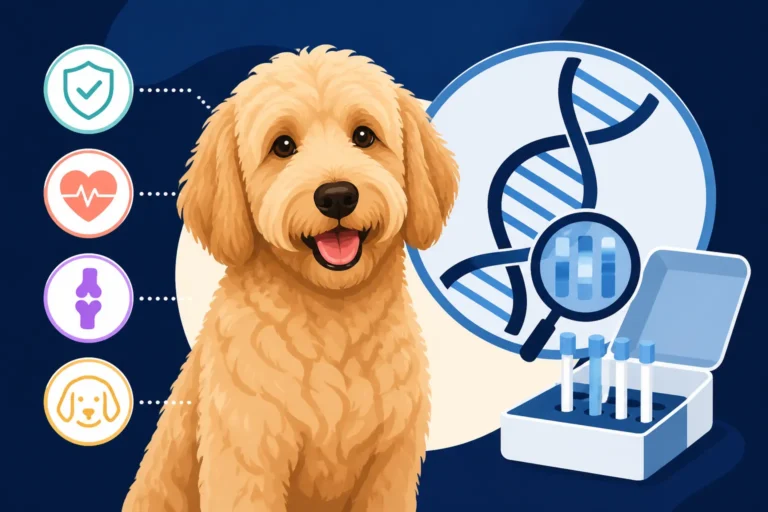
Thanks to advancements in veterinary genetics, we now have DNA tests that can identify the specific gene mutations responsible for many forms of PRA. Companies like Embark, Optimal Selection, and Paw Print Genetics offer comprehensive DNA panels that include tests for prcd-PRA, GR-PRA1, and GR-PRA2, among others, which are highly relevant for Goldendoodles. A simple swab of your dog's cheek is all it takes to collect a DNA sample. This sample is then analyzed to determine whether your dog is "clear," a "carrier," or "affected" for specific PRA mutations.
These tests are invaluable because they can identify a dog's genetic status long before any clinical signs of PRA appear. For breeders, this information is vital for making responsible breeding decisions, preventing the transmission of disease genes to future generations. For pet owners, it provides peace of mind or, if the dog is affected or a carrier, allows for proactive planning and monitoring. It’s important to understand that a single DNA test won't cover every possible eye condition, but it's a powerful tool against the most common inherited forms of PRA. Before committing to a puppy, it's wise to ask a breeder about The DNA Panel a Goldendoodle Breeder Should Run.
OFA Eye Exams and Veterinary Ophthalmologist Check-ups
While DNA tests reveal a dog's genetic predisposition, annual eye examinations performed by a board-certified veterinary ophthalmologist are equally important. These examinations are part of the Eye Certification Registry (CAER) program through the Orthopedic Foundation for Animals (OFA). During a CAER exam, the ophthalmologist uses specialized equipment to meticulously examine the entire structure of the eye, looking for any signs of inherited eye diseases, not just PRA. This includes conditions like cataracts, glaucoma, distichiasis, and, of course, the physical changes associated with PRA.
The beauty of these exams is that they detect clinical signs of disease, even those not covered by a specific DNA test or conditions that might develop later in life. A dog might have a "clear" DNA test for prcd-PRA but could still develop another form of PRA not yet linked to a genetic marker, or another eye condition entirely, such as Goldendoodle Cataracts and Vision Loss. For breeders, passing these annual eye exams (alongside DNA testing) ensures they are actively screening for a broad range of ocular health issues. For pet owners, regular check-ups can catch problems early, allowing for timely intervention or management strategies. Every responsible breeder should ensure The Annual Eye Exam a Goldendoodle Breeder Should Have is part of their health protocol.
Interpreting Test Results and Making Informed Decisions
Getting your Goldendoodle's eye test results can be a moment of anticipation. Understanding what those results mean for your dog, and potentially for future generations if you're a breeder, is critical.
What a "Clear," "Carrier," or "Affected" Result Means
When you receive genetic test results for PRA, you'll typically see one of three designations:
- Clear: This is the best possible result! It means your Goldendoodle does not have any copies of the specific PRA gene mutation(s) tested. They will not develop that particular form of PRA, and they cannot pass it on to their offspring. A "clear" dog is considered ideal for breeding, as long as all other health clearances are also satisfactory.
- Carrier: This means your Goldendoodle has inherited one copy of the PRA gene mutation from one parent, but a normal copy from the other. For most forms of PRA (which are recessive), a carrier will not develop the disease itself. They typically have normal vision throughout their lives. However, they can pass the gene on to approximately 50% of their offspring. If a carrier is bred to another carrier, there's a 25% chance of producing affected puppies. This is why it's vital for breeders to know if a dog is a carrier. Breeding a carrier is acceptable if they are only bred to a "clear" dog, as all puppies will then either be clear or carriers, but none will be affected. Understanding What a Carrier PRA Result Means for a Goldendoodle is essential for responsible breeding practices.
- Affected: This result means your Goldendoodle has inherited two copies of the PRA gene mutation, one from each parent. An affected dog will almost certainly develop clinical signs of PRA at some point in their life, leading to vision loss and eventual blindness. These dogs should never be bred, as they will pass on the defective gene to 100% of their offspring.
Here's a quick summary of what these results imply:
| Result | Genetic Status | Will Develop PRA? | Can Pass Gene to Offspring? | Breeding Recommendation |
|---|---|---|---|---|
| Clear | No copies of the specific mutation | No | No | Yes, with other health clearances. |
| Carrier | One copy of the specific mutation | No (for recessive PRA) | Yes (50% chance per pup) | Only breed with a "Clear" partner. Avoid breeding with other Carriers. |
| Affected | Two copies of the specific mutation | Yes | Yes (100% chance per pup) | No. Should not be bred. |
Breeder Transparency and Your Puppy's Future
When you're looking for a Goldendoodle puppy, breeder transparency regarding health testing is non-negotiable. A responsible, ethical breeder will be open and honest about the genetic health of their breeding dogs. They should readily provide documentation of DNA test results for PRA, as well as OFA/CAER eye exam clearances, for both the sire (father) and dam (mother) of your prospective puppy. This isn't just a "nice to have"; it's a fundamental requirement. Asking for these papers, and understanding them, gives you the peace of mind that your puppy comes from parents who have been screened to minimize the risk of passing on debilitating conditions.
Don't settle for verbal assurances. Ask to see the actual certificates. A reputable breeder will explain the results, whether their dogs are clear or carriers, and how they make breeding decisions based on that information. This level of diligence ensures that they are not just breeding for cute puppies, but for healthy puppies that will live long, fulfilling lives. You need to know What Health Papers a Goldendoodle Breeder Should Show before you commit to bringing a Goldendoodle home. While genetic testing is a powerful tool, remember it only tests for known mutations. Regular veterinary care and ongoing eye check-ups remain important throughout your Goldendoodle's life, as other eye conditions can emerge.
Living with a Goldendoodle Diagnosed with PRA
Receiving a PRA diagnosis for your beloved Goldendoodle can be devastating, but it's important to remember that it's not a death sentence. Dogs are incredibly resilient and can adapt remarkably well to vision loss with the right support from their devoted owners. Your role shifts from prevention to compassionate care, ensuring your dog can continue to live a happy, full life.
Adapting Your Home for a Visually Impaired Dog
The key to helping a visually impaired Goldendoodle thrive is consistency and safety. Their world becomes one they navigate through memory, smell, sound, and touch. Here are some practical tips to adapt your home:
- Maintain Consistent Layout: Resist the urge to rearrange furniture. Once your dog has memorized the layout of your home, sudden changes can be disorienting and stressful. If you must move something, do it slowly and guide your dog around the new obstruction several times.
- Create Safe Zones: Use baby gates to block off stairs, swimming pools, or areas with hazards. A securely fenced yard is crucial, and it's best to supervise them outside, especially initially, to ensure they don't encounter unfamiliar obstacles.
- Use Scent and Texture Markers: Place scented essential oils (dog-safe, diluted, and subtle) on furniture legs or doorways to help your dog identify areas. Different textured mats at the top or bottom of stairs can also serve as tactile warnings.
- Audible Cues: Start using clear verbal cues for everything – "step up," "step down," "wait," "danger," "toy." This can help them navigate with greater confidence. A little bell on your shoes can also help them track your location.
- Safe Toys: Opt for toys that make noise (squeaky, crinkly) or are scented to engage their other senses during playtime.
Remember, your Goldendoodle will be relying on you more than ever. Their confidence comes from your calm guidance and a predictable environment. It's a journey, and there will be good days and challenging ones, but with patience and understanding, your dog can continue to enjoy life. You might find more helpful advice in articles like Vision Loss in an Old Goldendoodle, which addresses similar challenges.
Supporting Your Goldendoodle's Quality of Life
Beyond adapting the physical environment, supporting your Goldendoodle's emotional and mental well-being is paramount. Vision loss can be frustrating and anxiety-inducing for dogs, so your calm presence and consistent routine are their anchor.
- Routine, Routine, Routine: Stick to a predictable daily schedule for feeding, walks, and playtime. This predictability reduces stress and allows them to anticipate what's next.
- Continue Mental Stimulation: Even without sight, your Goldendoodle's brain needs exercise! Engage them with scent work (hide-and-seek with treats), puzzle toys, and familiar obedience commands. Nose work is particularly rewarding and can build their confidence.
- Verbal Praise and Touch: Since they can't see your expressions, rely heavily on your voice and touch. Gentle petting, reassuring words, and enthusiastic verbal praise become even more important.
- Socialization (Controlled): Continue to allow them to socialize with familiar, calm dogs and people. Introduce new individuals slowly and announce their presence verbally. Supervise all interactions closely.
- Regular Vet Visits: Maintain regular check-ups with your veterinarian. They can monitor for any secondary eye issues, manage overall health, and offer advice on pain management if other age-related conditions arise. While many pet insurance policies, including those from providers like Healthy Paws, often have exclusions for pre-existing or genetic conditions like PRA, it's still incredibly valuable to have a comprehensive plan in place for all the other unexpected bumps in the road – like accidents or other illnesses that can crop up. Having that safety net allows you to focus on your Goldendoodle's care without added financial strain for other unrelated issues.
- Consider a 'Halo' Vest: For some dogs, a halo vest can provide a physical bumper that alerts them to obstacles before they make contact, helping to prevent bumps and build confidence.
- Leash Walking: Keep them on a leash when outside your secure yard. Even in familiar areas, smells and sounds can be distracting, and without sight, they are more vulnerable.
Living with a Goldendoodle with PRA is a testament to the incredible bond we share with our dogs. It requires extra effort, but the love and companionship you receive in return are immeasurable. Taking proactive steps for Senior Goldendoodle Care After the Age of Nine can also offer insights, as vision loss often accompanies the aging process.
Disclaimer
Please remember that this article is intended for informational purposes only and does not constitute professional veterinary advice. Always consult with a qualified veterinarian or board-certified veterinary ophthalmologist for any health concerns or before making any decisions about your Goldendoodle's health care, diagnosis, or treatment. Genetic test results and eye exam findings should always be interpreted by a professional.