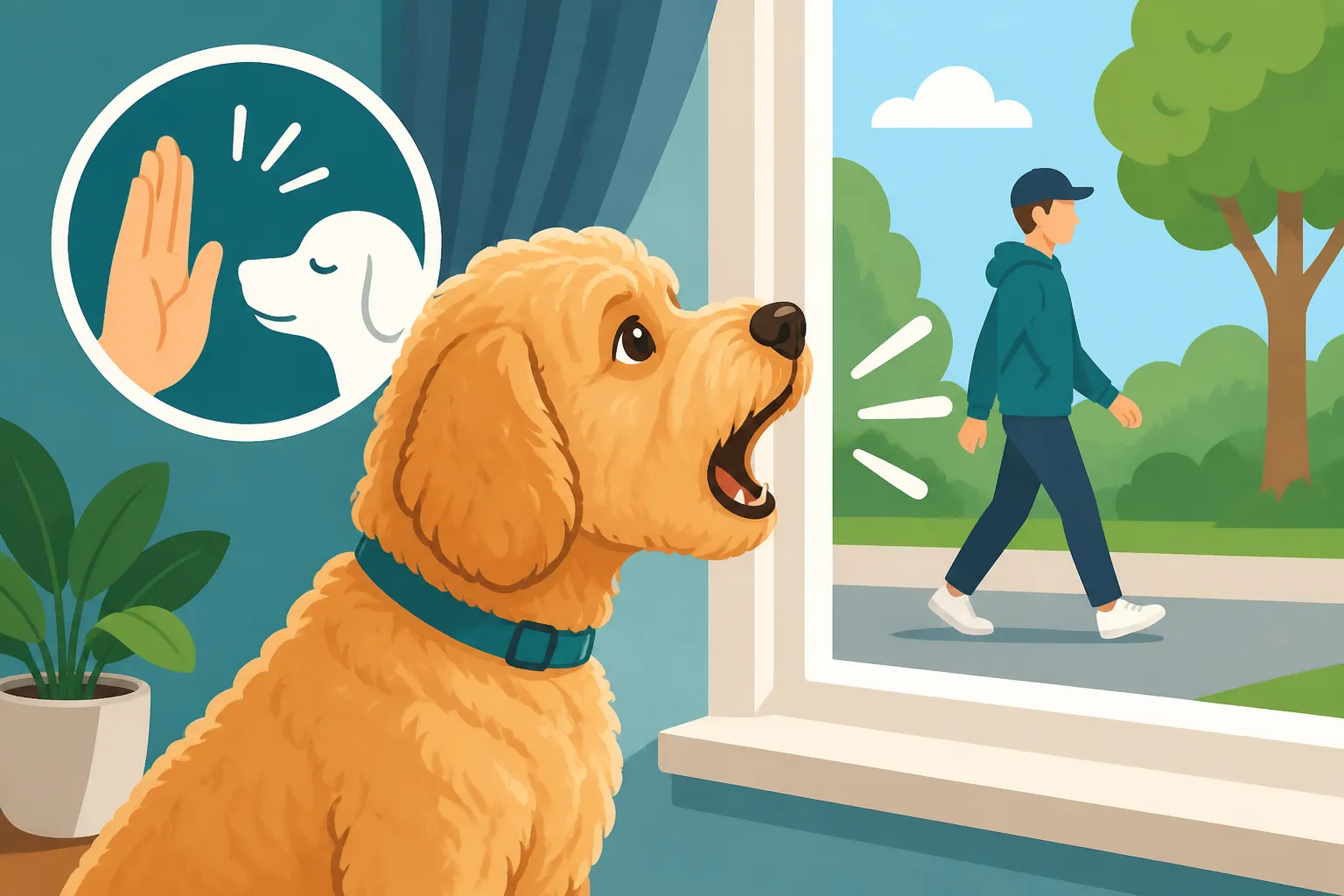
Quieting a Goldendoodle That Barks at Every Passerby
It's a familiar scene for many Goldendoodle parents: you're enjoying a quiet moment at home, maybe sipping your morning coffee, when suddenly your sweet, fluffy companion transforms into a barking sentinel, launching into a frenzied chorus at the sight of a leaf blowing by, a neighbor walking their dog, or the postal carrier just doing their job. This constant "alert" barking at every passerby can be incredibly frustrating, not just for you but for your neighbors too. This comprehensive guide will delve into the reasons behind this common Goldendoodle behavior and offer actionable, empathetic strategies to help you teach your beloved companion to respond more calmly to the outside world.
Understanding Why Your Goldendoodle Barks at Every Passerby
Before we can even begin to address the barking, we need to put on our detective hats and figure out why it's happening. Goldendoodles are wonderful dogs, but they're not always born knowing the "rules" of suburban living. Their heritage and instincts play a huge role in how they react to their environment.
The Goldendoodle's Alert Nature
Let's be real, Goldendoodles come from lines of dogs that were bred for specific purposes, and those instincts don't just disappear. The Golden Retriever side brings a natural friendliness and a strong desire to announce arrivals, whether it's a long-lost friend or the pizza delivery person. They're often very attuned to their surroundings and want to make sure you know what's happening. Then you have the Poodle, a highly intelligent breed, historically used as water retrievers and known for their keen senses and sometimes watchful nature. Combine these, and you have a dog with a strong "alert" instinct. They might not be aggressive, but they feel it's their job to tell you about every squirrel, every jogger, and every car door closing within a two-block radius.
Imagine your Goldendoodle sees someone walking past your window. To them, this isn't just a person; it's a potential "intruder" or a fascinating new element in their territory that must be acknowledged. They're essentially saying, "Hey! Something's out there! Are you seeing this?!" This can be particularly pronounced in dogs that haven't been exposed to a wide variety of people and situations from a young age. Their world might feel very safe and predictable, and anything outside that norm becomes a cause for alarm, or at least, a vocal report.
Boredom and Undersocialization
Sometimes, barking at passersby isn't about guarding or alerting at all; it's simply a cry for attention or a symptom of boredom. Goldendoodles are smart, active dogs who thrive on interaction and mental stimulation. If they're not getting enough physical exercise or engaging mental work, they'll find their own "jobs," and often, that job becomes monitoring the street and barking at anything that moves. A bored Goldendoodle with a view of the world is a Goldendoodle that might decide to entertain itself by creating a ruckus. This is where a lack of mental enrichment can really lead to problems. They might have a big backyard, but if they're just left out there without interaction or engaging toys, it can quickly become a monotonous space, making any external movement seem like prime entertainment. We often discuss Goldendoodle Exercise and Mental Work Every Day for exactly this reason – a tired Goldendoodle is often a quieter, happier Goldendoodle.
Furthermore, if your Goldendoodle wasn't properly socialized during their critical puppyhood window (roughly 3 to 16 weeks), they might not have learned how to interpret novel sights and sounds without alarm. If every new person or dog they saw was a surprise, they might have learned to react with barking rather than curiosity or calm observation. This isn't their fault, of course; it's a foundational experience that shapes their perception of the world. An undersocialized dog may simply lack the coping mechanisms to process common outdoor stimuli without feeling the need to vocalize intensely.
Barrier Frustration and Leash Reactivity
Another common reason for barking at passersby, especially from behind a fence or on a leash, is what we call barrier frustration. Your Goldendoodle sees someone they desperately want to greet, play with, or even just investigate, but they can't reach them. That inability to fulfill their natural urge to interact (or sometimes, to chase) leads to intense frustration, which then manifests as barking, lunging, and whining. It's like a toddler having a tantrum because they can't have a toy they see. They're not necessarily aggressive; they're just overwhelmed by their inability to control the situation.
This is especially true for Goldendoodles, who are often incredibly friendly and eager to meet everyone. The fence or leash becomes a frustrating barrier to their social desires. On walks, this can escalate into what's known as leash reactivity, where a Goldendoodle might bark and lunge at other dogs or people because they feel restrained and overstimulated. We explore this in more detail when we discuss A Friendly Goldendoodle That Turns Reactive on Leash. They're experiencing a cocktail of excitement, frustration, and sometimes a little bit of anxiety, which all boils down to an explosion of noise.
Practical Strategies to Manage Window and Yard Barking
Once we understand why the barking is happening, we can start to implement practical strategies. Remember, consistency is key, and it often involves a multi-pronged approach to really make a difference.
Managing the Environment Indoors
One of the quickest and most effective ways to reduce indoor barking at passersby is to control your Goldendoodle's access to the "triggers." If they can't see it, they're less likely to bark at it. This isn't about ignoring the problem, but about creating an environment where your dog can learn to be calm without constant stimulation.
- Limit Visual Access: Simple solutions like drawing blinds, closing curtains, or even applying privacy film to lower window panes can make a huge difference. For doors with glass panels, consider temporary covers or frosted film. This removes the immediate visual trigger that sparks the initial bark.
- Create a "Quiet Zone": Establish a designated area in your home that's away from windows and high-traffic areas. This could be a cozy crate in a quieter room, a dog bed in the corner of the living room, or a laundry room. Teach your Goldendoodle that this is their relaxation spot. Offer a long-lasting chew or a puzzle toy (like a Kong filled with peanut butter) to help them settle in this zone. You can find many excellent options for puzzle toys and chews on platforms like Amazon that can keep them occupied and mentally stimulated away from the window.
- Muffle Outdoor Sounds: Sometimes it's the sounds, not just the sights, that trigger the barking. Playing calming music, white noise, or even having a TV on in the background can help muffle external noises that might otherwise set off your Goldendoodle. This reduces the sudden, startling nature of an unexpected sound, giving your dog less to react to.
Redirection and Positive Reinforcement
This is where you actively teach your Goldendoodle what to do instead of barking, and then reward them for it. It takes time and patience, but it's incredibly effective because you're building new, positive associations. Positive Reinforcement and Why It Suits a Goldendoodle is the foundation here.
- Interrupt and Reward Quiet: The moment you see a passerby (before your Goldendoodle barks), or at the very first quiet moment after a bark, say "Yes!" or click a clicker, and immediately give a high-value treat. The timing is crucial. You want to reward the absence of barking or the interruption of it. The goal is to show them, "Hey, being quiet when someone passes means good things happen!"
- Teach a "Look At Me" or "Quiet" Cue: Start in a calm environment. Hold a treat near your nose and say "Look at me!" When your Goldendoodle makes eye contact, immediately reward. Practice this many times. Once they reliably "look at me," you can start using it when they're about to bark. The idea is to redirect their attention from the trigger to you. For a "quiet" cue, wait for a bark, then gently interrupt them (perhaps with a sound, but not yelling), and when they pause, say "Quiet!" and reward immediately. Gradually increase the duration of quietness before the reward.
- Consistency with High-Value Treats: For this to work, the reward needs to be incredibly motivating. Small pieces of cooked chicken, cheese, or specialized training treats often work wonders. Make sure everyone in the household uses the same cues and rewards to avoid confusion. This consistent positive reinforcement helps solidify the new desired behavior over time.
Desensitization and Counter-Conditioning
This approach involves gradually changing your Goldendoodle's emotional response to the passerby. Instead of seeing a passerby as something to bark at, you want them to associate it with something positive.
- Controlled Exposure: Start by exposing your Goldendoodle to the trigger at a distance where they notice it but don't react. This might mean having them on a leash across the street from a sidewalk, or even just cracked blinds where they can only glimpse movement.
- Positive Association: The moment they see a passerby without barking, immediately give them a super high-value treat. The passerby becomes a predictor of deliciousness! Repeat this many, many times. If they start to bark, you've moved too close too fast. Increase the distance again.
- Gradual Reduction of Distance: Over days or weeks, slowly decrease the distance to the passerby. The key is to keep your Goldendoodle under their barking threshold. It's a slow process, but it builds a calm, positive association. Imagine your Goldendoodle seeing a person walk by, and instead of barking, they look at you expectantly for a treat. That's the goal!
Addressing Leash and Yard Barking Outdoors
Outdoor barking presents its own set of challenges, as you have less control over the environment. However, the principles of management, redirection, and positive reinforcement still apply.
Structured Walks and Leash Training
Walking your Goldendoodle can be a fantastic bonding experience, but it can also be a nightmare if they're barking and lunging at everything. Structured walks are about teaching your dog to focus on you, rather than reacting to every external stimulus.
- Focus on the Handler: Before you even leave the house, practice "look at me" or "watch me" in a quiet area. Carry high-value treats and reward eye contact and loose-leash walking consistently. When you encounter a passerby on a walk, use your "look at me" cue the moment you see the person, before your Goldendoodle does. Reward heavily if they focus on you instead.
- No-Pull Harnesses: Equipment can make a huge difference. A well-fitting no-pull harness (many brands available on Amazon offer front-clip options) can help manage pulling and give you more control, reducing the feeling of frustration for both you and your dog. Avoid retractable leashes, as they teach dogs to pull and offer little control in reactive situations.
- "Leave It" and Distance: Practice the "leave it" command with tempting items at home, then generalize it to your walks. If you see a passerby approaching and your Goldendoodle is about to react, use "leave it" and redirect their attention. If necessary, cross the street or step behind a parked car to create more distance and keep your dog under their reactivity threshold. Remember our advice on Goldendoodle Leash Manners by Size – a well-mannered Goldendoodle on a leash is less likely to bark out of frustration.
Yard Management and Supervision
Your yard might feel like your Goldendoodle's kingdom, but if it's leading to incessant barking, some management is necessary.
- Supervise Yard Time: Don't just let your Goldendoodle out in the yard unsupervised for long periods, especially if they're prone to barking. Go out with them. When you see a passerby, use your "quiet" or "look at me" cues and reward calm behavior. If they start barking uncontrollably, bring them inside. This teaches them that barking doesn't prolong yard time, but rather shortens it.
- Reinforce "Quiet": Just like indoors, reward quiet behavior in the yard. When they're enjoying the yard calmly, occasionally go out and give them a treat. If a bark does happen, wait for a pause, say "Quiet," and reward the silence.
- Physical Barriers and Enrichment: Consider installing privacy screens on fences or planting dense shrubs to block visual access to the street or neighboring yards. For boredom-related barking, make the yard a more enriching place. Provide durable chew toys, hide treats for them to find, or play a game of fetch. A mentally and physically engaged Goldendoodle is less likely to stand at the fence barking at air.
Considering Professional Help
Sometimes, despite your best efforts, the barking behavior is simply too ingrained, too intense, or you feel completely overwhelmed. This is absolutely nothing to be ashamed of; behavior modification can be challenging, and there are wonderful professionals out there to help.
- Certified Professional Dog Trainers or Behaviorists: If you're struggling, a certified professional dog trainer (CPDT-KA) or a certified dog behaviorist (CDBC) can assess your specific situation and create a tailored training plan. They can observe your Goldendoodle's behavior, identify underlying triggers, and guide you through the process step-by-step. They'll teach you how to effectively communicate with and train your dog. Don't hesitate to seek out Finding a Trainer for a Goldendoodle if you feel out of your depth.
- Online Training Programs: For those who prefer a flexible approach, online training programs can be a fantastic resource. Many reputable programs offer structured lessons, video demonstrations, and even virtual coaching sessions. For example, BAXTER & Bella's online puppy program, while often focused on younger dogs, provides a comprehensive foundation in positive reinforcement training that can be adapted to address specific barking issues. These resources can offer valuable insights and support from the comfort of your own home, helping you feel empowered in your training journey.
| Barking Scenario | Common Causes | Management Strategies | Training Techniques |
|---|---|---|---|
| Window Barking | Alerting, boredom, barrier frustration | Close blinds/curtains, privacy film, quiet zone | "Look at me," "Quiet" cue, positive interruption |
| Yard/Fence Barking | Territoriality, boredom, barrier frustration | Supervised yard time, privacy screens, enrichment toys | "Quiet" cue, recall indoors if barking, reward calm play |
| Leash Reactivity Barking | Frustration, over-excitement, fear | Structured walks, no-pull harness, create distance | "Look at me," "Leave it," counter-conditioning |
| General Alert Barking | Instinct, undersocialization, attention seeking | Mental & physical exercise, desensitization, consistent cues | Reward calm behavior, ignore attention-seeking barks |
Consistency and Patience: The Keys to Success
It's easy to get disheartened when you're trying to curb a persistent barking habit. Remember that behavior change is a marathon, not a sprint, and your Goldendoodle is learning a whole new way to interact with their world.
The Long Game of Behavior Modification
Teaching a Goldendoodle not to bark at every passerby isn't a one-and-done solution. It requires ongoing effort and a consistent approach from everyone in the household. Goldendoodles are incredibly intelligent, which means they can learn quickly, but they also pick up on inconsistencies. If one family member lets them bark and another tries to correct it, your dog will get mixed signals, making the process much longer and more confusing for them. Think of it like teaching a child a new language – you wouldn't expect them to be fluent overnight, and you'd use the same words and phrases every time.
Be prepared for setbacks. There will be days when your Goldendoodle seems to have forgotten everything you've taught them, and they'll bark furiously at a leaf. Don't get discouraged. Just calmly and consistently go back to your training strategies. Your Goldendoodle truly wants to please you, but old habits are hard to break. Understanding Why a Goldendoodle Learns Faster Than Most Crosses can be encouraging, knowing that with persistence, they will grasp what you're asking of them.
Avoiding Common Pitfalls
When trying to stop barking, it's easy to fall into traps that can actually make the problem worse.
- Don't Reward Barking Accidentally: Yelling at your Goldendoodle to "be quiet" can often be interpreted as you barking with them, or at least giving them attention for the behavior. Even giving them a push or touching them to stop the bark is a form of attention. For some Goldendoodles, any attention is good attention, and it inadvertently reinforces the barking. Instead, aim to redirect or reward quietness.
- Avoid Punishment: Harsh punishments, shock collars, or yelling can damage your bond with your Goldendoodle and often lead to increased anxiety or fear, which can manifest in other behavioral problems. Your goal is to teach them a better way to cope, not to scare them into silence. A scared dog might stop barking in front of you, but continue the behavior or develop new issues when you're not around.
- Meet Their Core Needs: A well-exercised, mentally stimulated Goldendoodle is less likely to feel the need to bark for entertainment. Ensure they get enough physical activity (walks, fetch, playtime) and mental enrichment (puzzle toys, training sessions, scent games) every single day. Many Goldendoodles also suffer from Goldendoodle Separation Anxiety From Both Parent Lines, which can sometimes manifest as excessive barking, especially when left alone. Addressing these underlying needs can significantly reduce nuisance barking.
Celebrating Small Victories
Every small step forward is a victory worth celebrating! Did your Goldendoodle only bark twice instead of ten times at the mail carrier today? That's progress! Did they look at you for a treat instead of lunging at the dog across the street? Fantastic!
Keep a mental (or even a written) log of these improvements. It helps you see how far you've come and reminds you that your efforts are paying off. Patience, persistence, and a whole lot of love are what will ultimately help your Goldendoodle learn to be a calmer, quieter member of your family. It's a journey, and you're in it together.
Disclaimer
This article is for general informational purposes only and does not constitute professional advice. Laws, prices and regulations vary by location and change over time. Consult a qualified professional for guidance on your specific situation.