Goldendoodle Leash Manners by Size
Many Goldendoodle owners feel like they're being pulled down the street by a furry freight train, struggling to enjoy walks because their enthusiastic companion just has to greet everything, or sniff every single blade of grass with immense force. It's truly frustrating when you want a pleasant stroll but end up with a dislocated shoulder or a scraped knee. This comprehensive guide will walk you through understanding Goldendoodle leash manners, focusing on how their size impacts their pulling power, and offering practical strategies and tools to transform your walks from a tug-of-war into a harmonious partnership.
Understanding the Goldendoodle's Leash Enthusiasm
It's easy to look at your Goldendoodle and wonder why they can't just walk nicely. They're smart, they're eager to please, and yet the moment that leash clips on, they transform into a furry rocket. But understanding why they pull is the first step toward teaching them better manners. It's rarely out of malice; it's almost always a combination of natural instincts and learned behaviors.
Why Goldendoodles Pull
Goldendoodles, by nature, are bundles of joyful energy and curiosity. Their Golden Retriever heritage imbues them with a strong desire to explore, retrieve, and greet everyone and everything with unbridled enthusiasm. Couple that with the Poodle's intelligence and quickness, and you have a dog that's constantly taking in the world and wanting to be part of it, often at full speed. This natural exuberance, while charming in many contexts, can manifest as persistent pulling on the leash. They want to get to that interesting smell, that person, or that other dog, and they want to get there now.
What often happens is that we, as humans, inadvertently reinforce the pulling. Think about it: your Goldendoodle pulls, you follow, and they get to sniff the bush they wanted. To them, that's a direct reward for pulling. Every time they drag you to something exciting, they're learning that pulling works. This creates a self-perpetuating cycle where the dog believes that the tighter the leash, the faster they get to their destination or desired object. It’s a completely natural dog behavior, and it takes a conscious effort from us to re-teach them a different way.
Beyond just sheer excitement, pulling can also be a sign of unfulfilled energy. A Goldendoodle that isn't getting enough physical exercise or mental stimulation might use walks as their main outlet for pent-up energy, making them harder to control. While Goldendoodle Exercise at Thirty to Sixty Minutes is a good guideline, the quality of that exercise, including mental work, matters immensely. If they're not tired mentally and physically before the walk, they're more likely to be over-aroused and struggle with focus, leading to more pulling.
Building Early Foundations for Leash Training
Starting early is absolutely key, even if your puppy hasn't had all their vaccinations yet and can't go on public walks. Goldendoodle Puppy Vaccination Timing is important, but you can begin teaching them about wearing a collar or harness and having a leash attached indoors. This desensitization process makes the equipment a positive experience from the get-go. Let them wear a lightweight collar for short periods, then attach a leash and let them drag it around the house under supervision. Make it fun, never a punishment.
Positive reinforcement is crucial when introducing the leash. You want your Goldendoodle to associate the leash with good things – treats, praise, and enjoyable experiences, not restriction or frustration. Keep initial training sessions very short, perhaps just 2-5 minutes, several times a day. This is an excellent time to implement Goldendoodle Training Sessions and How Long to Run Them. The goal is to build a positive association with the equipment and the idea of walking politely next to you, not to perfect a heel in one go.
The core concept you're aiming for is "loose leash walking." This means the leash should always have a gentle curve, never taut. The moment your Goldendoodle pulls and the leash tightens, stop moving. Don't say anything, don't yank the leash – just become a tree. They'll eventually look back at you, confused, or the tension will ease. The instant there's slack, mark it with a verbal cue like "yes!" or a clicker, reward them with a high-value treat, and then start walking again. This simple technique, consistently applied, teaches them that pressure on the leash means stopping, and slack means moving forward. Positive Reinforcement and Why It Suits a Goldendoodle is the most effective approach for this sensitive and intelligent breed.
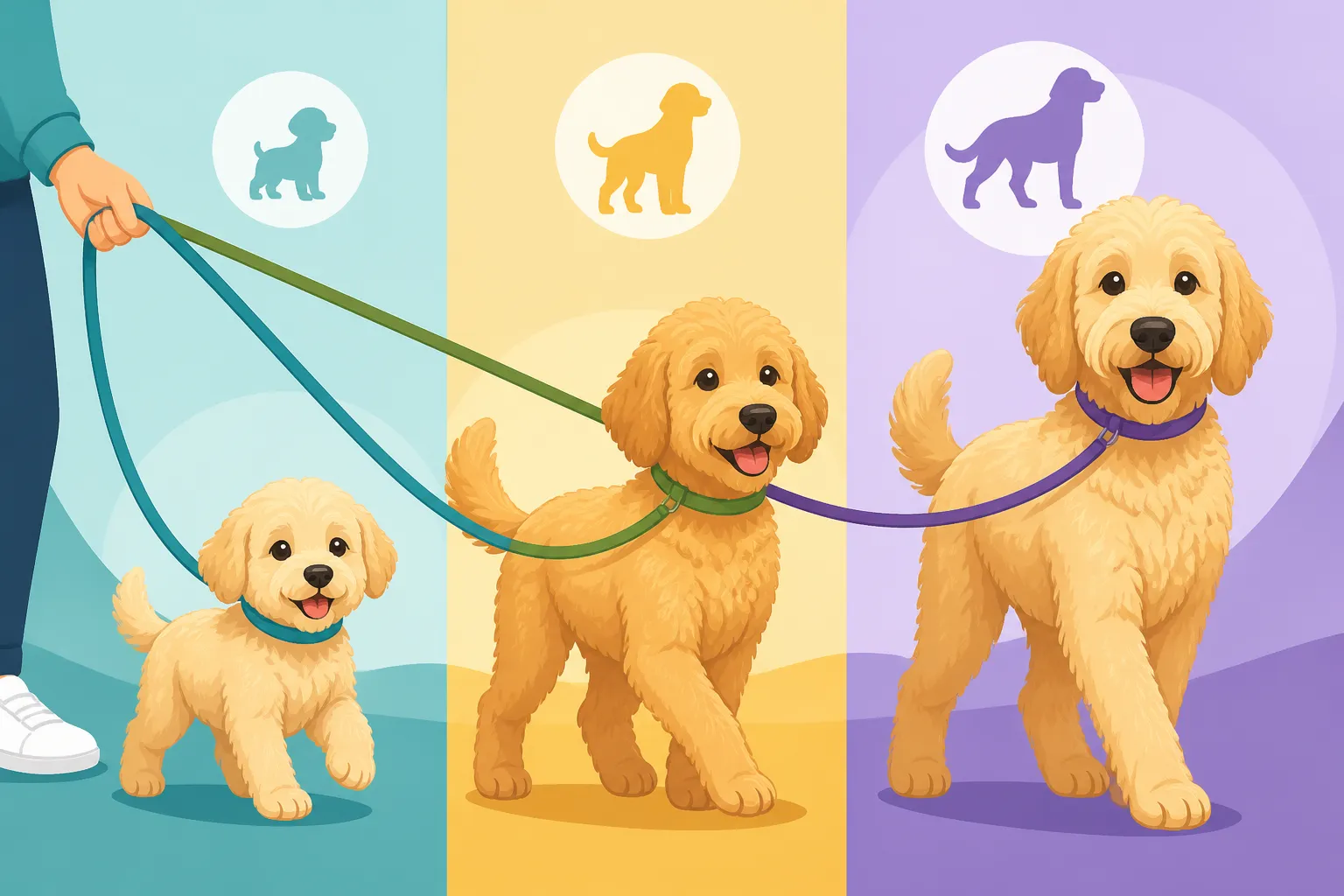
Leash Manners for Toy and Mini Goldendoodles
Just because a Goldendoodle is smaller doesn't mean leash manners are any less important. While they might not be able to physically drag an adult human down the street, their pulling can still be surprising, especially for children or older family members. Plus, their small size brings unique challenges in busy environments.
Managing the Small but Mighty Pull
Don't let their adorable size fool you; a 15-to-25-pound Goldendoodle can still pull with remarkable strength. They might be small, but they can generate a lot of leverage and momentum, especially when they suddenly lunge for a squirrel or another dog. For a child walking the dog, or an elderly person, this can easily lead to a fall or loss of control, which can be dangerous for both the dog and the handler. Focus on teaching self-control early on, regardless of their eventual adult size.
Because of their smaller stature, Goldendoodles in the Toy and Mini categories have more delicate necks. A flat collar, while suitable for ID tags, can put undue pressure on their trachea if they're constantly pulling, leading to coughing or even long-term damage. This is why a well-fitting harness is often the preferred choice for walks. It distributes pressure across their chest and shoulders, making it much safer and more comfortable for them. Always check the fit to ensure it's snug but not restrictive, with two fingers able to slip under the straps.
One of the best ways to combat pulling in smaller Goldendoodles is to instill strong impulse control. These little powerhouses get just as excited as their larger cousins, and they need to learn to manage that excitement. Goldendoodle Impulse Control Exercises like "leave it" (for dropped food or interesting objects on the ground) and "wait" (before darting out the door) are invaluable. Practicing these in low-distraction environments first, then gradually increasing the challenge, will set them up for success on walks.
Navigating Urban and Busy Environments
Small Goldendoodles face a different set of challenges when walking in urban or busy areas. Being closer to the ground means they're right at nose-level with all sorts of intriguing (and sometimes dangerous) distractions: dropped food, discarded trash, or even tiny objects that could be choking hazards. As an owner, you need to be incredibly vigilant, constantly scanning the ground ahead and using cues like "leave it" to prevent them from snatching something they shouldn't. Their proximity to the ground also makes them more prone to getting stepped on in crowded places if they're not walking close to you.
Socialization is vital for smaller Goldendoodles, but it needs to be carefully managed. While their friendly nature is endearing, they can easily become overwhelmed or develop fear-based reactivity if they're constantly approached by larger, boisterous dogs without proper introduction or if they feel unsafe. Conversely, some small dogs learn to be "yappy" or reactive as a defense mechanism if they feel vulnerable. Socializing a Goldendoodle Beyond Hyper-Friendliness means teaching them to calmly observe rather than frantically interact with every new dog or person. This controlled exposure helps them build confidence without resorting to undesirable behaviors.
In crowded areas, teaching a reliable "heel" or "watch me" cue isn't just about manners; it's about their safety. Being able to keep your Toy or Mini Goldendoodle precisely by your side, maintaining eye contact, is crucial when navigating busy sidewalks, crossing streets, or passing large groups of people. This focus on you helps them ignore distractions and ensures they don't dart into traffic or get lost in a crowd. Practice these cues in quiet areas first, using high-value treats, then slowly introduce more distractions as they gain proficiency.
Leash Manners for Medium Goldendoodles
Medium Goldendoodles, typically weighing between 30 and 50 pounds, represent a unique sweet spot in terms of size and strength. They're big enough to exert significant pulling force, but often small enough that owners might not realize the potential for trouble until it's already a habit. Their enthusiasm is certainly still present, requiring a dedicated approach to training.
Balancing Enthusiasm and Control
A Medium Goldendoodle has substantial strength, enough to pull a grown adult off balance, especially if they're caught by surprise. Their natural exuberance, combined with their developing musculature, can easily translate into powerful pulls that make walks more of a wrestling match than a leisurely stroll. It’s important for handlers to recognize this potential strength early on and commit to consistent training to ensure control and safety.
The adolescent phase, typically from around 6 months to 2 years, can be particularly challenging for Medium Goldendoodles. During this time, they're testing boundaries, their hormones are surging, and their focus might seem to vanish into thin air. They might suddenly "forget" all the leash manners they once knew, becoming easily distracted and prone to pulling. This period is often described as Goldendoodle Adolescence and Selective Hearing. Maintaining consistency in your training, even when it feels like you're making no progress, is absolutely vital. Regression is normal; giving up is not an option.
To foster better control, focus on teaching your Goldendoodle "auto-check-ins." This means rewarding them for naturally looking back at you during a walk, without you having to prompt them. Every time they glance your way, even for a split second, say "yes!" and give them a treat. This builds a habit of attentiveness and reinforces the idea that you are the most interesting thing on the walk, even amidst distractions. Over time, these check-ins will become more frequent, allowing you to re-engage their focus when needed.
Building Focus on Walks
The world is a distracting place for a Goldendoodle, and a medium-sized one has the perfect height to notice everything: other dogs, squirrels darting across the path, interesting smells, and people. Simply expecting them to ignore these things is unrealistic. Instead, you need to actively teach them to disengage from distractions and refocus on you. This isn't about eliminating distractions, but about building their ability to work through them.
Use the environment itself as a gradual training ground. Start in very quiet areas with minimal distractions, practicing your loose leash walking. Once your Goldendoodle is doing well there, slowly introduce more challenging environments. Walk past a parked car, then a person sitting on a bench, then a dog behind a fence, increasing the level of distraction incrementally. The key is to keep your Goldendoodle below their threshold for over-excitement, so they can still learn and respond to your cues. If they're completely overwhelmed, they can't learn.
Incorporate short bursts of training into every walk to reinforce focus and remind your Goldendoodle that walks aren't just for sniffing. For example, ask for a "sit" at every curb before crossing the street, or a "watch me" before continuing past a tempting bush. These quick, intentional interactions break up the monotony of walking and keep your Goldendoodle's brain engaged with you. It transforms the walk from just a physical outing into a mental workout too, which is just as important for a smart breed like the Goldendoodle.
Leash Manners for Standard Goldendoodles
When you're dealing with a Standard Goldendoodle, typically ranging from 50 to over 90 pounds, leash manners aren't just about convenience; they're about safety. The sheer power of a large, enthusiastic Goldendoodle can be genuinely dangerous if not managed properly.
Handling Significant Strength
A Standard Goldendoodle can easily overpower an adult human, especially if they're caught off guard. This isn't just an annoyance; it's a genuine safety hazard. A sudden lunge can pull you off your feet, cause injuries, or even result in the dog getting loose and into a dangerous situation. Because of this, strong, appropriate equipment and rigorous, consistent training are not just recommended, but non-negotiable for a Standard Goldendoodle owner. Their size and strength demand a higher level of commitment to training.
It's vital for handlers of Standard Goldendoodles to understand their own body mechanics. Learning how to brace yourself, distribute weight, and maintain balance can help prevent falls during unexpected pulls. Walking with a Standard Goldendoodle requires a degree of defensive walking, constantly anticipating potential distractions and being prepared to respond. A well-trained large dog is an absolute joy to walk; an untrained one can be a significant liability and make walks a source of constant stress rather than enjoyment.
Standard Goldendoodles, with their height and powerful build, can also cause accidental harm even through their friendly excitement. A happy bounce or an eager lunge to greet someone can easily knock a child or an elderly person off their feet. This applies equally to interactions on walks as it does to greetings at home. Therefore, teaching calm greetings and preventing them from launching themselves at people or other dogs is essential. A Goldendoodle that exhibits A Goldendoodle That Jumps on Every Guest at home will almost certainly do the same on a walk, and the consequences can be much more severe outside the house.
Preventing Leash Reactivity and Over-Excitement
Because of their impressive size, any leash-related behavioral issue, such as jumping, barking, or lunging, is amplified dramatically in a Standard Goldendoodle. What might be a minor, manageable nuisance with a small dog becomes a major, potentially dangerous problem. Early intervention and consistent prevention are crucial to ensure these behaviors don't become ingrained habits that are difficult to break. It's much easier to prevent reactivity than to cure it.
If your Standard Goldendoodle gets over-excited by other dogs, people, or even certain objects, proactive management is your best friend. This often means creating distance. If you see another dog approaching, don't wait until your Goldendoodle is already reacting. Cross the street, duck behind a car, or find a visual barrier. The goal is to keep them below their "threshold" – the point where they can no longer think or respond to you. Calling a Goldendoodle Off a Dog It Wants to Greet is an indispensable skill in these scenarios, teaching them that even if they see something exciting, your command means they must disengage.
Actively engage your Goldendoodle when distractions are present. Don't just hold the leash and hope for the best. Use high-value treats, rapid changes in direction, and positive interrupters (a sudden sound or movement to get their attention) to keep their focus on you. Make yourself more interesting than the environment. Practice frequently in varying environments, gradually increasing the level of distraction, always setting your Goldendoodle up for success rather than failure. The more you practice, the more their default behavior will become checking in with you when something exciting appears.
Essential Tools for Effective Leash Training
Having the right tools can make a world of difference in your Goldendoodle's leash manners, complementing your consistent training efforts. Just like a craftsman needs the right tools for the job, you need the right equipment to effectively communicate with and manage your Goldendoodle.
Choosing the Right Leash and Collar/Harness
While a flat collar is perfectly acceptable for holding your Goldendoodle's identification tags, it's generally not the best choice for training leash manners, especially if pulling is an issue. The pressure on their delicate trachea can be uncomfortable, potentially causing coughing, gagging, or even long-term damage, particularly for dogs that pull consistently. It offers very little control against a determined puller.
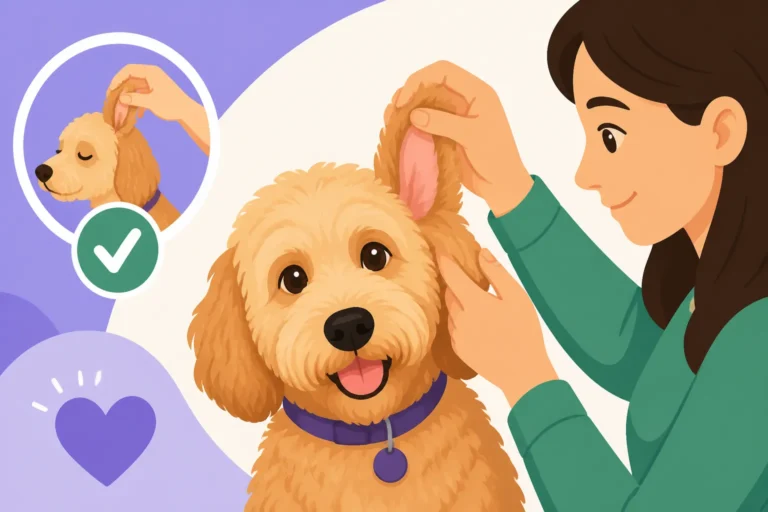
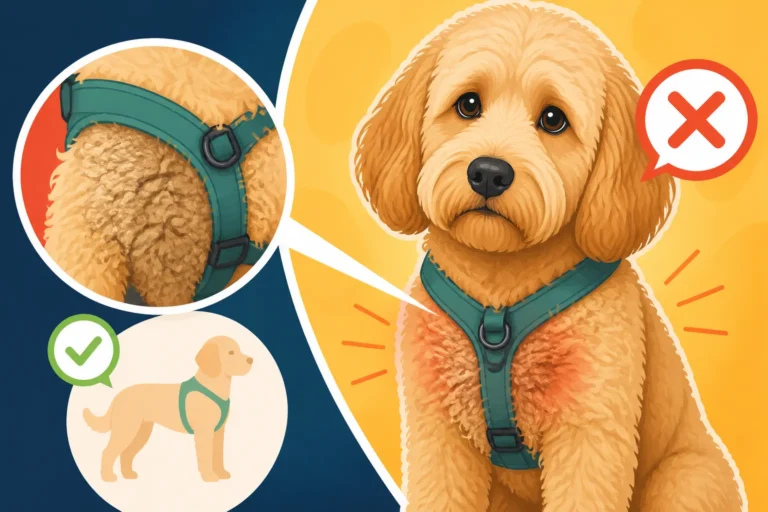
Harnesses are widely recommended for Goldendoodles of all sizes, as they distribute pressure more evenly across the chest and shoulders, reducing strain on the neck. Among harnesses, front-clip harnesses (where the leash attaches to a D-ring on the dog's chest) are particularly effective for redirecting pulling. When your Goldendoodle tries to pull ahead, the leash attachment on their chest gently guides them to the side, turning their body and making it harder to pull forward with full force. Brands like Easy Walk or Freedom Harness are popular examples. However, it's worth noting that some harnesses, especially ill-fitting ones, can cause chafing or even impact your Goldendoodle's natural gait. Be mindful of Harnesses That Suit a Goldendoodle Coat and the potential for Why a Harness Can Mat a Goldendoodle's Chest, especially with thicker or curly coats.
For strong pullers or highly reactive Goldendoodles, a head halter (also known as a head collar, like a Gentle Leader or Halti) can offer excellent control. These tools fit over the dog's muzzle and behind their ears, similar to how a horse halter works. By guiding the dog's head, you can gently steer their entire body and redirect their attention from distractions. It's crucial to introduce head halters very positively, using treats and praise, as some dogs initially dislike the sensation on their face. Never use a head halter to yank or jerk your dog's head.
Regarding leash length, a standard 6-foot nylon or leather leash is ideal for most training and daily walks. It provides enough slack for your dog to explore a little while still allowing you sufficient control. Avoid retractable leashes entirely. They actually teach dogs to pull by constantly providing tension, and they offer very poor control, making it difficult to interrupt unwanted behaviors or quickly bring your dog close in an emergency. Many of these effective harnesses and halters, along with quality leashes, are readily available on platforms like Amazon, where you can read reviews and compare options to find the best fit for your specific Goldendoodle.
Supplemental Training Aids and Techniques
Beyond the basic equipment, there are other aids and techniques that can significantly boost your leash training efforts. One of the most important is using high-value treats. When you're outdoors, facing countless distractions, tiny pieces of boiled chicken, cheese, or specialized training treats will capture your Goldendoodle's attention far better than their regular kibble. They need to be small, soft, and easy for your dog to swallow quickly so you can maintain momentum during your walk.
Clicker training can be incredibly effective for precision in leash manners. A clicker acts as a precise marker, telling your Goldendoodle the exact moment they performed the desired behavior (e.g., walking with a loose leash, looking back at you, ignoring a distraction). The click is always followed immediately by a treat. This clear communication helps them understand faster what you want them to do, speeding up the learning process.
For those who want a structured approach from the comfort of their home, especially for new puppies, online training programs can be invaluable. A resource like BAXTER & Bella, for instance, offers step-by-step video tutorials and support for everything from puppy basics to more advanced leash manners. These programs can guide you through the initial stages of loose leash walking, polite greetings, and managing distractions, ensuring consistency in your training methods. This can be a great way to build a solid foundation before tackling more challenging outdoor environments.
| Tool Type | Description | Best For | Pros | Cons |
|---|---|---|---|---|
| Flat Collar | Standard collar for ID tags, wraps around the neck. | Basic identification, dogs that rarely pull. | Lightweight, inexpensive, widely available. | Provides no leverage against pulling, can injure the neck/trachea if the dog pulls. |
| Front-Clip Harness | Straps around chest and back, leash clips on the dog's chest. | Pulling dogs of all sizes, especially strong ones. | Redirects pulling by turning the dog's body, less strain on the neck. | Can sometimes cause chafing under the armpits, may alter natural gait if ill-fitting. |
| Back-Clip Harness | Straps around chest and back, leash clips on the dog's back. | Dogs that don't pull much, general walks. | Comfortable for the dog, easy to put on, does not restrict shoulder movement. | Offers little control for pulling, can inadvertently encourage pulling by offering resistance. |
| Head Halter | Fits over the muzzle and behind the ears, guides the dog's head. | Strong pullers, reactive dogs, very large breeds. | Provides significant control over the dog's direction and focus, less physical strain for handler. | Requires positive introduction, some dogs dislike the feel, may rub facial hair. |
| Standard 6-ft Leash | Nylon or leather leash, fixed length. | All training and walking scenarios. | Good balance of control and freedom, durable, prevents dog from straying too far. | Can be chewed if left unattended, may get tangled around legs if not managed. |
| Retractable Leash | Extends and retracts, allowing variable leash length. | Generally not recommended for training. | Allows dog to roam further. | Teaches pulling, offers poor control, safety hazard (rope burns, falls, dog getting loose). |
Disclaimer
This article is for general informational purposes only and does not constitute professional advice. Laws, prices and regulations vary by location and change over time. Consult a qualified professional for guidance on your specific situation.