Goldendoodle Separation Anxiety From Both Parent Lines
It's truly heartbreaking to walk out the door and hear the frantic barking or whining begin, or worse, to return home to destruction and messes, knowing your beloved Goldendoodle suffered in your absence. This isn't just "bad behavior;" it's a genuine distress call. This comprehensive guide will help you understand the unique factors that make Goldendoodles prone to separation anxiety and provide actionable strategies to support your furry family member in learning to cope peacefully alone.
Understanding Goldendoodle Separation Anxiety: What It Is and Isn't
Separation anxiety in Goldendoodles is a complex emotional condition, not a simple act of defiance or mischief. It's a profound panic response to being left alone, rooted in a deep attachment to their primary caregivers. Many Goldendoodle owners misinterpret the signs, thinking their dog is just being naughty, but the reality is far more distressing for the dog.
What Constitutes Separation Anxiety?
True separation anxiety manifests as a severe panic attack. When left alone, a Goldendoodle suffering from this condition experiences intense fear, which can trigger a range of behaviors they have no conscious control over. Think of it like a human panic attack – it's overwhelming, frightening, and the person can't simply "snap out of it." For Goldendoodles, this often means an inability to settle, relentless vocalization, and sometimes frantic attempts to escape or alleviate their distress through destructive chewing or elimination. This isn't boredom; it's existential fear.
Distinguishing From General Boredom or Lack of Training
It’s easy to confuse separation anxiety with a Goldendoodle who simply hasn't been properly house-trained or given enough exercise and mental stimulation. A bored dog might chew on a slipper, but they’re usually able to settle and sleep eventually. A dog with insufficient potty training might have an accident if left too long, but they won't typically eliminate immediately upon your departure. The Signs a Goldendoodle Cannot Cope Alone dives deeper into pinpointing true distress.
Here's a quick comparison to help you differentiate:
| Behavior Aspect | Signs of Boredom/Lack of Training | Signs of Separation Anxiety |
|---|---|---|
| Vocalization | Intermittent barking/whining, stops after a while. | Persistent, high-pitched barking, howling, or whining, often escalating immediately upon departure. |
| Destruction | Chewing on specific items (shoes, toys) often for entertainment. | Destroys doors, windowsills, crates, or attempts to escape; targets exits. |
| Elimination | Accidents due to long holding times or insufficient house-training. | Urinates/defecates immediately or shortly after owner leaves, even if recently pottied. |
| Pacing/Restlessness | May pace a bit, then settles for a nap. | Continuous pacing, circling, trembling, panting, or drooling, indicating high arousal. |
| Greeting | Normal, happy greeting. | Exaggerated, frantic greeting upon return, can seem overly excited or relieved. |
| Timing | Can occur at any time, especially if under-stimulated. | Exclusively happens when the dog is left alone or separated from a specific person. |
If you're seeing multiple signs from the right column, especially escalating immediately upon departure, it's highly likely you're dealing with genuine separation anxiety.
The Root Causes: Why Goldendoodles Are Prone to Separation Anxiety
Goldendoodles, wonderful as they are, inherit traits from both the Golden Retriever and Poodle lines that can predispose them to separation anxiety. Their inherent desire for companionship and close bonds, while endearing, can become a vulnerability when they are left alone.
Inherited Traits from Golden Retrievers and Poodles
From the Golden Retriever side, Goldendoodles often inherit a profound "velcro dog" tendency. Goldens are known for their unwavering devotion and desire to be constantly near their humans. This biddability and constant seeking of human interaction are fantastic for training and companionship, but they can translate into significant distress when that constant presence is removed. They thrive on connection, and its absence can feel like a profound loss.
The Poodle half contributes intelligence and sensitivity. Poodles are highly attuned to their environment and their people's emotions. This can mean they pick up on subtle cues of your impending departure and begin to anticipate the anxiety before you even step out the door. Their keen minds, without appropriate outlets or coping mechanisms, can ruminate on your absence, amplifying their distress. The Poodle Sensitivity a Goldendoodle Can Inherit can explain more about this trait. This combination creates a dog that is both highly bonded and highly sensitive, a perfect storm for separation distress if not managed carefully.
Environmental Factors and Past Experiences
Beyond genetics, a Goldendoodle's environment and past experiences play a crucial role. Dogs who have experienced frequent changes in homes, spent time in shelters, or were previously rehomed might be more prone to anxiety. They may have learned that being left alone means abandonment. Even subtle changes in a predictable routine, like a sudden increase in your work hours, can trigger anxiety in a dog that was previously content.
The way a puppy is raised can also contribute. Puppies who are never taught to be alone, always having human or canine company, might struggle when that constant presence changes. Over-reliance on constant companionship, even with the best intentions, can hinder a Goldendoodle's ability to develop self-soothing skills and independence.
Recognizing the Signs: Is It Really Separation Anxiety?
It's crucial to correctly identify separation anxiety, not just for your Goldendoodle's well-being, but also to ensure you choose the most effective intervention. The signs are usually quite distinct and specifically linked to your absence.
Auditory Distress: Barking, Howling, and Whining
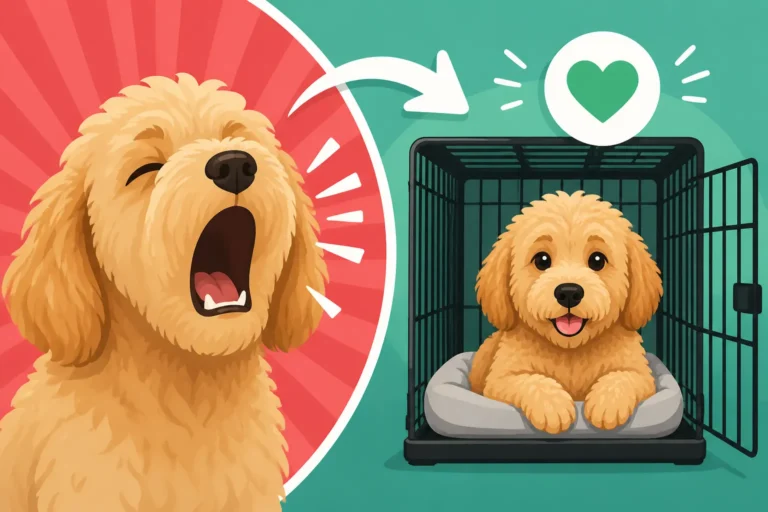
One of the most common and often frustrating signs is persistent vocalization. As soon as you leave, or even as you prepare to leave, your Goldendoodle might start barking, howling, or whining. This isn't just a few barks at the mailman; it's often a continuous, high-pitched, desperate sound that can last for the entire duration of your absence. Neighbors often report this long before owners realize the extent of their dog's distress. The pitch and urgency of the vocalizations are key indicators that this is distress, not just attention-seeking.
Consider installing a camera to monitor your Goldendoodle's behavior when you're gone. Devices like those widely available on Amazon allow you to observe their actions and listen to their sounds, providing invaluable insight into their anxiety levels. Cameras That Show What a Goldendoodle Does Alone offers more details on these helpful tools.
Destructive Behaviors and Escape Attempts
A Goldendoodle suffering from separation anxiety may turn their fear into destructive chewing or scratching, often targeting exit points like doors, windows, or their crate. They might scratch paint off door frames, chew through drywall, or bend crate bars in desperate attempts to escape and reunite with you. This isn't about chewing shoes for fun; it's about trying to get out, sometimes leading to self-injury like broken teeth or torn nails. The destruction is usually focused on getting to you, not just destroying random household items.
For example, a Goldendoodle might chew through the frame of a window if they see you leave through the front door, trying to get to that same door. Or they might furiously dig at the carpet by the front door until it's shredded. This kind of targeted destruction, coupled with the frantic nature of their attempts, is a hallmark of separation anxiety.
Inappropriate Elimination and Physical Signs of Distress
Even a perfectly house-trained Goldendoodle might urinate or defecate indoors when suffering from separation anxiety. This happens regardless of how recently they were taken outside. It's not a spiteful act; it's an involuntary physical manifestation of extreme stress and fear. Their body simply cannot hold it due to the overwhelming panic.
Beyond elimination, you might also notice excessive drooling, panting, or trembling, even in comfortable temperatures. Some Goldendoodles will pace relentlessly, unable to settle. Others might lick or chew excessively at their paws or other body parts, creating "hot spots" or raw skin, as a self-soothing (but ultimately damaging) mechanism. These physical signs clearly point to an internal state of high arousal and panic, not just boredom. A Goldendoodle That Follows You Room to Room and A Goldendoodle That Panics When You Shower might give you clues about their level of attachment and precursors to anxiety.
Setting the Foundation: Preventing Separation Anxiety in Puppies
The best offense is a good defense, and that certainly applies to preventing separation anxiety. Starting good habits early in puppyhood can significantly reduce the risk of your Goldendoodle developing this distressing condition later on.
Gradual Alone Time: Building Tolerance Incrementally
From the moment you bring your Goldendoodle puppy home, begin introducing short periods of alone time. Start small, perhaps just a minute or two, then gradually increase the duration. This might involve stepping out of the room for a few seconds, then increasing to a few minutes, then eventually leaving the house for short errands. The key is to make these separations uneventful and positive. Leave them with a high-value chew toy or a food puzzle.
The goal is for your puppy to learn that your departures are temporary and always followed by your return, and that being alone can be a calm, even enjoyable experience. Never make a big fuss when you leave or return; this reinforces the idea that your absence is a major event. A simple, calm "be good, I'll be back" is sufficient, and upon return, wait for them to settle before greeting them. Building Alone Time for a Goldendoodle in Minutes provides a structured approach to this critical training.
Crate Training as a Safe Haven
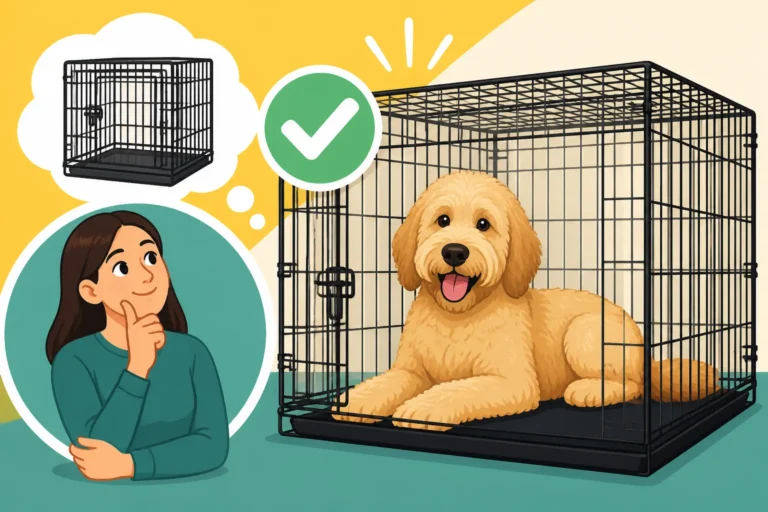
A well-executed crate training program can be a powerful tool in preventing separation anxiety. When introduced positively, the crate becomes your Goldendoodle's personal den, a safe and comfortable space where they can relax and feel secure. It's not a punishment; it's their quiet retreat. By teaching them to be comfortable in their crate when you're home, you lay the groundwork for them to feel secure in it when you're gone.
Start with very short periods in the crate, always with a treat or toy, and gradually increase the duration. Feed meals in the crate, and make it a place for sleepytime. A properly crate-trained Goldendoodle will often choose to go into their crate on their own. Crate Training a Velcro Goldendoodle offers detailed steps to ensure this is a positive experience. Remember, the crate should never be used for extended periods beyond what your dog can comfortably hold their bladder, especially as a puppy.
Building Independence and Confidence
Encourage your Goldendoodle to entertain themselves and not rely solely on you for every moment of stimulation. Provide a variety of puzzle toys, appropriate chew items, and opportunities for independent play. Practice "place" or "mat" training, where your dog learns to relax on a designated spot away from you. This teaches them to settle and self-regulate without constant interaction.
Even small actions like having your Goldendoodle lie on their bed while you cook dinner, rather than underfoot, helps foster a sense of independence. Resist the urge to constantly interact with them every time they seek attention. Teach them that sometimes you're busy, and they need to occupy themselves. Programs like BAXTER & Bella often emphasize building these foundational skills in puppies, teaching owners how to nurture confidence and independence from the very start, which is vital for preventing future anxiety.
Behavioral Modification: Helping Your Goldendoodle Cope
Once separation anxiety has taken root, simply giving your Goldendoodle a chew toy isn't enough. You need a structured, patient approach to help them overcome their fear. The goal is to gradually desensitize them to your departures and counter-condition their negative associations with being alone.
Gradual Desensitization Steps
This is the cornerstone of treating separation anxiety. It involves exposing your Goldendoodle to triggers (like you leaving) at such a low intensity that they don't trigger a panic response, and then slowly increasing the intensity. This means starting with "mock departures" that are so short, you barely leave the room.
- Pre-Departure Cues: Identify all the things you do before leaving (grabbing keys, putting on shoes, picking up your bag). These become triggers. Practice these cues randomly throughout the day without actually leaving. This desensitizes your Goldendoodle to the cues, so they no longer predict your absence.
- Door Drills: Start by simply walking to the door, touching the doorknob, and returning. Repeat this until your Goldendoodle is completely calm. Then, open the door a crack and close it. Gradually build up to stepping outside for 1 second, then 2, then 5, and so on. The key is to always return before your dog becomes anxious. If they show signs of distress, you've gone too far, too fast.
- Increasing Duration: Over days and weeks, slowly increase the time you are outside. You might spend a week working on 10-second departures, then move to 30 seconds, then a minute. This is a marathon, not a sprint. Consistency is crucial. Never rush the process. If you can observe your dog with a camera, you'll know exactly when to return.
Counter-Conditioning Positive Associations
While desensitizing your Goldendoodle to your absence, you also want to create positive associations with being alone. This is counter-conditioning. Before you leave, provide a highly enticing, long-lasting treat or puzzle toy that your Goldendoodle only gets when you depart. This could be a Kong stuffed with frozen peanut butter or a puzzle feeder filled with their favorite kibble. The treat should be so good that it distracts them and helps them associate your departure with something wonderful.
As soon as you return, remove the special treat. This reinforces the idea that the special goodie only appears when you're gone. The goal is to shift their emotional state from panic to anticipation of something pleasant when you leave. Over time, your Goldendoodle will start to associate your departure not with fear, but with the joy of their special treat. Ensure the treat is safe for them and won't cause choking or digestive upset.
Reinforcing Calm Departures and Returns
The way you handle departures and returns can significantly impact your Goldendoodle's anxiety. Avoid making a big fuss. When you're about to leave, act calm and neutral. Don't engage in prolonged goodbyes or overly affectionate gestures, as this can heighten their anxiety. A simple, quiet "I'll be back" is fine.
Upon your return, similarly, avoid an excited reunion. Walk in calmly, ignore your Goldendoodle for a few minutes until they settle down, then offer a calm greeting. This teaches them that your departures and returns are routine, not emotionally charged events. This is a common challenge for Goldendoodle owners because their dogs are so exuberantly happy to see them. But it’s vital to manage your own excitement to help your dog learn. Goldendoodle Training Sessions and How Long to Run Them can give you an idea of how to structure short, effective training bursts for this and other behaviors.
Tools and Aids: Products That Can Help
While training is paramount, several tools and aids can support your Goldendoodle through their separation anxiety journey, helping to manage their distress and facilitate their learning.
Monitoring Devices and Interactive Cameras
Monitoring your Goldendoodle's behavior when you're gone is absolutely invaluable. Pet cameras, many available on Amazon, allow you to see and hear what your dog is doing. Some even offer two-way audio, so you can speak to your Goldendoodle (use this sparingly and calmly, as it can sometimes make anxiety worse if overused) or dispense treats remotely.
These devices help you:
- Identify exactly when the anxiety starts (is it immediately, or after 10 minutes?).
- Pinpoint specific triggers.
- Gauge the intensity of their distress.
- Determine if your training exercises are working and if you're pushing too fast or too slow.
- Ensure your Goldendoodle isn't injuring themselves in their distress.
Seeing their behavior firsthand can be a real eye-opener for owners who might underestimate the severity of their dog's panic.
Interactive Puzzle Toys and Long-Lasting Chews
As part of your counter-conditioning strategy, provide engaging, long-lasting enrichment when you leave. Puzzle toys like Kongs, snuffle mats, or treat-dispensing toys can keep your Goldendoodle mentally occupied for a period. Filling a Kong with wet food, dog-safe peanut butter, or yogurt and freezing it can make it last longer.
The idea is to provide an activity that is highly rewarding and engrossing. This helps redirect their focus from your absence to a positive, engaging task. However, it's important to note that for severe separation anxiety, a puzzle toy alone might not be enough to override the intense panic. It's an aid, not a cure-all. Goldendoodle Puzzle Feeders and Scent Games has more ideas for engaging toys. Always ensure the toys are safe and appropriate for your Goldendoodle's size and chewing style.
Calming Supplements and Pheromones
There's a wide array of calming products on the market, from supplements to pheromone diffusers and collars. While these are not magic bullets, they can sometimes help reduce overall anxiety levels, making your Goldendoodle more receptive to behavioral training.
- Pheromone Products: These mimic the natural calming pheromones produced by lactating mother dogs, which can have a soothing effect. They come as diffusers for your home or collars for your dog.
- Calming Supplements: Many supplements contain ingredients like L-Theanine, L-Tryptophan, chamomile, or valerian root, which are thought to promote relaxation. Always consult your veterinarian before starting any new supplement regime for your Goldendoodle, as they can advise on appropriate dosages and potential interactions.
- ThunderShirts/Anxiety Wraps: These provide gentle, constant pressure, similar to swaddling a baby, which can have a calming effect on some dogs.
Remember, these are supplementary tools to be used in conjunction with a robust behavioral modification plan, not replacements for training.
When to Seek Professional Help: Trainers and Vets
Separation anxiety is one of the most challenging behavioral issues to tackle alone. It often requires professional guidance. Knowing when to call in the experts can save you a lot of frustration and, more importantly, alleviate your Goldendoodle's suffering much faster.
Consulting Your Veterinarian First
Your first stop should always be your veterinarian. They can rule out any underlying medical conditions that might be contributing to your Goldendoodle's distress. Pain, thyroid issues, or even cognitive decline in older dogs can mimic or exacerbate anxiety symptoms. Your vet can conduct a thorough examination and recommend blood tests if necessary.
If medical causes are ruled out, your vet can discuss pharmaceutical interventions. Anxiety Medication for a Goldendoodle details how medication, when used appropriately, can be a game-changer. It doesn't "cure" separation anxiety, but it can lower your Goldendoodle's overall anxiety levels, taking the edge off their panic. This creates a window of opportunity where they are calm enough to actually learn from the behavioral modification techniques you're implementing. Medication makes the brain more receptive to learning new coping mechanisms.
Finding a Certified Professional Dog Trainer or Behaviorist
For separation anxiety, you ideally want to work with a professional who specializes in this area. Look for certified professional dog trainers (CPDT-KA) or, for more severe cases, a certified veterinary behaviorist (DACVB) or a Certified Applied Animal Behaviorist (CAAB). These professionals have advanced education and experience in animal behavior and can design a tailored desensitization and counter-conditioning program specifically for your Goldendoodle.
A good behaviorist will:
- Assess your Goldendoodle's specific triggers and anxiety levels.
- Help you identify and track progress.
- Provide a step-by-step plan for your "mock departures" and alone time exercises.
- Offer strategies for managing your Goldendoodle's current distress while you train.
- Work in conjunction with your veterinarian, especially if medication is being considered.
They can often offer virtual consultations, which is convenient since much of the work involves observing your dog in your home environment.
Understanding Medication Considerations
If your Goldendoodle's anxiety is severe – if they are causing self-harm, extreme destruction, or cannot tolerate even short durations alone – medication might be recommended by your vet or a veterinary behaviorist. It's not a quick fix, but a tool to help manage the physiological aspects of anxiety.
Medications typically used for separation anxiety fall into categories like selective serotonin reuptake inhibitors (SSRIs) or tricyclic antidepressants (TCAs). These work to balance brain chemistry and reduce the intensity of the panic response. It often takes several weeks for these medications to reach full effectiveness, and they are almost always used in combination with behavioral modification. Discontinuing medication should also be done gradually under veterinary guidance.
Living with and Managing Long-Term Goldendoodle Anxiety
Addressing separation anxiety is a journey, not a destination. Even with successful training, ongoing management and thoughtful lifestyle adjustments are often necessary to ensure your Goldendoodle continues to thrive.
Establishing Predictable Routines and Enrichment
Dogs, especially Goldendoodles with their Poodle intelligence, thrive on routine and predictability. A consistent daily schedule for walks, meals, playtime, and alone time can provide a sense of security. Knowing what to expect reduces uncertainty, which is a common trigger for anxiety.
Beyond routine, consistent mental and physical enrichment is crucial. A tired Goldendoodle is often a calmer Goldendoodle. Ensure they get adequate exercise before you leave – a long walk, a game of fetch, or a run at the dog park can help burn off excess energy. But don't forget mental stimulation! Puzzle toys, training sessions, or scent games can be even more tiring than physical exercise. A dog whose brain has had a workout is less likely to fixate on your absence. Goldendoodle Exercise and Mental Work Every Day provides more ideas for keeping your dog engaged.
Lifestyle Adjustments and Support Systems
For some Goldendoodles, especially those with severe anxiety, you might need to make lifestyle adjustments to minimize their time alone. This could mean:
- Doggy Daycare: For short periods, doggy daycare can be a great option for social Goldendoodles, providing supervision and companionship. However, it's not a solution for true separation anxiety if the dog just transfers their anxiety to the daycare environment or panics in the car ride. Whether Doggy Daycare Fixes Goldendoodle Anxiety discusses this in detail.
- Dog Walkers/Pet Sitters: Hiring someone to come to your home to break up long periods of alone time can be incredibly helpful.
- Work-from-Home Options: If possible, adjusting your work schedule to be home more often.
- Friends/Family Support: Having trusted people who can check in on or care for your Goldendoodle when you're out.
These strategies aren't about avoiding the problem; they're about providing a crucial support system that allows your Goldendoodle to gradually build confidence without being overwhelmed by their fear.
Continuing Training and Monitoring for Relapses
Even after your Goldendoodle shows significant improvement, it's wise to continue practicing short, uneventful departures periodically. Life changes, and old anxieties can sometimes resurface during stressful times, like moving to a new home, a new family member arriving, or a change in your own schedule.
Stay vigilant for any subtle signs of relapse – perhaps a slight increase in vocalization or restlessness when you leave. Address these promptly by returning to earlier stages of your desensitization training. The key is ongoing management and adapting your approach as your Goldendoodle continues to grow and experience life. Remember, patience and empathy are your most powerful tools in helping your beloved Goldendoodle live a calmer, happier life, both with you and when you're away.
Disclaimer
This article is for general informational purposes only and does not constitute professional advice. Laws, prices and regulations vary by location and change over time. Consult a qualified professional for guidance on your specific situation.