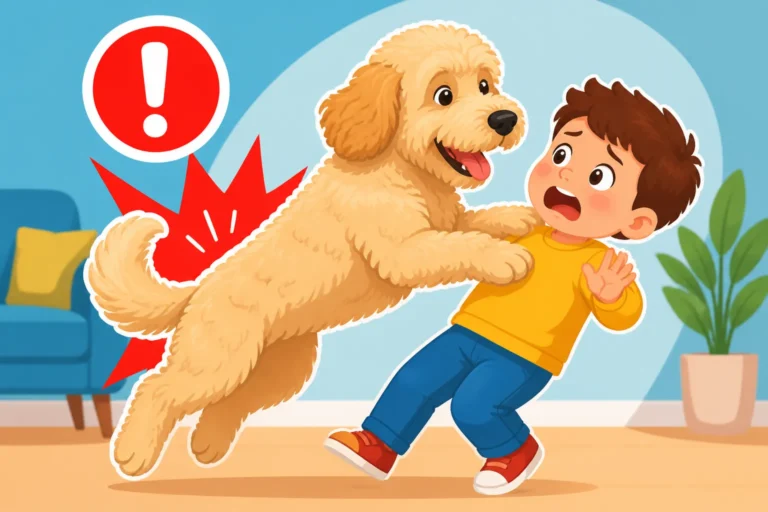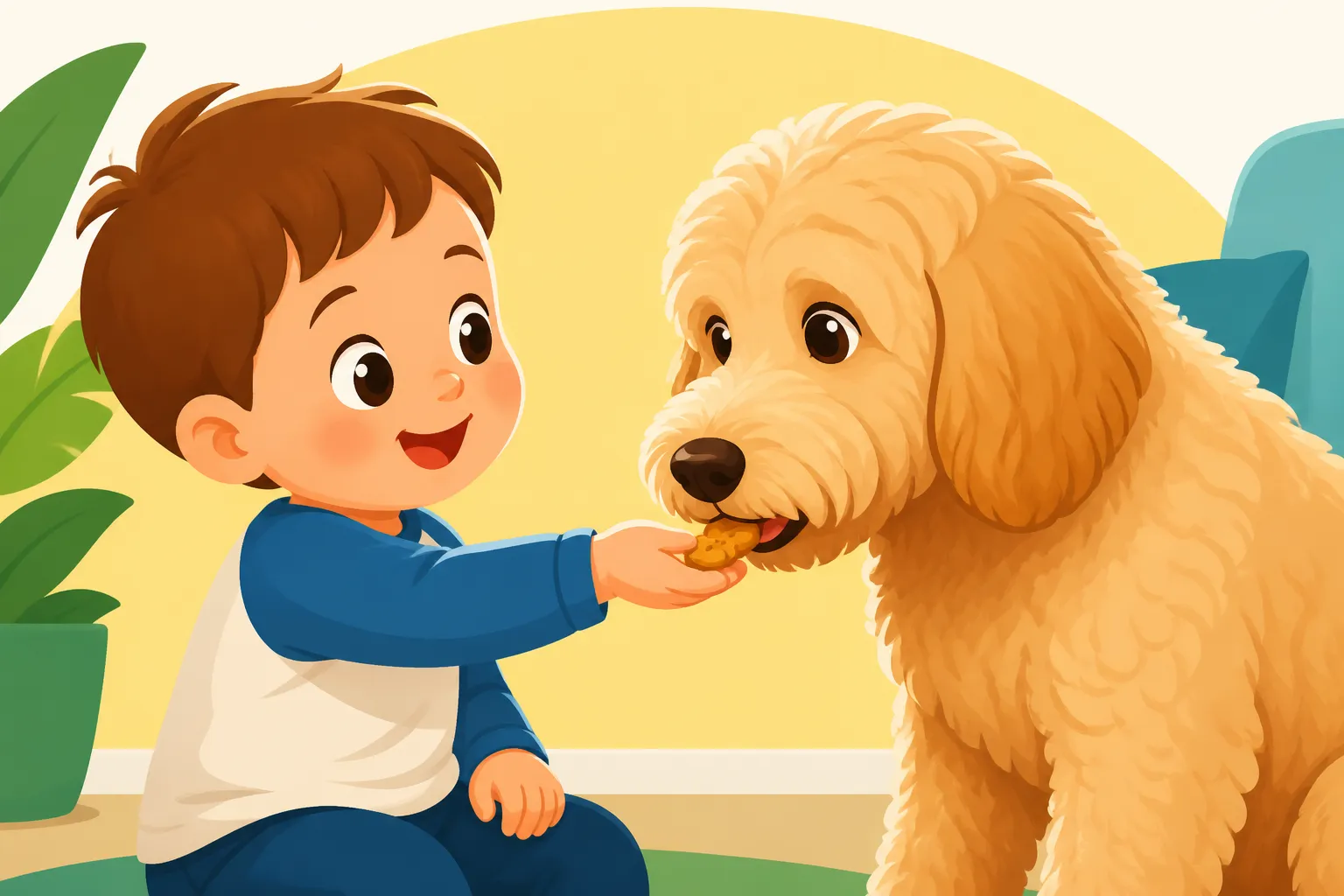
A Goldendoodle Taking Snacks From a Toddler’s Hand
It’s a scene many Goldendoodle parents know all too well: you turn your back for a second, and suddenly, your sweet, fluffy companion has snatched a half-eaten cracker or a dropped piece of fruit right out from under your toddler’s nose. This isn't just annoying; it can be downright dangerous if the snack isn't dog-safe or if your dog accidentally nips your child in the process. This guide is here to walk you through why your Goldendoodle might be engaging in this behavior and, more importantly, how you can put a stop to it, creating a safer and more peaceful environment for everyone in your home.
Understanding Why Your Goldendoodle Steals Snacks
It's easy to feel frustrated, perhaps even a little betrayed, when your beloved Goldendoodle, who usually seems so well-behaved, resorts to swiping food. But it's crucial to understand that, from your dog's perspective, this isn't an act of malice or defiance. It's often a combination of natural instincts, learned behaviors, and a simple lack of clear boundaries, especially when tiny humans are involved.
The Irresistible Lure of Food
Let's be honest, Goldendoodles come from lines of dogs, Golden Retrievers and Poodles, who are often highly food-motivated. A dropped crumb is a treasure, and a snack held loosely in a small hand is practically an invitation. To a dog, food is a high-value resource, and the opportunity to get it, especially if it requires little effort, is hard to resist. This isn't them trying to be naughty; it's them acting on a very primal drive to consume calories. They don't differentiate between "dog food" and "people food" in the same way we do, or understand that certain foods are specifically for one family member. If it smells good and is within reach, it's fair game in their minds.
The Power of Reinforcement
Dogs are masters of association. If your Goldendoodle has successfully taken a snack from your child even once, that behavior has been inadvertently reinforced. They learned that reaching for or snatching food from a toddler leads to a tasty reward. Perhaps your child shrieked, dropped the food, and the Goldendoodle got it. Or maybe you quickly tried to intervene, and in the confusion, the dog still managed a bite. Each time this happens, it strengthens the idea in their mind: "If I go for the toddler's food, I get food!" This creates a persistent habit that can be incredibly difficult to break without a concerted effort. It’s a classic example of operant conditioning, where a behavior followed by a reward is likely to be repeated.
Lack of Clear Boundaries with Children
Toddlers, bless their hearts, aren't usually the best at setting firm boundaries with dogs. They might drop food frequently, leave plates within reach, or even, unknowingly, offer food directly to the dog. This can be confusing for a Goldendoodle, who sees a small human constantly providing or dropping appealing morsels. Without consistent rules from the adults in the house, the Goldendoodle naturally assumes that the toddler is a "food dispenser." It's not uncommon for dogs to learn that while adults might have stricter rules about food, children are a much easier target. We often talk about Introducing a Goldendoodle Puppy to Children in terms of gentle play, but food boundaries are just as critical for safe coexistence.
Immediate Management and Prevention Strategies
While training is absolutely vital for long-term success, your immediate priority needs to be preventing the behavior from happening in the first place. Every time your Goldendoodle successfully snatches a snack, the habit becomes more ingrained. Think of it as putting up safety gates before you teach your child not to touch the stove.
Creating Physical Barriers
The simplest and most effective way to prevent snack snatching is to physically separate your Goldendoodle from your toddler during mealtimes or snack times. This isn't a punishment; it's a management tool to set everyone up for success.
- Baby Gates: Install baby gates or use an exercise pen to create a dog-free zone where your toddler can eat safely. This might be the kitchen, a designated play area, or even just keeping the Goldendoodle in their crate while the child is eating. You can find excellent, sturdy options on platforms like Amazon that are tall enough for even a standard Goldendoodle.
- Crate Time: If your Goldendoodle is crate-trained, this is an excellent time to utilize it. Give them a special, long-lasting chew toy or a puzzle feeder in their crate so they're occupied and happy while your child eats. This also teaches them that pleasant things happen in their crate, rather than just feeling excluded. Crate Training a Goldendoodle That Screams can be a challenge initially, but it pays dividends for situations like this.
- Tethering: For shorter periods, you can tether your Goldendoodle to a piece of heavy furniture in a different part of the room, far enough away that they cannot reach the toddler or dropped food. Again, provide a safe chew or toy to keep them content.
Supervised Snack Time (and Post-Snack Clean Up)
Even with barriers, accidents happen. Vigilant supervision is paramount.
- Hawk-Eye Mode: Never leave your toddler unattended with food when your Goldendoodle is in the same room. Seriously, never. You need to be ready to intervene the instant food drops or a hand comes too close.
- "No Feeding the Dog" Rule: Teach your child, in age-appropriate ways, that they should never feed the dog people food, especially not from their own hand or plate. This rule is often challenging for young children to grasp, so it requires constant repetition and enforcement from adults.
- Immediate Cleanup: The moment a snack falls to the floor, swoop in and clean it up before your Goldendoodle has a chance to grab it. This denies them the reinforcement. You'll need to be quick! Consider a small handheld vacuum cleaner for quick crumb patrol.
Teaching "Leave It" and "Drop It" Commands
Management is temporary; training is permanent. These two commands are non-negotiable for a dog living with children and food. They are literally lifesavers and will give you the tools to intervene safely and effectively.
The "Leave It" Command: Building Impulse Control
The "leave it" command teaches your Goldendoodle to ignore something tempting, whether it's a dropped cookie or another dog on a walk. It's all about building impulse control.
- Start Easy: Begin with low-value treats. Hold one in your closed fist. Say "Leave it!" As your dog sniffs and tries to get it, keep your fist closed. The moment they look away from your hand, even for a split second, say "Yes!" or click, and immediately reward them with a different, higher-value treat from your other hand. This teaches them that ignoring the temptation leads to a better reward.
- Gradually Increase Difficulty:
- Once they reliably "leave" your closed fist, move to an open palm.
- Then, place the treat on the floor, covering it with your hand. Say "Leave it!" and reward from your other hand when they look away.
- Slowly remove your hand from the treat on the floor, ready to cover it again if they try to snatch it.
- Progress to walking past the treat, then having them "leave" a treat your toddler might drop (start with non-edible items or low-value kibble).
- Consistency is Key: Practice this command in various environments and with different levels of distraction. Make it a game. The more practice, the stronger the behavior becomes. Teaching Leave It to a Goldendoodle is a fundamental skill that will protect your family.
The "Drop It" Command: Releasing Items Safely
"Drop it" is essential for getting your Goldendoodle to release something they already have in their mouth. This is particularly important if they grab something dangerous or, in this scenario, a child's snack.
- Trade Up: Have your Goldendoodle holding a toy. Present a high-value treat right to their nose. As they open their mouth to take the treat, the toy will naturally drop. As it drops, say "Drop it!" and then give them the treat.
- Repeat and Practice: Do this many times a day with various toys. The goal is for them to associate "drop it" with getting something even better, not losing what they have.
- Introduce Different Objects: Once they reliably drop toys, practice with other safe, low-value items they might pick up. Never chase your Goldendoodle to get something back, as this often turns into a game of keep-away. Instead, calmly approach, present a high-value trade, and say "Drop it!"
- Proofing with Real-World Items: Eventually, you can practice with things similar to what a toddler might drop (e.g., a piece of stale bread). Remember, the reward for dropping should always be more appealing than what they're dropping.
- BAXTER & Bella offers online puppy training programs that cover both "leave it" and "drop it" in great detail, with video tutorials and personalized coaching. Their comprehensive approach can be incredibly helpful for owners needing structured guidance, especially when navigating a multi-species household.
Long-Term Strategies for a Peaceful Household
Beyond immediate prevention and core commands, fostering a consistent and respectful dynamic between your Goldendoodle and your toddler requires a holistic approach from every member of the household.
Consistent Rules for Everyone
The biggest hurdle for dogs, especially smart Goldendoodles, is inconsistency. If one family member lets them steal a crumb, and another punishes them, they simply get confused.
- Family Meeting: Get everyone on the same page. All adults, older children, and even regular visitors need to understand and enforce the same rules. For example, "Goldendoodle always stays behind the gate during snack time," or "Food that falls on the floor is always picked up by a human, never by the dog."
- No Begging: Do not allow your Goldendoodle to beg at the table or around eating children. This includes whining, staring intently, or nudging. If they start, calmly redirect them to their mat or crate with a chew toy. This reinforces Goldendoodle Impulse Control With Food on the Floor in a broader context.
Redirecting and Rewarding Good Behavior
It's not enough to tell your Goldendoodle what not to do; you also need to tell them what to do.
- Designated "Chew Zone": When your toddler is eating, give your Goldendoodle a high-value chew or puzzle toy in their designated spot (like their crate or mat). This teaches them that good things happen for them during this time, separate from the human food.
- Praise and Treats: When your Goldendoodle successfully leaves a dropped item, or calmly stays on their mat while a child eats, offer enthusiastic praise and a special dog-specific treat. Catch them being good and reward it generously. This positive reinforcement approach is crucial, as Positive Reinforcement and Why It Suits a Goldendoodle is often the most effective training method for this intelligent and eager-to-please breed.
Here's a quick look at how you can manage and train for safer snack times:
| Strategy Category | Goal | Examples | Key Takeaway |
|---|---|---|---|
| Management | Prevent the behavior from happening | Baby gates, crate time during meals, tethering | Avoid opportunities for unwanted behavior. |
| Supervision | Intervene before a problem arises | Never leave unattended, quick cleanup | You are the primary barrier and enforcer. |
| Training | Teach alternative, desired behaviors | "Leave It," "Drop It" | Give your dog clear commands to follow. |
| Consistency | Establish clear, lasting rules | Everyone enforces same rules, no begging | All family members must be on the same page. |
| Redirection | Offer appropriate alternatives | Designated chews, puzzle toys | Give your dog something else to do. |
Addressing Underlying Training Gaps
If snack-snatching is just one symptom, it might indicate broader training needs. Goldendoodles, stemming from the intelligent Poodle and biddable Golden Retriever, thrive on having a job and clear guidance.
- Basic Obedience Refresher: Ensure your Goldendoodle is solid on basic commands like "sit," "stay," and "down." These commands provide a foundation for impulse control. Regular, short Goldendoodle Training Sessions and How Long to Run Them can reinforce these skills.
- Impulse Control Exercises: Beyond "leave it," practice exercises that build general impulse control. This could involve waiting patiently for their food bowl, not bolting out the door, or waiting for a release cue before taking a toy. Goldendoodle Impulse Control With Food on the Floor needs to be an everyday practice, not just during toddler snack time.
- Professional Help: If the behavior is severe or you're struggling to make progress, don't hesitate to consult a certified professional dog trainer or behaviorist. They can offer tailored strategies and hands-on guidance. They might also identify other contributing factors, such as anxiety or resource guarding, which would require a different approach. While Goldendoodles are generally lovely, sometimes Goldendoodle Behavior Problems That Start in Puppyhood can escalate without proper intervention.
Ultimately, preventing your Goldendoodle from taking snacks from a toddler's hand comes down to a consistent, multi-pronged approach. It requires setting up physical boundaries, diligent supervision, teaching crucial commands like "leave it" and "drop it," and ensuring every family member understands and enforces the rules. Your Goldendoodle isn't trying to be a menace; they're simply acting like a dog. By understanding their motivations and providing clear guidance, you can foster a safer, happier home where both your Goldendoodle and your toddler can thrive side-by-side.
Disclaimer
This article is for general informational purposes only and does not constitute professional advice. Laws, prices and regulations vary by location and change over time. Consult a qualified professional for guidance on your specific situation.