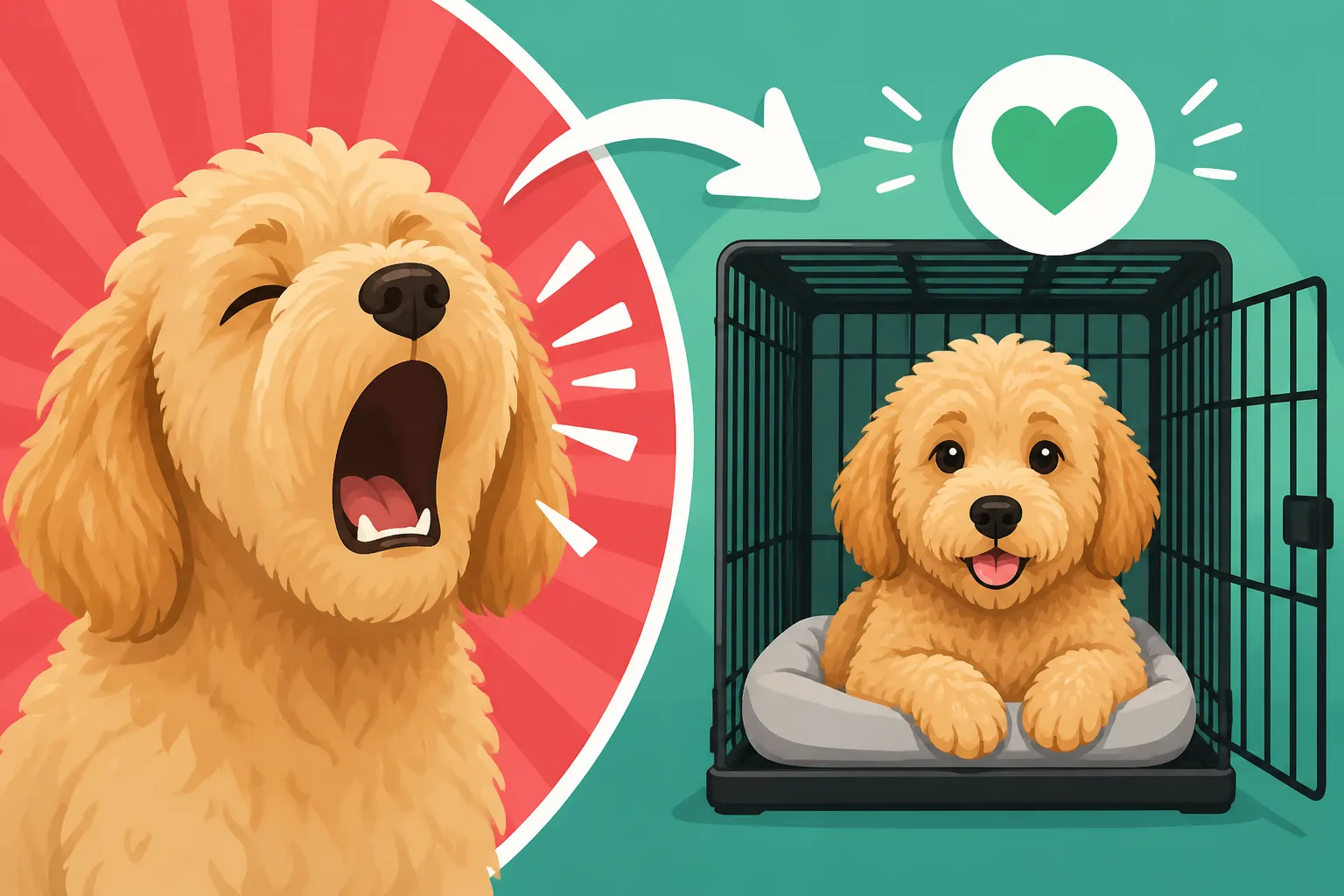
Crate Training a Goldendoodle That Screams
Oh, the heartbreak of hearing your sweet Goldendoodle puppy or even an older dog wailing from their crate, feeling like you've done something wrong or that they'll never settle down! It's an incredibly common and utterly draining experience, leading many owners to give up on crate training altogether. This comprehensive guide is here to walk you through exactly why your Goldendoodle might be screaming in their crate and, more importantly, how to systematically and kindly teach them to love their safe, quiet space.
Understanding Why Your Goldendoodle is Screaming in the Crate
It’s easy to feel defeated when your Goldendoodle screams in their crate, especially when you’ve been told how smart and adaptable they are. The first step is always empathy and understanding. Your dog isn't doing this to spite you; there's a reason behind the noise, and figuring that out is half the battle. We need to remember that while dogs are den animals by nature, a crate is a man-made den, and it doesn't always feel natural or safe right away, particularly if the introduction was rushed or if they've had a less-than-ideal experience before.
It's Not Always Separation Anxiety
When a dog cries in their crate, many people immediately jump to separation anxiety, and while that can absolutely be a factor, it's not the only reason. Sometimes, especially with puppies, their protests are far simpler. They might just need to go potty. Think about it: a young puppy has tiny bladders and bowels, and they can't "hold it" for long periods. If you put them in their crate and they start screaming within minutes, consider if it’s been a while since their last outdoor break. Ignoring a true potty signal can lead to accidents in the crate, which then contaminates their "safe space" and makes them even less likely to want to go in.
Beyond biological needs, sometimes it's pure discomfort or fear. Is the crate too small, making them feel squished? Or perhaps too large, making them feel exposed and insecure? A crate that’s too big can also encourage them to use one end as a potty area, which defeats the entire purpose of crate training. Maybe they had a scary experience related to a confined space before they came to you. Perhaps they were just thrown into the crate without any positive association, making it feel like a punishment rather than a cozy den. Young puppies, too, often protest simply because they're tired and overstimulated, much like a toddler throwing a tantrum. It's not malicious, it's just their way of expressing their feelings. You might find some useful insights on general crate settling in Crate Training a Velcro Goldendoodle.
The Role of Goldendoodle Temperament
Goldendoodles are often described as "Velcro dogs" for a reason. They typically inherit a strong desire to be with their people from the Golden Retriever side, combined with the Poodle’s intelligence and sensitivity. This wonderful combination makes them incredibly loyal and affectionate companions, but it also means they have high social needs. They thrive on companionship and can sometimes struggle when isolated, even for short periods. This isn't a flaw in their character; it's simply part of their charming, people-oriented nature.
Because they're so smart, Goldendoodles also pick up on cues very quickly, including your emotions. If you're stressed, anxious, or frustrated about their crate behavior, they can sense it, and it can amplify their own distress. They're also quite dramatic, and their protests can sound absolutely heart-wrenching, making you feel like the worst pet parent in the world. It’s important to distinguish between genuine fear or distress and what might be simple frustration or a bid for attention. A truly distressed Goldendoodle might drool excessively, pant, shake, or make desperate attempts to escape, potentially injuring themselves. A Goldendoodle that's just frustrated or seeking attention, while loud, might not show these intense physical signs. Understanding The Signs a Goldendoodle Cannot Cope Alone can help you differentiate.
Building a Positive Crate Experience, Step by Step
The key to successful crate training, especially for a Goldendoodle that screams, is to make the crate their absolute favorite place, a safe haven they want to be in. This isn't an overnight fix; it's a gradual process built on positive reinforcement and patience.
Choosing the Right Crate and Location
Before you even begin the training, you need to set your Goldendoodle up for success with the right crate. Size is paramount. The crate should be just large enough for your Goldendoodle to stand up, turn around comfortably, and lie down stretched out. If it’s too big, they might use one end as a toilet, defeating the purpose of house training. If it's too small, they'll feel cramped and uncomfortable. Many crates come with dividers, which are excellent for adjusting the space as your Goldendoodle grows. This allows you to buy one crate that will last their lifetime. For a deeper dive into sizing, check out Buying One Crate That Fits a Grown Goldendoodle.
Once you have the right size, make it a den, not a cage. Line it with soft, comfortable bedding. Old blankets, a vet bed, or a designated crate mat can work wonders. Toss in a favorite, safe chew toy or a comfort item. Some dogs love a blanket draped over the top and sides of the crate, which creates a cozy, cave-like atmosphere and reduces visual distractions. The location of the crate is also crucial, especially in the early stages. For puppies, placing the crate in your bedroom for the first few weeks can provide comfort and reassurance at night. They can hear you, smell you, and feel less alone, which can significantly reduce nighttime screaming. As they get more comfortable, you can gradually move the crate to a more permanent location.
The Gentle Introduction Method
This is where the magic happens – making the crate fun! Start by simply leaving the crate door open and letting your Goldendoodle explore it on their own terms. Never force them in. Instead, use high-value treats (think tiny pieces of chicken, cheese, or hot dogs) to lure them near and then into the crate. Toss a treat just inside the door, then further back. As they go in to get the treat, praise them calmly.
Play "crate games." For instance, toss a treat in, let them go in and get it, then immediately come out. Repeat this a few times. The idea is to build a positive association with entering and exiting the crate. You can even feed them their meals inside the crate with the door open initially. As they get comfortable eating inside, you can start gently closing the door for a few seconds while they eat, then opening it before they finish. Gradually increase the time the door stays closed, always opening it before they start to fuss. Remember, the goal is for them to associate the crate with good things, not with being trapped. Think of it like a fun game, and your Goldendoodle, with their Training a Goldendoodle That Wants to Please You attitude, will likely catch on quickly.
Gradually Increasing Time Alone
Once your Goldendoodle is happy to enter the crate and eat their meals inside with the door closed, it's time to build up their tolerance for being alone in there. Start incredibly small. Close the door, walk a few steps away, and immediately return, opening the door and praising them with a high-value treat. Your Goldendoodle didn't even have time to think about screaming! Repeat this many, many times, gradually increasing the distance you walk away and the duration you stay out of sight.
The crucial part here is to return and open the door before they start to cry or panic. If you always return when they are quiet, they learn that being quiet makes you come back. If you only return when they are screaming, you inadvertently teach them that screaming gets your attention. Slowly, over days and weeks, you can extend the time you're away. Step out of the room for a few seconds, then a minute, then five. Don't make a big deal out of leaving or returning. A casual "crate time!" or "kennel!" cue, followed by a treat in the crate, is all you need. You're aiming for calm consistency. For detailed exercises, consider Building Alone Time for a Goldendoodle in Minutes. An online program, like the one offered by BAXTER & Bella, can provide structured guidance and support for this gradual process, often including video demonstrations that are incredibly helpful.
Strategies for a Screaming Goldendoodle
Even with the best intentions and a gentle approach, some Goldendoodles will still protest. Don't lose heart! There are specific strategies you can employ to address the screaming, whether it's at night or during the day.
Dealing with Nighttime Screaming
Nighttime screaming can be particularly tough because it impacts your sleep and your patience. The first, and most important, step is always to rule out biological needs. If your Goldendoodle screams at night, take them out for a quick potty break on a leash, in silence, with minimal interaction. Don't make it a play session. If they go, praise them calmly, and immediately put them back in the crate. If they don't go, put them straight back in. This teaches them that crying at night only gets them a potty break, not playtime or freedom.
As mentioned before, having the crate in your bedroom for the first few weeks can significantly reduce nighttime anxiety. The sound of your breathing, even if they can't see you, can be incredibly reassuring. Consider using a white noise machine or a fan near the crate. This can help muffle household sounds that might startle them awake and also create a soothing environment. A crate cover can also help mimic a den, blocking out visual stimuli. It's vital to differentiate between a puppy protest (whining that eventually fades) and genuine panic. If your Goldendoodle is truly panicking, whimpering, hyperventilating, or showing signs of extreme distress, you'll need to re-evaluate your approach, potentially moving the crate closer or going back to shorter periods of confinement. For more on this, look into Goldendoodle Puppy Sleep and Night Waking.
Enrichment and Calming Aids
A bored Goldendoodle is often a noisy Goldendoodle. Providing appropriate enrichment can turn the crate from a place of boredom into a sanctuary. Offer long-lasting chew toys like a frozen KONG stuffed with peanut butter or yogurt, a bully stick, or a safe dental chew. These high-value items can keep them occupied and happy for extended periods, associating the crate with delicious rewards. Brands like KONG are readily available on Amazon and are fantastic for this purpose.
Beyond toys, there are several calming aids that some owners find helpful. Diffusers that release dog-appeasing pheromones (like Adaptil) can create a more soothing environment. Calming sprays can be applied to bedding (never directly on the dog). Some dogs also benefit from anxiety vests or shirts, such as a Thundershirt, which apply gentle, constant pressure, much like swaddling a baby. You can find many of these options on Amazon. However, remember these are aids, not solutions. They work best in conjunction with consistent, positive training.
Addressing Underlying Anxiety or Fear
If your Goldendoodle's screaming is truly rooted in anxiety or fear, particularly if it's escalating or accompanied by destructive behavior, excessive drooling, or self-harm attempts, you need to address the root cause, not just the symptom. Never punish a fearful dog; it will only exacerbate their anxiety and damage your bond. If you suspect Goldendoodle Separation Anxiety From Both Parent Lines is the issue, the training approach needs to be more specialized, focusing on building independence and positive associations with alone time outside the crate first.
In severe cases, or when you feel completely overwhelmed, don't hesitate to seek professional help. Your veterinarian can rule out any underlying medical conditions that might be causing discomfort or pain, as Goldendoodle Behavior Shifts That Mean Something Hurts can sometimes manifest as irritability or distress. They can also discuss whether anti-anxiety medication might be appropriate as a temporary aid while you implement a comprehensive behavior modification plan. A certified professional dog trainer or veterinary behaviorist specializing in separation anxiety can provide invaluable guidance, creating a tailored plan for your specific Goldendoodle. Finding a trainer who works with Goldendoodles and understands their unique temperament is key, and you can learn more about this in Finding a Trainer Who Works With Goldendoodles.
Remember, building impulse control through general training, like the exercises in Goldendoodle Impulse Control Exercises, can also contribute to a dog that settles more easily in their crate. It's all about teaching them how to be calm and confident, both with you and when alone in their cozy, safe den.
Crate Training Stages and Troubleshooting at a Glance
To summarize the progressive steps and how to handle common setbacks, here's a quick reference table to guide you through the crate training journey with your Goldendoodle.
| Stage | Goal | Common Challenge & Solution |
|---|---|---|
| Introduction | Goldendoodle willingly enters crate, sees it as positive. | Dog won't go in: Lure with high-value treats and toys. Play "crate games" with door open. Feed meals inside. |
| Short Stays | Comfortable in crate for 1-5 minutes with door closed, you nearby. | Whining starts immediately: Shorten duration, increase reward (e.g., stuffed KONG). Return before whining. Try again later. |
| Alone Time | Comfortable with you out of sight for increasing durations. | Sustained screaming: Re-evaluate crate comfort, ensure needs met. Revert to very short times. Use a camera to monitor. |
| Nighttime | Sleeping through the night quietly in the crate. | Night waking/screaming: Rule out potty needs (quick, quiet break). Adjust crate location (near you). Use white noise/cover. |
| Extended Stays | Comfortable for 1-4+ hours, settled and relaxed. | Regression/resistance: Re-evaluate routine for boredom or anxiety. Ensure sufficient physical and mental exercise before crating. |
This journey requires patience, consistency, and a deep understanding of your Goldendoodle's needs. Every dog is an individual, and what works quickly for one might take longer for another. Celebrate small victories and remember that a well-crate-trained Goldendoodle is a safer, happier dog, whether at home, traveling, or visiting the vet.
Disclaimer
This article is for general informational purposes only and does not constitute professional advice. Laws, prices and regulations vary by location and change over time. Consult a qualified professional for guidance on your specific situation.