How a Goldendoodle Coat Color Changes With Age
Goldendoodle coat color changes occur due to genetics and the transition from puppy hair to adult fur at eight to twelve months.
Is this the right one for you?
Origins and temperament, size and coat, what living with one is actually like, and how it compares to the breeds people weigh against it.
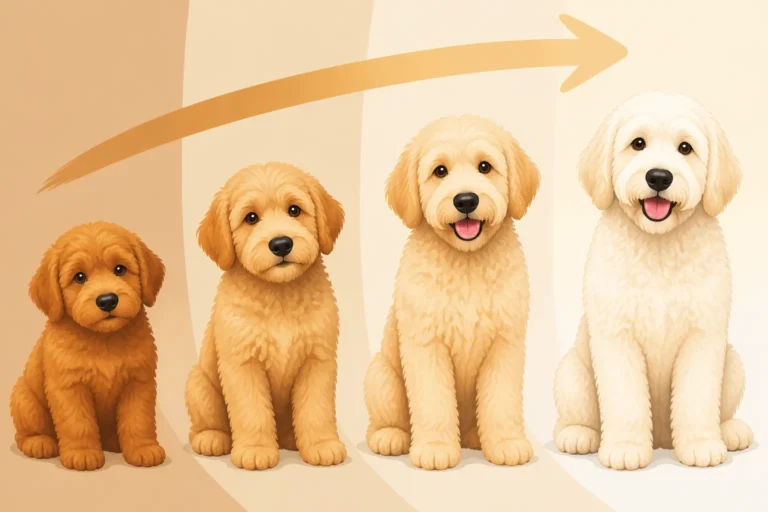
Goldendoodle coat color changes occur due to genetics and the transition from puppy hair to adult fur at eight to twelve months.

Rare Goldendoodle colors and their genetics explain whether paying higher prices for specific shades is worthwhile.

Breeding two merle Goldendoodles creates double merle puppies facing severe health consequences and life-altering conditions.

Merle Goldendoodles carry genetic patterns linked to serious health risks caused by irresponsible breeding practices.

Phantom Goldendoodle markings are distinct tan points inherited from Poodle ancestry, creating symmetrical patterns on the eyebrows, muzzle, chest, and legs.

Parti Goldendoodles feature fifty percent white fur combined with solid patches of other colors governed by recessive piebald genetics.
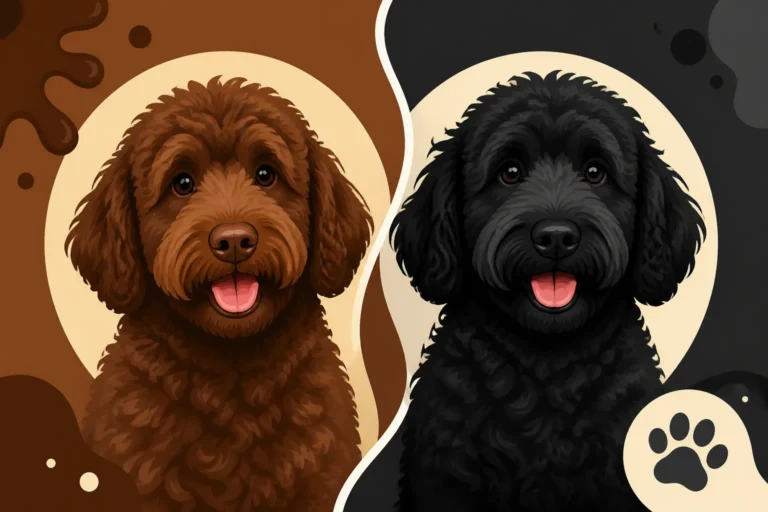
Chocolate and black Goldendoodle coat genetics, color fading over time, and daily maintenance needs are explained.

Red Goldendoodle coat color fading happens due to genetics and the intensity locus. This text explains why red puppies turn lighter.

Cream and apricot Goldendoodle coats feature unique genetics, color spectrum differences, and fading patterns explained through specific DNA loci.

Goldendoodle DNA testing reveals exact parent breed ratios, specific health risks, and coat types for crossbreed dogs.