The Annual Eye Exam a Goldendoodle Breeder Should Have
Annual eye exams for Goldendoodle breeding dogs detect genetic conditions passed down from Golden Retrievers and Poodles.
Know what to watch for.
Breed-specific conditions, screening and DNA tests, what surgery actually costs, and the daily habits that stretch a healthy lifespan.

Annual eye exams for Goldendoodle breeding dogs detect genetic conditions passed down from Golden Retrievers and Poodles.
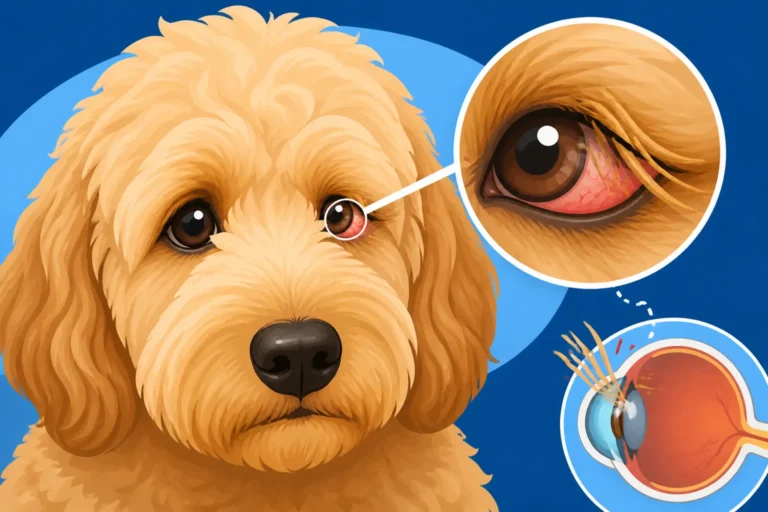
Goldendoodle eyelash abnormalities like distichiasis, entropion, and ectopic cilia cause corneal irritation, pain, and vision problems.

Goldendoodle dry eye and Keratoconjunctivitis Sicca cause painful corneal damage, inflammation, and thick yellow discharge beneath facial hair.

Goldendoodle cataracts cause cloudy vision, while surgery options, early signs, and causes help owners manage eye health.
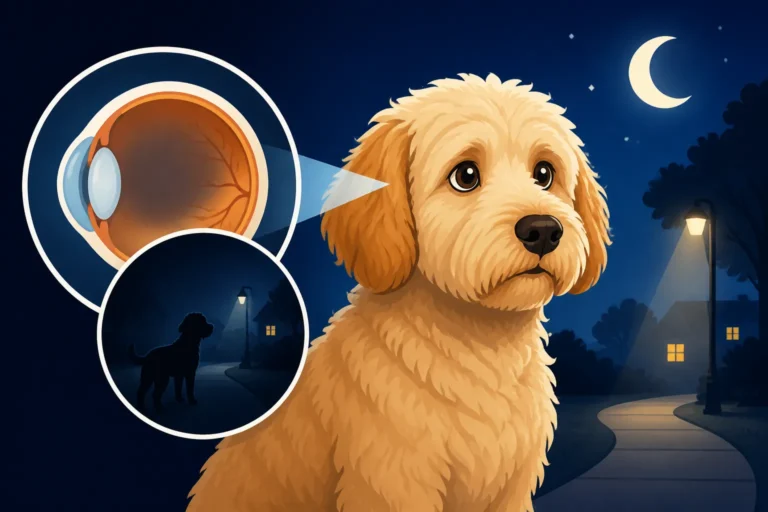
Progressive retinal atrophy in Goldendoodles causes early night blindness as photoreceptor cells degenerate and die over time.

A carrier Progressive Retinal Atrophy test result means a Goldendoodle has one affected gene copy and will not develop blindness.

Progressive Retinal Atrophy DNA tests help Goldendoodle parents prevent genetic eye disorders that cause progressive canine blindness.

Progressive Retinal Atrophy in Goldendoodles explains genetic inheritance patterns, specific blindness types, and the true incidence rates of this eye disease.

Physical therapy after Goldendoodle knee surgery explains rehabilitation stages and ways to support recovery after cruciate ligament tears.
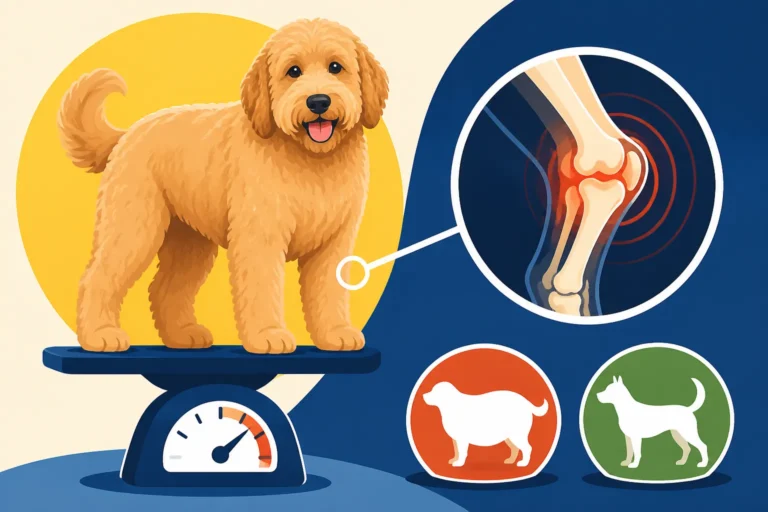
Excess body weight increases physical strain on Goldendoodle joints, worsening conditions like hip dysplasia and arthritis.