Night Blindness as a Goldendoodle’s First PRA Sign
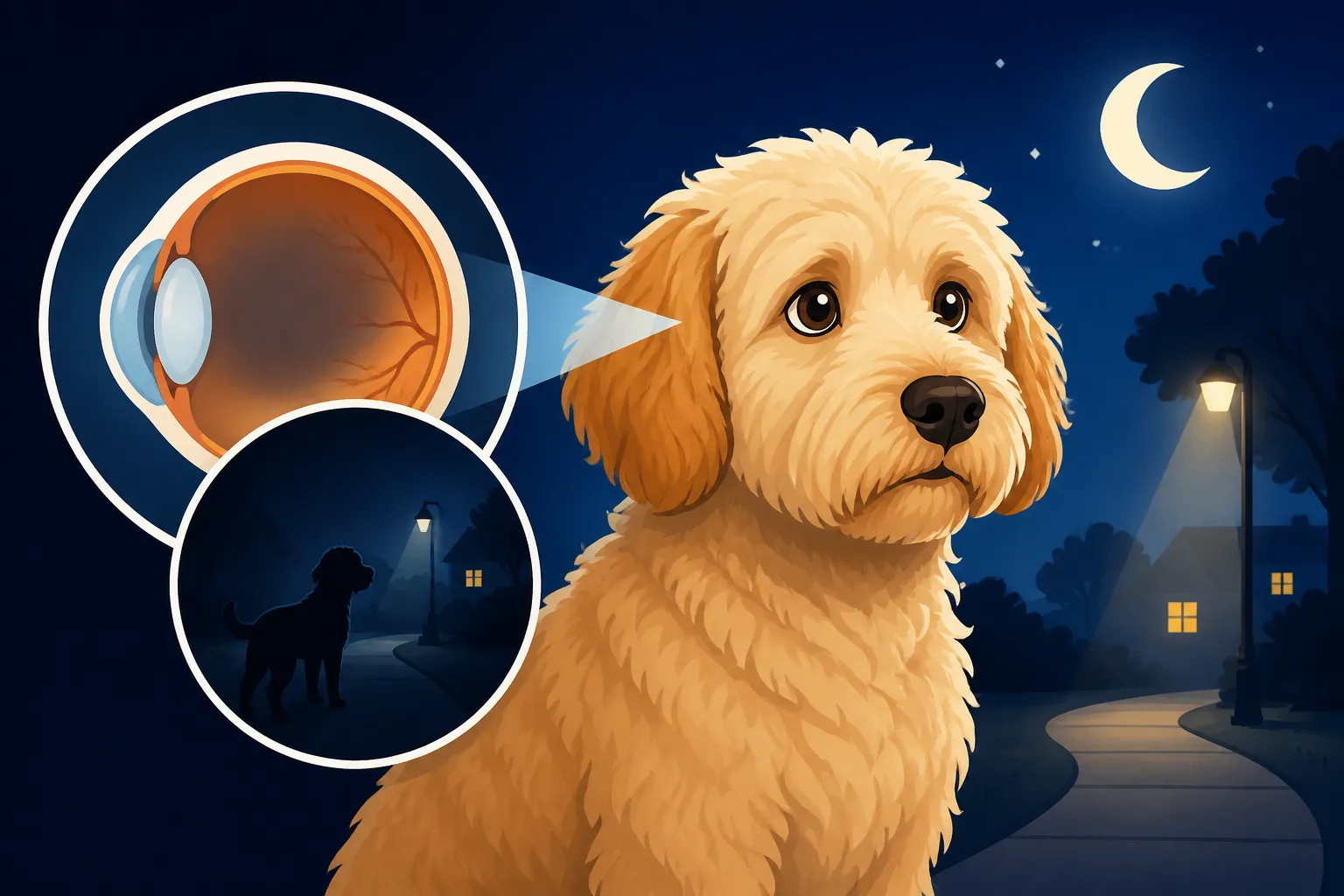
It’s truly heartbreaking when you start noticing subtle changes in your beloved Goldendoodle, especially when those changes hint at something deeper than just clumsy moments. One of the most insidious problems many Goldendoodle parents face is trying to pinpoint why their dog suddenly seems hesitant in low light, bumping into furniture they’ve navigated a thousand times, or generally acting a bit lost as evening approaches. This isn't just "getting older" or being a bit goofy; it can actually be the first, quiet symptom of a serious eye condition called Progressive Retinal Atrophy (PRA), particularly night blindness. This guide is here to help you understand PRA, recognize those early, often-missed signs of night blindness, and arm you with the knowledge to seek the best care for your furry family member.
Understanding Progressive Retinal Atrophy PRA in Goldendoodles
Learning that your Goldendoodle might have a serious genetic eye condition like Progressive Retinal Atrophy, or PRA, can be incredibly daunting. It’s a term that sounds scary and complicated, but understanding what it means is the first step toward managing it. PRA isn't just one single disease; it's a blanket term for a group of inherited degenerative diseases that affect the retina, the light-sensitive tissue at the back of your dog's eye.
What is PRA and How It Affects Vision?
Imagine the back of your dog’s eye having millions of tiny light receptors, much like the pixels on a camera sensor. These are called photoreceptor cells, and they come in two main types: rods and cones. Rods are responsible for vision in low light and detecting movement, while cones handle bright light, color vision, and fine details. In PRA, these photoreceptor cells, particularly the rods, begin to degenerate and die off over time. This process is progressive, meaning it gets worse as the dog ages.
Initially, because the rods are affected first, the dog loses its ability to see in dim light or darkness. This is what we call night blindness. They might still see perfectly fine during the day, which can make diagnosing PRA incredibly challenging in its early stages. You might just think your Goldendoodle is being a bit more cautious at night, or perhaps they're just getting older. But as the disease progresses, the cone cells also start to break down, eventually leading to complete blindness, even in bright light. The timeline for this can vary dramatically depending on the specific genetic form of PRA, from early onset in puppyhood to late-onset in senior dogs. It's a slow, often unnoticeable decline at first, which is why early detection of night blindness is so vital.
The Genetic Link to Goldendoodle Parent Breeds
The cruel twist with PRA in Goldendoodles is that both of their parent breeds, the Golden Retriever and the Poodle, are known to carry various forms of the disease. This means that a Goldendoodle can inherit PRA from either side of their family tree, or even a combination. It's primarily an autosomal recessive genetic condition. What does that mean for your Goldendoodle? It means a dog needs to inherit two copies of the faulty gene (one from each parent) to actually develop the disease. If they inherit only one copy, they are considered a "carrier" – they won't show symptoms themselves, but they can pass the gene on to their offspring. This is why understanding The PRA DNA Test Both Goldendoodle Parents Need is so crucial for responsible breeders.
Several specific genetic mutations cause PRA. For example, some common forms seen in Golden Retrievers include progressive rod-cone degeneration (PRCD-PRA) and generalized progressive retinal atrophy (GR-PRA1, GR-PRA2). Poodles can also carry PRCD-PRA, as well as forms like PRA-rcd4. Because Goldendoodles are a crossbreed, they can potentially inherit any of these forms. This complicated genetic landscape underscores why relying on health testing for both parent dogs is paramount. Without proper DNA screening, a breeder might unknowingly breed two carriers, resulting in an entire litter of puppies affected by PRA. It’s a stark reminder that even seemingly healthy parents can produce puppies with genetic issues. You might wonder How Rare PRA Actually Is in Goldendoodles, and while testing has helped, it's still a significant concern.
Recognizing Night Blindness: The Earliest Sign of PRA
Spotting night blindness in your Goldendoodle can be tricky because dogs are incredibly adaptable, and they learn to compensate for vision loss. Plus, their other senses, like smell and hearing, are so keen that they can often navigate familiar environments even with diminishing eyesight. This is why you need to be a super-sleuth, paying close attention to subtle behavioral shifts, especially in low-light conditions.
Subtle Behavioral Changes to Watch For
The key to identifying night blindness is observing your Goldendoodle when the lights are low – dusk, dawn, or in dimly lit rooms. Don't expect dramatic stumbling at first. Instead, look for these nuanced changes:
- Hesitation in Dim Light: Does your Goldendoodle, who usually bounds through the house, suddenly slow down, hesitate, or even refuse to enter a dimly lit room or hallway? They might pause at the threshold, sniff the ground more intently, or press close to your leg for guidance.
- Bumping into Familiar Objects at Night: You might find them occasionally bumping into a chair, a wall, or even another pet in the evening or when they first wake up in a dark room. During the day, they navigate perfectly, but at night, things seem different.
- Increased Anxiety or Clinginess in the Dark: Dogs rely on their vision for security. If their night vision is failing, they might become more anxious, clingy, or startle more easily in the dark. They might stick closer to you on evening walks or seem more hesitant to explore the yard after sunset.
- Reluctance to Use Stairs or Jump Off Furniture in Dim Light: Stairs can become a major obstacle. A dog with night blindness might stand at the top or bottom of the stairs, barking or whining, or refuse to go up or down without light. Similarly, they might be reluctant to jump off the sofa or bed if the room isn't well-lit, as they can't accurately gauge the distance.
- Difficulty Catching Toys in Low Light: If your Goldendoodle loves to play fetch, try playing a game as the sun sets. If they suddenly miss throws they'd normally catch with ease, it could be a sign their depth perception and ability to track objects in dim light are compromised.
- Wider Pupil Dilation: You might notice your Goldendoodle's pupils appear larger or more dilated in normal lighting conditions than they used to, as their eyes try to gather more light to compensate for failing photoreceptors. This can be very subtle but is a consistent sign an ophthalmologist will look for.
It's important to remember that these changes are gradual. You might notice them one week, dismiss them, and then see them again more clearly a month later. Keeping a mental note or even a small journal of these observations can be incredibly helpful when speaking with your vet.
Differentiating Night Blindness from Normal Aging or Other Issues
Here’s where it gets tricky, because many of these signs can be mistaken for other things. So, how do you tell if it’s night blindness due to PRA versus just normal aging, a mild clumsiness, or even another eye condition?
- Gradual Onset: PRA-related night blindness is typically a slow, progressive process. It doesn't happen overnight. If your Goldendoodle suddenly becomes completely blind, or experiences acute pain in their eyes, that points to a different, more urgent issue like glaucoma or sudden acquired retinal degeneration (SARDs). With PRA, the decline is usually so subtle you might second-guess yourself for months.
- Day vs. Night Difference: The hallmark of early PRA is the stark difference in your dog's ability to navigate in bright light versus dim light. If they are perfectly confident and agile during the day, but hesitant and bumping into things at night, that’s a strong indicator of night blindness. Normal aging might cause some general vision degradation, but usually not such a distinct day/night split initially.
- Excluding Other Eye Conditions: Other common eye issues like cataracts can also cause vision impairment, but they manifest differently. Cataracts cause cloudiness in the lens of the eye, making vision blurry or hazy, like looking through a foggy window. You might visually see the cloudiness in their eyes. Goldendoodle Cataracts and Vision Loss are a different concern entirely, though they can co-occur with PRA in senior dogs. Glaucoma, on the other hand, is painful and can cause rapid vision loss, often with a red, swollen, or cloudy eye. Night blindness from PRA usually doesn’t involve pain or outward changes in the eye's appearance in its early stages.
- General Clumsiness: Some Goldendoodles are just naturally a bit clumsy, especially as puppies or during growth spurts. But true night blindness will show a pattern: the "clumsiness" is directly related to low light and usually involves hesitancy rather than just accidental bumps.
If you observe these patterns of night-time hesitation, take them seriously. Even if it turns out to be something else, getting it checked early is always the best approach. It helps to keep a small flashlight handy during evening potty breaks or dark hallways to quickly assess if your dog's confidence improves with added light.
What to Do If You Suspect Night Blindness
If you've started noticing those subtle signs of night blindness in your Goldendoodle, it's natural to feel a knot of worry in your stomach. The good news is that recognizing these symptoms early means you can take proactive steps. While there's no cure for PRA, an early diagnosis helps you plan, manage, and support your dog effectively.
The Importance of a Veterinary Ophthalmologist
Your regular veterinarian is wonderful for general health, but when it comes to specific eye conditions like PRA, a board-certified veterinary ophthalmologist is your best resource. These specialists have advanced training and equipment specifically for diagnosing and treating eye diseases in animals.
When you visit an ophthalmologist, they won't just glance at your dog's eyes. They'll perform a thorough examination, which typically includes:
- Ophthalmoscopy: This involves looking into the back of your Goldendoodle’s eye with a special light to examine the retina, optic nerve, and other structures. In early PRA, the retina might look mostly normal, but an experienced ophthalmologist can often detect subtle changes like thinning or vascular attenuation.
- Electroretinography (ERG): This is the definitive diagnostic test for PRA. It’s similar to an EKG for the heart, but it measures the electrical activity of the photoreceptor cells in the retina in response to light flashes. Even if your Goldendoodle still has some vision, an ERG can detect the subtle decline in retinal function that signifies PRA. It's a non-invasive procedure, usually done under light sedation to ensure the dog remains still.
- Genetic Testing: While not a direct diagnostic for a dog currently showing symptoms, a genetic test can confirm the specific mutation responsible for PRA in your Goldendoodle, if it’s one of the known forms. This can be valuable for understanding the prognosis and for any future breeding decisions (though your Goldendoodle won't be bred if diagnosed). Remember, What a Carrier PRA Result Means for a Goldendoodle can still impact relatives.
- Visual Acuity Tests: These are less precise than an ERG but involve evaluating your dog's ability to navigate obstacle courses in varying light conditions.
Getting a definitive diagnosis from a specialist is crucial. It rules out other conditions and provides you with clarity, which is essential for informed decision-making about your Goldendoodle’s care. Don't hesitate to seek a referral if your general vet agrees there's cause for concern.
Managing Life with a Visually Impaired Goldendoodle
A diagnosis of PRA doesn't mean your Goldendoodle's life is over, nor does it mean they can't still enjoy a high quality of life. Dogs are incredibly resilient and adapt remarkably well to vision loss, especially if it’s gradual. Your role as their human companion shifts to helping them navigate their world safely and confidently.
Here are some key strategies for supporting a Goldendoodle with progressive vision loss:
- Maintain Consistency: Dogs thrive on routine. Keep furniture and their belongings (food bowls, beds, toys) in consistent locations. Avoid rearranging your home if possible. If you must move something, guide your dog around the new layout several times.
- Create Safe Zones: Block off stairs with gates, especially if your Goldendoodle is struggling with them. Protect them from sharp corners or objects they might bump into. Consider soft padding for furniture legs in high-traffic areas.
- Use Scent and Sound Cues: Since their other senses are heightened, leverage them. Use distinct scents (e.g., a drop of essential oil) to mark important areas like their water bowl or their favorite resting spot. Call their name frequently to guide them, and use verbal cues like "step up," "watch out," or "stop."
- Consistent Verbal Cues: Start using specific words for commands like "find your bed," "come to me," or "left/right" consistently. This will become invaluable as their vision diminishes further.
- Bell on Other Pets: If you have other pets, consider putting a small bell on their collars so your visually impaired Goldendoodle can track their movements and avoid collisions.
- Safe Outdoor Environment: Keep your yard clear of obstacles. Always supervise them outside, especially off-leash. Consider using a long lead in unfamiliar areas or fenced parks to give them freedom while ensuring safety. Remember that Senior Goldendoodle Mobility and Arthritis can also impact their confidence outdoors.
- Comfort and Reassurance: Your Goldendoodle might experience moments of confusion or anxiety, especially in new or dark environments. Offer plenty of verbal praise, gentle touches, and reassurance to boost their confidence.
- Grooming Adjustments: Your Goldendoodle's coat still needs regular attention. Be extra gentle during grooming sessions, guiding them carefully. Regular professional grooms every six to eight weeks are essential, but let your groomer know about their vision impairment so they can adjust their approach. You can always refer to our guide on Progressive Retinal Atrophy and the Goldendoodle Eye Test for more context.
- Financial Planning: Eye testing and ongoing veterinary care can be a significant expense. This is where pet insurance, like a plan from Healthy Paws, can be an absolute lifesaver. Many policies, especially if enrolled early, can help cover the costs of diagnostic tests, specialist visits, and potentially even medications or supportive therapies that might be recommended. It’s worth looking into plans that cover hereditary conditions, as PRA certainly falls into that category. Understanding your options for Goldendoodle Eye Testing and Treatment Costs is crucial.
Living with a visually impaired Goldendoodle is a journey, but it’s one filled with love and adaptation. They continue to be the same wonderful companions, simply needing a little extra help to navigate their world.
Here's a quick comparison to help you distinguish early PRA symptoms from typical age-related changes:
| Symptom | Early PRA (Night Blindness) Signs | Normal Aging Vision Changes (often later onset) |
|---|---|---|
| Onset | Can be subtle and gradual, often starting in middle age (3-6 years) for some forms, or later. | Very gradual, typically starting in senior years (8+ years). |
| Low Light Navigation | Significant hesitation, bumping into familiar objects, anxiety in dim light/darkness. | Might be slightly slower or more cautious, but generally adapts to familiar layouts. |
| Daylight Navigation | Generally normal, confident, and unaffected in bright light. | May show some general haziness, difficulty with depth perception even in good light. |
| Pupil Size | Often noticeably dilated in normal light as eyes try to gather more light. | May show some mild dilation, but less pronounced early on. |
| Confidence Level | May become more clingy, hesitant, or anxious in low-light situations. | Can become more cautious overall, but not specifically tied to light levels initially. |
| Visible Eye Changes | None initially, pupils may appear larger; later stages may show retinal changes on exam. | Lens may appear cloudy (lenticular sclerosis, normal aging); cataracts (if present). |
| Stairs/Jumping in Dim Light | Reluctance or refusal without light, misjudging steps. | May be slower or more careful, but usually can manage if familiar. |
Ultimately, any concern about your Goldendoodle's vision warrants a conversation with your vet and, ideally, a visit to a veterinary ophthalmologist. Early intervention and management can make a huge difference in your dog's comfort and quality of life.
Disclaimer
This article is for general informational purposes only and does not constitute professional advice. Laws, prices and regulations vary by location and change over time. Consult a qualified professional for guidance on your specific situation.