Goldendoodle Weight and the Load on Its Joints
It’s a heartbreaking sight to see your bouncy, playful Goldendoodle start to slow down, limp, or struggle with everyday movements like getting onto the couch. Often, we focus on genetics and age as the primary culprits for joint problems, but what many of us don't realize is just how much our Goldendoodle's weight impacts the health and longevity of their precious joints. This guide will walk you through the undeniable link between your Goldendoodle's weight and the strain on their joints, and more importantly, what you can do about it.
Understanding Goldendoodle Joint Health Basics
When you bring home a Goldendoodle, you're getting a wonderful mix of two fantastic breeds, the Golden Retriever and the Poodle. While they bless us with incredible personalities and often beautiful, low-shedding coats, they also bring a genetic predisposition to certain joint conditions that we, as owners, need to be aware of and actively manage.
The Genetic Predisposition to Joint Problems
Both Golden Retrievers and Standard Poodles, the foundation breeds for most Goldendoodles, are known to carry genes for various orthopedic issues. Golden Retrievers, particularly, are notorious for their rates of hip and elbow dysplasia. Hip dysplasia, a condition where the hip joint doesn't form correctly, can lead to painful arthritis and mobility issues. Similarly, elbow dysplasia involves abnormal development of the elbow joint, causing lameness and pain. Poodles, while generally having better hips than Golden Retrievers, can still contribute to these issues, and they are also prone to conditions like patellar luxation, where the kneecap slips out of place.
When these two breeds are crossed to create a Goldendoodle, their offspring inherit a mix of these genetic possibilities. This means that while a Goldendoodle might benefit from what some breeders call "hybrid vigor"—a theoretical reduction in inherited disease due to increased genetic diversity—they are by no means immune to these predispositions. In fact, understanding What a Goldendoodle Inherits From Each Parent Breed is crucial for knowing what health challenges might lie ahead. It's a cruel twist of fate that the very genes that create such a beloved companion can also set the stage for future discomfort.
Growth Plate Development and Puppy Weight
The foundation for adult joint health begins in puppyhood, long before any obvious signs of trouble appear. Goldendoodle puppies, especially the larger standard sizes, grow incredibly fast. Their bones lengthen rapidly, and their joints are still developing, with cartilage and soft tissues that are particularly vulnerable. Growth plates, the areas of growing tissue at the ends of a puppy's long bones, don't fully close until they reach skeletal maturity, which can be anywhere from 12 to 24 months, depending on the size of your Goldendoodle.
During this critical period, excessive weight puts undue stress on these delicate, unfinished joints and growth plates. Imagine building a house on a shaky foundation, and then immediately piling on too much weight; it’s bound to cause problems down the line. Overfeeding a puppy, even with good quality food, can lead to rapid weight gain that outpaces the development of their skeletal structure. This can increase the likelihood and severity of conditions like hip and elbow dysplasia, as the stressed joints are more likely to develop abnormally. It's not just about how big they'll get, but how fast they get there, and carrying too much puppy fat can seriously jeopardize their long-term mobility. Early, heavy impact exercise on growing joints can also be detrimental, so understanding Goldendoodle Growth Plates by Size Category is really important.
The Direct Impact of Excess Weight on Goldendoodle Joints
It might seem obvious, but the direct physical burden of extra weight on your Goldendoodle's frame is immense. Every extra pound your dog carries means more work for their joints, leading to a cascade of problems that can significantly reduce their quality of life and even shorten their healthy lifespan.
Increased Stress on Hips, Elbows, and Knees
Think about carrying a backpack that’s just a little too heavy all day, every day. That’s what it’s like for an overweight Goldendoodle. Their hips, elbows, and knees, which are already susceptible to conditions like Goldendoodle Hip Dysplasia at 15 to 20 Percent and Goldendoodle Elbow Dysplasia From Both Parent Breeds, bear the brunt of this increased load.
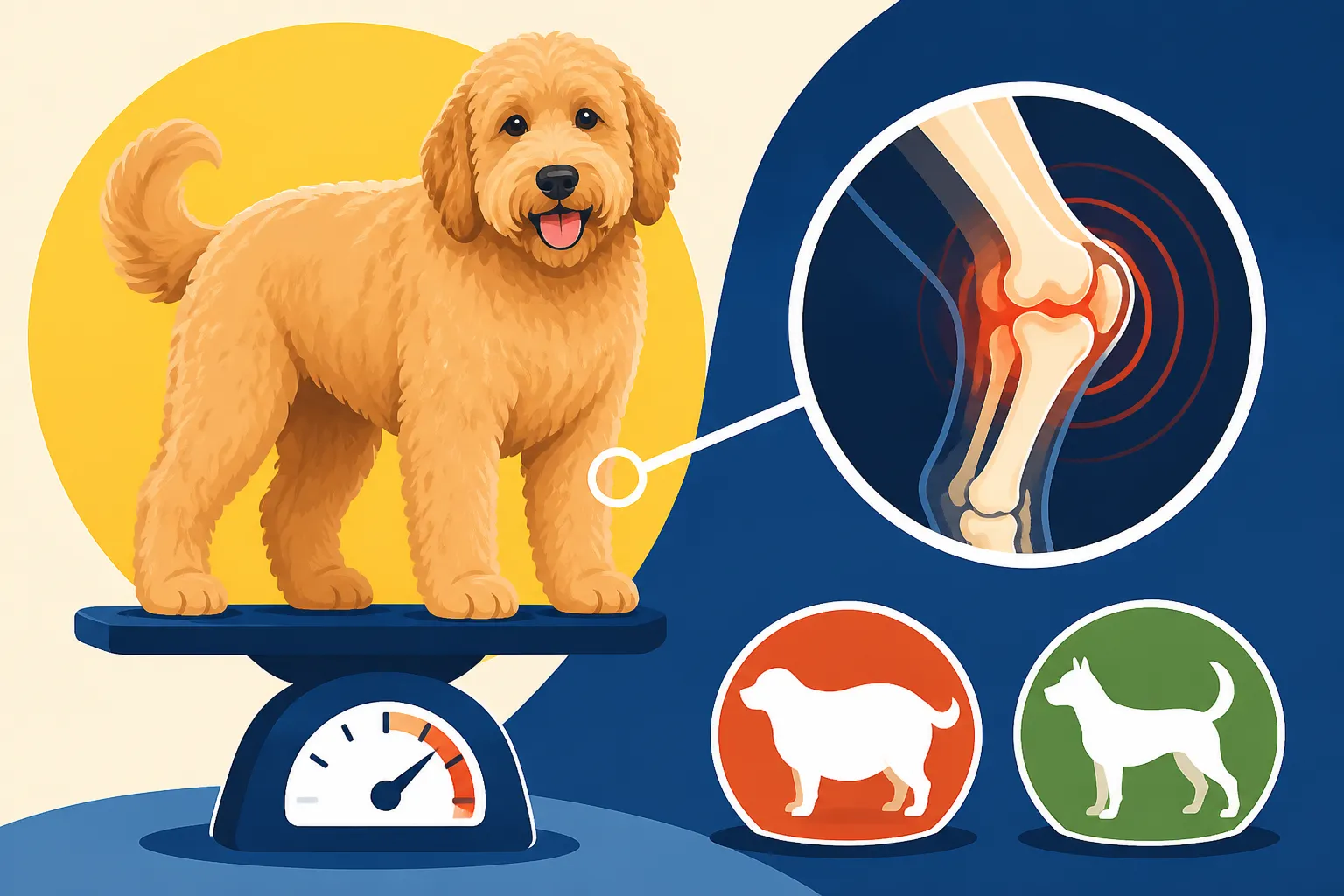
Each step, jump, or even just standing still, puts magnified pressure on the cartilage and ligaments within these joints. Cartilage, which acts as a shock absorber, wears down faster under constant strain. The ligaments, which hold the joints together, are stretched and weakened. Over time, this constant stress leads to microtrauma and inflammation. It's not just a little discomfort; it's a slow, grinding process that accelerates the breakdown of healthy joint tissue. For a dog that loves to run and play, this can be utterly debilitating, turning joyful sprints into painful struggles.
Exacerbating Conditions Like Arthritis and Cruciate Ligament Tears
Beyond simply wearing down healthy joints, excess weight acts as an accelerant for existing or developing orthopedic conditions. If your Goldendoodle has even a mild case of hip or elbow dysplasia, being overweight will almost guarantee that these conditions progress to painful arthritis much faster and more severely. The inflammation caused by extra pressure becomes chronic, leading to bone remodeling, stiffness, and debilitating pain that can make even short walks a chore.
Consider cruciate ligament tears, a common and painful injury, particularly in active dogs. The cranial cruciate ligament in a dog's knee is analogous to the ACL in humans. When a Goldendoodle is overweight, the increased force and torque on this ligament during everyday movements—a quick turn, a sudden stop, or a jump—makes it far more prone to partial or complete rupture. This often requires expensive and invasive surgery, with a long and challenging recovery period. Even minor conditions like Patellar Luxation in a Mini Goldendoodle can become significantly worse, causing more frequent "skipping" and pain, when compounded by extra pounds. It's a harsh reality that simply managing your Goldendoodle's weight can be the single most effective preventative measure against such devastating injuries and conditions.
Maintaining a Healthy Weight for Your Goldendoodle
It’s one thing to understand the problem; it’s another to tackle it head-on. Managing your Goldendoodle's weight is a lifelong commitment, but it’s one of the most impactful things you can do to ensure their health and happiness.
Ideal Body Condition Scoring for Goldendoodles
Unlike humans, dogs can be tricky to assess by numbers on a scale alone, especially Goldendoodles with their fluffy, often deceiving coats. A Goldendoodle’s ideal weight can vary wildly depending on its size (Toy, Mini, Medium, or Standard) and individual build. This is where body condition scoring (BCS) comes in as an invaluable tool. It’s a visual and tactile assessment that helps you gauge your dog’s fat reserves. Most vets use a 9-point scale, where 4-5 is considered ideal.
Here’s a quick guide to what you should be looking for:
| Score | Appearance | Ribs | Waist | Abdominal Tuck |
|---|---|---|---|---|
| 1-3 | Underweight | Easily visible, no fat | Profound hourglass | Very obvious |
| 4-5 | Ideal | Easily felt, minimal fat | Well-proportioned | Obvious |
| 6-7 | Overweight | Difficult to feel, some fat | Noticeable, but not tucked | Slightly visible |
| 8-9 | Obese | Very difficult/impossible to feel | No waist, rounded belly | No tuck, distended |
You should be able to easily feel your Goldendoodle's ribs without pressing hard. They should have a noticeable "waist" when viewed from above, behind the rib cage, and a clear abdominal tuck when viewed from the side, meaning their belly should tuck up from their ribcage to their hind legs, not sag or hang low. Don't let that beautiful, thick coat fool you! You need to get your hands on your dog regularly to really feel what's going on underneath. This can be tricky, as a Finding Ribs Through Two Inches of Goldendoodle Hair requires a bit of practice. Regular checks will help you catch any creeping weight gain early.
Tailoring Diet and Exercise to Prevent Weight Gain
Once you understand your Goldendoodle’s ideal body condition, the next step is active management through diet and exercise. This isn't a one-size-fits-all equation, as a Toy Goldendoodle will have vastly different caloric needs than a Standard.
For diet, start by following the feeding guidelines on your dog food bag, but treat them as a starting point, not a rigid rule. Many dogs, especially those with lower activity levels, need less than the recommended amount. Measure food precisely with a kitchen scale, rather than just scooping. Treats, while a wonderful training tool and bonding experience, are often silent calorie bombs. Choose low-calorie options or use small pieces of healthy human foods like carrots or green beans. Consider splitting their daily food allowance into two meals, which can help with satiety and prevent overeating. For Goldendoodles prone to gulping their food, a slow feeder bowl can also be incredibly helpful in promoting digestion and making meals last longer.
Exercise is equally vital. Goldendoodles are active dogs, inheriting energy from both parent breeds. Most adult Goldendoodles need at least 30-60 minutes of vigorous exercise daily, which can be broken into multiple sessions. This isn't just a leisurely stroll around the block; it means playtime, fetch, swimming (many Goldendoodles love water!), or brisk walks. Mental stimulation, like puzzle toys or training sessions, also burns calories and helps keep them engaged, preventing boredom-related overeating. If your Goldendoodle is a standard size, understanding Daily Calories for a Standard Goldendoodle is crucial, as their intake will be significantly higher than smaller varieties. Remember, consistency is key. A routine of balanced meals and regular activity will go a long way in preventing your Goldendoodle from carrying extra weight.
Proactive Measures and Support for Joint Health
Even with the best intentions, sometimes weight management can be a challenge. Or, perhaps your Goldendoodle already shows signs of joint discomfort. In these cases, proactive measures, including supplements, veterinary oversight, and careful weight loss strategies, become paramount.
The Role of Supplements and Veterinary Care
While diet and exercise are foundational, certain supplements can provide additional support for your Goldendoodle's joint health, especially as they age or if they have a known predisposition to joint issues. Glucosamine and chondroitin are popular choices, believed to support cartilage health and reduce inflammation. Omega-3 fatty acids, particularly EPA and DHA found in fish oil, are powerful anti-inflammatories that can significantly ease joint pain. Turmeric and MSM are other supplements often recommended for their anti-inflammatory properties.
It's absolutely critical, however, to discuss any supplements with your veterinarian before introducing them. Not all supplements are created equal, and your vet can recommend reputable brands and appropriate dosages based on your Goldendoodle's specific needs, size, and any other medications they might be on. A good veterinarian will also help you create a comprehensive health plan that includes Goldendoodle Joint Health by Size Category and regular check-ups to monitor joint condition, catch early signs of issues, and ensure their overall well-being. This might involve periodic x-rays or other diagnostics to get a clear picture of what's happening internally. Investing in pet insurance, like a policy from Healthy Paws, can be incredibly helpful for covering the costs of these diagnostics and potential treatments for joint conditions.
Managing an Overweight Goldendoodle Safely
If your Goldendoodle is already carrying extra pounds, don't despair! Weight loss is achievable, but it requires a structured, safe approach to avoid putting further strain on already compromised joints. Crash dieting is never the answer.
Your first step should be a visit to your vet. They can accurately assess your Goldendoodle’s current weight and body condition score, rule out any underlying medical conditions contributing to weight gain (like thyroid issues), and help you set a realistic target weight and timeline. They can also formulate a specific diet plan, potentially recommending a prescription weight-loss dog food that is lower in calories but still provides essential nutrients.
Gradual diet modification is key. Slowly reduce their daily caloric intake, perhaps by 10-15% initially, and monitor their weight loss over several weeks. Increase their exercise gradually. If they're heavily overweight or have significant joint pain, high-impact activities like jumping or long runs should be avoided. Instead, focus on low-impact exercises like swimming, short, frequent walks on soft surfaces (grass or dirt), or even underwater treadmill therapy, which many veterinary rehabilitation centers offer. These activities allow them to burn calories and build muscle without stressing their joints. Continue using food puzzles to make mealtime an activity, and remember that consistent, small changes over time are far more effective and safer than drastic measures. With commitment, you can help your Goldendoodle shed those excess pounds and live a more comfortable, active life, often reducing the need for more intensive interventions down the line. Remember, preventative care, including proper weight management, can help reduce the likelihood of costly procedures, even if you have coverage from Healthy Paws.
Disclaimer
This article is for general informational purposes only and does not constitute professional advice. Laws, prices and regulations vary by location and change over time. Consult a qualified professional for guidance on your specific situation.