How an F2 Goldendoodle Comes About
It’s a common scenario: you’ve fallen in love with the Goldendoodle charm, perhaps after meeting an F1 or F1b, and you’re starting to research the different generations. Then you stumble upon "F2" and might feel a little lost in the alphabet soup of genetics. This guide is here to unravel the mystery of the F2 Goldendoodle, explaining exactly how this generation comes to be and what unique characteristics you can expect, helping you make an informed choice for your future furry family member.
Understanding Goldendoodle Generations Beyond F1 and F1b
Navigating the world of Goldendoodle generations can feel a bit like learning a secret code. You've probably heard about F1 and F1b Goldendoodles, which are often the most discussed generations, but the F2 is a crucial step in understanding the breed's development and diversity. Before we dive into the specifics of the F2, let's quickly recap what makes the earlier generations distinct, as this sets the stage for the F2's unique genetic profile. Understanding these foundational crosses is key to grasping the often-unpredictable nature of the F2 Goldendoodle.
The Basics of F1 and F1b Generations
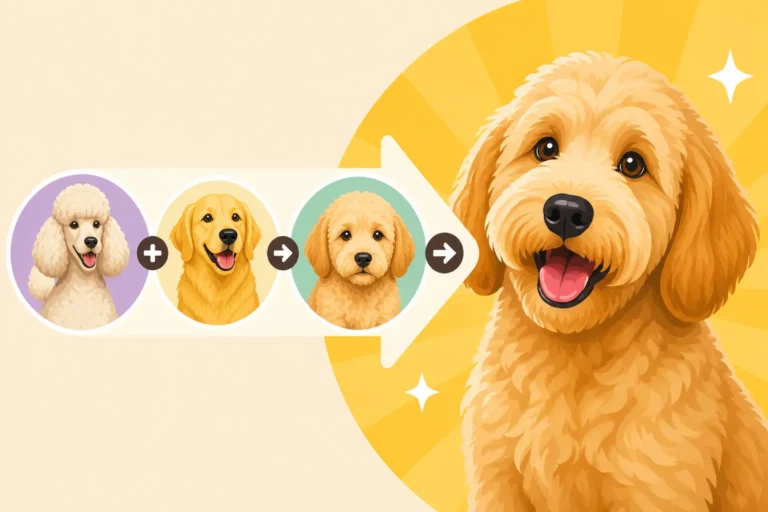
The journey of the Goldendoodle often begins with the F1 generation, which is essentially the original cross. An F1 Goldendoodle is the direct result of breeding a purebred Golden Retriever with a purebred Poodle. This pairing results in a dog that is, genetically speaking, 50% Golden Retriever and 50% Poodle. While often lauded for "hybrid vigor," which is the idea that crossbreeds are healthier due to genetic diversity, the reality is that the traits expressed in an F1 can be quite varied. You might get a dog with a wavy coat that sheds minimally, or one with a flatter coat that sheds more, or even a curlier coat. It's a bit of a genetic toss-up, which can be exciting for some, but less predictable for those seeking specific qualities. To learn more about this foundational cross, check out What a Goldendoodle Actually Is and Is Not.
Then there's the F1b generation, which was developed to address some of the unpredictability of the F1, particularly concerning shedding and hypoallergenic qualities. An F1b Goldendoodle is created by breeding an F1 Goldendoodle back to one of the purebred parent breeds – most commonly, a Poodle. This means an F1b is typically 75% Poodle and 25% Golden Retriever. The increased Poodle genetics usually result in a curlier coat and significantly less shedding, making them a popular choice for families with allergies. However, this re-introduction of a purebred can also mean that some of the "hybrid vigor" benefits might start to lessen, and certain Poodle-specific health concerns could become more prominent. Each generation is a step in the ongoing quest for desirable Goldendoodle traits, each with its own set of characteristics and considerations.
Why Breeders Sought a Different Path for Consistency
The initial popularity of the F1 and F1b Goldendoodles quickly showed breeders that while these crosses were delightful, there was still a significant amount of unpredictability in traits like coat type, shedding level, and even adult size and temperament. Prospective owners often had specific desires – a non-shedding coat for allergy sufferers, a particular look, or a consistent energy level. The "genetic lottery" of the F1 meant that even within the same litter, puppies could have vastly different coats, ranging from flat and retriever-like to tightly curled and poodle-like.
This variability, while charming to some, presented challenges for breeders aiming for a more consistent product. They wanted to create Goldendoodles that reliably possessed the best traits of both parent breeds, with greater predictability. The F2 generation emerged as a logical next step in this journey towards consistency, though it brought its own unique set of genetic surprises. It was an attempt to take the beloved F1 Goldendoodle and breed it to another F1, hoping to somehow "lock in" the desired characteristics. The goal was admirable: to offer families a Goldendoodle with more predictable qualities, moving closer to what many envisioned as the ideal companion.
The Specific Breeding Pair for an F2 Goldendoodle
So, you're curious about how an F2 Goldendoodle actually comes into existence. It's not as simple as just adding another 'F' and a '2' to the name; it signifies a very specific breeding combination that has its own set of genetic implications. Understanding this pairing is crucial for anyone considering bringing an F2 Goldendoodle into their home, as it directly impacts the traits you might see in a puppy. Unlike the straightforward F1 cross, the F2 introduces another layer of genetic complexity that can be both exciting and challenging.
Mating Two F1 Goldendoodles
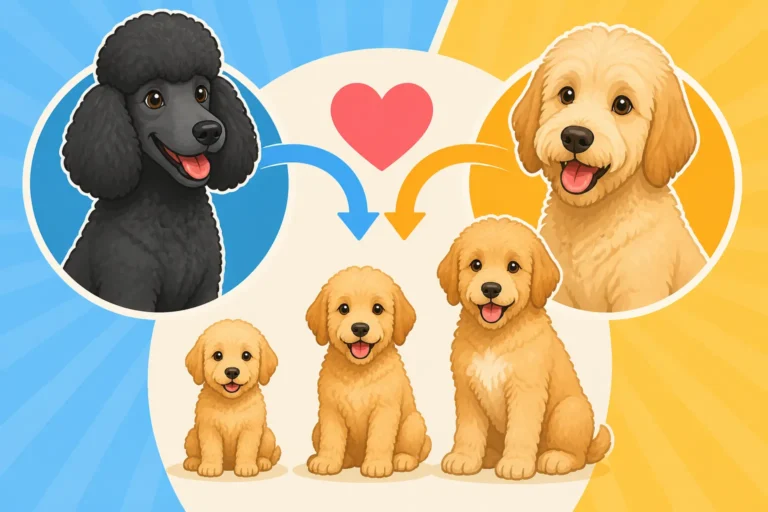
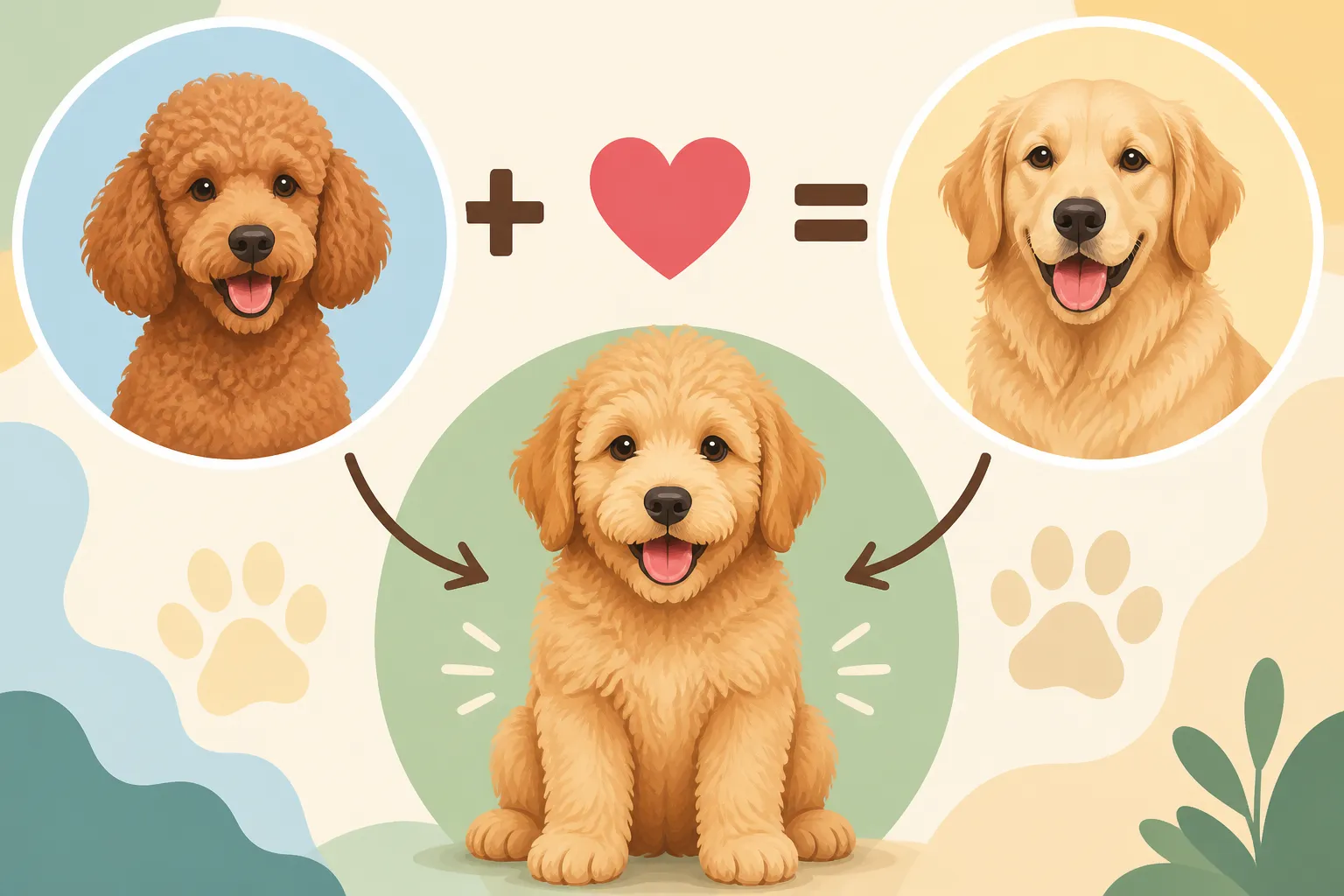
The definition of an F2 Goldendoodle is quite straightforward on paper: it's the offspring of two F1 Goldendoodles. This means both parents are already a 50/50 mix of Golden Retriever and Poodle. When you breed two F1 Goldendoodles together, you're essentially taking two dogs that each have a full set of mixed genetics and combining them again. Think of it like shuffling two separate decks of cards that each contain a mix of red and black cards, and then picking cards from those shuffled decks. While the overall average might still lean towards 50/50, the individual puppies in the litter can inherit a much wider, and more random, array of traits from their grandparents.
This breeding strategy often leads to a phenomenon sometimes referred to as the "genetic mishmash," where the genetic contributions from the original Golden Retriever and Poodle ancestors can reappear in surprising ways. For example, some F2 puppies might strongly resemble a Golden Retriever with a flat, shedding coat, while their littermates could be very poodle-like with a tight, non-shedding curl. It’s a testament to the powerful and sometimes unpredictable nature of genetics, where recessive genes from several generations back can suddenly make an appearance. This variability is precisely why understanding the F2 generation is so important – it’s not just a numerical progression but a distinct genetic event.
The Genetic "Mishmash" You Can Expect in an F2 Litter
This is where the F2 Goldendoodle truly stands out, and often where the most significant surprises arise. When you breed two F1 Goldendoodles, each puppy in the resulting F2 litter becomes a unique genetic lottery winner (or loser, depending on your preferences!). Because both F1 parents carry a 50/50 genetic blend, their offspring have the potential to inherit any combination of those genes. This means you could see puppies with a wide spectrum of traits, even within the same litter. This is often described in Why F2 Goldendoodle Litters Vary So Much.
Let's talk coats, for instance. You might find a puppy with a flat, straight coat that sheds quite a bit, much like a Golden Retriever. Right next to it could be a sibling with a curly, wool-like coat that hardly sheds at all, mirroring the Poodle. And somewhere in between, you’ll likely find the wavy, shaggy Goldendoodle coat that many people envision. This can be incredibly frustrating for prospective owners who are specifically looking for a low-shedding dog for allergy reasons, only to find that half the litter might not fit the bill. The consistency that breeders hoped for often remains elusive in the F2 generation, making it a truly diverse and sometimes unpredictable grouping of puppies. Preparing for this range of outcomes is key when considering an F2 Goldendoodle.
The Pros and Cons of an F2 Goldendoodle for Families
Deciding which Goldendoodle generation is right for your family involves weighing various factors, and the F2 generation certainly brings its own unique set of considerations to the table. While the unpredictability can be a challenge for some, it can also be a source of joy and surprise for others. It’s all about managing expectations and understanding the potential outcomes before you commit to an F2 Goldendoodle. Let's delve into what makes this generation appealing, as well as the potential hurdles you might encounter down the road.
The Appeal for Some Goldendoodle Lovers
Despite the genetic variability, F2 Goldendoodles hold a special appeal for a particular kind of dog lover – those who appreciate individuality and aren't necessarily chasing a specific "look" or guaranteeing a non-shedding coat. For these families, the "surprise" element of an F2 litter can be quite exciting. You might end up with a truly one-of-a-kind Goldendoodle, a unique blend of its Golden and Poodle heritage that no other dog quite matches. This can mean unique coat patterns, color combinations, or a blend of personalities that truly makes your dog stand out.
Furthermore, sometimes, breeders of F2 Goldendoodles might price their puppies a little differently than the more predictable F1b or Multigen lines, though this isn't always the case and you should always check with individual breeders. For some, the opportunity to own a Goldendoodle, regardless of its precise coat type or shedding level, is the primary driver. If you're someone who loves the general Goldendoodle temperament and isn't overly concerned with specific aesthetic or hypoallergenic guarantees, an F2 could offer a wonderful, albeit diverse, addition to your home. It’s about embracing the delightful variations that make each dog special.
The Challenges of an Unpredictable Coat and Health Profile
Now, let's talk about the flip side of the F2 coin, which primarily revolves around predictability. The wide range of coat types within an F2 litter means you could end up with a dog that sheds quite a bit, even if you were hoping for a low-shedding companion. This can be a real disappointment for allergy sufferers, as the "hypoallergenic" claim often associated with Goldendoodles is far less certain in an F2. Imagine preparing your home for a non-shedding dog, only to find your F2 puppy starts "blowing its puppy coat" and leaving hair everywhere, similar to what's described in Why a Goldendoodle Puppy Coat Predicts Nothing. Grooming can also become a challenge; you might anticipate a wavy coat that's relatively easy to manage, but find yourself with a tight, wooly coat that mats easily and requires professional attention every six to eight weeks, significantly impacting your Goldendoodle Grooming as the Biggest Line in the Budget. You might even need specialized tools from Chewy to handle the various coat textures.
Beyond coats, while Goldendoodles are generally lovely dogs, the F2 generation's broader genetic spread can also make health predictions a bit trickier. While responsible breeders will always conduct Health Testing Both Goldendoodle Parents Should Have, the genetic risks from both the Golden Retriever and Poodle lines can surface in more varied ways when two F1 crosses are bred. Without more careful selection over generations, the potential for inheriting conditions from either side remains broad. It's not to say F2s are inherently unhealthy, but rather that the specific health profile can be less precisely predicted than in more carefully line-bred or back-crossed generations aimed at consistency. Potential owners need to be prepared for the full spectrum of Goldendoodle traits, both good and challenging, that this unique generation can present.
Navigating the F2 Market and What to Ask Breeders
If you're still drawn to the F2 Goldendoodle, perhaps because you appreciate the individuality or understand the genetic nuances, congratulations! You're entering a fascinating segment of the Goldendoodle world. However, navigating the F2 market requires a bit more diligence and a keen eye for responsible breeding practices. Because of the inherent unpredictability, especially in coat and sometimes temperament, it’s even more critical to partner with a breeder who prioritizes health, temperament, and transparency above all else. Don't rush into a decision; take your time to ask the right questions and observe the puppies and parents closely.
What to Prioritize When Considering an F2 Goldendoodle
Given the broader genetic potential of an F2 Goldendoodle, your priorities during the selection process should shift slightly from perhaps solely focusing on coat type to a much stronger emphasis on health and temperament. First and foremost, a healthy puppy comes from healthy parents. This means looking for breeders who openly share the health clearances for both F1 parent Goldendoodles, covering common issues like hip and elbow dysplasia, eye conditions, and heart health. Don’t settle for a breeder who shrugs off health testing; it’s non-negotiable for any generation, but especially important where genetic outcomes are less controlled. You'll want to review the OFA Clearances on a Goldendoodle Sire and Dam carefully.
Secondly, pay close attention to the temperament of the parent dogs. Are they calm, friendly, and well-socialized? While puppy temperament can vary, seeing well-adjusted parents is a good indicator of what you might expect. Spend time observing the puppies in their environment. Are they curious, playful, and responsive, or are they overly shy or aggressive? Even if you can't predict the exact coat, you can certainly prioritize a strong, healthy start for your future companion. Remember, a dog’s personality and health will impact your life far more than whether their coat is perfectly wavy or slightly curlier than you imagined.
Essential Questions for an F2 Goldendoodle Breeder
When speaking with a potential F2 Goldendoodle breeder, don't be shy about asking specific, probing questions. A reputable breeder will welcome your inquiries and be transparent with their answers. Start by asking about the health testing conducted on both F1 parents. Specifically, inquire about OFA (Orthopedic Foundation for Animals) certifications for hips and elbows, CERF (Canine Eye Registry Foundation) or OFA eye certifications, and any genetic panels for conditions like Progressive Retinal Atrophy (PRA) or Von Willebrand Disease. Ask to see the actual certificates, not just a verbal assurance. You can learn more about specific genetic tests by looking into The DNA Panel a Goldendoodle Breeder Should Run.
Next, discuss the coats. Given the F2's variability, ask if the breeder uses DNA testing to predict the likelihood of different coat types (e.g., shedding vs. non-shedding, flat vs. curly) within their litters. While it's not a guarantee, some breeders do this to help manage expectations. Ask about the parents' temperaments, their daily routines, and how the puppies are socialized. What kind of early neurological stimulation do they provide? What age do they send puppies home? What is their policy on health guarantees? Do they microchip the puppies? Reputable breeders will be able to answer these questions confidently and provide a clear, comprehensive contract. A good breeder cares deeply about where their puppies go and will be just as inquisitive about your home as you are about their breeding program. Many will offer comprehensive puppy packs, often including starter food, toys, and grooming tools you can find at stores like Chewy.
Goldendoodle Generation Comparison
To help clarify the differences between the generations we've discussed, here's a quick overview of how F1, F1b, and F2 Goldendoodles typically compare. Remember that genetics can always surprise us, but this table outlines the general expectations for each.
| Feature | F1 Goldendoodle | F1b Goldendoodle | F2 Goldendoodle |
|---|---|---|---|
| Parent Pairing | Golden Retriever x Poodle | F1 Goldendoodle x Poodle (most common) | F1 Goldendoodle x F1 Goldendoodle |
| Genetic Makeup | 50% Golden Retriever, 50% Poodle | ~75% Poodle, ~25% Golden Retriever | Highly variable; can be any mix of 50/50 |
| Coat Predictability | Variable (flat, wavy, curly likely) | More predictable (usually curlier, less shedding) | Least predictable (wide range from flat to curly) |
| Shedding Level | Variable (can shed moderately) | Typically low to no shedding | Highly variable (can shed significantly) |
| Allergy Friendliness | Variable (less reliable for allergy sufferers) | Generally better for allergy sufferers | Least reliable for allergy sufferers |
| Hybrid Vigor | Often high | Moderate (reintroduction of purebred genes) | Variable (genetic diversity still present) |
| Purpose/Goal | Initial cross, often for hybrid vigor | Reduced shedding, more consistent coat | Attempt at consistent F1 traits, but often varied |
This table should give you a clearer picture of why the F2 Goldendoodle sits in a unique position within the Goldendoodle family, offering a wide range of outcomes that can make each puppy a delightful, one-of-a-kind individual.
Disclaimer
This article is for general informational purposes only and does not constitute professional advice. Laws, prices and regulations vary by location and change over time. Consult a qualified professional for guidance on your specific situation.