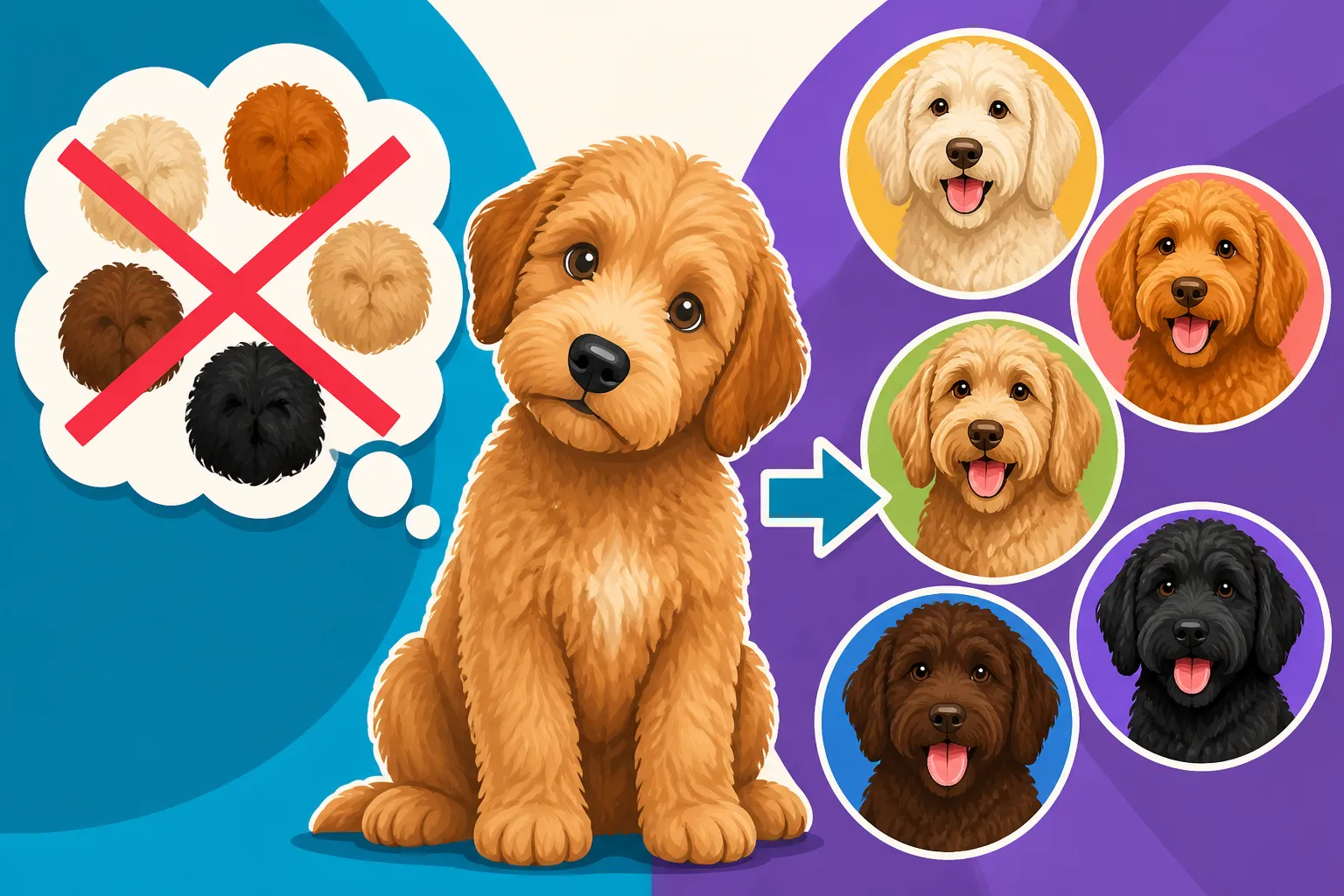
Why a Goldendoodle Puppy Coat Predicts Nothing
Many new Goldendoodle puppy parents fall head over heels for that soft, fluffy baby coat their little furball sports. It's so light and airy, and often, they're told or assume it's a perfect preview of what their adult Goldendoodle will look like. But here's the honest truth: your Goldendoodle puppy's coat is almost never an accurate predictor of their adult fur. This can lead to a lot of confusion, frustration, and unexpected grooming challenges down the line. This guide is here to unravel the mystery, explain the genetics at play, and help you understand what truly happens as your Goldendoodle grows, so you can be prepared for the beautiful, unique coat they'll actually develop.
The Puppy Coat Illusion: Why Early Appearances Deceive
It’s completely understandable to look at your Goldendoodle puppy and imagine that incredibly soft, downy fur will last forever. That "fluffy cloud" phase is truly adorable, isn't it? The fur is usually fine, often straight or gently wavy, and feels like spun silk. Owners often assume this charming texture and appearance is exactly what their adult dog will have, perhaps just a bit longer or thicker. This natural assumption, however, often sets up unrealistic expectations for the future, leading to surprise when the actual coat emerges. The puppy coat is a temporary delight, designed for a different purpose than the robust adult coat.
The reality is that Goldendoodles are a crossbreed, a wonderful mix of Golden Retriever and Poodle genetics, and this genetic cocktail makes predicting their adult coat a real dice roll. You might see a puppy with a perfectly straight, wispy coat, only for it to develop into tight curls by its first birthday. Conversely, a fluffy, wavy puppy could surprise you with a much straighter, more Golden-like adult coat. This isn't just a minor tweak; it's a fundamental transformation driven by complex genetic interactions. The combination of genes inherited from both parent breeds means that each Goldendoodle is a unique individual, and their coat development is a prime example of this inherent unpredictability. It’s part of the charm, but also a significant grooming consideration.
The "Fluffy Cloud" Phase and Its Appeal
When you first bring home a Goldendoodle puppy, their coat is usually a dream. It's incredibly soft to the touch, often light and airy, sometimes even feeling like cotton candy. This fine, baby-soft fur might be somewhat sparse in places, especially on the belly, but overall it creates that irresistible, cuddly appearance we all adore. Many new owners are drawn in by this initial fluff, picturing a lifetime of effortless, soft, flowing locks. They might even choose their puppy based on how "fluffy" or "non-shedding" its puppy coat appears, hoping for a similar adult coat. This phase is truly appealing, and it’s natural to become emotionally attached to the feel and look of this innocent puppy fur.
However, this initial coat is functionally very different from what will follow. It's simpler, less dense, and not yet equipped for the adult dog's needs in terms of weather protection or shedding cycles. It’s essentially a temporary placeholder, and while beautiful, it offers very few concrete clues about the ultimate adult coat. The softness, the length, the curl (or lack thereof) you see in those first few months are fleeting indicators, often completely transforming as the dog matures. Understanding this early on can save a lot of head-scratching and disappointment when the changes begin.
The Genetic Dice Roll of a Crossbreed
The Goldendoodle's status as a crossbreed is precisely why predicting their adult coat from puppyhood is so challenging. Unlike purebreds, where generations of selective breeding have established predictable coat traits, Goldendoodles inherit a wide array of genes from two distinct breeds: the Golden Retriever and the Poodle. The Golden Retriever typically has a dense, double coat that sheds, ranging from straight to wavy. The Poodle, on the other hand, possesses a dense, single coat of tight curls that grows continuously and sheds minimally. When these two genetic blueprints combine, the possibilities are vast.
It’s not simply a 50/50 split in every characteristic; rather, it’s a complex interplay where dominant and recessive genes from both sides can manifest in unexpected ways. This means that even within the same litter, you can see puppies with vastly different coat textures and growth patterns. One pup might lean heavily towards the Golden side, another towards the Poodle, and yet another might be a true blend that surprises everyone. This is a fundamental aspect of Goldendoodle genetics, and it means that the adorable straight-haired puppy could end up with a very curly adult coat, and vice-versa. It’s a genetic lottery, and it's why you can't rely on early appearances. What a Goldendoodle Inherits From Each Parent Breed highlights this genetic mosaic.
Deciphering Goldendoodle Coat Genetics
To truly understand why a Goldendoodle puppy's coat is a poor predictor, we need to dive a little into the fascinating world of canine genetics. It's not just about what you see, but what genes are lying beneath the surface, waiting to express themselves. The specific genes related to coat type, texture, and shedding are what ultimately determine the adult Goldendoodle look, and these aren't always immediately apparent in a young puppy. Knowing about these genes can help you grasp the complexity involved.
There are a few key genetic markers that breeders often test for, and understanding them can shed light on why your puppy's coat might change so dramatically. These genes dictate everything from the presence of facial hair to the degree of curl and, crucially, the shedding potential. Without this genetic information, observing a puppy's coat in its first few months is largely an exercise in wishful thinking rather than accurate prediction.
The Critical Role of the Furnishings Gene (F/IC)
One of the most significant genetic factors in a Goldendoodle's coat is the furnishings gene, often abbreviated as F or IC (Improper Coat). This gene dictates whether your Goldendoodle will have the distinctive "doodle look" – that shaggy beard, mustache, and eyebrows that many people love. If a Goldendoodle inherits two copies of the furnishings gene (F/F), they will have strong furnishings and are very likely to be low-shedding. If they inherit one copy (F/IC), they'll still have furnishings but might have a slightly softer, looser coat. However, if they inherit two copies of the improper coat gene (IC/IC), they will have what’s called an "unfurnished" coat.
An unfurnished Goldendoodle will have a smooth face, much like a Golden Retriever, and their coat is more likely to shed because the characteristic hair growth around the muzzle helps to trap loose fur. What’s tricky is that a young puppy with an F/IC or F/F genotype might not show prominent furnishings until several weeks or even months old. Their puppy coat can look smooth and Golden-like, only for the furnishings to "grow in" later. Conversely, a puppy that appears to have some fluff around its muzzle might actually be IC/IC, meaning that fluff is just puppy hair that will give way to a smooth adult face. This is why What Furnishings Give a Goldendoodle Its Beard is so crucial to understanding the true Goldendoodle appearance.
Understanding the Curl (KRT71) and Shedding (MC5R) Genes
Beyond furnishings, the genes for curl (specifically KRT71) and shedding (MC5R) are paramount. It's a common misconception that a Goldendoodle's curl directly determines its shedding. While tighter curls tend to trap loose hair, making them appear "non-shedding," the genetic markers for curl and shedding are actually distinct. A Goldendoodle can inherit a straight coat gene (meaning less curl) but still have a low-shedding gene, or vice versa. This genetic variability is why you can encounter straight-coated Goldendoodles that shed very little, and some wavy or even curly ones that still drop a fair amount of hair.
The KRT71 gene influences the hair's structure, determining whether it will be straight, wavy (fleece), or tightly curled (wool). Meanwhile, the MC5R gene is associated with the actual shedding process. A Goldendoodle needs specific combinations of these genes to achieve the desired "low-shedding, curly" coat. For instance, a puppy might have a very loose, wavy puppy coat, but if it carries the strong curl gene, it could develop a much tighter, Poodle-like curl as an adult. It's essential to remember that Why a Goldendoodle Curl Gene Is Not a Shedding Gene is a key piece of information for managing expectations.
DNA Testing: The Only Real Predictor
Given the complex genetic soup that makes up a Goldendoodle's coat, the only truly reliable way to predict an adult coat type is through genetic DNA testing of the parent dogs, and sometimes even the puppies themselves. Reputable Goldendoodle breeders often run DNA panels on their breeding stock to identify the specific genes related to furnishings, curl, and shedding. This allows them to make more informed breeding decisions and give prospective puppy buyers a much more accurate expectation of a litter's potential coat types.
These tests can determine if a dog is F/F (two copies of furnishings), F/IC (one copy), or IC/IC (no furnishings). They can also predict the likelihood of straight, wavy, or curly coats, and whether the dog will be low-shedding. While it's still not an absolute guarantee, as other modifier genes can play a role, it's exponentially more accurate than simply guessing based on a puppy's appearance at eight weeks old. When choosing a Goldendoodle, asking your breeder about these genetic test results is far more informative than trying to "guess" from your puppy's fluffy phase. It truly is the only way to get a glimpse into their genetic future. DNA Coat Testing on a Goldendoodle is an invaluable tool for breeders and buyers alike.
The Great Goldendoodle Coat Change: What to Expect
If you're a new Goldendoodle owner, prepare yourself for what's often referred to as "the great coat change." This is the period when your adorable, soft puppy fur transitions into the denser, more mature adult coat. It's a phase that surprises many owners, often leading to sudden and intense grooming challenges that they hadn't anticipated based on their puppy's easy-to-manage fluff. It's completely normal, but knowing what's coming can help you navigate it with much less stress and prevent serious matting.
This transition isn't just about the coat getting longer; it's a fundamental shift in texture, density, and growth pattern. The fine, wispy puppy hairs gradually give way to coarser, thicker adult hairs, and this simultaneous shedding and new growth can create a tangled mess if not managed proactively. Understanding the timeline, the challenges, and what's happening at the follicular level is key to successfully getting through this stage.
The Timeline of Transformation
The Goldendoodle coat change typically kicks off around 8 to 12 months of age, though it can sometimes start a little earlier or later. Think of it like a human teenager hitting a growth spurt and suddenly needing a whole new wardrobe – but for their hair! During this period, your Goldendoodle’s puppy fur, which is often much finer and softer, begins to shed out to make way for the more robust and dense adult coat. It’s not a sudden event, but a gradual process that can last several weeks or even a few months.
What makes this phase particularly challenging is that the puppy fur and the emerging adult fur have different textures. The softer puppy coat can easily get tangled and intertwined with the coarser, often curlier, adult hair that's pushing through. This creates a perfect storm for matting, especially in high-friction areas like behind the ears, under the armpits, and around the collar. Many owners are genuinely taken aback by how quickly mats can form during this time, seemingly overnight. This period is a prime example of why The Goldendoodle Coat Change at Eight to Twelve Months is such a critical topic for new owners to understand and prepare for.
The Challenges of the Transition Period
During the coat change, you might find yourself in what feels like an "ugly duckling" phase with your Goldendoodle. Their formerly easy-to-manage puppy coat suddenly becomes a magnet for tangles and mats. Brushing sessions that used to be quick and simple can turn into lengthy, frustrating battles as you try to untangle stubborn knots. Owners often report that their dog's coat feels "sticky" or "felty," even shortly after a groom, because the mixed textures are constantly snagging on each other. This can be truly disheartening, especially if you had visions of a perpetually fluffy, low-maintenance companion.
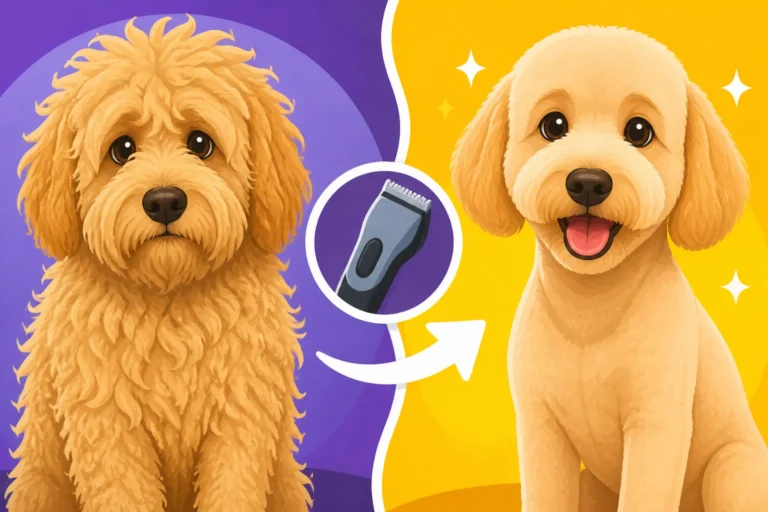
The frustration is real, and it’s okay to feel overwhelmed. This is the period when many Goldendoodles end up getting shaved down because their coats become too matted to brush out. While a fresh start with a short cut can be a relief, it's also preventable with diligent care. The key is to understand that your Goldendoodle isn't being "difficult" or "misbehaving"; their coat is simply undergoing a natural, albeit challenging, developmental process. Your job is to adapt your grooming routine to match this new reality.
Emerging Adult Coat Types
As the puppy coat gives way, the true adult Goldendoodle coat emerges, revealing one of three primary types, largely determined by those underlying genetics we discussed. These are typically described as straight (or flat), wavy (often called fleece), and curly (or wool). Each type has distinct characteristics in terms of texture, shedding potential, and grooming requirements.
- Straight/Flat Coat: This coat resembles the Golden Retriever's coat more closely, being relatively straight and often shedding more than the other types. It may still have some light feathering.
- Wavy/Fleece Coat: This is arguably the most common and sought-after Goldendoodle coat. It's soft, often with a slightly crimped or wavy texture, and generally low-shedding. It can range from loose waves to more defined curls.
- Curly/Wool Coat: This coat is dense and has tight, Poodle-like curls. It's typically very low-shedding, but also requires the most diligent grooming to prevent matting due to its tight texture.
A puppy with a straight, soft coat could develop into any of these types, making early prediction so difficult. It's a journey of discovery for both you and your Goldendoodle! Understanding these distinctions is crucial for proper care. The Three Goldendoodle Coat Types and How to Tell Them provides a deeper dive into these variations.
Here’s a quick overview of what you might encounter with adult Goldendoodle coats:
| Coat Type | Description | Shedding Level | Grooming Frequency (Home) | Grooming Frequency (Pro) |
|---|---|---|---|---|
| Straight/Flat | Smooth, soft, similar to Golden Retriever | Moderate | 2-3 times/week | Every 8-12 weeks |
| Wavy/Fleece | Soft, flowing waves; most common type | Low | 3-5 times/week | Every 6-8 weeks |
| Curly/Wool | Dense, tight curls; Poodle-like | Very Low | Daily | Every 4-6 weeks |
What You Can Observe in a Puppy's Coat (and What It Means)
While a puppy's coat won't predict its adult form with 100% accuracy, there are subtle clues you can look for, particularly if you don't have access to genetic testing results. These aren't foolproof, but they can give you a hint about the direction their coat might take. It’s more about observing texture, density, and the very early signs of those crucial furnishings rather than just the overall fluffiness.
It's important to approach these observations with a realistic mindset, understanding that even the most experienced breeders can be surprised by a Goldendoodle's coat development. Think of it less as a crystal ball and more as a weather forecast – it gives you an idea, but doesn't guarantee the outcome.
Early Indicators of Furnishings (or Lack Thereof)
Even if a puppy's overall body coat is misleading, you can sometimes get an early sense of whether they’ll have furnishings, that distinctive Goldendoodle beard and eyebrows. Look closely at the hair around their muzzle and over their eyes. Puppies destined for strong furnishings might show a slight "scruffiness" or longer, coarser hair emerging in these areas, even if the rest of their coat is still baby-soft. It might not be a full beard yet, but a subtle difference in texture or length compared to a smooth-faced Golden Retriever puppy.
Conversely, a puppy with a perfectly smooth, short face, with no hint of longer hairs around the muzzle or brows, is more likely to be unfurnished (IC/IC). These dogs often retain a more Golden Retriever-like appearance in their face, even if their body coat develops some waves. While not always definitive, observing these facial features at around 6-8 weeks can be a better indicator than trying to Guessing a Goldendoodle Adult Coat at Eight Weeks by its overall body coat. However, even these subtle cues can evolve, so always factor in genetic uncertainty.
Texture and Density: Subtle Clues
Beyond facial hair, pay attention to the feel of the puppy's body coat, especially as they get closer to 8-10 weeks. Is it exceptionally fine and wispy, or does it have a noticeable underlying thickness? While all puppy coats are soft, some might have a slightly coarser or denser feel even at a young age, which could hint at a more textured adult coat. A very sparse, extremely fine coat across the body might lean towards a flatter, less dense adult coat, while a noticeably thicker, somewhat "cottony" feel could suggest a future fleece or wool coat.
However, be cautious not to overinterpret these observations. A puppy's hair follicles are still maturing, and the full density and texture won't be apparent until the adult coat comes in. A puppy that feels thin might develop a surprisingly thick adult coat, and a fluffy puppy could still end up with a lighter adult coat. It's truly a spectrum. What matters most is understanding that the puppy coat is transient. If a breeder makes strong promises about an adult coat based solely on puppy appearance, it's wise to be skeptical, as Why a Fluffy Goldendoodle Puppy May Shed as an Adult clearly shows.
Understanding "Low Shedding" vs. "Non-Shedding"
Another critical aspect for Goldendoodle owners, especially those with allergies, is the shedding potential. It's easy to look at a Goldendoodle puppy and assume it won't shed, particularly if it has any fluff or waves. However, it's crucial to understand that no dog is truly 100% non-shedding. The term "hypoallergenic" for Goldendoodles is often a misnomer, as it's not the shedding itself, but the dander and saliva that trigger allergies.
Goldendoodles are often described as "low-shedding" because their Poodle heritage gives them a coat that tends to trap loose hairs rather than releasing them into the environment. This means less visible hair on your furniture, but those trapped hairs still need to be brushed out regularly to prevent matting. A puppy that seems to shed minimally might just be in a phase where its fine puppy hair isn't falling out significantly, but its adult coat could still surprise you. The actual shedding level is largely determined by the genetics we discussed earlier (specifically the MC5R gene) and the type of adult coat that develops. Curly and wavy coats tend to trap more hair, making them appear lower shedding than straight coats.
Grooming Through the Transition and Beyond
The unpredictable nature of the Goldendoodle coat means that proactive grooming from day one is not just helpful, it's absolutely essential. You can't just hope for the best; you have to actively manage their coat, especially during that challenging transition period. Many owners get caught off guard, and unfortunately, this is often when Goldendoodles develop severe matting that can only be resolved by shaving them down. A little effort consistently applied can save a lot of heartache and expense down the road.
Establishing a solid grooming routine early on will not only keep your Goldendoodle comfortable and healthy but also make the process enjoyable for both of you. It's about building positive associations and setting expectations for a lifetime of beautiful, manageable fur, no matter what surprises their adult coat might bring.
Preparing for the Change from Day One
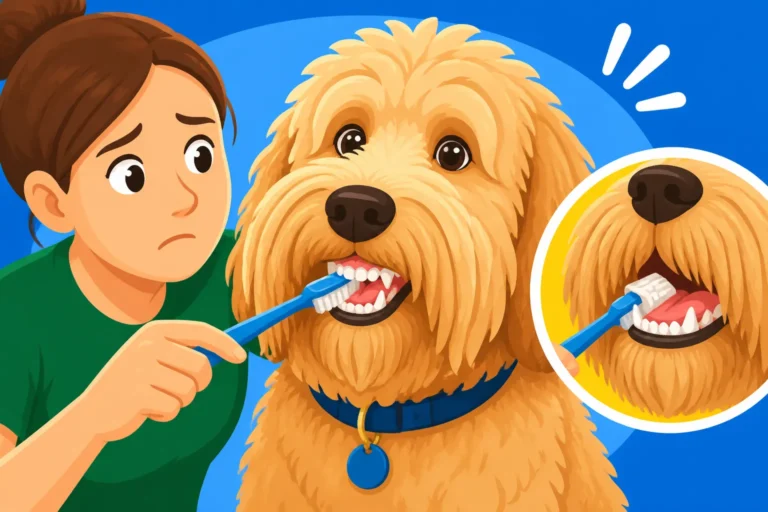
The best way to prepare for your Goldendoodle’s coat change is to start grooming your puppy as soon as you bring them home, regardless of how soft and easy their current fur seems. Even if they have a flat, straight puppy coat, getting them accustomed to being brushed, handled, and even hearing the sound of clippers (without touching them, just for desensitization) will pay dividends. Use a soft slicker brush and a wide-toothed metal comb to gently brush their entire body daily for short, positive sessions. Focus on making it a pleasant experience with lots of treats and praise.
Introduce them to having their paws, ears, tail, and face handled. These are common problem areas for matting and grooming sensitivity. Early positive exposure means that when the coat change hits, and brushing becomes more intense, your Goldendoodle will already be familiar and comfortable with the routine, rather than seeing it as a scary, novel experience. Establishing this foundation is paramount. Even if their coat seems low-maintenance, consistent positive reinforcement around grooming will make life much easier for both of you later on. Consider using treats from brands like Chewy to make grooming a rewarding experience for your pup.
Surviving the Coat Change Without Matting
When the coat change hits, typically between 8-12 months, your grooming routine needs to kick into high gear. This is not a time to skip brushing sessions. You will likely need to brush your Goldendoodle daily, and not just a surface brush. You need to learn the technique of "line brushing," which ensures you get down to the skin and prevent mats from forming at the base of the hair shaft. To line brush, you part the hair, hold it up, and brush a small section down, working your way across the dog. Then, you part a new section of hair just below the first and repeat the process.
A good metal comb is your best friend here. After slicker brushing, always follow up with a comb, especially behind the ears, in the armpits, and around the tail. If the comb snags, there’s a mat forming that your slicker brush missed. At this point, it might be worth booking professional grooming appointments more frequently, perhaps every 4-6 weeks, just to get through this challenging phase. Your groomer can help manage the coat and identify problem areas. Remember, prevention is key, because once a mat forms, it's much harder to remove. Line Brushing a Goldendoodle Down to the Skin is a fundamental skill for every Goldendoodle owner.
Maintaining the Adult Goldendoodle Coat
Once your Goldendoodle has navigated the coat change and their adult coat has fully emerged, your grooming routine will become more predictable, but no less essential. The frequency of home brushing will depend largely on their adult coat type (straight, wavy, or curly) and the length you prefer to keep it. Shorter cuts generally require less frequent brushing, while longer, flowing coats demand daily attention. Most Goldendoodle owners find that professional grooming every 6 to 8 weeks is ideal for keeping their dog's coat in top condition, preventing mats, and maintaining a tidy appearance.
Between professional appointments, regular home brushing with a good quality slicker brush and metal comb is non-negotiable. This prevents mats from forming and keeps their coat healthy and shiny. You'll also want to invest in a good dog-specific shampoo and conditioner, perhaps available through Amazon or Chewy, for occasional baths at home. Discuss with your groomer what haircut length and style best suits your Goldendoodle's coat type and your lifestyle. They can advise on how to maintain the popular "teddy bear cut" or other styles that minimize matting. Remember, a well-cared-for coat is a happy coat, and it directly impacts your Goldendoodle's comfort and skin health. This consistent effort is truly How Often a Goldendoodle Actually Needs Brushing.
Common Misconceptions and Realistic Expectations
The world of Goldendoodles is full of wonderful traits, but also a fair share of myths, particularly when it comes to their coats. It’s easy to get caught up in marketing buzzwords or anecdotal advice, leading to disappointment or unexpected challenges. Setting realistic expectations from the outset, based on scientific understanding rather than wishful thinking, is crucial for any prospective or current Goldendoodle owner.
Understanding these common misconceptions can save you from frustration and help you provide the best possible care for your unique companion. It’s about separating fact from fiction and embracing the beautiful individuality of your Goldendoodle, no matter what their adult coat looks like.
The "Non-Shedding" Illusion
Perhaps the biggest misconception surrounding Goldendoodles is the idea that they are completely "non-shedding." While it's true that many Goldendoodles shed significantly less than a purebred Golden Retriever, no dog is truly 100% non-shedding. The Poodle's curly coat grows continuously, and loose hairs get caught within the curls rather than falling out onto your floor or furniture. This is why Poodles, and often Goldendoodles, are considered a good choice for people with mild allergies.
However, "low-shedding" does not mean "no-shedding," nor does it mean "no grooming." Those trapped hairs still need to be brushed out regularly, otherwise, they will quickly form mats that can be painful and lead to skin issues. Ignoring this can turn a low-shedding coat into a matted nightmare that requires a full shave-down. It's important to differentiate between hair not falling out and hair not needing to be removed. Goldendoodle owners need to be prepared for consistent brushing to manage these trapped hairs, especially during the coat change.
Why a Breeder's "Guarantees" Might Be Misleading
It's common to see breeders offer "health guarantees" or sometimes even "coat guarantees." While health guarantees often cover genetic diseases (and should be thoroughly vetted), a breeder's "coat guarantee" for a Goldendoodle can be tricky, if not outright misleading. As we've discussed, the genetics of Goldendoodle coats are complex, and even with genetic testing, there can still be variability. No breeder can 100% guarantee a specific adult coat type (e.g., "always wavy and non-shedding") from a puppy, especially if they haven't done comprehensive DNA testing on the parents for all relevant coat genes.
Be wary of breeders who rely solely on a puppy's appearance at eight weeks to predict its adult coat, or who promise absolute "non-shedding" without genetic proof. A responsible breeder will be transparent about the genetic testing they've done, explain the probabilities, and emphasize the potential for variation within a litter. They will also educate you on the significant grooming commitment involved, regardless of the eventual coat type. Understanding that Why a Fluffy Goldendoodle Puppy May Shed as an Adult is a real possibility, despite initial appearance, is key to managing expectations.
Embracing the Uniqueness of Your Goldendoodle's Coat
Ultimately, the most fulfilling approach to your Goldendoodle's coat is to embrace its uniqueness and prepare for proper care, regardless of what exact texture or curl pattern emerges. While it can be exciting to anticipate a specific look, the true joy of a Goldendoodle comes from their incredible temperament, intelligence, and loving personality, not just their fur. Whether your Goldendoodle ends up with a straight, wavy, or curly coat, they will still be the same wonderful companion.
Focus your energy on establishing a consistent and positive grooming routine. Invest in good quality grooming tools, whether from a pet store or an online retailer like Amazon, and consider feeding high-quality food, perhaps from a brand like Ollie, that supports healthy skin and coat. A well-nourished dog with a well-maintained coat will always look and feel their best, no matter their genetic destiny. Celebrate the individuality of your Goldendoodle, and know that with the right care, their coat will be a beautiful reflection of their overall health and your dedicated attention.
Disclaimer
This article is for general informational purposes only and does not constitute professional advice. Laws, prices and regulations vary by location and change over time. Consult a qualified professional for guidance on your specific situation.