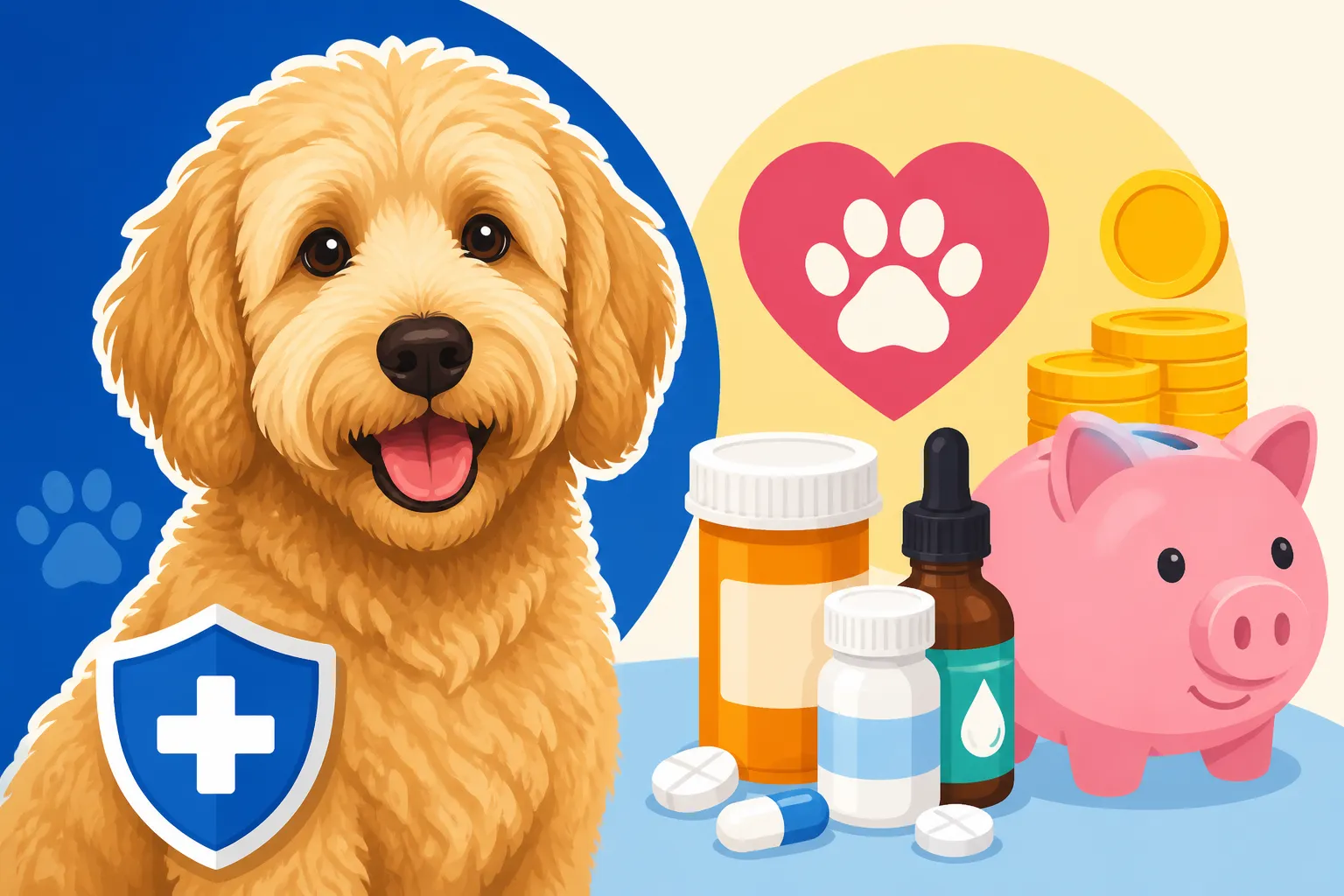
Lifetime Addison’s Medication Costs for a Goldendoodle
When your beloved Goldendoodle receives an Addison's disease diagnosis, it can feel like a punch to the gut. Beyond the immediate shock and concern for their well-being, the practical worry often kicks in: "What is this going to cost me, not just now, but for their entire life?" It’s a completely valid and common concern, as Addison’s is a lifelong condition requiring consistent medication and monitoring. This guide aims to shed light on those ongoing financial commitments, helping you understand what to expect and how to prepare for the journey ahead.
Understanding Addison's Disease in Goldendoodles
Addison's disease, or hypoadrenocorticism, is a condition where your Goldendoodle's adrenal glands don't produce enough vital hormones, primarily cortisol and aldosterone. It's often called the "Great Mimicker" because its symptoms can be vague and mimic other conditions, making diagnosis tricky. However, once diagnosed, it's a condition that can be well-managed, allowing your Goldendoodle to live a full and happy life – but it does require commitment, especially financially.
Why Goldendoodles Are Prone to Addison's
It’s a tough reality, but Goldendoodles, like many hybrid breeds, can inherit predispositions to certain health conditions from their parent lines. In the case of Addison’s disease, the Poodle side of your Goldendoodle’s ancestry carries a higher genetic risk. Standard Poodles, in particular, have a well-documented predisposition to this condition, and this trait can certainly be passed down to their Goldendoodle offspring. This is why understanding the health history of both parent breeds is so crucial, even if you’re told your Goldendoodle benefits from something called "hybrid vigor." It's important to be aware of conditions like Addison's Disease a Goldendoodle Gets From the Poodle.
The Lifelong Nature of Addison's Treatment
Unlike an infection that can be cleared with a course of antibiotics, Addison’s disease is a chronic condition that your Goldendoodle will manage for the rest of their life. There’s no cure, only management. This means continuous medication and regular veterinary check-ups to ensure the dosage is correct and their body is responding appropriately. It’s not just about getting through the initial crisis; it’s about establishing a consistent routine for years to come. Recognizing Addison's Disease Signs in a Goldendoodle early is vital for starting this lifelong management promptly.
Breaking Down the Medication Costs
When it comes to treating Addison's, there are typically one or two main medications involved, along with the necessary diagnostic and monitoring tests. The specific costs can vary widely depending on your Goldendoodle's size (which dictates dosage), your geographical location, and the veterinary clinic or pharmacy you use.
Percorten-V (Desoxycorticosterone Pivalate – DOCP)
This is often the cornerstone of Addison's treatment, particularly for what's known as "typical" Addison's, where both cortisol and aldosterone production are deficient. DOCP is a mineralocorticoid replacement, mimicking the natural aldosterone hormone. It's administered as an injection, typically every 25-30 days, though your vet might adjust the schedule based on your Goldendoodle's individual needs.
The cost of Percorten-V can be a significant factor. A single vial can range from $150 to $350 or more, depending on the size of the vial (often 4ml or 10ml) and where you purchase it. A larger Goldendoodle will naturally require a higher dose per injection, meaning a vial won't last as long, or they might need a larger vial. For instance, a 50-pound standard Goldendoodle might need 1ml per injection, meaning a 4ml vial would last about four months, costing around $150-$250 for those four months. However, a 70-pound Goldendoodle might need 1.4ml per injection, using up a 4ml vial in less than three months, thus increasing the monthly expenditure. It's crucial to understand that this isn't a one-time purchase; it's a recurring monthly or near-monthly expense for the entirety of your dog's life. Many owners find themselves thinking, "This is really going to add up over the years," and they're absolutely right. It's part of the reality of Lifelong Medication for an Addisonian Goldendoodle.
Prednisone or Dexamethasone (Corticosteroids)
In addition to DOCP, many Goldendoodles with Addison's will also require a daily oral corticosteroid, such as prednisone or dexamethasone. These medications replace the cortisol that their adrenal glands are no longer producing. The goal is to find the lowest effective dose to minimize potential side effects. Some Goldendoodles may only need these during stressful events (like vet visits, travel, or boarding), while others need a very small daily maintenance dose.
The good news is that these oral corticosteroids are generally much more affordable than DOCP. A month's supply of prednisone for a Goldendoodle might cost anywhere from $10 to $50, depending on the dosage and whether you get a generic version. While seemingly small compared to the DOCP, it's another recurring cost to factor into your budget. For some dogs with "atypical" Addison's (only cortisol deficiency), this might be the only medication needed, making their treatment significantly less expensive overall.
Regular Vet Visits and Monitoring Tests
Medication is just one part of the equation. To ensure your Goldendoodle is stable and the medication dosages are correct, regular vet visits and blood tests are essential. Initially, after diagnosis and starting treatment, your vet will likely want to see your Goldendoodle every few weeks for follow-up blood work to check their electrolyte levels (sodium and potassium). Once stable, these visits might reduce to every three to six months.
Each vet visit will include an examination fee (typically $50-$100 or more) and the cost of the electrolyte panel. A blood draw and electrolyte panel can range from $70 to $150 per test. Over a year, this can add up to several hundred dollars in monitoring costs alone, even for a well-controlled Goldendoodle. These tests are critical because they tell your vet if the DOCP is working correctly and if adjustments are needed. Without this monitoring, you're essentially flying blind, risking an Addisonian crisis. The initial diagnosis usually involves a more comprehensive test like The ACTH Test for a Goldendoodle, which is a larger upfront cost, but the follow-up electrolyte panels are the ongoing expense.
Strategies for Managing Addison's Medication Expenses
Given the lifelong nature of Addison's treatment, finding ways to manage these expenses effectively is something every Goldendoodle owner with an Addisonian dog will explore. There are several avenues that can help soften the financial blow.
The Role of Pet Insurance
Pet insurance can be an absolute lifesaver for managing chronic conditions like Addison's. However, there's a crucial caveat: it must be in place before the diagnosis. Addison's disease, like any chronic condition, will be considered a pre-existing condition if diagnosed before or during the waiting period of your policy, meaning future claims for it will be denied.
If you have pet insurance, and your Goldendoodle was enrolled and healthy before their Addison's diagnosis, it can reimburse a significant portion of your medication, vet visits, and monitoring test costs. Policies typically cover 70-90% of eligible vet bills after your deductible is met. For instance, if your Goldendoodle's monthly DOCP injection costs $200, and you have an 80% reimbursement plan with a $250 annual deductible, you could be reimbursed $160 after hitting your deductible, reducing your out-of-pocket to $40 for that shot. Brands like Healthy Paws are popular choices among Goldendoodle owners for their comprehensive coverage, but always read the fine print regarding chronic conditions and waiting periods. Understanding Goldendoodle Pet Insurance for a Dog With No Breed Papers is essential, as some policies might have specific requirements for mixed breeds.
Discount Pharmacies and Online Retailers
Your veterinarian's office often marks up medications, which is understandable as it's part of their business model. However, for long-term medications like those for Addison's, you can often find significant savings by getting your prescriptions filled elsewhere.
Online pet pharmacies, such as Chewy, VetRxDirect, or even human pharmacies like Chewy's online pharmacy, Walgreens, or Costco, often offer these medications at a lower price. You'll need a prescription from your vet, which they can either send directly to the online pharmacy or provide to you to upload. For example, a 4ml vial of Percorten-V that might cost $250 at your vet could be found for $180-$200 online. Always compare prices, but ensure the pharmacy is reputable and requires a valid prescription. This requires a little proactive work on your part, but the savings can truly add up over a year.
Compounding Pharmacies
In some cases, your vet might recommend a compounding pharmacy. These specialized pharmacies can custom-make medications in specific dosages or formulations that aren't commercially available. While this might be less common for Percorten-V (which comes in standard vials), it could be an option for prednisone if your Goldendoodle needs a very precise, tiny dose that's hard to achieve with standard pill sizes, or if they need a liquid form.
The cost at compounding pharmacies can sometimes be higher than generic off-the-shelf medications, but they offer flexibility. If your Goldendoodle is particularly picky about pills, a compounding pharmacy might be able to flavor the medication to make it more palatable, reducing the stress of daily administration. Discuss this option with your vet if you're facing challenges with standard medications.
Manufacturer Programs and Financial Aid
While less common for chronic conditions like Addison's, it's always worth asking your veterinarian if they are aware of any manufacturer patient assistance programs for Percorten-V or other medications. Sometimes, pharmaceutical companies offer discounts or support for long-term medication needs.
Additionally, if you're facing significant financial hardship, inquire about local or national veterinary financial aid programs. Organizations like The Pet Fund, RedRover, or specific university veterinary teaching hospitals sometimes have programs or grants available to help pet owners cover expensive treatments. While these are often for acute emergencies, some may extend to chronic care in dire situations. It never hurts to ask your vet for resources; they often know about local initiatives.
Here’s a simplified breakdown of potential monthly and annual costs for managing Addison’s in a typical 50-pound Goldendoodle, illustrating the range you might expect. Please remember these are estimates and can vary widely.
| Expense Category | Frequency | Estimated Cost Range (Per Occurrence) | Estimated Monthly Cost | Estimated Annual Cost | Notes |
|---|---|---|---|---|---|
| Percorten-V (DOCP) | Every 25-30 days | $150 – $350 per vial | $150 – $350 | $1,800 – $4,200 | Varies by Goldendoodle size & clinic/pharmacy. |
| Prednisone (daily) | Daily | $10 – $50 per month | $10 – $50 | $120 – $600 | Low dose, often cheaper generic. |
| Vet Exam (Monitoring) | Quarterly | $50 – $100 | $17 – $33 | $200 – $400 | Reduced frequency once stable (e.g., 4x/year). |
| Electrolyte Panel (Blood) | Quarterly | $70 – $150 | $23 – $50 | $280 – $600 | Crucial for monitoring effectiveness of DOCP. |
| Total Estimated (Monthly) | $200 – $483 | $2,400 – $5,800 | This does not include emergency care or other health issues. |
This table highlights that you're looking at a minimum of $2,400 per year, and potentially much more, just for Addison's management. It underscores why careful budgeting and exploring all cost-saving options are so important.
Disclaimer
The information provided in this article is for general informational purposes only and does not constitute veterinary advice. Always consult with a qualified veterinarian for any health concerns or before making any decisions about your Goldendoodle's care, diet, or medication. Individual costs can vary significantly based on location, specific veterinary practices, and your dog's unique needs.