The ACTH Test for a Goldendoodle
It’s truly heartbreaking when your beloved Goldendoodle isn’t feeling well, exhibiting confusing symptoms like intermittent vomiting, lethargy, or just an overall "off" feeling that comes and goes, leaving you and your vet scratching your heads. Many Goldendoodle parents face this frustrating dilemma, fearing the worst while hoping for answers. This comprehensive guide will walk you through the ACTH stimulation test, a critical diagnostic tool often used to identify Addison's disease, shedding light on what it is, why it's performed, and what the results mean for your furry family member.
Understanding Addison's Disease in Goldendoodles
Addison's disease, formally known as hypoadrenocorticism, is a tricky condition to diagnose because its symptoms can be so vague and mimic so many other common ailments. It occurs when the adrenal glands, small glands located near the kidneys, don't produce enough cortisol and/or aldosterone – hormones essential for regulating a dog's metabolism, immune system, blood pressure, and stress response. When these hormones are deficient, a dog's body can't cope with stress, leading to a cascade of problems.
Why Goldendoodles Are Prone to Addison's
One of the less-talked-about aspects of the Goldendoodle’s genetic makeup is their predisposition to certain inherited conditions, often stemming from their parent breeds. In the case of Addison's disease, the Poodle side of your Goldendoodle’s family tree brings a higher risk. Standard Poodles, in particular, have a known genetic link to Addison's, and since Goldendoodles inherit traits from both the Golden Retriever and Poodle, this susceptibility can pass down. It’s a harsh reality that while we adore our Goldendoodles for their charm and intelligence, they can also inherit some of the less desirable genetic predispositions. This crossbreed nature sometimes complicates diagnosis, as symptoms might not present in a textbook fashion, or a vet might initially focus on more common Goldendoodle health concerns before considering something rarer like Addison's. For a deeper dive into how this specific genetic link impacts your pup, you might find our article on Addison's Disease a Goldendoodle Gets From the Poodle really insightful.
The Vague and Confusing Symptoms of Addison's
The most frustrating thing about Addison's disease for Goldendoodle owners, and indeed for any dog owner, is just how elusive its early signs can be. We're talking about symptoms that often come and go, making you question if your dog was ever truly sick in the first place. You might notice your Goldendoodle is lethargic, sleeping more than usual, or seems uninterested in their favorite walk or toy. They might lose their appetite for a day or two, only to bounce back, seemingly fine. Vomiting or diarrhea can occur intermittently, sometimes resolving on its own, leaving you to wonder if it was just a passing upset stomach. You might even see unexplained weight loss or muscle weakness, making them seem a bit wobbly or less enthusiastic to play.
These "waxing and waning" symptoms are the hallmark of chronic Addison's. It's not a sudden, dramatic illness initially, which is why it can take months, sometimes even years, to diagnose. Owners often describe their dog having "off days" rather than being consistently ill. This makes it incredibly easy to attribute symptoms to other issues – perhaps they ate something they shouldn't have, or they’re just tired. It’s only when these episodes become more frequent, severe, or lead to an "Addisonian crisis" – a sudden, life-threatening collapse – that the true nature of the illness becomes unmistakable. To understand these early, subtle cues better, check out our guide on Addison's Disease Signs in a Goldendoodle.
What Exactly is the ACTH Stimulation Test?
Given the non-specific nature of Addison's symptoms, a definitive diagnostic tool is absolutely essential. That's where the ACTH (Adrenocorticotropic Hormone) stimulation test comes in. It's considered the gold standard for diagnosing Addison's disease because it directly assesses the adrenal glands' ability to produce cortisol. Without this test, diagnosing Addison's would be largely guesswork, based only on symptoms and general bloodwork that might be suggestive but not conclusive.
The Science Behind the Test
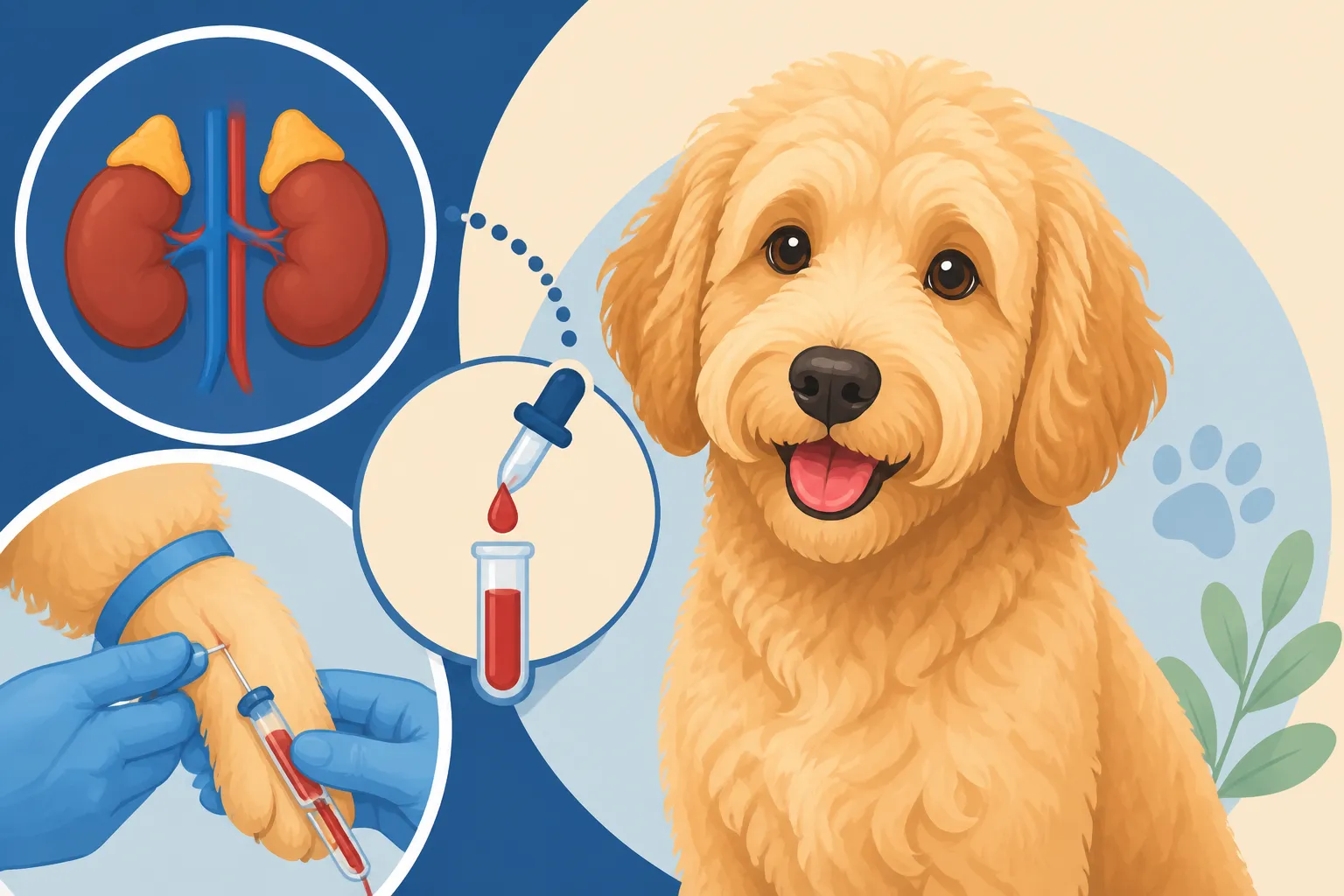
To truly understand the ACTH test, let's break down the science just a little bit, but don't worry, we'll keep it straightforward! In a healthy dog, the pituitary gland in the brain releases ACTH. This hormone then travels to the adrenal glands, telling them to produce and release cortisol, which is a vital stress hormone. When a dog has Addison's disease, their adrenal glands are damaged and can't respond properly to this signal.
The ACTH stimulation test essentially mimics this natural process, but with a controlled "test dose" of ACTH. Here's how it generally works:
- Baseline Blood Sample: First, your vet will draw a small sample of your Goldendoodle's blood. This initial sample measures their baseline cortisol level before any stimulation. Think of it as getting a starting point.
- ACTH Injection: Immediately after the baseline sample, a synthetic version of ACTH is injected into your dog. This synthetic hormone acts just like the natural one, sending a strong signal to the adrenal glands to produce cortisol.
- Second Blood Sample: Approximately one hour after the injection (though timing can vary slightly depending on the specific protocol), a second blood sample is drawn. This sample measures how much cortisol your Goldendoodle's adrenal glands produced in response to the ACTH stimulation.
By comparing the cortisol levels from the first and second samples, your vet can determine if the adrenal glands are functioning correctly. If the adrenal glands are healthy, they will significantly increase cortisol production after the ACTH injection. If they are failing, as in the case of Addison's disease, the cortisol levels will remain low or show no significant increase. Other blood tests might show imbalances in electrolytes (like sodium and potassium), which can also hint at Addison's, but the ACTH test provides the definitive answer by directly measuring the adrenal glands' response.
Preparing Your Goldendoodle for the Test
Getting your Goldendoodle ready for an ACTH test usually isn't too complicated, but there are a few things to keep in mind. Your vet will likely advise that your dog fasts for 8-12 hours before the test, meaning no food, but water is generally fine. This is to ensure that food doesn't interfere with the blood test results.
Medication is another important consideration. If your Goldendoodle is currently on certain medications, particularly steroids like prednisone, your vet might instruct you to temporarily discontinue them before the test, as they can interfere with cortisol measurements. Always follow your vet's specific instructions regarding medications prior to any test. Don't stop any prescribed medications without their explicit guidance.
From an owner's perspective, the test typically involves two trips to the vet or a stay of a couple of hours. The first trip is for the baseline blood draw and injection, and you might take your Goldendoodle home for an hour before returning for the second blood draw, or they might stay at the clinic. It can be a bit nerve-wracking to have your dog undergo any procedure, especially when you're so anxious for answers. Remember to keep your Goldendoodle as calm as possible before and during the test. A relaxed dog can sometimes provide more accurate results, though Addison's itself reduces a dog's ability to handle stress. Many Goldendoodle owners can attest to the stress of these diagnostic periods, hoping for clarity while seeing their dog still feeling unwell.
Interpreting the ACTH Test Results
Once the samples have been analyzed by the lab, your vet will call you to discuss the results. This is often the moment of truth, bringing either immense relief or the difficult news of a diagnosis. Knowing what to expect from the results can help you navigate this conversation.
What a Normal Result Looks Like
If your Goldendoodle has healthy adrenal glands, the ACTH stimulation test will show a significant increase in cortisol levels after the synthetic ACTH injection. In simple terms, the "before" cortisol level will be low, and the "after" level will be much higher, indicating that the adrenal glands responded appropriately to the signal to produce more cortisol. This normal response effectively rules out Addison's disease.
While a normal result might not immediately explain why your Goldendoodle has been feeling unwell, it's a huge step forward because it eliminates a serious and often challenging condition from the list of possibilities. It means your vet can then focus on other potential causes for your Goldendoodle's symptoms, leading you closer to the correct diagnosis and treatment. It’s a relief to cross such a significant illness off the list, even if the mystery continues for a little longer.
Diagnosing Addison's with the ACTH Test
A diagnosis of Addison's disease is made when the ACTH stimulation test reveals that your Goldendoodle's cortisol levels remain very low, or show no significant increase, after the ACTH injection. This indicates that the adrenal glands are either not producing enough cortisol at all, or they are incapable of responding to the pituitary's signal to produce more.
Most cases of Addison's disease in dogs are "primary Addison's," meaning the adrenal glands themselves are damaged and unable to produce hormones. Less commonly, "secondary Addison's" can occur if the pituitary gland isn't producing enough ACTH to stimulate the adrenals, but this is rare in dogs. A confirmed diagnosis of primary Addison's through the ACTH test is crucial because it allows your vet to start the specific and highly effective treatment required to manage the condition. The sooner treatment begins, the faster your Goldendoodle can return to a normal, healthy life. This diagnosis can feel overwhelming at first, but it's the first step toward effective management and vastly improving your dog's quality of life. Understanding that this condition can hide for months on end makes a definitive diagnosis even more critical, as explored in Why Addison's Hides in a Goldendoodle for Months.
The Cost and Insurance Considerations
The cost of an ACTH stimulation test can vary depending on your location, your veterinary clinic, and whether additional bloodwork or an overnight stay is required. Generally, you can expect the test itself, including both blood draws and the synthetic ACTH, to range from $200 to $500. This might not include the initial consultation, follow-up discussions, or any other preliminary blood tests your vet may have run to suspect Addison's in the first place.
When you're dealing with a sick Goldendoodle, the bills can add up quickly. This is where pet insurance can be a real lifesaver. Companies like Healthy Paws offer comprehensive coverage that often includes diagnostic tests like the ACTH stimulation test, as well as ongoing treatment costs if Addison's is diagnosed. Many Goldendoodle owners wisely enroll their puppies early to avoid pre-existing condition exclusions, which means that when unexpected illnesses like Addison's arise, a significant portion of the cost could be covered. It's definitely worth looking into a plan from a reputable provider like Healthy Paws, not just for the initial diagnosis, but for the potential lifelong management that might be required. Making sure your Goldendoodle has comprehensive insurance protection can provide immense peace of mind during these challenging times.
Beyond the Test: Living with an Addisonian Goldendoodle
Receiving an Addison's diagnosis for your Goldendoodle can be frightening, but it's important to remember that it is a very manageable condition with an excellent prognosis once properly treated. The ACTH test provides the clarity needed to move forward.
The Relief of a Diagnosis and Starting Treatment
Many Goldendoodle parents describe a profound sense of relief once an Addison's diagnosis is confirmed. The uncertainty, the endless worrying, and the frustrating cycle of unexplained sickness finally have a name. With a diagnosis in hand, your vet can immediately begin a treatment plan that will drastically improve your Goldendoodle’s health and well-being.
The cornerstone of Addison's treatment involves replacing the hormones your Goldendoodle's body isn't producing. This typically includes:
- Desoxycorticosterone Pivalate (DOCP): Often given as an injection (like Percorten-V or Zycortal) every 25-30 days, this medication replaces the mineralocorticoids (like aldosterone) that regulate electrolytes and blood pressure.
- Prednisone: A corticosteroid that replaces cortisol. This is usually given orally, daily, at a low dose. The dose may be temporarily increased during times of stress (like travel, vet visits, or boarding) to help your Goldendoodle's body cope.
Once on the correct medication, most Goldendoodles with Addison's disease bounce back remarkably, often within days or weeks, transforming from a lethargic, unwell pup into their old, energetic selves. It’s truly incredible to witness. While it might sound daunting, the medication regimen becomes a normal part of your routine. Our article on Lifelong Medication for an Addisonian Goldendoodle provides more details on what to expect.
Long-Term Management and Prognosis
Living with an Addisonian Goldendoodle is a commitment to ongoing care, but it doesn't have to be overwhelming. Regular vet check-ups are essential, especially in the initial months, to monitor your Goldendoodle's response to medication and adjust dosages as needed. This will involve blood tests to check electrolyte levels and ensure they are balanced. Once stabilized, these check-ups might become less frequent, perhaps every 3-6 months.
Managing stress is also key for Addisonian dogs, as their bodies cannot produce extra cortisol to handle stressful situations. Your vet might advise increasing their prednisone dose during anticipated stressful events. The good news is that with consistent treatment and vigilant monitoring, Goldendoodles with Addison's disease can live full, happy lives with a normal lifespan. It's not a death sentence; it's a manageable condition that allows your furry friend to thrive.
The financial aspect of lifelong medication can be a concern for many families. This is another area where pet insurance, such as a plan from Healthy Paws, can provide invaluable assistance. Covering chronic conditions like Addison's, Healthy Paws can help offset the recurring costs of medication and routine monitoring bloodwork, making long-term care more affordable and less of a burden. Early diagnosis, often prompted by seemingly minor issues like Goldendoodle Vomiting and When It Matters or Goldendoodle Diarrhea Lasting More Than Two Days, and consistent treatment are paramount.
Many owners find that the initial scare of an Addisonian crisis, which we discuss further in Addison's Disease and a Goldendoodle That Crashes, gives way to a predictable and manageable routine once treatment is established. Remember that even healthy Goldendoodles benefit from regular vet visits, as covered in Goldendoodle Vaccination and Puppy Health Checks, but for an Addisonian pup, these check-ups become even more critical, especially as they enter their senior years, as explored in Senior Goldendoodle Vet Visits After Nine.
It's a testament to modern veterinary medicine that a condition once considered dire is now something many Goldendoodles live with comfortably, challenging the notion of Whether a Goldendoodle Is Healthier Than a Purebred by showing that even purebred predispositions can be managed effectively. Responsible breeders are also increasingly aware of the importance of Health Testing Both Goldendoodle Parents Should Have to screen for such conditions, aiming to reduce their incidence in future generations.
Here's a quick overview of the ACTH test process:
| Step | Description | Purpose | Expected Outcome (Healthy Dog) | Expected Outcome (Addisonian Dog) |
|---|---|---|---|---|
| 1. Baseline Blood Sample | Vet draws first blood sample. | Measures resting cortisol level. | Low to moderate cortisol levels. | Low or undetectable cortisol levels. |
| 2. ACTH Injection | Synthetic ACTH is administered (intramuscularly or intravenously). | Stimulates adrenal glands to produce cortisol. | Adrenal glands receive stimulation. | Adrenal glands receive stimulation. |
| 3. Second Blood Sample | Vet draws second blood sample ~1 hour post-injection. | Measures cortisol level after stimulation. | Significant increase in cortisol levels. | Cortisol levels remain low or unchanged. |
| 4. Interpretation of Results | Comparison of baseline and stimulated cortisol levels. | Determines if adrenal glands responded appropriately (ruled out Addison's) or failed to respond (diagnosed Addison's). | Addison's Disease ruled out. | Addison's Disease diagnosed. |
Disclaimer
Please remember that this article is intended for informational purposes only and should not be taken as professional veterinary advice. Always consult with a qualified veterinarian for any health concerns or before making any decisions about your Goldendoodle's care. Every dog is an individual, and only your vet can provide an accurate diagnosis and appropriate treatment plan.