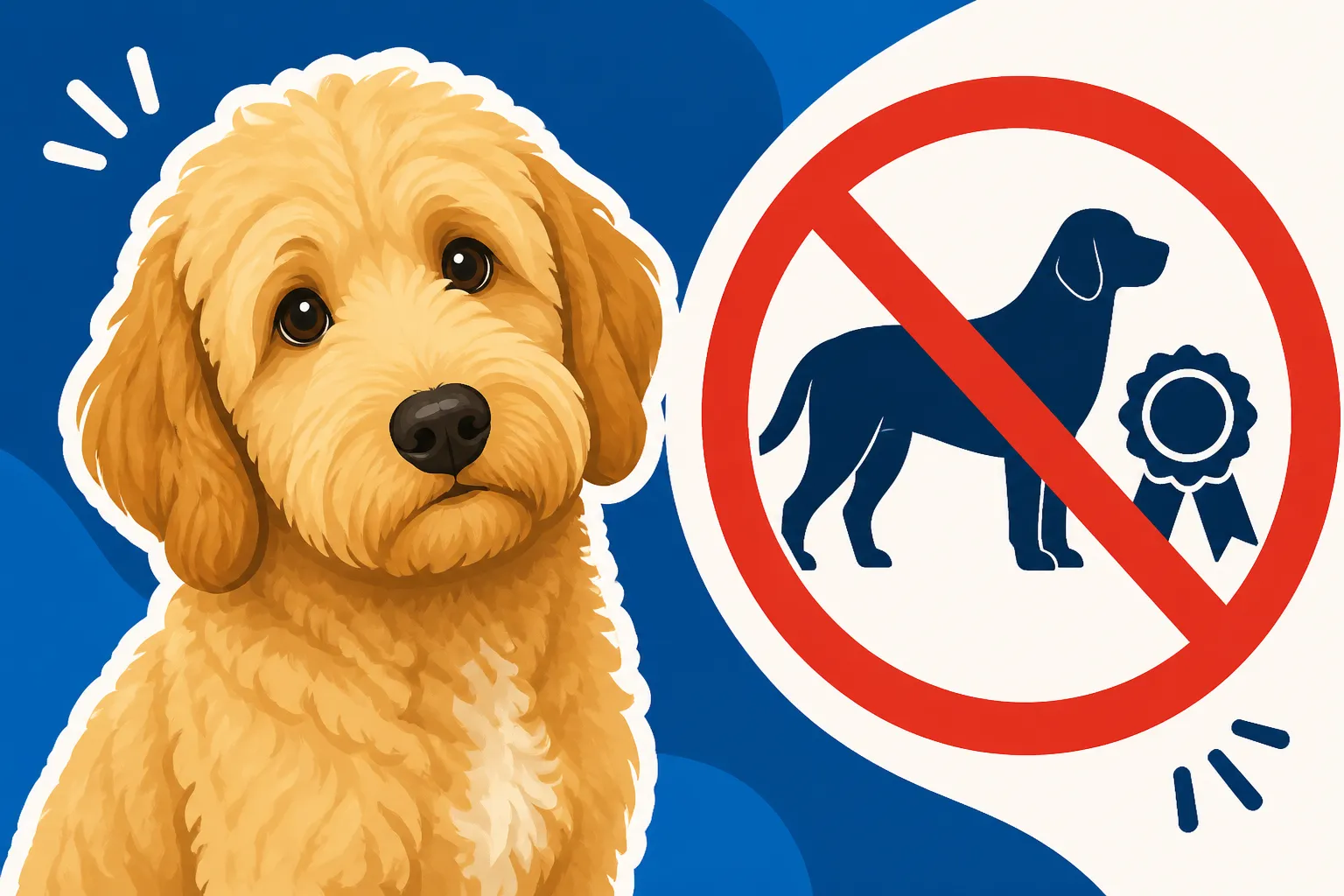
Why a Goldendoodle Cannot Be AKC Registered
It’s a common moment for new Goldendoodle parents: you’ve fallen head over heels for your fluffy, friendly companion, and then you start looking into things like registration. Maybe you've heard friends talk about their purebred Golden Retrievers or Standard Poodles having AKC papers, and naturally, you wonder where your Goldendoodle fits in. The truth is, Goldendoodles cannot be registered with the American Kennel Club (AKC), and that can feel a bit confusing or even disappointing at first. This guide is here to shed light on exactly why that's the case and what it means for you and your beloved Goldendoodle.
The Foundation: What Makes a Dog an AKC "Breed"?
When we talk about the American Kennel Club, we're talking about a very specific and historically rooted definition of what constitutes a "breed." The AKC isn't just a club; it's an institution that upholds traditions of canine lineage, genetics, and predictable characteristics. Understanding their criteria is key to grasping why Goldendoodles, as wonderful as they are, don't fit the mold.
The Purebred Paradigm and Closed Stud Books
The AKC's foundation rests entirely on the concept of purebred dogs. A purebred dog, in their eyes, is one whose ancestors are all of the same breed, without any crossbreeding, going back many generations. Think of it like a family tree where every branch leads back to the same distinct lineage. This is maintained through something called a "closed stud book." Once a breed's stud book is closed, only dogs whose parents are both already registered within that specific breed can be registered themselves. This system ensures genetic purity and consistency within the breed over time, preventing new genetic material from entering.
For example, a Golden Retriever registered with the AKC must have two AKC-registered Golden Retriever parents, who in turn had two AKC-registered Golden Retriever parents, and so on. This isn't just about a piece of paper; it’s about a verifiable, multi-generational history that proves the dog's adherence to a specific genetic standard. This strict adherence is what gives purebred dogs their predictability in terms of appearance, temperament, and even certain health predispositions, allowing breeders and owners to have a clear expectation of what their puppy will become.
Consistency in Traits: Appearance, Health, and Temperament
Beyond the lineage, a core tenet of AKC breed recognition is the predictability of traits. When you buy an AKC-registered German Shepherd, you expect a certain look, size, coat type, and general temperament. You know it will be a high-energy dog, typically intelligent and loyal, with specific physical characteristics. This predictability is codified in a detailed "breed standard," which outlines everything from ear set and tail carriage to preferred coat colors and acceptable bite. Every AKC-recognized breed has one, and breeders strive to produce dogs that conform as closely as possible to this standard.
This consistency extends to health as well, though it's a double-edged sword. While specific purebreds might have known genetic health issues, responsible breeders engage in health testing protocols specific to their breed to minimize these risks. The ability to track and predict these traits is precisely what the AKC system is designed to preserve. The Goldendoodle, as a crossbreed, inherently lacks this level of predictable consistency, especially across different generations and pairings, making it impossible to establish a single, unified breed standard for them that the AKC would accept. This is a fundamental reason why What a Goldendoodle Actually Is and Is Not is such an important distinction.
The Goldendoodle's Journey: Why Crossbreeds Don't Qualify
Now that we've explored the AKC's stringent criteria, it becomes clearer why the Goldendoodle, despite its widespread popularity and wonderful qualities, cannot be registered. The very nature of its creation, by design, places it outside the AKC's definition of a "breed."
The Genetic Blend: Unpredictability Across Generations
A Goldendoodle is, by definition, a hybrid, a first-generation cross (F1) between a purebred Golden Retriever and a purebred Poodle, or subsequent generations where Goldendoodles are bred back to Poodles (F1b) or to other Goldendoodles (F2, F3, Multigen). This genetic blending, while creating many desirable traits, also introduces a degree of unpredictability that the AKC's closed stud book system cannot accommodate. Even within the same litter, Goldendoodle puppies can exhibit a wide range of characteristics. One puppy might lean heavily towards its Golden Retriever parent in terms of coat, size, and personality, while a littermate might be more Poodle-like.
This variability is especially pronounced in early generations. For instance, an F1 Goldendoodle gets exactly 50% of its genes from each parent. But which 50%? It's a genetic lottery, which means some F1s will shed more, some less, some will be curlier, others wavier. This phenomenon is Why an F1 Goldendoodle Is the Least Predictable Healthwise and other traits are often discussed. As breeders move into F1b or Multigen Goldendoodles, they try to increase predictability, often favoring Poodle traits for lower shedding, but even then, the lineage isn't "pure" in the AKC sense. This genetic diversity is a hallmark of the Goldendoodle and inherently contradicts the AKC's requirement for multi-generational genetic stability.
Absence of a Unified Breed Standard
Because of this inherent genetic variability, there is no single, universally accepted Goldendoodle breed standard. Think about it: how could you write a standard that accurately describes a dog that could be 50 pounds or 90 pounds, have a flat coat or a curly coat, or come in a dozen different colors? The traits that are consistent in, say, an AKC-registered Beagle, simply aren't consistent in Goldendoodles. While many Goldendoodle breeders and enthusiasts have informal ideas about what makes an "ideal" Goldendoodle, these are not the rigorous, documented, and universally agreed-upon standards required for AKC recognition.
Organizations like the Goldendoodle Association of North America (GANA) have developed their own "standards" for Goldendoodle generations, coat types, and sizes, and they promote responsible breeding practices. However, these are not "breed standards" in the same way the AKC defines them. GANA aims to guide breeders towards more predictable and desirable outcomes within the crossbreed, rather than enforcing a singular, strict definition of a new purebred. The very nature of the Goldendoodle being a blend means there's a beautiful spectrum of possibilities, which is part of their charm, but also why they remain a crossbreed in the eyes of traditional registries. This distinction highlights What Crossbreed Means for a Goldendoodle on Paper.
Navigating Ownership Without AKC Papers
For many Goldendoodle owners, the lack of AKC registration is a non-issue. They love their dogs for their personalities, intelligence, and companionship. However, it's helpful to understand what AKC registration offers purebred owners and what alternatives exist for Goldendoodle enthusiasts.
What AKC Registration Entitles a Purebred Owner To
For owners of AKC-registered purebreds, the papers symbolize more than just lineage. AKC registration allows a dog to compete in a vast array of AKC-sanctioned events, including conformation shows (where dogs are judged on how well they conform to the breed standard), obedience trials, agility competitions, dock diving, tracking, and more. It also provides access to resources, education, and community specific to that breed through breed clubs affiliated with the AKC. For breeders, AKC registration is crucial for proving lineage, marketing puppies, and maintaining the genetic health and integrity of their lines. Without it, a dog's purebred status is essentially unverified by the most recognized authority in the United States.
While your Goldendoodle won't be sashaying around a conformation ring at an AKC show, this doesn't diminish their inherent value or your ability to enjoy a full, active life with them. It simply means that your dog’s pedigree isn't recognized by that specific organization. This might be a surprise for some, but most Goldendoodle owners quickly realize that the real value of their dog isn't found on a piece of paper.
Exploring Alternative Registries and Organizations
Just because the AKC doesn't recognize Goldendoodles doesn't mean there are no organizations that support them. Many Goldendoodle breeders and owners turn to alternative registries that cater specifically to designer breeds and crossbreeds. The most prominent of these is the Goldendoodle Association of North America (GANA). GANA works to establish standards for health testing, ethical breeding practices, and documentation for Goldendoodles. They maintain a registry for Goldendoodles, offering pedigrees that track the lineage of parent dogs, often including health clearances.
While GANA registration doesn't carry the same historical weight or widespread recognition as AKC, it offers a framework for responsible breeding and provides a sense of community for Goldendoodle enthusiasts. Breeders who register their litters with GANA are often committed to specific health testing protocols for their breeding dogs, which is crucial for reducing the incidence of inherited diseases like Goldendoodle Hip Dysplasia at 15 to 20 Percent or Progressive Retinal Atrophy Carried by Both Goldendoodle Lines. Understanding What GANA Does for Goldendoodle Buyers can provide valuable insights for those seeking a well-bred puppy. These organizations focus on promoting the positive attributes of the Goldendoodle and ensuring their welfare, even without the traditional purebred designation.
Focus on Health, Training, and Responsible Ownership
Ultimately, a dog's health, temperament, and training are far more important than any registration paper. Responsible Goldendoodle ownership involves focusing on preventative care, consistent training, and providing a loving environment. This means finding a veterinarian you trust, ensuring your Goldendoodle receives regular check-ups and vaccinations, and investing in good nutrition. High-quality dog food from brands like Ollie, for instance, can support their overall well-being. Keeping up with grooming, especially with their unique coats, is also paramount to their comfort and health.
Furthermore, training is vital. Goldendoodles are intelligent and eager to please, inheriting a wonderful biddability from both the Golden Retriever and Poodle sides. Focusing on positive reinforcement training helps build a strong bond and ensures your dog is a well-behaved member of the family. Whether it's basic obedience, crate training, or tackling more specific behaviors like Goldendoodle Jumping and the Impulse Control Problem, consistent effort makes all the difference. Many Goldendoodle owners also find that investing in pet insurance from providers like Healthy Paws can offer peace of mind, helping to cover unexpected vet bills for common Goldendoodle ailments like ear infections or allergies. Your Goldendoodle's happiness and health stem from your care, not a registry.
The True Value of Your Goldendoodle: Beyond the Pedigree
So, while your Goldendoodle won't have AKC papers, this really doesn't detract from what makes them such incredible companions. Their popularity isn't built on conformation ribbons, but on their genuinely wonderful qualities that shine through every day.
Goldendoodle Temperament: A Winning Combination
One of the primary reasons Goldendoodles have captured so many hearts is their truly winning temperament. They inherit a beautiful blend of traits from their parent breeds: the Golden Retriever's famous friendliness, loyalty, and gentle nature, combined with the Poodle's intelligence, trainability, and often playful spirit. This combination typically results in a dog that is eager to please, highly social, and wonderful with families, including children and other pets. They often have a desire to be involved in whatever their family is doing, earning them the affectionate nickname "Velcro dogs." This lovely nature makes Goldendoodle Temperament From Two Parent Breeds a fascinating topic to explore.
They are known for being highly adaptable, fitting into various living situations as long as their exercise and mental stimulation needs are met. This incredible blend of traits makes them excellent candidates for therapy work, assistance roles, and simply being cherished family members. The lack of AKC recognition doesn't change the fact that they often excel in these very meaningful roles because of their inherent disposition.
Competing and Engaging in Non-AKC Activities
Just because Goldendoodles can't participate in AKC conformation shows doesn't mean they can't be stars in other arenas! Many organizations offer a wide range of competitive and recreational activities open to all dogs, regardless of breed or pedigree. Agility courses, obedience trials, rally obedience, flyball, scent work, and even trick dog titles are fantastic ways for Goldendoodles to show off their intelligence and athleticism. Their eager-to-please nature and quick learning ability make them naturals for these types of challenges. You can easily find local clubs or independent organizations that welcome all breeds and mixes.
For instance, purchasing robust, engaging toys and training equipment from a retailer like Chewy can help prepare your Goldendoodle for these activities, ensuring they're mentally and physically stimulated. Participating in these events isn't just about winning; it's about bonding with your dog, providing them with mental and physical enrichment, and celebrating their unique talents. Goldendoodles truly thrive when given a job to do, and these activities offer incredible outlets for their energy and intelligence. Understanding Goldendoodle Exercise for Body and Mind highlights the importance of keeping them engaged.
Celebrating the Individual Dog You Love
At the end of the day, the love and companionship you share with your Goldendoodle far outweigh any concerns about registration papers. What truly matters is the wagging tail that greets you at the door, the soft nuzzle against your hand, and the endless joy they bring into your home. Goldendoodles are celebrated for their unique personalities, their affectionate nature, and their ability to become deeply cherished members of the family.
While it's important to be an informed owner about their lineage and potential health considerations, don't let the absence of AKC papers diminish the wonderful dog you have. Instead, celebrate the crossbreed that has brought so much happiness to so many households. Focus on their health, their training, and providing them with a life full of love and adventure. That's the real reward of Goldendoodle ownership.
| Feature / Aspect | AKC-Registered Purebred Dog | Goldendoodle (Crossbreed) |
|---|---|---|
| Genetic Lineage | Documented, multi-generational single-breed ancestry. | Blend of Golden Retriever and Poodle genes. |
| Breed Standard | Strict, defined breed standard for appearance, temperament, health. | No unified, recognized breed standard. |
| Predictability | High predictability in traits across generations. | Variability in coat, size, and temperament, especially in early generations. |
| Registration | AKC Registration available, confirming purebred status. | Not eligible for AKC registration. |
| Conformation Shows | Can compete in AKC conformation shows. | Cannot compete in AKC conformation shows. |
| Other Dog Sports | Can compete in AKC obedience, agility, rally, etc. | Can compete in independent or non-AKC sanctioned obedience, agility, rally, etc. |
| Common Registries | AKC, UKC (for some breeds) | GANA, CKC (Canadian Kennel Club, for some crosses), various designer dog registries. |
| Breeder Focus | Adherence to breed standard, genetic health, purebred lineage. | Ethical breeding practices, health testing, desirable hybrid traits. |
Disclaimer
This article is for general informational purposes only and does not constitute professional advice. Laws, prices and regulations vary by location and change over time. Consult a qualified professional for guidance on your specific situation.