Parti, Phantom and Merle Goldendoodles
It's easy to fall in love with a Goldendoodle's charming personality and fluffy coat, but sometimes, a potential puppy's unique markings can throw you for a loop. Beyond the familiar creams, apricots, and chocolates, there's a world of fascinating patterns like parti, phantom, and merle, each with its own look and, in some cases, critical genetic implications. This guide will demystify these distinctive coat patterns, helping you understand their origins, appearance, and what you need to know as a prospective Goldendoodle owner.
Beyond Solid Colors: An Introduction to Goldendoodle Patterns
When you picture a Goldendoodle, chances are a solid-colored dog in shades of cream, apricot, or red comes to mind. These are indeed the most common expressions of their beautiful coats, often inherited from both the Golden Retriever and Poodle sides. However, the Poodle parent breed carries a rich genetic tapestry of patterns, and when these genes are passed down to a Goldendoodle, they can create some truly show-stopping and unique appearances. Understanding these patterns goes beyond aesthetics; it delves into the fascinating world of canine genetics.
The Allure of Unique Goldendoodle Coats
There's something undeniably captivating about a Goldendoodle that stands out from the crowd with a distinct pattern. A dog with perfectly placed white patches, elegant tan points, or mottled blue splotches can turn heads at the dog park and become an instant conversation starter. For many, these unique coats add an extra layer of charm and individuality, making their Goldendoodle feel even more special. It's not just about rarity; it's about the beauty in genetic diversity that the Poodle lineage brings to the Goldendoodle cross.
The desire for these specific patterns often leads prospective owners to seek out breeders specializing in them. However, it's crucial to remember that while a striking coat is lovely, it should never overshadow health, temperament, and responsible breeding practices. A patterned coat is simply one aspect of the dog, and its true value lies in its overall well-being and suitability as a companion.
Genetic Basics: How Patterns Emerge
Canine coat genetics are surprisingly complex, with different genes controlling base color, color intensity, and various patterns. For Goldendoodles, the Golden Retriever typically contributes genes for solid yellow/gold/red coats, while the Poodle offers a much broader palette, including genes for solid colors, various shades, and crucial pattern genes. These pattern genes act independently of the base color genes, essentially layering over the dog's primary color to create the final look.
For example, a dog might genetically be a "black" dog, but a pattern gene could cause white patches to appear, or tan points to emerge on specific areas of its body. When both parent breeds contribute their genetic material, the possibilities for coat expression in a Goldendoodle become incredibly diverse. This is why you see such a wide range of colors and patterns even within the same litter sometimes, especially in earlier generations like F1 or F2 Goldendoodles where genetic contributions are less predictable. Why an F2 Goldendoodle Litter Varies So Much is a great example of this genetic lottery playing out.
The Classic Canvas: Parti Goldendoodles
The parti pattern is perhaps one of the most cheerful and eye-catching variations you'll find in Goldendoodles. It immediately brings to mind a playful, whimsical look, and it's a pattern that comes straight from the elegant Poodle.
What Defines a Parti Goldendoodle?
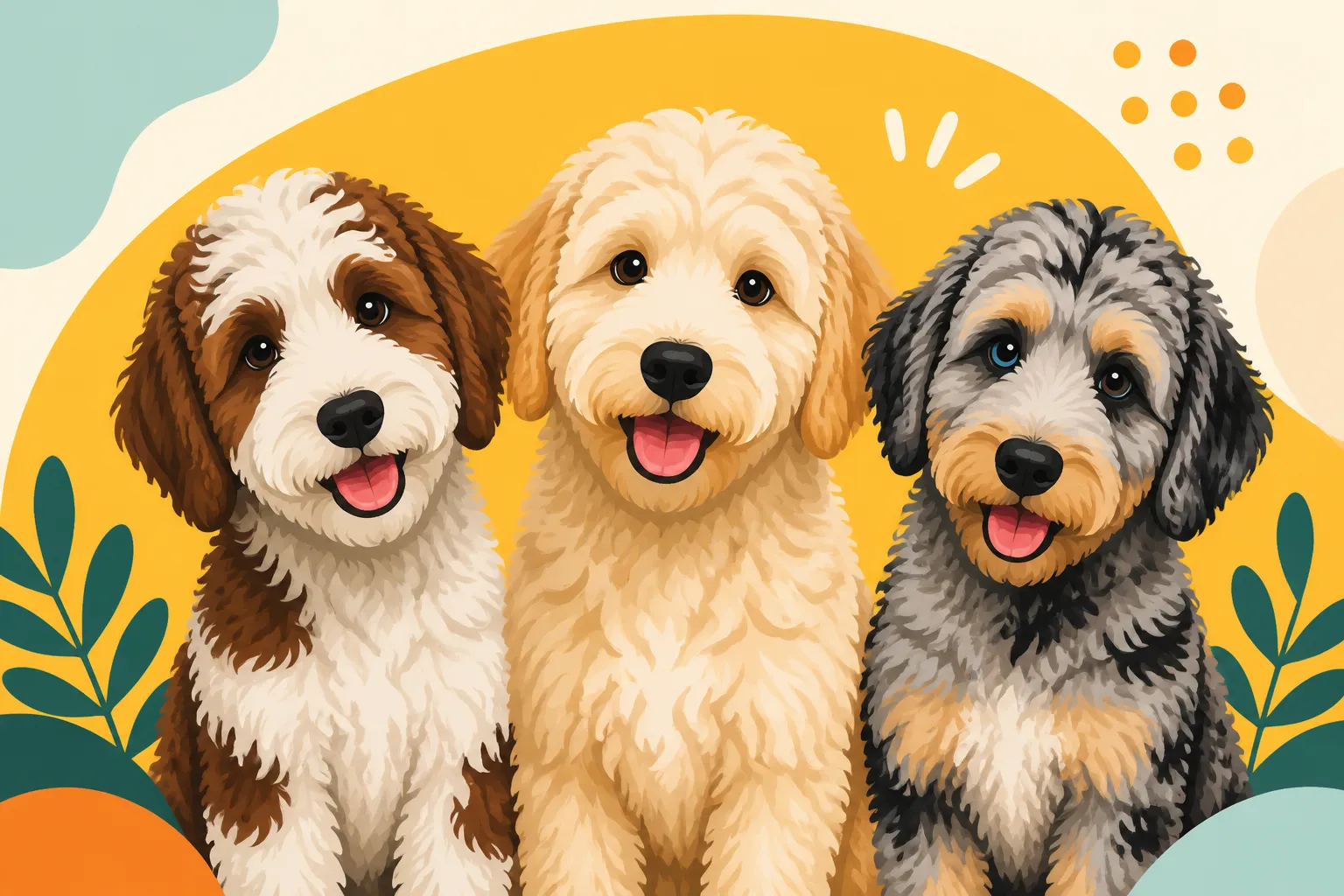
A parti Goldendoodle is characterized by a coat that is primarily white (at least 50% white), combined with patches of another solid color. Think of it like a paint-splattered canvas, but in a beautifully intentional way. The white serves as the base, and then distinct, solid-colored markings appear on top. These patches can be apricot, black, chocolate, red, or even silver, offering a wide array of visual combinations. The white areas are typically crisp and clean, creating a striking contrast with the colored patches.
The term "parti" itself comes from the word "partition," signifying the division of colors on the coat. It's not about fading or blending; it's about clear, separate blocks of color. These markings can appear anywhere on the body, though they often concentrate around the head, ears, back, and base of the tail. A truly beautiful parti will have a balanced distribution of color and white, making for a symmetrical and pleasing aesthetic.
Popular Parti Color Combinations
While the possibilities are nearly endless, some parti color combinations are more commonly seen and highly sought after.
- Black and White Parti: This classic combination offers a bold contrast, reminiscent of a Friesian cow or a sophisticated tuxedo. The deep black patches against the brilliant white create a striking visual impact.
- Apricot and White Parti: Soft and warm, this combination is incredibly popular. The creamy white blends beautifully with the sunny apricot patches, giving the dog a gentle, inviting appearance.
- Chocolate and White Parti: A rich, decadent look, chocolate and white parti Goldendoodles often have dark noses and eyes to match their deep brown patches. This is a favorite for those who love the luxurious feel of a chocolate coat but desire the unique flair of a pattern.
- Red and White Parti: Vibrant red patches against white make for a truly show-stopping Goldendoodle, often with a playful, energetic vibe.
The beauty of parti is that no two dogs are exactly alike, even from the same litter. The size, shape, and placement of the colored patches are unique to each individual, making every parti Goldendoodle a one-of-a-kind work of art.
Sourcing a Parti Goldendoodle
If you're set on bringing a parti Goldendoodle into your home, you'll find that many reputable breeders specializing in Goldendoodles will occasionally have parti litters. The parti gene is naturally present and well-established in the Poodle breed, so it's a genuine Poodle trait that translates directly into Goldendoodles. This means that a parti Goldendoodle is not the result of unusual or unethical breeding practices, unlike some other patterns we'll discuss.
When looking for a parti Goldendoodle, focus on the same criteria you would for any Goldendoodle puppy: health testing of the parents, clear communication from the breeder, and a comprehensive health guarantee. Don't be swayed by a breeder charging exorbitant prices solely for the parti pattern; while unique, it's a recognized and naturally occurring genetic trait. You'll want to review Goldendoodle Puppy Prices From $2,000 to $5,000 to get a realistic idea of general pricing before diving into specific pattern premiums. Always ask to see the parent dogs, their health clearances, and ensure the breeder can explain the genetics behind their parti puppies.
The Sophisticated Streak: Phantom Goldendoodles
For those who appreciate elegance and a touch of dramatic flair, the phantom pattern offers a refined aesthetic that truly sets a Goldendoodle apart. It's a pattern that looks almost painted on, creating a sophisticated and striking appearance.
Recognizing the Phantom Pattern
A phantom Goldendoodle is defined by specific markings of a secondary color appearing on a solid base coat. Think of it like the classic markings you'd see on a Doberman Pinscher or a Rottweiler, but softer and often in more muted tones. The primary color can be black, chocolate, red, apricot, silver, or blue, and the phantom markings will typically be cream, tan, or sometimes a lighter shade of the base color. These markings are always found in very distinct locations:
- Above each eye (like eyebrows)
- On the sides of the muzzle and cheeks
- Across the chest, often in two triangles
- On all four legs, usually up the inner leg to the knee, and sometimes on the paws
- Under the tail
These symmetrical markings create a dog that looks almost like it's wearing a mask and boots, giving it a very distinctive and often regal look. Unlike parti, where white is a primary color, phantom markings are points of color on an otherwise solid dog.
The Genetic Code Behind Phantom
The phantom pattern is controlled by the agouti gene series (A locus), specifically the allele 'at' which stands for tan points. For a Goldendoodle to express the phantom pattern, they must inherit this 'at' allele from at least one parent, and usually carry two copies (at/at) or one copy combined with another specific allele. The Poodle breed carries this 'at' allele, meaning phantom Goldendoodles derive this beautiful trait directly from their Poodle heritage. Golden Retrievers typically carry different alleles at this locus, so the phantom pattern is almost exclusively thanks to the Poodle side.
It's a recessive gene, meaning that both parents must either carry the gene or express the pattern for it to show up in the puppies. A breeder interested in producing phantom Goldendoodles would carefully select Poodle parents known to carry or express this gene, then breed them to a Golden Retriever or another Goldendoodle. Genetic testing, such as the kind you'd find from Which Embark Results Matter on a Goldendoodle Parent, can confirm the presence of the 'at' allele, allowing breeders to predict outcomes more accurately.
Varieties of Phantom Markings
Just like with parti, phantom patterns come in a variety of breathtaking combinations, all dependent on the base coat color and the shade of the tan points.
- Black Phantom: This is perhaps the most classic phantom look, with crisp tan or cream markings against a sleek black coat. The contrast is sharp and elegant, giving the dog a very striking appearance.
- Chocolate Phantom: Rich chocolate base with lighter tan or cream points. This offers a softer contrast than black phantom but is equally stunning, often with beautiful amber eyes.
- Blue Phantom: A diluted black, resulting in a charcoal or slate-grey base with lighter grey or cream points. This combination is rarer and very sophisticated.
- Silver Phantom: Similar to blue, but typically a lighter, more shimmering silver base with cream or very light silver points.
- Red/Apricot Phantom: A deeper red or apricot base with lighter cream or gold markings. This can sometimes be subtle, especially if the base and point colors are close in shade, but it still provides that elegant, defined look.
The depth of color and contrast can vary greatly, even within the same litter. Some phantom Goldendoodles will have very bold, clear markings, while others might have more muted, blended points. Regardless, the distinct placement of these markings is what unequivocally identifies them as phantom.
The Controversial Canvas: Merle Goldendoodles
The merle pattern is undeniably captivating, characterized by stunning swirls of diluted color and often striking blue eyes. However, unlike parti and phantom, the merle pattern comes with significant health considerations that every prospective Goldendoodle owner must understand.
Understanding the Merle Pattern's Appearance
Merle creates a patchwork or mottled effect on a dog's coat, diluting random sections of the base color. This results in irregular patches of lighter, diluted color interspersed with areas of the full, undiluted base color. For example, a "blue merle" Goldendoodle will have patches of black mixed with lighter grey or blue, while a "red merle" will have red patches mixed with lighter cream or tan. The pattern can also affect the eyes, often leading to one or both eyes being partially or fully blue, or even "marbled" with different colors. The nose and paw pads can also show pink patches where pigment has been diluted.
The appeal of merle is undeniable; it's a truly unique and visually dramatic pattern. However, its beauty masks a genetic complexity that requires utmost caution in breeding.
The Merle Gene: Benefits and Significant Risks
The merle gene (scientifically known as the M locus) is a dominant gene that dilutes eumelanin (black pigment). If a dog carries just one copy of the merle gene (Mm), it will express the merle pattern. The problem arises when a dog inherits two copies of the merle gene (MM), known as "double merle" or "homozygous merle." This is where the significant health risks lie.
Double merle dogs are at a drastically increased risk of severe health issues, particularly affecting their vision and hearing. Common problems include:
- Deafness: Often complete deafness, either unilaterally (one ear) or bilaterally (both ears). The merle gene interferes with the development of pigment cells in the inner ear, which are crucial for normal hearing.
- Ocular Defects: A wide range of eye abnormalities, from microphthalmia (abnormally small eyes), colobomas (missing pieces of eye tissue), detached retinas, to blindness. Like hearing, pigment cells are vital for proper eye development and function.
- Reproductive Issues: Some studies suggest a potential link to sterility, though this is less commonly reported than hearing and vision problems.
- Skin Abnormalities: Double merles can also have areas of unpigmented skin, making them more susceptible to sunburn and skin cancers.
It is absolutely imperative that two merle dogs are never bred together, as this significantly increases the chances of producing double merle puppies with these devastating health defects. This risk is why Merle Goldendoodles and the Health Warning is such a crucial topic for any prospective owner.
Responsible Breeding and Buying for Merle Patterns
Given the serious health risks associated with double merle, responsible breeding of merle Goldendoodles requires extensive genetic testing and a deep understanding of canine genetics. Neither Golden Retrievers nor Standard Poodles naturally carry the merle gene. If a Goldendoodle is merle, that gene has been introduced from another breed (such as an Australian Shepherd or Shetland Sheepdog) or through an unregistered Poodle lineage that was outcrossed at some point. This means the merle gene is not a natural Goldendoodle trait derived from its foundation breeds.
A responsible breeder offering merle Goldendoodles will:
- DNA Test all breeding dogs for the merle gene (M locus) to ensure no two merle carriers are bred together. They should only breed a merle dog (Mm) with a non-merle dog (mm).
- Be transparent about the origin of the merle gene in their lines, explaining which parent breed (or previous outcross) introduced it.
- Provide a comprehensive health guarantee that specifically addresses potential merle-related health issues.
- Prioritize health over aesthetic appeal. A reputable breeder will never intentionally breed for double merle dogs, and will not produce "cryptic merles" (dogs that visually appear non-merle but genetically carry the gene) without proper testing.
As a buyer, if you are considering a merle Goldendoodle, you must be extra vigilant. Ask for proof of DNA testing for merle on both parents. If a breeder cannot provide this, or if they downplay the risks, walk away. The potential for heartache and extensive veterinary bills for a double merle puppy is not worth the risk. The DNA Panel a Goldendoodle Breeder Should Run should definitely include merle gene testing if they are producing merle puppies.
A Side-by-Side Look: Comparing Goldendoodle Patterns
To help you visualize and understand the distinctions between these unique Goldendoodle coat patterns, let's break down their key characteristics in a comparative table. This will highlight the different aesthetic qualities and underscore the genetic origins and associated health considerations.
Visual Distinctions: Parti vs. Phantom vs. Merle
While all three patterns deviate from the common solid Goldendoodle coat, their visual presentation is distinctly different.
| Feature | Parti Goldendoodle | Phantom Goldendoodle | Merle Goldendoodle |
|---|---|---|---|
| Primary Appearance | Predominantly white (at least 50%) with solid patches of color. | Solid base color with specific, symmetrical tan/cream points. | Diluted, mottled patches of color on a base coat, often with streaks of the full color. |
| Color Distribution | Irregular, distinct patches of color on a white background. | Tan points above eyes, on muzzle, chest, legs, and under tail. | Random, irregular patches of diluted and full pigment. |
| Eye Color Impact | Typically unaffected by the pattern; usually brown. | Typically unaffected by the pattern; usually brown. | Often results in blue eyes, marbled eyes, or heterochromia. |
| Paws/Nose Pigment | Can have pink areas on paws/nose if on a white patch. | Fully pigmented. | Can have pink or mottled pigment on paws/nose. |
| Best Analogy | "Paint-splattered canvas" or "cow-like" | "Doberman markings" or "tuxedo with tan trim" | "Marble effect" or "tie-dye" |
Understanding these visual cues can help you identify a puppy's pattern at a glance, although always confirm with the breeder. It also helps in appreciating the specific artistry each genetic pattern brings to the Goldendoodle coat.
Genetic Background and Health Considerations Summary
Beyond appearance, the genetics behind each pattern carry different implications, especially concerning health.
| Feature | Parti Goldendoodle | Phantom Goldendoodle | Merle Goldendoodle |
|---|---|---|---|
| Genetic Locus | S (Spotting) locus | A (Agouti) locus (at allele) | M (Merle) locus |
| Origin in Lineage | Naturally occurring in Poodles. Inherited from Poodle parent. | Naturally occurring in Poodles. Inherited from Poodle parent. | Not naturally occurring in Golden Retrievers or Standard Poodles; introduced from other breeds/outcrosses. |
| Health Risks | Generally no specific health risks associated with the parti gene itself. | Generally no specific health risks associated with the phantom gene itself. | Significant risk of deafness and ocular defects, especially in double merles (MM). Ethical breeding is paramount. |
| Breeding Caution | Standard responsible breeding practices apply. | Standard responsible breeding practices apply. | NEVER breed two merle dogs together. Requires careful DNA testing and pairing with non-merle dogs. |
This summary table clearly illustrates that while parti and phantom are beautiful, genetically benign traits inherited from the Poodle, merle carries a heavy responsibility for breeders and a need for extreme caution from buyers. The beauty of the merle coat comes with a serious obligation to ensure ethical breeding practices are followed to prevent unnecessary suffering in puppies. What a Goldendoodle Breeder Spends on Testing for genetics often includes a merle panel if they produce these dogs.
Practicalities for Goldendoodle Owners with Patterned Pups
Bringing home any Goldendoodle is an exciting journey, and one with a unique coat pattern is no different. While their looks might be distinctive, many of the core care principles remain the same. However, a few considerations might arise, particularly concerning health and ensuring you're working with a responsible breeder.
Care and Grooming for Patterned Coats
The good news is that the presence of a parti, phantom, or merle pattern generally has no bearing on the texture or maintenance requirements of your Goldendoodle's coat. Whether your Goldendoodle is solid apricot or a striking black and white parti, their grooming needs will primarily be determined by their coat type (straight, wavy, or curly) and length, not the pattern itself. All Goldendoodles with their iconic "furnished" coats (that lovely beard and eyebrows) will require consistent grooming to prevent matting.
You'll still be looking at regular brushing – often several times a week, especially as their adult coat comes in around 8-12 months. This is when the puppy coat sheds out and the more dense, adult coat grows in, making them particularly prone to matting. A solid routine of Brushing a Goldendoodle Often Enough to Stop Matting will be crucial. Professional grooming appointments every 6-8 weeks will also be essential to keep their coat healthy and manageable. The pattern won't make the coat shed more or mat less; it's all about the texture. You might notice some staining on white areas around the mouth if your parti or merle Goldendoodle has a very wet beard, but this is a common issue for many Goldendoodles and easily managed with regular cleaning and specific water bowls you can find at pet supply stores like Chewy.
Beyond the Pattern: Temperament and Training
It's a common misconception that a dog's coat color or pattern might influence its personality. Rest assured, whether your Goldendoodle is merle, parti, or phantom, their temperament is derived from their Golden Retriever and Poodle ancestry, not their markings. You can still expect that wonderfully friendly, intelligent, and eager-to-please nature that Goldendoodles are famous for. Goldendoodle Temperament From Two Parent Breeds delves deeper into the traits you can expect.
Like all Goldendoodles, patterned pups thrive on positive reinforcement training, early socialization, and plenty of mental and physical exercise. They are intelligent dogs that respond well to consistent, kind training methods. Don't fall into the trap of thinking a unique coat means a unique personality or a more challenging dog; a Goldendoodle's core traits are ingrained in its genetic makeup from its parent breeds. Focus on training, socialization, and providing a loving environment, and your patterned pup will blossom into a wonderful companion.
The Importance of Breeder Transparency and Health Testing
This is arguably the most critical takeaway when considering a patterned Goldendoodle, especially if you're looking at merle. A beautiful coat is never worth compromising a dog's health or supporting unethical breeding practices.
- For Parti and Phantom: These are natural Poodle traits. A reputable breeder will be able to show you the lineage, discuss the genetics, and, most importantly, provide evidence of comprehensive health testing for the parent dogs. This includes OFA clearances for hips and elbows, eye certifications (CERF), and genetic panels for common diseases like Progressive Retinal Atrophy (PRA) and Von Willebrand Disease. A good breeder will freely offer What Health Papers a Goldendoodle Breeder Should Show.
- For Merle: As discussed, merle is not indigenous to the Golden Retriever or Standard Poodle. If a breeder is producing merle Goldendoodles, they should be fully transparent about how the merle gene entered their lines. This means explaining the outcross (e.g., to an Australian Shepherd) or the specific Poodle lines that carried the merle gene. Crucially, they must provide DNA test results for both parent dogs confirming the merle status, ensuring they are never breeding two merles together. Any breeder selling "double merle" puppies or denying the risks is unethical and should be avoided at all costs.
Always remember, the responsibility of ensuring a puppy's health and well-being falls heavily on the breeder. As a buyer, your job is to ask tough questions, review all documentation, and prioritize ethical practices over aesthetic appeal. You can find many supplies, from grooming tools to high-quality food, at places like Chewy, which will support your puppy's health, but choosing the right breeder is the first and most vital step.
Disclaimer
This article is for general informational purposes only and does not constitute professional advice. Laws, prices and regulations vary by location and change over time. Consult a qualified professional for guidance on your specific situation.