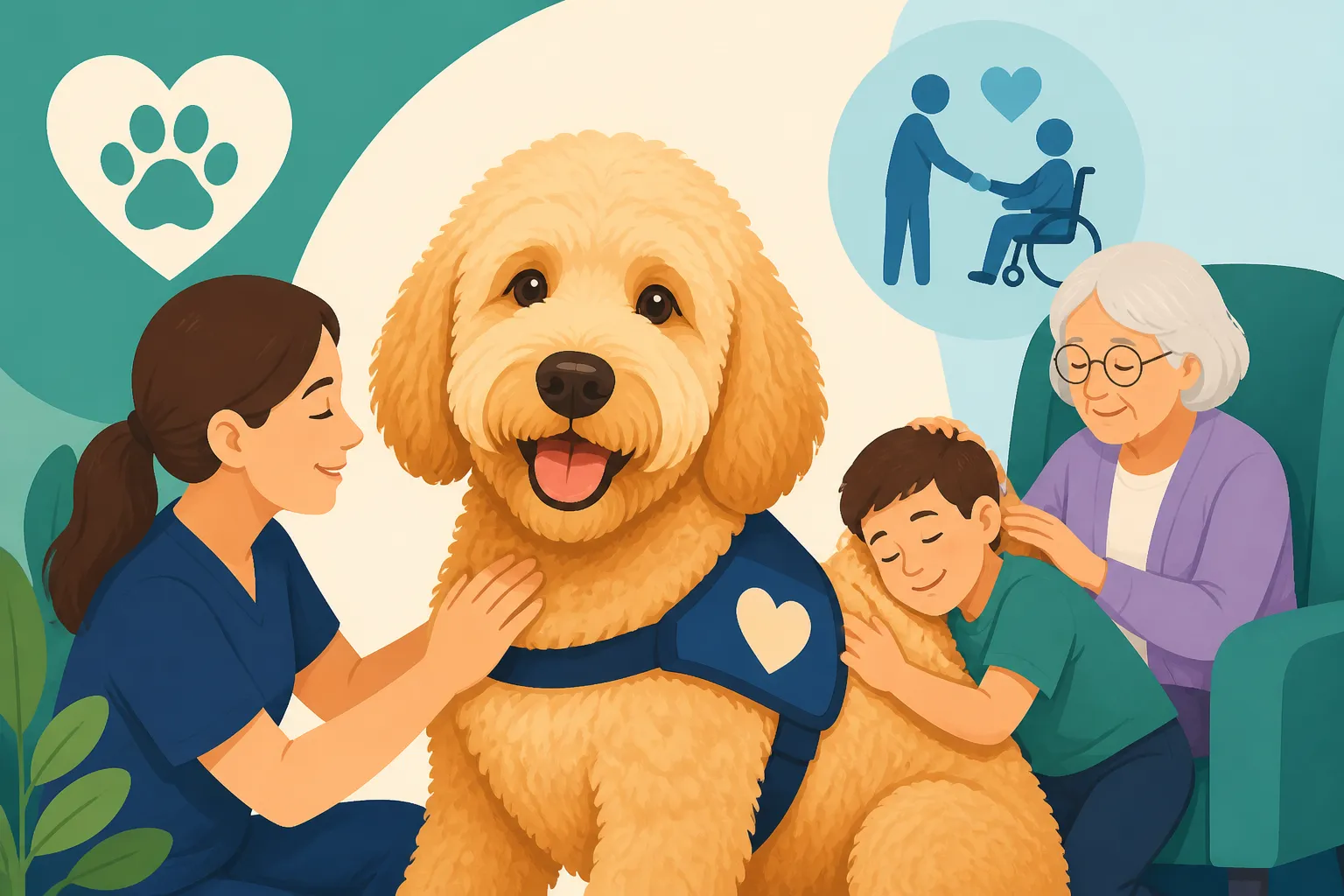
Goldendoodles as Therapy and Facility Dogs
It's wonderful to think about our sweet, goofy Goldendoodles bringing comfort and joy to others. Many Goldendoodle owners, myself included, have looked at our dogs and thought, "They'd make such a great therapy dog!" And it's true, their inherent friendliness and charming appearance often make them fantastic candidates. However, the path to becoming a certified therapy or facility dog is much more involved than just having a friendly pup. This guide will walk you through what it really takes, distinguishing between these important roles and how your Goldendoodle might just shine in them.
Defining the Roles: Therapy Dog vs. Facility Dog
Before we dive into how Goldendoodles fit in, let's clear up the common confusion between therapy dogs and facility dogs. While both provide immense emotional support and bring smiles, their roles, training, and the environment they work in are distinctly different. Understanding these differences is the first step in deciding which path, if any, might be right for your furry companion.
Therapy Dogs: Bringing Comfort to Many
A therapy dog, in its most common definition, is a dog that works with its owner or handler to provide comfort and affection to people in various settings. Think of visits to hospitals, nursing homes, schools, or even disaster zones. The key here is that the dog is primarily partnered with its owner, who volunteers their time. The dog's presence is often requested for its calming influence, to reduce stress, or simply to bring a moment of joy to someone who needs it.
The Goldendoodle's temperament often makes them natural fits for this role. Their joyful greetings, soft fur, and gentle demeanor can quickly put people at ease. However, they must be exceptionally well-behaved, predictable, and able to handle novel environments, strange noises, and unexpected interactions with grace. A therapy dog needs to love people, but not overwhelm them. They must also be impervious to dropped food, loud alarms, and sudden movements, always remaining calm and focused on their job.
Facility Dogs: Working Alongside Professionals
Facility dogs, on the other hand, are highly trained dogs that work with a professional, such as a therapist, social worker, teacher, or police officer, in a specific facility or environment. Unlike therapy dogs, these dogs are typically owned by the organization or by the professional themselves and live with the professional handler. Their training is often more intensive and specialized, focusing on tasks that support their handler's specific goals.
For example, a facility dog in a courtroom might provide comfort to a child testifying. In a school, they might work with students who have anxiety or reading difficulties. In a physical therapy setting, they might motivate patients during exercises. The Goldendoodle's intelligence, biddability, and moderate size can make them excellent candidates for this level of training. They need to be responsive to their handler's cues, capable of performing specific tasks, and adaptable to a structured routine within a consistent environment. This isn't just about being friendly; it's about being a canine colleague.
Here's a quick comparison of the two roles:
| Feature | Therapy Dog | Facility Dog |
|---|---|---|
| Handler | Owner/Volunteer | Professional (e.g., therapist, teacher, police officer) |
| Ownership | Privately owned by handler | Often owned by facility/organization or the professional handler |
| Work Setting | Various, often changing (hospitals, schools, etc.) | Specific, consistent environment (courtroom, school, clinic) |
| Training Focus | Temperament, public manners, handler connection | Advanced obedience, task-specific skills, handler relationship |
| Goal | General comfort, affection, stress reduction | Support specific therapeutic/educational/judicial goals |
| Supervision | Handler responsible for dog's behavior | Dog works as part of a professional team |
The Goldendoodle Temperament: A Natural Fit for Service?
It's no secret that Goldendoodles are often described as friendly, intelligent, and eager to please. These are, of course, wonderful traits that make them beloved family pets. But when it comes to service work, these qualities take on a new level of importance. Let's explore why the unique blend of Golden Retriever and Poodle traits often positions Goldendoodles so well for roles as therapy and facility dogs.
The Golden Retriever's Heart: Eagerness and Gentleness
From the Golden Retriever side, Goldendoodles often inherit an incredible desire to please. This "biddability" means they are highly motivated to learn and respond to their handler's cues, which is absolutely essential for any working dog. They typically possess a gentle nature, an innate patience, and a calm disposition that makes them wonderful with people of all ages, including vulnerable individuals. This gentleness translates into careful interactions, a soft touch, and an understanding of personal space – crucial when visiting someone frail in a hospital bed or a nervous child.
Goldens are known for their empathy, and many Goldendoodles reflect this, seeming to intuitively understand when someone needs quiet comfort versus a playful interaction. They soak up affection and readily offer it back, creating a strong emotional connection that is the very essence of therapy work. Their stable temperament also means they're less likely to be startled by unexpected noises or sudden movements, maintaining their composure even in chaotic environments. What a Goldendoodle Takes From the Golden Retriever gives more insight into these inherited traits.
The Poodle's Brain: Intelligence and Trainability
Then there's the Poodle influence, which brings a high level of intelligence and problem-solving ability to the Goldendoodle. Poodles are incredibly smart dogs, and this often makes Goldendoodles quick learners. They pick up new commands and routines with relative ease, which significantly shortens the time needed for the extensive training required for therapy or facility work. This intelligence also means they can adapt to different situations and learn to perform specific tasks, which is vital for facility dogs who often have more specialized duties.
The Poodle's calm demeanor (when properly socialized and exercised) also contributes to a Goldendoodle's suitability. While they can be playful and energetic, a well-bred and well-trained Goldendoodle often possesses an "off switch," allowing them to settle calmly in a quiet room for an extended period. This combination of eagerness from the Golden and intelligence from the Poodle creates a dog that not only wants to work but has the mental capacity to excel at complex tasks. What a Goldendoodle Takes From the Poodle further elaborates on these qualities.
The Hypoallergenic Appeal and Approachability
Beyond temperament, there are practical advantages to the Goldendoodle's appearance. Many Goldendoodles have a low-shedding coat (though not truly "hypoallergenic," as we often discuss, but certainly less allergenic for many). This is a huge plus in settings where allergies might be a concern, such as hospitals or schools. Their "teddy bear" look is also incredibly approachable and disarming. People who might be wary of a larger, more traditional working breed often find themselves immediately drawn to a friendly Goldendoodle, which helps break down barriers and facilitate positive interactions. This visual appeal, combined with their warm personalities, creates an instant connection with those they visit.
The Path to Certification: Making it Official
So, you believe your Goldendoodle has the right stuff? That's fantastic! The next step is understanding the commitment involved in getting them officially certified. This isn't a quick process, and it requires dedication, consistent training, and often a financial investment. But for many, the rewards of seeing their dog bring comfort to others are immeasurable.
Foundation Training and Socialization
The journey begins long before you even consider certification. A well-adjusted Goldendoodle puppy needs excellent foundational training and extensive socialization. This means exposing them to a wide variety of sights, sounds, people, and other dogs from a young age. Early positive experiences are critical for building confidence and a resilient temperament. Enroll in puppy classes, attend obedience courses, and make sure your Goldendoodle is comfortable with handling – ears, paws, mouth – as this will be essential during interactions with strangers and for their own health and grooming. Goldendoodle Puppy Vaccination Timing and Goldendoodle Puppy Biting and Mouthing are good places to start thinking about a young Goldendoodle's development.
Obedience training is non-negotiable. Your Goldendoodle must reliably respond to basic cues like "sit," "stay," "down," "come," and "leave it" in distracting environments. They need impeccable leash manners, walking politely without pulling, and being able to ignore dropped food or interesting smells. Positive reinforcement methods work best with Goldendoodles, leveraging their desire to please. Training a Goldendoodle That Wants to Please You emphasizes this approach. You might even want to stock up on training treats from a place like Chewy to keep your pup engaged!
Canine Good Citizen (CGC) and Beyond
Many therapy dog organizations require a Canine Good Citizen (CGC) certification as a prerequisite. The CGC program, administered by the American Kennel Club, tests a dog's manners and obedience in a public setting. It covers things like accepting a friendly stranger, sitting politely for petting, walking through a crowd, and remaining calm when separated from the handler. Passing the CGC demonstrates that your Goldendoodle has the basic social skills and manners needed for public access.
After CGC, you'll want to look into specific therapy dog preparatory classes. These classes focus on behaviors unique to therapy work, such as being comfortable with medical equipment (wheelchairs, walkers), loud noises, petting from multiple people simultaneously, and remaining calm during prolonged interactions. They also teach the handler how to manage their dog in these situations, read their dog's body language, and advocate for their dog's comfort and safety.
Choosing a Therapy Dog Organization and Evaluation
Once you feel your Goldendoodle is ready, you'll need to choose a reputable therapy dog organization to register with. There are many excellent organizations, each with its own requirements, testing protocols, and insurance coverage. It's crucial to research and find one that aligns with your values and the type of work you want to do.
The evaluation itself will typically involve a certified evaluator observing your Goldendoodle and you (as the handler) performing a series of tasks designed to assess their temperament, obedience, and reaction to various stimuli. This might include:
- Greeting strangers: Calmly accepting petting from multiple people.
- Medical equipment exposure: Not reacting to wheelchairs, crutches, or hospital beds.
- Loud noises: Remaining unfazed by sudden sounds.
- Separation: Brief moments of being away from you to ensure they don't panic.
- Leave It/Drop It: Ignoring temptations on the floor.
If your Goldendoodle passes, you'll then go through an orientation, often including an observational visit to a facility with an experienced team. The process can take several months, but it's designed to ensure both dog and handler are fully prepared for the important work ahead. Remember, the goal is not just to pass a test, but to ensure your Goldendoodle is truly happy and comfortable in this role.
The Reality of the Work: Challenges and Considerations
While the idea of your Goldendoodle bringing smiles to faces is heartwarming, it's also important to be realistic about the challenges and considerations that come with therapy or facility dog work. This isn't just about showing up with a cute dog; it's about a consistent commitment to training, care, and understanding your dog's limits.
Time Commitment and Ongoing Training
Becoming a certified therapy or facility dog team is not a "one and done" deal. It requires a significant time commitment, not only for the initial training and certification but for ongoing practice and actual visits. You'll need to schedule regular visits, which can take several hours out of your day, including travel time. Furthermore, your Goldendoodle will need continuous training to maintain their skills and manners. Just like athletes, working dogs need to stay in shape, both physically and mentally. This means refreshing obedience commands, practicing handling techniques, and ensuring they remain comfortable in various environments.
Grooming and Health Maintenance
Goldendoodles, with their often curly or wavy coats, require diligent grooming. Regular brushing is crucial to prevent matting, which can be painful for the dog and look unprofessional. Imagine a matted Goldendoodle trying to comfort someone in a hospital! Therapy dogs need to be clean and well-groomed for every visit. This might mean more frequent trips to the groomer, or a dedicated home grooming routine using quality products you might find at Chewy. Goldendoodle Grooming as the Biggest Line in the Budget and Brushing a Goldendoodle Often Enough to Stop Matting highlight the importance of this.
Beyond grooming, the dog's health is paramount. Regular vet check-ups, up-to-date vaccinations, and parasite prevention are essential for the dog's well-being and to prevent the spread of illness in sensitive environments. A dog that isn't feeling well cannot be an effective or safe therapy animal.
Reading Your Dog's Signals and Advocacy
Even the most well-trained Goldendoodle can have an "off" day, or encounter a situation that makes them uncomfortable. As the handler, it is your responsibility to constantly read your dog's body language and recognize signs of stress, fatigue, or discomfort. Are their ears back? Are they lip-licking? Yawning excessively? Do they turn their head away from interaction? These are subtle cues that your dog might need a break, a drink of water, or simply to end the visit.
You must be your Goldendoodle's advocate. This means saying "no" to people who are too rough, asking for breaks, or ending a session if your dog is showing signs of being overwhelmed. Pushing a dog beyond its comfort zone can lead to burnout or, worse, a negative incident. A Goldendoodle's inherent "people-pleaser" tendency can sometimes make it harder for them to disengage, so you, the handler, must be their voice.
Goldendoodle Specific Considerations
While Goldendoodles generally have fantastic temperaments for this work, there are breed-specific traits to be mindful of:
- Jumping: Their enthusiasm can sometimes manifest as jumping, especially when young or overly excited. This must be trained out rigorously, as jumping on a frail patient or a small child is unacceptable. Goldendoodle Jumping and the Impulse Control Problem is a critical read.
- Separation Anxiety: Many Goldendoodles are "Velcro dogs" and can be prone to separation anxiety. While therapy dogs are rarely left alone during visits, the ability to settle calmly without constant handler attention is important. Facility dogs, especially, need to be comfortable in their specific work environment, even when their handler is focused on a client. Goldendoodle Separation Anxiety From Both Parent Lines offers deeper insights.
- Over-friendliness: While friendliness is key, excessive, frantic greetings can be overwhelming. They need to learn polite, calm greetings that don't involve lunging or barking, even if it's happy barking.
Ultimately, the decision to pursue therapy or facility dog work with your Goldendoodle is a personal one, but it's a journey that can be incredibly rewarding, creating a deeper bond with your dog while bringing immense joy and comfort to countless others.
Disclaimer
This article is for general informational purposes only and does not constitute professional advice. Laws, prices and regulations vary by location and change over time. Consult a qualified professional for guidance on your specific situation.