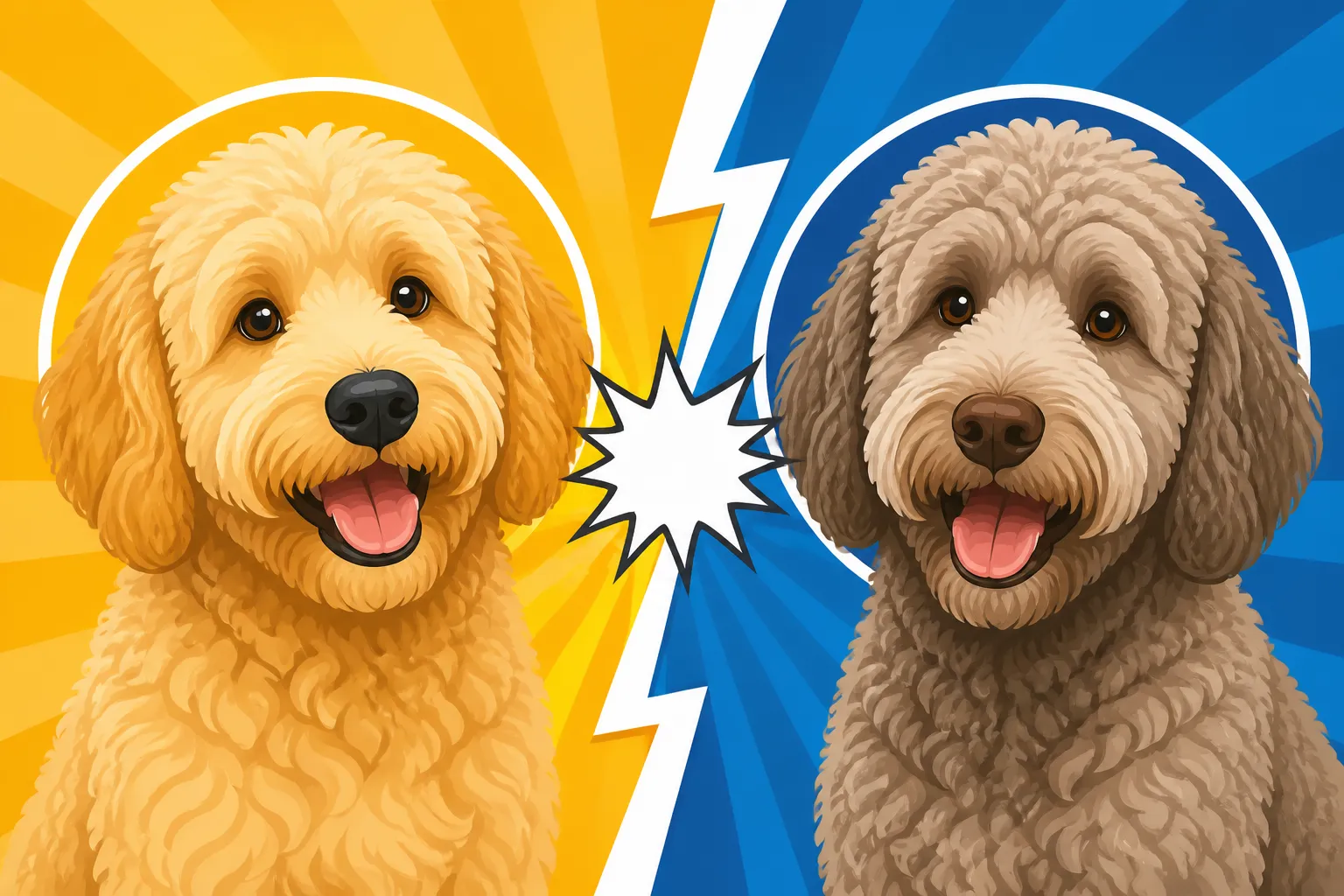
The Goldendoodle Against the Labradoodle
Deciding on a new furry family member is a huge commitment, and if you’ve landed on a Goldendoodle or a Labradoodle, you've likely already fallen in love with their charm, intelligence, and those irresistible curly coats. But for many prospective owners, the choice between these two beloved "Doodles" can feel like splitting hairs, making the decision seem impossible. This guide is designed to cut through the confusion, helping you understand the unique characteristics of each, so you can confidently choose the Doodle that truly fits your lifestyle and family dynamics.
The Roots of the Doodles: Golden vs. Lab Influence
Both Goldendoodles and Labradoodles owe their existence to the magnificent Poodle, celebrated for its intelligence and low-shedding coat. However, the other parent breed for each brings a distinct set of characteristics to the genetic table, influencing everything from their personality to their physical build. Understanding these foundational differences is key to appreciating what makes each Doodle cross unique.
The Golden Retriever's Contribution to the Goldendoodle
The Golden Retriever, as half of the Goldendoodle equation, is renowned for its gentle, affectionate nature and an almost unparalleled eagerness to please. These traits are deeply ingrained in their genetic makeup, having been selectively bred for generations to work cooperatively with humans as retrieving gun dogs. This means that a Goldendoodle often inherits a profound desire for companionship, a soft mouth, and an intuitive understanding of human emotions. They thrive on being part of the family, often following their people from room to room, seeking gentle pets and offering quiet comfort. Owners frequently describe Goldendoodles as having a calm, "Velcro" personality, always wanting to be near their loved ones. This golden contribution also typically lends itself to a somewhat softer, more flowing appearance, even in their curlier coats. You'll often find Goldendoodles to be incredibly tolerant and patient, making them excellent companions for children and other pets, provided they are properly socialized from a young age. Many of these wonderful traits stem directly from their Golden Retriever heritage, contributing to their widespread popularity as family dogs.
The Labrador Retriever's Legacy in the Labradoodle
On the other side, the Labrador Retriever half of the Labradoodle brings a different, equally charming energy. Labs are celebrated for their outgoing, boisterous, and perpetually optimistic personalities. They are often described as robust, confident, and endlessly enthusiastic. Bred as working retrievers for fishermen, they possess a strong retrieving drive, a love for water, and an incredible amount of stamina. A Labradoodle, therefore, often inherits a more athletic build, a higher energy level, and an irrepressible zest for life. They tend to be more independent than Goldendoodles but are still incredibly devoted to their families. Their playful nature makes them fantastic partners for active individuals or families who enjoy outdoor adventures like hiking, swimming, or long games of fetch. Labradoodles might be more prone to seeking out their own fun if not sufficiently exercised or mentally stimulated, which can manifest as playful mischief. This strong, energetic base gives the Labradoodle a slightly different dynamic, often appealing to those who desire a more robust and active companion.
The Ever-Present Poodle Factor
For both Goldendoodles and Labradoodles, the Poodle parent brings immense intelligence, a keen problem-solving ability, and that coveted low-shedding coat. Poodles are incredibly smart and highly trainable, and these qualities translate directly to their Doodle offspring. Whether you choose a Goldendoodle or a Labradoodle, you're getting a dog that genuinely enjoys learning and excelling in training. This intelligence, however, is a double-edged sword; while it makes them quick to pick up new commands, it also means they require consistent mental stimulation to prevent boredom, which can lead to destructive behaviors. The Poodle's influence also contributes to their potential for sensitivity, meaning both Doodles generally respond best to positive reinforcement training methods rather than harsh corrections. Positive Reinforcement and Why It Suits a Goldendoodle delves deeper into why this approach is so effective. This shared Poodle heritage ensures that both breeds are highly adaptable and eager to please, making them both excellent candidates for various roles, from family companions to therapy dogs.
Unpacking Temperament: Who's the Better Fit for Your Family?
When it comes to choosing between a Goldendoodle and a Labradoodle, temperament is often the deciding factor. While both are generally friendly, intelligent, and eager-to-please, the subtle differences in their parent breeds create distinct nuances in their overall personalities. It's not about one being "better" than the other, but rather which blend of traits aligns more closely with your expectations and household dynamics.
Goldendoodle's Affectionate and Gentle Nature
Goldendoodles tend to inherit the Golden Retriever's incredibly sweet, docile, and affectionate disposition. They are often described as "people-pleasers" who crave interaction and cuddles. This makes them fantastic companions for families, particularly those with younger children or other small pets, as their gentle nature often lends itself to patience and tolerance. They typically form strong bonds with all family members and can sometimes develop a "Velcro dog" tendency, preferring to be in the same room as their humans, if not right beside them. While playful, their energy is often more easily managed indoors, and they are generally content with a good romp in the yard or a brisk walk. Goldendoodle Temperament From Two Parent Breeds explores how the Golden Retriever's biddability truly shines through. They are often very perceptive to human emotions, making them natural empathic companions, which is why many Goldendoodles excel as therapy or emotional support animals. Their desire to please their owners makes them highly motivated in training, responding well to positive reinforcement and a kind, consistent approach.
Labradoodle's Spirited and Playful Demeanor
Labradoodles, stemming from the Labrador Retriever, often exhibit a more spirited, outgoing, and adventurous personality. They are typically bursting with enthusiasm and a seemingly endless supply of energy. Labs are known for their playful antics and robust nature, and these traits are very much present in the Labradoodle. They thrive on activity and are happiest when they have a "job" to do, whether it's retrieving a ball repeatedly, going for a long run, or swimming. This high drive and robust energy can be a wonderful asset for active families, but it also means they require more structured exercise and mental engagement to prevent boredom and potential mischievous behavior. While affectionate, a Labradoodle's expression of love might be more through boisterous play and exuberant greetings than quiet snuggles. They often possess a confident independence that allows them to explore and engage with their environment with great curiosity. This drive and athleticism make them excellent candidates for dog sports like agility or dock diving.
Similarities in Intelligence and Trainability
Despite their different primary influences, both Goldendoodles and Labradoodles are highly intelligent and remarkably trainable, thanks to their shared Poodle heritage. The Poodle brings a sharp mind, quick learning abilities, and a strong desire to please, all of which manifest in both Doodle varieties. They excel in obedience training and can quickly pick up complex commands and tricks. This intelligence, however, also means they require consistent mental stimulation to stay happy and well-behaved. Puzzle toys, interactive games, and ongoing training sessions are vital for both. Training a Goldendoodle That Wants to Please You highlights how this eager-to-please attitude makes them so responsive. Both breeds are sensitive and thrive on positive reinforcement, making them a joy to train for those who understand their motivations. They love having a purpose, and engaging their brains is just as important as exercising their bodies.
Coat, Grooming, and Allergen Realities
One of the biggest draws for many people considering a Doodle is the promise of a low-shedding, "hypoallergenic" coat. While both Goldendoodles and Labradoodles can offer this, the reality is a bit more nuanced. Understanding the different coat types, the intense grooming demands, and the truth about allergens is crucial before bringing either of these beautiful dogs into your home.
Goldendoodle Coat Types and Grooming Demands
Goldendoodle coats can vary quite a bit, typically falling into three main categories: straight (or flat), wavy, and curly. The straight coat is less common and often sheds more, resembling a Golden Retriever's coat. The wavy coat, often called a "fleece" coat, is soft, shaggy, and tends to be low-shedding. The curly coat, or "wool" coat, is dense, tight, and resembles a Poodle's coat, being the most consistently low-shedding option. Regardless of the type, all Goldendoodle coats are prone to matting without diligent care. This is especially true during their "coat change" phase, usually between 8 to 12 months, when their softer puppy coat transitions to their denser adult coat. The Goldendoodle Coat Change at Eight to Twelve Months explains this phenomenon in detail.
Grooming a Goldendoodle is a significant commitment. Daily or every-other-day brushing with a slicker brush and a metal comb, working down to the skin, is essential to prevent mats. Professional grooming every 6-8 weeks is non-negotiable for most owners, with many electing for a shorter "teddy bear" or "kennel" cut to make home maintenance easier. This includes bathing, drying, trimming, and ear cleaning. Expect to invest in quality grooming tools, and perhaps a force dryer, if you plan to do any significant grooming at home. You can find excellent options for grooming tools on retailers like Chewy.
Labradoodle Coat Varieties and Their Care
Labradoodle coats also come in variations, typically described as hair (similar to a Labrador, more prone to shedding), fleece (soft, wavy, low-shedding), and wool (dense, curly, and most reliably low-shedding). The fleece coat is often the most sought-after due to its soft texture and low-shedding qualities. Just like Goldendoodles, Labradoodle coats require extensive maintenance to prevent painful matting. The density and texture of their coats, particularly the fleece and wool types, mean that mats can form quickly and deeply, especially in friction areas like behind the ears, armpits, and under collars.
The grooming schedule for a Labradoodle is very similar to a Goldendoodle: frequent home brushing and professional grooming every 6-8 weeks. Many Labradoodle owners also opt for shorter cuts to manage the coat more easily. Regular ear cleaning is crucial for both breeds due to their dropped ears and hair growth within the ear canal, which creates a warm, moist environment ripe for infections. Remember, investing in grooming is not just about aesthetics; it's about your dog's comfort and health.
| Feature | Goldendoodle | Labradoodle |
|---|---|---|
| Golden Retriever | Gentle, affectionate, eager to please, soft mouth | Energetic, outgoing, confident, robust, strong retrieve |
| Poodle | High intelligence, sensitive, low-shedding | High intelligence, sensitive, low-shedding |
| Temperament | More calm, 'Velcro dog', highly empathetic | More spirited, adventurous, active, playful |
| Energy Level | Moderate, adaptable, enjoys both play & downtime | High, requires consistent physical and mental exercise |
| Coat Types | Straight, Wavy (Fleece), Curly (Wool) | Hair, Fleece, Wool |
| Grooming Needs | High; daily brushing, professional grooming every 6-8 weeks | High; daily brushing, professional grooming every 6-8 weeks |
| "Hypoallergenic" | Not truly, but can be low-shedding and better for some allergies | Not truly, but can be low-shedding and better for some allergies |
The "Hypoallergenic" Myth for Both Doodles
This is where realism comes into play. Neither Goldendoodles nor Labradoodles are truly 100% "hypoallergenic," despite what some breeders or popular narratives might suggest. The term "hypoallergenic" implies they won't cause allergic reactions, but the reality is that no dog breed is entirely allergen-free. Allergies are typically caused by dander (dead skin flakes), saliva, and urine, not just shedding hair. While Goldendoodles and Labradoodles often shed less than their Golden Retriever or Labrador Retriever counterparts (especially those with curlier, Poodle-like coats), they still produce dander and saliva.
However, for many individuals with mild dog allergies, a low-shedding Doodle can indeed be a better fit than a heavy-shedding breed. The tighter, curlier coats tend to trap more dander, preventing it from circulating as freely in the environment. It's crucial for prospective owners with allergies to spend time with the specific adult Doodles (and ideally, the puppy's parents if possible) before committing, to see how they react. Why No Goldendoodle Is Truly Hypoallergenic provides a deep dive into the science behind this claim. Regular grooming and cleaning of the home can also significantly reduce allergen levels for both types of Doodles.
Size, Exercise, and Activity Levels
When envisioning your future companion, size and how much energy they'll have are often top considerations. Both Goldendoodles and Labradoodles come in a range of sizes, offering flexibility, but their inherent activity levels, influenced by their parent breeds, will dictate how well they integrate into your daily life. It’s not just about how much space you have, but how much time and energy you’re willing to commit to their physical and mental well-being.
Comparing Standard, Medium, and Mini Sizes
Both Goldendoodles and Labradoodles are commonly bred in three primary size categories: standard, medium, and miniature/mini. The size is primarily determined by the size of the Poodle parent used in the cross.
- Standard Doodles: These are the largest, typically weighing 50 pounds or more, sometimes reaching well over 80-90 pounds, and standing over 20 inches tall at the shoulder. They are usually the result of crossing a Standard Poodle with a Golden or Labrador Retriever. A standard Goldendoodle or Labradoodle will require ample space, a larger crate, and more food, which are all important budget considerations.
- Medium Doodles: A great middle-ground, these Doodles usually weigh between 30-50 pounds and stand 17-20 inches tall. They are often produced by breeding a Miniature or Moyen Poodle. They still have plenty of energy but are often more manageable in smaller homes or for those who prefer a dog that isn't quite as large as a standard.
- Miniature/Mini Doodles: These smaller versions typically weigh 15-30 pounds and stand under 17 inches tall. They are bred using Miniature or Toy Poodles. While they might fit better in apartments or homes without large yards, it’s a misconception that mini Doodles automatically have less energy or need less exercise. They can be just as feisty and active as their larger counterparts, just in a more compact package. Mini and Toy Goldendoodle Puppy Prices often reflect the higher demand for these smaller sizes.
It's important to remember that size ranges can overlap, and predicting a puppy's exact adult size is an art, not a science, even for experienced breeders. Always ask breeders about the size of both parent dogs to get a better estimate.
Exercise Needs: Burning Off That Doodle Energy
Regardless of size, both Goldendoodles and Labradoodles are active, intelligent dogs who require significant daily exercise to stay happy, healthy, and out of trouble. This isn't just about physical exertion; mental stimulation is equally important for these smart breeds.
- Goldendoodles: While often described as calmer than Labradoodles, Goldendoodles still need a good amount of daily activity. Their Golden Retriever side gives them a love for retrieving and moderate stamina. About 30-60 minutes of vigorous exercise per day, split into one or two sessions, is usually sufficient. This could be a brisk walk, a game of fetch, or a run in a secure area. They also thrive on mental games, puzzle toys, and training sessions to keep their Poodle brains engaged. If they don't get enough physical and mental exercise, a Goldendoodle might become restless or engage in unwanted behaviors like excessive chewing. Goldendoodle Exercise and Mental Work Every Day offers great strategies for keeping them occupied.
- Labradoodles: Expect a higher energy level from a Labradoodle, thanks to their Labrador parentage. They are often described as enthusiastic athletes with a boundless love for activity. They typically require 60 minutes or more of vigorous exercise daily, often needing more intense activities like running, swimming, or extended games of fetch. Labradoodles often excel in dog sports and would appreciate opportunities to use their natural retrieving instincts. Their robust nature means they can go, go, go, and if their energy isn't channeled positively, it can lead to boisterous indoor behavior or destructive tendencies. Think of a Labradoodle as a canine marathon runner, eager for adventure.
Suitability for Various Lifestyles
The ideal home for a Goldendoodle or Labradoodle largely depends on your lifestyle and activity level.
- Goldendoodles are generally more adaptable and might suit a wider range of families. Their gentler nature makes them wonderful companions for families with children or those seeking a dog that is equally happy cuddling on the couch as it is going for a walk. They can do well in homes with smaller yards or even apartments, provided their exercise and mental stimulation needs are met daily. Their "Velcro" tendency means they thrive in environments where they are an integral part of family life and not left alone for long periods.
- Labradoodles are best suited for active individuals or families who embrace an outdoorsy lifestyle. They thrive when they have plenty of space to run and opportunities for adventurous outings. If you’re a runner, hiker, or enjoy water sports, a Labradoodle might be your perfect partner. They need more than just a quick walk around the block; they need opportunities to truly expend their physical energy. While they love their families, their independent spirit and higher energy mean they might be slightly less prone to separation anxiety than some Goldendoodles, though both breeds can experience it. If you have a busy household with lots of activity and are looking for a dog to join in on all your adventures, a Labradoodle could be an excellent match.
Health Considerations and Breeder Responsibilities
When choosing any dog, especially a crossbreed, understanding potential health concerns and the role of responsible breeding is paramount. Both Goldendoodles and Labradoodles are generally healthy dogs, but they are susceptible to certain genetic conditions inherited from their Golden Retriever, Labrador Retriever, and Poodle parent lines. Responsible breeders play a critical role in minimizing these risks.
Common Health Concerns Shared by Both Crosses
Because both Goldendoodles and Labradoodles share the Poodle as a parent breed, they also share susceptibility to some common Poodle-related health issues. Additionally, their retriever parent lines bring their own set of potential challenges.
- Hip and Elbow Dysplasia: This is a significant concern for all large and medium-sized breeds, including Goldens, Labs, and Standard Poodles. Dysplasia is a malformation of the hip or elbow joints that can lead to arthritis and lameness. It's a polygenic trait, meaning multiple genes and environmental factors contribute to it. Goldendoodle Hip Dysplasia at 15 to 20 Percent highlights the prevalence in Goldendoodles, and similar concerns exist for Labradoodles.
- Eye Conditions: Both parent breeds for both Doodles can carry genes for various eye conditions, including Progressive Retinal Atrophy (PRA) and cataracts. PRA is a degenerative disease that leads to blindness.
- Heart Conditions: Subvalvular Aortic Stenosis (SAS) can be seen in Golden Retrievers, and thus potentially in Goldendoodles. Similar congenital heart defects can occur in Labradors and Poodles, meaning both Doodles should have their hearts checked.
- Thyroid Disease: Hypothyroidism, an underactive thyroid, can be seen in Poodles, Golden Retrievers, and Labrador Retrievers.
- Bloat (Gastric Dilatation-Volvulus – GDV): Particularly a risk for larger, deep-chested dogs like Standard Poodles, Golden Retrievers, and Labrador Retrievers. This life-threatening condition requires immediate veterinary attention.
This list isn't exhaustive, but it covers some of the more prevalent issues. The key takeaway is that both Goldendoodles and Labradoodles can inherit a range of genetic predispositions from all their parent breeds.
The Importance of Parent Health Testing
This is arguably the most critical factor when acquiring a Goldendoodle or Labradoodle puppy. Reputable breeders will meticulously health test their breeding stock for genetic conditions prevalent in the parent breeds. This isn't just a casual vet check-up; it involves specific, often expensive, screenings and certifications.
For example, both Golden Retrievers, Labrador Retrievers, and Poodles should have:
- OFA (Orthopedic Foundation for Animals) clearances for hips and elbows.
- Eye certifications (CERF or OFA Eye Certification Registry), ideally performed annually by a veterinary ophthalmologist.
- Cardiac clearances to screen for heart conditions.
- Genetic DNA testing for conditions like PRA, Von Willebrand's Disease (a bleeding disorder found in Poodles and sometimes Goldens), and other breed-specific genetic markers. This helps identify carriers and affected dogs.
A responsible breeder will be transparent about these test results and be able to provide documentation for both the sire (father) and dam (mother) of the litter. They understand that Health Testing Both Goldendoodle Parents Should Have is a non-negotiable step in producing healthy puppies. Avoid any breeder who cannot or will not provide these health clearances. A puppy sold without proper health testing from its parents carries a significantly higher risk of developing debilitating and costly genetic diseases later in life. Websites like Chewy also provide a wide range of products for specific health needs, for example, joint supplements or prescription diets recommended by vets for conditions like allergies or digestive sensitivities.
Why No Breed Club Recognition Matters
One commonality between Goldendoodles and Labradoodles (and all "designer" crossbreeds) is that they are not recognized by major kennel clubs like the American Kennel Club (AKC) in the United States or The Kennel Club (KC) in the UK. This isn't a judgment on their value as companions, but it has practical implications for buyers.
- No Centralized Health Scheme: Purebred dogs often have established breed clubs that mandate specific health testing protocols and maintain databases of health clearances (e.g., the Golden Retriever Club of America's health requirements). Because Goldendoodles and Labradoodles are not recognized breeds, there is no such overarching body to enforce health testing or maintain official pedigrees with health data. This makes the individual breeder's integrity and commitment to health testing even more critical. Why No Kennel Club Recognizes the Goldendoodle explains this in more detail.
- "Hybrid Vigor" Misconceptions: While the concept of hybrid vigor (heterosis) suggests that crossing two unrelated purebreds can lead to increased health and fertility, this benefit is often exaggerated or misunderstood in Doodles. Hybrid vigor is most pronounced in the first generation (F1) cross, but even then, it doesn't eliminate the risk of inheriting genetic diseases from both parent lines. If both parent breeds carry a gene for the same recessive disease, crossing them will not reduce the risk in their offspring. The Goldendoodle Hybrid Vigor Claim and Where It Breaks highlights why this can be a complex issue.
- Variability: The lack of strict breed standards means there's more variability in appearance, coat type, and even temperament within Goldendoodle and Labradoodle litters compared to purebred dogs. This unpredictability can be part of their charm, but it also means buyers need to be extra diligent in researching breeders and meeting the parent dogs if possible, to get a clearer idea of what their puppy might grow up to be.
Disclaimer
This article is for general informational purposes only and does not constitute professional advice. Laws, prices and regulations vary by location and change over time. Consult a qualified professional for guidance on your specific situation.