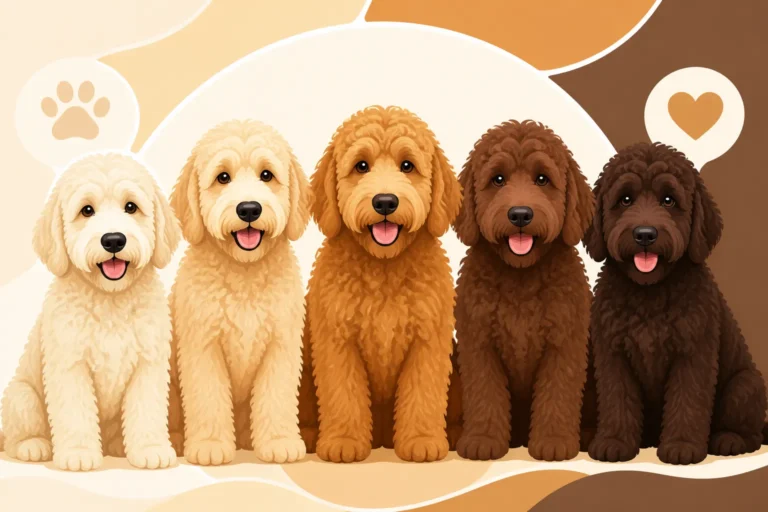
Why No Kennel Club Recognizes the Goldendoodle
It’s a question that puzzles so many aspiring Goldendoodle owners, and honestly, it’s a perfectly valid one: if Goldendoodles are so popular, so loved, and so widely available, why aren't they recognized by major kennel clubs like the American Kennel Club (AKC)? You’re not alone in wondering why this seemingly ubiquitous companion animal exists in a sort of official limbo. This guide will take a deep dive into the fascinating world of canine recognition, explaining the strict rules and historical traditions that keep the Goldendoodle from official "breed" status, and what that truly means for you as an owner.
Understanding Kennel Club Recognition and What It Means
When we talk about a dog being a "recognized breed," it's not just a casual title; it signifies adherence to a very specific and often centuries-old framework established by influential organizations like the American Kennel Club (AKC) in the United States or The Kennel Club in the UK. These institutions are the custodians of breed standards, pedigrees, and the very definition of what constitutes a "purebred" dog. For a breed to gain their stamp of approval, it must embark on an arduous journey that often spans generations and demands unwavering dedication from a passionate group of breeders.
The Strict Criteria for "Breed" Status
What does it truly mean to be a "breed" in the canine world? It goes far beyond simply mixing two different dogs and calling the offspring something new. A recognized breed is a group of animals that, through generations of selective breeding, have developed consistent, predictable characteristics in appearance, temperament, and even health predispositions. When you breed two purebred Golden Retrievers, you have a very clear expectation of what their puppies will look like, how they'll generally behave, and what health screening is most relevant. This predictability is the bedrock of breed status.
Kennel clubs require substantial evidence of a breed’s stability and consistency. We're talking about meticulous record-keeping, proven lineages, and a demonstrable history of breeding true-to-type. This isn't a quick process where a few successful litters suddenly qualify a group of dogs. Instead, it involves decades, sometimes centuries, of dedicated breeders meticulously selecting breeding pairs to fix desired traits and eliminate undesirable ones. It’s about creating a "closed gene pool," where only dogs of that established breed can be registered as that breed, and new bloodlines are introduced with extreme caution and oversight. For a cross like the Goldendoodle, which is a relatively recent phenomenon in the grand scheme of canine history, this stringent requirement for proven, consistent lineage presents an immediate and formidable hurdle. Their story is still unfolding, not yet solidified into the kind of predictable pattern that kennel clubs demand.
The Role of Breed Clubs in Maintaining Standards
Before any major kennel club officially recognizes a new breed, there's almost always a dedicated national breed club that has been working tirelessly behind the scenes for an extended period, often decades. These breed clubs aren't just social gatherings for enthusiasts; they are the driving force and organizational backbone that pushes for recognition. They are the ones who passionately believe in the distinct identity and value of their chosen breed.
Their role is multifaceted and absolutely critical to maintaining the integrity of a recognized breed. They develop and refine the official breed standard, a detailed written description that outlines the ideal physical characteristics (size, coat texture, head shape, ear set, tail carriage, gait) and temperament. This standard serves as a blueprint, guiding all breeders in their efforts to produce dogs that conform to the breed's ideal. Furthermore, these clubs are instrumental in promoting essential health testing specific to their breed, often maintaining databases of results to track genetic health trends and mitigate hereditary diseases. They foster a vibrant community among breeders and owners, providing educational resources, organizing events, and ensuring that the breed's unique qualities and future are preserved for generations to come. For the Goldendoodle, the landscape is much different; there isn't a singular, universally recognized breed club with the unified authority or ambition to push for kennel club recognition. While there are admirable organizations working to promote responsible Goldendoodle breeding, they operate in a more fragmented and less unified manner than traditional breed clubs.
The Goldendoodle's Origins as a Designer Cross
The Goldendoodle story isn't one of ancient lineage or working traditions that slowly evolved into a distinct breed. Instead, it's a tale rooted in modern intent, born from a desire to blend the beloved qualities of two popular purebreds. Understanding this origin is key to grasping why they don't fit the traditional kennel club mold. They emerged not from a centuries-long process of natural selection or specific historical purpose, but from a deliberate, relatively recent crossbreeding experiment.
The Intent Behind the Original Cross
The initial motivations for crossing Golden Retrievers and Poodles were incredibly practical and empathetic. The late 1980s saw the intentional breeding of these two breeds, often with the specific aim of creating a dog that possessed the gentle, eager-to-please temperament of the Golden Retriever combined with the low-shedding, intelligent qualities of the Poodle. This was particularly appealing for individuals seeking a companion dog that might be more suitable for allergy sufferers. The idea wasn't to invent a new breed to parade in a show ring, but rather to combine desirable traits from two established breeds to produce a highly functional and affectionate pet.
In fact, one of the most significant early influences came from a guide dog association in Australia, searching for a guide dog that would be less likely to trigger allergies. This particular cross, aimed at a specific working purpose, ultimately laid the groundwork for the Goldendoodle's future popularity. The 1989 Guide Dog Cross Behind Every Goldendoodle It’s crucial to remember that these initial crosses were not about establishing a new, distinct breed that would seek kennel club recognition. They were about creating a dog with a particular set of characteristics to meet a specific human need. However, as the word spread about these wonderful, intelligent, and often allergy-friendly dogs, demand soared. This growing popularity quickly led to more widespread breeding, moving the Goldendoodle from a niche, purposeful cross to a broader "designer dog" phenomenon, sometimes without the rigorous intent of those early breeders.
The Unpredictability of Early Generations
One of the biggest obstacles to Goldendoodle recognition by kennel clubs lies in the inherent genetic unpredictability of their early generations. When you breed two distinct purebreds, you're essentially creating a genetic lottery, especially in the first few generations. This means that even within the same litter, puppies can exhibit a wide array of traits, making it incredibly difficult to define a consistent breed standard.
Let's look at the F1 Goldendoodle, which is a direct cross of a purebred Golden Retriever and a purebred Poodle, making it 50% of each. In an F1 litter, you can see a vast spectrum of outcomes. Some puppies might have a flatter coat more reminiscent of a Golden, while others might inherit the tight curls of a Poodle. Their shedding levels can vary wildly, from minimal to quite substantial. Their size, even from parents of similar sizes, can be inconsistent, and while temperaments tend to be good, even that isn't entirely uniform. This lack of predictability in appearance, coat type, shedding, and even sometimes temperament, is a huge stumbling block for any group trying to define a rigid "breed standard" – a non-negotiable requirement for kennel club recognition. You can read more about this in Why an F1 Goldendoodle Is the Least Predictable Healthwise.
Then we move to F1b Goldendoodles, which are bred by taking an F1 Goldendoodle and breeding it back to a purebred Poodle (making them roughly 75% Poodle and 25% Golden Retriever). This generation was largely developed to specifically address the shedding concerns of allergy sufferers, aiming for a curlier, lower-shedding coat. While F1bs tend to be more consistent in their coat type than F1s, they still aren't perfectly uniform, and you still get variations. More importantly, they still lack the complete genetic uniformity that defines a purebred line. Why an F1b Goldendoodle Loses Some Hybrid Vigor further explores this concept.
The unpredictability really comes to a head with F2 Goldendoodles, which result from breeding two F1 Goldendoodles together. This generation is notorious for its wide variation. You might find puppies in the same litter that look like purebred Golden Retrievers, others that resemble purebred Poodles, and a mix of Goldendoodle types in between. This is because the recessive and dominant genes from both original parent breeds are allowed to re-sort and express themselves in myriad ways. Why F2 Goldendoodle Litters Vary So Much delves into how this genetic recombination can lead to such diverse outcomes. This "genetic lottery" makes it practically impossible to write a definitive breed standard that would encompass all potential F2 Goldendoodles, effectively shutting the door on traditional kennel club recognition.
Lack of a Unified Breed Standard and Breeding Goals
One of the most defining characteristics of any recognized purebred dog is its breed standard. This isn't just a suggestion; it's a meticulously detailed document that describes the ideal physical and temperamental traits of the breed. It ensures uniformity and helps preserve the breed's distinct identity. The Goldendoodle, by its very nature as a crossbreed, simply doesn't have such a standard, and this lack of consensus is a primary reason for its non-recognition.
No Consensus on Appearance, Size, or Coat
Imagine trying to write a single document that accurately describes the ideal Goldendoodle. Where would you even begin? Unlike recognized breeds with strict guidelines for everything from the angle of the shoulder to the set of the tail, Goldendoodles come in a dizzying array of appearances. There’s no single, agreed-upon "look" that defines them.
For instance, Goldendoodles range dramatically in size. You have the tiny Toy Goldendoodles, the popular Mini Goldendoodles, the mid-sized Medium Goldendoodles, and the substantial Standard Goldendoodles, which can weigh up to ninety pounds or more. These sizes are often determined by the Poodle parent used in the cross, leading to a broad spectrum of mature weights and heights. The Four Goldendoodle Sizes and How They Are Set explains how these categories are established. To define a single breed standard that encompasses such a vast size range would be practically impossible for traditional kennel clubs, which prefer much tighter parameters.
Then there are the coats. Oh, the coats! Goldendoodles can have straight, wavy, or curly coats, and each has different grooming needs and shedding tendencies. The "furnishings" gene, which gives them their characteristic beard and eyebrows, isn't present in all Goldendoodles, leading to some having a smoother face, more like a Golden Retriever. You can delve into the nuances of these coats in The Three Goldendoodle Coat Types and How to Tell Them. This incredible variety means that one Goldendoodle might look completely different from another, even if they share the same parents or are from the same "generation." This diversity, while charming and attractive to many owners who appreciate the unique look of their individual dog, is anathema to the strict uniformity and predictability that traditional kennel clubs require for breed recognition. They are looking for a consistent type, and Goldendoodles, currently, are anything but.
Diverse Breeding Motivations Among Breeders
Another significant factor preventing the Goldendoodle from achieving formal breed status is the sheer diversity of motivations and goals among those who breed them. In the world of purebred dogs, breeders within a recognized breed typically share a common goal: to produce dogs that adhere as closely as possible to the established breed standard, focusing on health, temperament, and conformation. There's a collective, unified effort towards the betterment of that specific breed.
For Goldendoodle breeders, the motivations can be incredibly varied. Some breeders prioritize specific coat types, aiming exclusively for that coveted non-shedding, curly coat to cater to allergy sufferers. Others might focus on creating miniature versions, selecting for smaller Poodle lines to produce Mini or Toy Goldendoodles. Some are driven by a desire for particular coat colors or patterns, while still others might put temperament and working ability (like therapy dog potential) at the forefront of their breeding program. This means that there isn't a singular, universally agreed-upon vision for what an "ideal" Goldendoodle should embody.
This contrasts sharply with the framework of purebred breeding, where breeders work collectively, often through their national breed clubs, towards a universally agreed-upon standard. They are often members of organizations that share a common philosophy for the breed's future. The Goldendoodle community, while growing and becoming more organized, lacks this central governing body or widespread consensus on a single definition. Without a unified "North Star" for what a Goldendoodle should be, it becomes impossible to establish the consistent lineage and predictable traits that kennel clubs require. This fragmentation of breeding goals means that any attempts to define a foundational standard quickly run into disagreement, further fragmenting any potential path to formal recognition.
The Absence of a Formal Governing Body and Registry
For any breed to achieve recognition, it needs a strong, centralized, and authoritative governing body that oversees its standards, health, and registry. This is where the Goldendoodle truly differs from recognized breeds. While various organizations have emerged to bring order to the Goldendoodle world, they do not possess the same power or mandate as traditional kennel clubs.
The Role of Organizations like GANA and Their Limitations
In the absence of traditional kennel club recognition, several organizations have stepped up to provide some structure and guidance for Goldendoodle breeders and owners. One of the most prominent of these is the Goldendoodle Association of North America (GANA). GANA was formed with admirable intentions: to promote responsible breeding practices, encourage health testing, and provide a framework for ethical breeders to operate within. They offer a voluntary registry for Goldendoodles, which means breeders can register their dogs and litters with GANA if they meet certain criteria, often including parental health testing and adhering to specific breeding ethics.
GANA's efforts are significant because they attempt to address the very issues that prevent kennel club recognition: lack of standardization and inconsistent health testing. They encourage breeders to perform genetic screenings and orthopedic clearances, and they provide a platform for buyers to find breeders who are committed to these best practices. What GANA Does for Goldendoodle Buyers details some of their initiatives. By registering with GANA, breeders are signaling their commitment to higher standards, and owners can gain some peace of mind knowing the breeder has voluntarily agreed to certain guidelines.
However, and this is a crucial distinction, GANA is not a kennel club in the traditional sense, and its standards are not universally enforced across all Goldendoodle breeders. It's a voluntary association. While its member breeders adhere to GANA's guidelines, there are many Goldendoodle breeders who operate outside of GANA's purview, meaning their practices may or may not align with GANA's recommendations. GANA's registration provides a record of lineage and health testing within its network, which is incredibly valuable, but it doesn't confer the same "breed" status as, say, an AKC registration. You can learn more about what this specific registration means for owners in What GANA Registration Buys a Goldendoodle Owner. The key difference lies in the level of authority and universality; a kennel club dictates standards for an entire breed, while GANA provides a framework for its members.
Why a Goldendoodle Cannot Be AKC Registered
This is perhaps the simplest and most direct answer to the central question: the Goldendoodle cannot be registered with the American Kennel Club (AKC) because the AKC is fundamentally dedicated to the preservation and promotion of purebred dog breeds. By its very definition, a Goldendoodle is a crossbreed—a hybrid resulting from breeding two distinct purebreds, a Golden Retriever and a Poodle.
The AKC's registration system requires that both parents of a puppy must be registered purebreds of the same recognized breed. For example, to register a Golden Retriever puppy with the AKC, both its sire and dam must be AKC-registered Golden Retrievers. Since a Goldendoodle's parents are different purebreds (one Golden Retriever, one Poodle), they simply do not meet this fundamental requirement. The AKC's mission statement revolves around upholding the integrity of purebred lines, and recognizing a crossbreed like the Goldendoodle would run contrary to that core purpose. You can find more detail on this specific issue in Why the AKC Will Not Register a Goldendoodle.
It's important to differentiate between registration and participation. While a Goldendoodle cannot be registered as an AKC breed, individual Goldendoodles can often participate in certain AKC events through their Canine Partners program. This allows mixed-breed and non-recognized dogs to compete in various performance sports like obedience, agility, rally, and even some tracking events. So, if your Goldendoodle is a star at agility, they absolutely can show off their talents under the AKC umbrella, just not as an officially recognized breed. Learn more about this in Whether AKC Sports Are Open to a Goldendoodle. The path for any crossbreed to gain full AKC recognition is extraordinarily long and involves many generations of consistent, standardized breeding—a path the Goldendoodle community has largely not pursued, nor is it set up to do so given its current structure.
The "Hybrid Vigor" Debate and Health Considerations
One of the most compelling arguments often made in favor of crossbreeds like the Goldendoodle is the concept of "hybrid vigor." This idea suggests that mixing two distinct purebred lines can lead to a healthier, more robust offspring. While there's a kernel of truth to this, the reality for Goldendoodles is far more nuanced and complex than a simple blanket statement of "healthier."
Hybrid Vigor in Theory Versus Reality
The theory of hybrid vigor, also known as heterosis, proposes that when you cross two unrelated purebred lines, the offspring may benefit from increased genetic diversity. This diversity can, in some cases, mask recessive genes that carry genetic diseases, theoretically leading to a more resilient and healthier individual. It's often presented as a major advantage, a selling point that suggests Goldendoodles inherently bypass the health issues sometimes seen in their purebred parents due to limited gene pools. Many potential owners are drawn to Goldendoodles precisely because they hope to avoid the well-documented genetic problems of Golden Retrievers and Poodles, looking to hybrid vigor as their shield. You can gain a deeper understanding of this concept in What Hybrid Vigor Means for a Goldendoodle.
However, the reality is not always so straightforward, especially beyond the initial F1 generation (first cross). While an F1 Goldendoodle might benefit from hybrid vigor for some conditions, it's certainly not a guarantee, and the effect tends to diminish rapidly in subsequent generations like F2 or Multigen Goldendoodles. The Goldendoodle Hybrid Vigor Claim and Where It Breaks explores why this fading occurs. A Goldendoodle is still a genetic blend of two purebreds, and they can absolutely inherit common health problems from both parent breeds. For instance, both Golden Retrievers and Poodles are susceptible to hip and elbow dysplasia, certain eye conditions, and some forms of cancer. If a Goldendoodle has parents who both carry genes for the same disease, that Goldendoodle is still at risk, regardless of "hybrid vigor." In fact, poor breeding practices, such as breeding two untested dogs, can ironically combine and even exacerbate certain predispositions, leading to a dog with a higher overall risk profile. It's not a magical shield. You can learn more about shared genetic risks in Diseases Both Goldendoodle Parent Breeds Share.
The Importance of Parent Health Testing
Given the complex reality of hybrid vigor, the single most critical factor in ensuring the health of a Goldendoodle puppy isn't its "hybrid" status, but rather the rigorous health testing performed on both of its purebred parents. Responsible Goldendoodle breeders understand that they are essentially combining the genetic legacies of two different breeds, and therefore, they must screen for the known inheritable conditions in both Golden Retrievers and Poodles.
This means asking to see verifiable health clearances for the sire (father) and dam (mother) of any Goldendoodle puppy you are considering. Key health tests include:
- Orthopedic Clearances: Hip and elbow evaluations from organizations like the Orthopedic Foundation for Animals (OFA) or PennHIP are crucial, as both parent breeds are prone to hip and elbow dysplasia.
- Eye Examinations: Annual eye exams by a board-certified veterinary ophthalmologist (CAER exams) are important to screen for conditions like Progressive Retinal Atrophy (PRA) and cataracts, which affect both Goldens and Poodles.
- Cardiac Clearances: Heart exams by a board-certified veterinary cardiologist are recommended, especially for conditions like Subvalvular Aortic Stenosis (SAS) in Golden Retrievers.
- Genetic DNA Panels: DNA tests can screen for a host of other inheritable conditions, such as Von Willebrand Disease (a bleeding disorder), various forms of PRA, Ichthyosis (a skin condition common in Golden Retrievers), and others specific to Poodles.
You should always be able to review these results. Health Testing Both Goldendoodle Parents Should Have details the specific tests to look for, and The DNA Panel a Goldendoodle Breeder Should Run offers insights into specific genetic screenings. Without formal breed clubs enforcing these tests, the burden falls squarely on the buyer to demand transparency from individual breeders. A reputable breeder will not only conduct these tests but will be eager to show you the certifications and explain what they mean. The absence of a central, universally recognized health database (which is common for recognized purebreds) for Goldendoodles means that individual breeders must meticulously track and provide this information themselves. This requires diligence from both the breeder and the prospective owner.
The Path to Breed Recognition – A Long and Difficult Journey
So, if Goldendoodles are so wonderful, why don't they just become a recognized breed? The answer lies in the deeply ingrained traditions and extremely rigorous process that kennel clubs employ for granting official breed status. It's a journey that few crossbreeds ever complete, and for the Goldendoodle, there are unique challenges that make it particularly improbable.
The Multi-Generational Process for New Breeds
For any new canine variety to gain formal recognition as a breed by a major kennel club, it embarks on an incredibly long and demanding multi-generational process. This isn't a quick sprint; it's a marathon that typically spans many decades, often approaching a century or more of dedicated, concerted effort. The pathway generally involves several critical stages:
- Foundational Breeding: A small, highly dedicated group of breeders must establish a clear vision for the new breed. They begin selective breeding, meticulously choosing parent dogs based on specific desired traits in appearance, temperament, and health. This stage is all about fixing consistency.
- Developing a Breed Standard: Once some level of consistency begins to emerge, these breeders draft a preliminary, and then eventually a detailed, breed standard. This written blueprint outlines every aspect of the ideal dog, from its physical characteristics to its temperament and gait. This standard serves as the guiding principle for all future breeding decisions.
- Establishing a Registry and Population: Over many generations, a substantial, stable population of dogs that consistently breed true to the new standard must be established. Meticulous pedigree records must be kept, tracing lineage back through many generations. This often involves establishing a preliminary registry for the emerging breed.
- Provisional Recognition: If a sufficiently large and consistent population exists, along with a well-defined standard and a dedicated parent club, a kennel club might grant provisional recognition. During this period, the breed is carefully observed, and its standard might be refined. Dogs of the breed may be allowed to compete in certain events, but not necessarily championship shows.
- Full Recognition: Only after a prolonged period of provisional recognition, typically several years, and once the kennel club is fully satisfied that the breed is stable, healthy, and consistently breeding true to its standard, will full recognition be granted.
This painstaking process ensures that any new breed admitted to the registry is indeed a distinct and stable entity, worthy of inclusion alongside established breeds. How Long a Goldendoodle Would Take to Become a Breed further explores the timeline and commitment involved. The organizational challenge of achieving this for a dog as diverse and widely bred as the Goldendoodle is immense, requiring a level of unified vision and sustained effort that has not yet materialized within the Goldendoodle community.
Why the Goldendoodle Community is Unlikely to Pursue Formal Recognition
Despite the Goldendoodle's immense popularity, it is highly improbable that its community will pursue, let alone achieve, formal breed recognition in the traditional kennel club sense. There are several fundamental reasons for this, rooted in the very nature of the Goldendoodle and its enthusiast base:
Firstly, many Goldendoodle breeders and owners are perfectly content with the "designer dog" or "hybrid" status. For them, the appeal of the Goldendoodle often lies precisely in its ability to combine desirable traits from two beloved breeds, rather than adhering to the rigid constraints of a single purebred standard. This status affords a certain freedom from the strict rules and political machinations that can sometimes accompany purebred dog showing and breeding. They don't see the lack of recognition as a deficit, but rather a reflection of their dog's unique appeal.
Secondly, the extreme diversity within the Goldendoodle "type" makes agreement on a single, rigid breed standard incredibly difficult, if not impossible. As we've discussed, Goldendoodles vary widely in size, coat type, shedding levels, and even facial structure (furnished vs. unfurnished). Breeders have different primary goals: some focus on making their dogs as hypoallergenic as possible, others on creating a compact size for urban living, and still others on specific colors or markings. To coalesce these disparate goals into one unified standard that everyone agrees upon would require an unprecedented level of compromise and organization within a community that currently thrives on its diversity.
Finally, the sheer scale and decentralized nature of Goldendoodle breeding and ownership present an enormous organizational hurdle. There are thousands of individuals breeding Goldendoodles, from small hobby breeders to larger operations, and many operate independently. Unifying such a vast and varied group under a single, overarching parent club with the authority to enforce standards and guide generations of breeding is a monumental task. Without this unified vision and hierarchical structure, the collective, multi-generational effort required for kennel club recognition simply cannot be sustained. For many, the benefits of the Goldendoodle lie exactly outside the rigid framework of kennel club recognition, allowing for greater flexibility and focus on traits that matter most to individual owners rather than show ring conformation.
What Does This Mean for Goldendoodle Owners?
So, if your beloved Goldendoodle isn't a "real" breed in the eyes of the AKC, does it actually matter? For most Goldendoodle owners, the answer is a resounding "no." The lack of formal recognition has some implications, but it also comes with certain freedoms and places specific responsibilities squarely on the shoulders of the owner.
The Freedom and Flexibility of Owning a Crossbreed
For the vast majority of Goldendoodle owners, the absence of kennel club recognition is utterly irrelevant to their daily lives and their relationship with their canine companion. What truly matters is the individual personality, health, and companionship their Goldendoodle brings into their home. They love their dog for who it is, regardless of official papers or show ring eligibility.
In fact, this status can afford a certain freedom and flexibility. Without strict show ring standards, there's less pressure on breeders to conform to purely aesthetic criteria that might not align with the practical needs or desires of pet owners. It allows for a broader range of appearances and individual preferences to emerge in breeding, meaning you can find Goldendoodles that suit a particular aesthetic or lifestyle need. The focus shifts from "does my dog conform to the breed standard?" to "is my dog a happy, healthy, well-adjusted member of the family?"
This informal status also often fosters a community centered on the practicalities of ownership rather than competitive exhibition. Goldendoodle groups online and in person often focus on sharing tips for grooming, training, health care, and managing common Goldendoodle behaviors. It's a community driven by shared experiences and a love for the unique qualities of this specific crossbreed. Owners are empowered to seek out reputable breeders who prioritize health and temperament above all else, rather than being bound by rigid physical standards that might not serve their family's needs.
Challenges and Responsibilities for Goldendoodle Owners
While the lack of kennel club recognition brings freedom, it also places a significant amount of responsibility on prospective and current Goldendoodle owners. Without a central, universally recognized registry or a powerful parent club enforcing breeding standards, the onus is heavily on you to do your due diligence and make informed choices.
Choosing a breeder, for instance, requires much more scrutiny. You can't just rely on an AKC registration as proof of quality. Instead, you must become an educated consumer, asking pointed questions about health clearances, parentage, and the breeder's practices. This means requesting to see verifiable health testing results for both parents of a puppy, including OFA or PennHIP certifications for hips and elbows, annual eye certifications, and genetic DNA panels for conditions specific to Golden Retrievers and Poodles. What Health Papers a Goldendoodle Breeder Should Show offers a detailed list of what you should expect from a reputable breeder. Without these, you are essentially buying a dog with unknown genetic predispositions.
Furthermore, understanding the genetics of Goldendoodles is crucial for setting realistic expectations regarding coat type, shedding, adult size, and potential health issues. Knowing whether you're getting an F1, F1b, or Multigen Goldendoodle will help you predict these traits more accurately. While you won't get "papers" in the traditional sense, a responsible breeder should provide you with extensive records of your puppy's parentage, health testing, vaccination schedule, and microchipping information. Reputable pet retailers like Chewy can also be a valuable resource, offering guides and products tailored for new puppy owners, often with detailed information on care and health needs, helping you navigate the early stages of Goldendoodle ownership.
Finally, you must be prepared for the ongoing responsibility of their unique coats. Regardless of the type of Goldendoodle coat you have, regular and thorough grooming is non-negotiable to prevent painful matting. This means consistent brushing at home and professional grooming every six to eight weeks, which, as many owners can attest, quickly becomes Goldendoodle Grooming as the Biggest Line in the Budget. Being an informed and responsible Goldendoodle owner means embracing these challenges, but for many, the joy and companionship their Doodles bring make it all worthwhile.
| Feature | Recognized Purebred Dog (e.g., Golden Retriever, Poodle) | Goldendoodle (Crossbreed) |
|---|---|---|
| Kennel Club Recognition | Yes (e.g., AKC, Kennel Club UK) | No (not recognized as a distinct breed by major kennel clubs) |
| Breed Standard | Strict, detailed written standard for appearance & temperament | No single, universally agreed-upon standard; wide variation |
| Parentage Documentation | Pedigree records tracing back generations within the breed | Parents are purebreds of different recognized breeds |
| Breeding Goals | Preserve and improve the breed according to its standard | Diverse goals (e.g., hypoallergenic coat, specific size/temperament) |
| Health Database | Centralized health registries (e.g., OFA, CHIC) often exist for breed | No central health database; relies on individual breeder testing |
| Predictability | High predictability in appearance, temperament, and health tendencies | Lower predictability, especially in early generations; significant variation |
| Breed Club Support | Strong national and local breed clubs | Voluntary associations (e.g., GANA) attempting to set standards |
Disclaimer
This article is for general informational purposes only and does not constitute professional advice. Laws, prices and regulations vary by location and change over time. Consult a qualified professional for guidance on your specific situation.