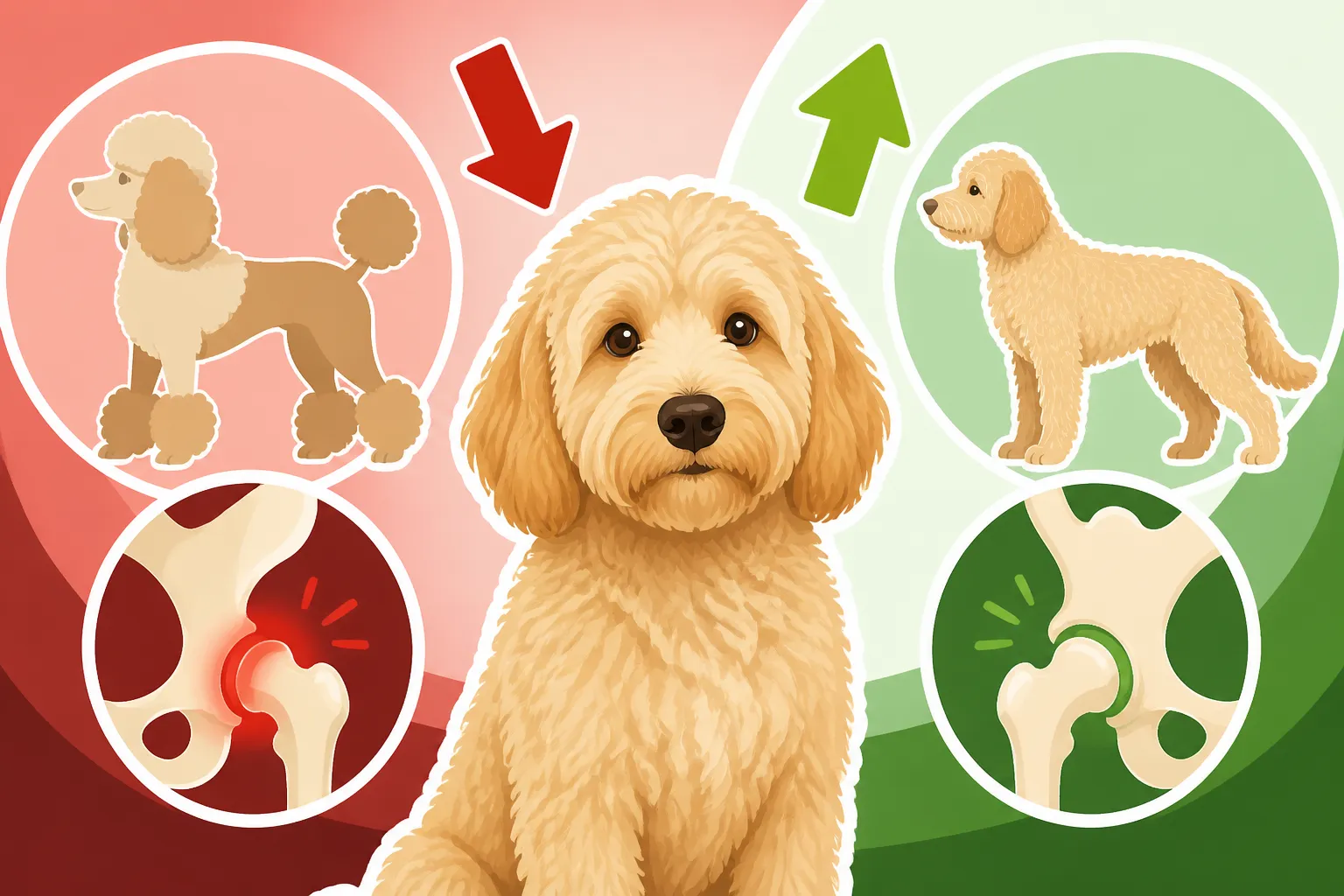
Whether the Poodle Half Lowers Goldendoodle Hip Risk
Many Goldendoodle enthusiasts bring home their fluffy companions with the hope that crossing a Golden Retriever with a Poodle inherently reduces the risk of common ailments, especially something as debilitating as hip dysplasia. It’s a natural desire for any dog owner to wish for the healthiest possible pet. This guide dives deep into whether the Poodle's genetic background truly lowers the Goldendoodle's susceptibility to hip issues, looking at the science behind hybrid vigor and the practical steps you can take.
Understanding Goldendoodle Hip Dysplasia
Hip dysplasia is a frustrating and often painful condition that affects many dog breeds, causing a malformation of the hip joint. It's not just a minor inconvenience; it can severely impact a dog's mobility and quality of life. For Goldendoodle owners, understanding this condition is the first step toward proactive care.
The Reality of Hip Dysplasia in Goldendoodles
Let's be blunt: Goldendoodles are absolutely susceptible to hip dysplasia. While some breeders might suggest otherwise, the reality is that this condition, stemming from both genetic and environmental factors, can affect any Goldendoodle. The Goldendoodle Hip Dysplasia at 15 to 20 Percent figure often cited is a stark reminder that this isn't a rare occurrence. It's a polygenic trait, meaning multiple genes are involved, making its inheritance complex and somewhat unpredictable. This complexity means that even with careful breeding, the risk isn't entirely eliminated. When the hip joint doesn't form correctly, the ball (femoral head) and socket (acetabulum) don't fit snugly. This leads to friction, wear and tear, and eventually, painful osteoarthritis, which can manifest as lameness, stiffness, and a reluctance to move.
The Golden Retriever's Contribution to Hip Risk
The Golden Retriever, one half of our beloved Goldendoodle, is unfortunately well-known for its predisposition to hip dysplasia. This breed consistently appears on lists of breeds with a higher incidence rate. Their popularity and genetics have intertwined over the years, leading to a significant genetic load for this condition within the breed. Reputable Golden Retriever breeders undertake rigorous health screening precisely because of this historical challenge. If a Goldendoodle puppy has a Golden Retriever parent with poorly structured hips, or even one that carries the genes without outwardly showing severe symptoms, those genes can absolutely be passed down to the Goldendoodle offspring. It's not a guarantee, but it certainly elevates the baseline risk for the litter.
The Poodle's Baseline for Hip Health
On the other side of the genetic equation, we have the Poodle. Standard Poodles, in particular, are generally considered to have a lower incidence of hip dysplasia compared to Golden Retrievers. This is often where the hope for "lowered risk" in Goldendoodles stems from. While Poodles are not entirely free from hip dysplasia, their breed statistics tend to be more favorable. However, it's crucial to remember that "lower incidence" doesn't mean "no incidence." Poodles can and do get hip dysplasia, and conscientious Poodle breeders also perform comprehensive hip screenings. So, while the Poodle half might offer a theoretical advantage in the genetic lottery, it's not a magic bullet. The individual Poodle parent's hip health, backed by proper certification, is what truly matters, not just the breed average.
Does the Poodle Influence Truly Lower Hip Risk?
This is the million-dollar question for many prospective Goldendoodle owners. It's a common belief that crossbreeding automatically dilutes inherited health problems, but the reality is more nuanced, especially for complex conditions like hip dysplasia.
The Hybrid Vigor Misconception and Hip Health
The term "hybrid vigor," or heterosis, often gets thrown around when discussing designer dogs like Goldendoodles. It suggests that mixing two purebred lines creates a more robust, healthier offspring due to increased genetic diversity. And sometimes, for certain traits, this can indeed be true. However, when it comes to complex polygenic conditions like hip dysplasia, the benefits of hybrid vigor are often overstated or misunderstood. The Goldendoodle Hybrid Vigor Claim and Where It Breaks explains that while hybrid vigor can reduce the expression of recessive traits, hip dysplasia isn't solely a recessive issue. If both parent breeds carry genes for poor hip conformation – even if one breed has a lower overall incidence – there's still a strong chance those genes will combine in the offspring. It's not as simple as averaging out the risks; it's about the specific genetic material each parent contributes. You can't just wish away bad genes through crossbreeding.
Genetic Inheritance: A Roll of the Dice
Imagine a deck of cards where each card represents a gene contributing to hip health. Both the Golden Retriever parent and the Poodle parent shuffle their decks and pass a selection of cards to their puppies. Even if the Poodle's deck has more "good" cards for hips, if it passes on some "bad" ones, and the Golden Retriever parent also passes on "bad" ones, the puppy could still end up with a poor hand. The genetic reality is that when Both Goldendoodle Parents Carry the Same Gene for a predisposition to hip dysplasia, even unknowingly or in a milder form, the risk to the offspring can be significant. It's not about one breed "canceling out" the other's weaknesses. It's a complex interplay of many genes, and the outcome is truly a roll of the genetic dice for each individual puppy. This is why Why an F1 Goldendoodle Is the Least Predictable Healthwise, despite often being touted for its "hybrid vigor," because the genetic mix is a true 50/50 blend, with less control over specific trait expression.
Statistical Realities of Goldendoodle Hips
While comprehensive, independent health registries specifically for Goldendoodles are still evolving, we can glean insights from the health data of their parent breeds and anecdotal evidence from veterinarians and responsible breeders. The Orthopedic Foundation for Animals (OFA) collects data on hip evaluations for thousands of dogs across various breeds.
Let's look at the OFA statistics for Golden Retrievers and Poodles (Standard Poodles are most relevant for Standard Goldendoodles, but mini/toy Poodles also contribute):
| Breed | Number of Evaluations (1974-2023) | Excellent | Good | Fair | Borderline | Mild | Moderate | Severe | Dysplastic Rate |
|---|---|---|---|---|---|---|---|---|---|
| Golden Retriever | 253,163 | 11.5% | 48.7% | 19.3% | 7.9% | 6.1% | 4.1% | 2.4% | 12.6% |
| Standard Poodle | 28,198 | 15.6% | 49.3% | 18.2% | 7.2% | 5.1% | 3.1% | 1.5% | 9.7% |
| Goldendoodle (Various) | 3,925 | 10.3% | 44.5% | 20.8% | 8.8% | 7.1% | 4.6% | 3.9% | 15.6% |
Note: The Goldendoodle data above is aggregated from OFA's public records for "Goldendoodle" as a listed breed/cross. It's a smaller sample size than purebreds and represents evaluations submitted, not necessarily the total population.
Looking at this table, it's clear the Poodle does have a lower "Dysplastic Rate" than the Golden Retriever. However, the Goldendoodle's own reported dysplastic rate, while based on a smaller submitted sample, is actually higher than both parent breeds in the submitted OFA data. This doesn't necessarily mean Goldendoodles are more prone to dysplasia than purebreds overall, but it strongly suggests that the Poodle's influence isn't automatically reducing the risk to below Golden Retriever levels, at least in the data available. It underscores the argument that Why Testing Beats the Word Hybrid on a Goldendoodle. Relying on the "doodle" label for health assurance is misguided; actual parent health certifications are paramount.
Practical Steps for Mitigating Goldendoodle Hip Risk
While genetics play a huge role, responsible breeding practices and proper care throughout your Goldendoodle's life can significantly reduce the expression and severity of hip dysplasia. You're not entirely powerless, even with genetic predispositions.
Prioritizing Parent Health Testing
This cannot be stressed enough: the single most important action you can take to mitigate hip risk in your Goldendoodle is to choose a breeder who performs comprehensive health testing on both parent dogs. This means looking for certifications like those from the Orthopedic Foundation for Animals (OFA) or PennHIP.
- OFA Clearances on a Goldendoodle Sire and Dam: OFA evaluations are graded from Excellent to Severe Dysplasia. You want parents with hip scores of "Fair," "Good," or "Excellent." A reputable breeder will provide documentation of these results for both the dam (mother) and sire (father) of your potential puppy. Don't accept vague assurances; ask to see the certificates. Reading an OFA Hip Result on a Goldendoodle Parent means understanding that "OFA prelim" results on young dogs are not final. You want definitive, adult certifications.
- PennHIP Against OFA for a Goldendoodle: PennHIP is another excellent method that offers a different perspective on hip laxity, often identifiable at an earlier age. It measures the passive hip laxity and provides a distraction index (DI) score. Lower DI scores indicate tighter, healthier hips. Some breeders prefer PennHIP, others OFA, and some even do both. The key is that they are actively screening and using the results to make informed breeding decisions. Any breeder claiming their dogs are "vet checked" for hips without these official certifications is not doing enough to protect their puppies.
Early Life Management for Joint Health
Beyond genetics, environmental factors during puppyhood can greatly influence whether a dog with a predisposition develops clinical hip dysplasia.
- Controlled Exercise: Goldendoodle Growth Plates by Size Category remain open and vulnerable during their rapid growth phase. High-impact activities like excessive jumping, prolonged running on hard surfaces, or strenuous agility training should be avoided until their growth plates have closed, usually around 12-18 months, depending on size. Instead, focus on controlled walks and gentle play on soft surfaces. A Goldendoodle Should Not Jump Off Furniture repeatedly, as this puts undue stress on developing joints. This includes jumping in and out of cars or off high beds.
- Optimal Nutrition: Feeding a high-quality, large-breed puppy food (for Standard and Medium Goldendoodles) is crucial. These foods are formulated with appropriate calcium and phosphorus ratios to support slow, steady bone growth, preventing the rapid growth spurts that can exacerbate hip issues. Overfeeding can lead to rapid growth and excess weight, both detrimental to developing joints.
- Avoiding Injury: Simple slips and falls on slick floors can also contribute to hip trauma. Provide rugs or runners on slippery surfaces to give your growing Goldendoodle better traction, especially during their playful, sometimes clumsy, puppy stages.
Lifetime Joint Support and Care
Managing hip health is a lifelong endeavor for any Goldendoodle. Even with excellent genetics, ongoing care is vital.
- Weight Management: This is paramount. Excess weight puts incredible strain on the hip joints, accelerating the progression of arthritis in dysplastic hips and increasing the risk even for healthy joints. Keep your Goldendoodle lean! Goldendoodle Weight and the Load on Its Joints is a serious consideration, especially as they age. You should be able to easily feel, but not see, their ribs.
- Regular, Moderate Exercise: As adults, Goldendoodles benefit from consistent, moderate exercise to maintain muscle mass around the hips, which helps stabilize the joints. Swimming is fantastic, as it's low-impact and builds strength. Daily walks, hiking, and playtime are also great. Goldendoodle Joint Health by Size Category varies, with larger dogs needing more careful consideration of impact.
- Supplements: Chondroprotective supplements like glucosamine and chondroitin, often combined with MSM, can support joint cartilage health. Omega-3 fatty acids also have anti-inflammatory properties that can help reduce joint pain. Discuss appropriate dosages with your vet.
- Pet Insurance: Having a robust pet insurance plan, such as those offered by Healthy Paws, can provide immense peace of mind. Should your Goldendoodle develop hip dysplasia, the diagnostic tests, medications, and potential surgeries can be incredibly expensive. A good plan helps ensure you can make treatment decisions based on what's best for your dog, not just your wallet. Many Goldendoodle owners have found Healthy Paws to be invaluable for covering unforeseen veterinary costs, including those associated with chronic conditions like hip dysplasia.
Recognizing Signs and Seeking Intervention
Despite your best efforts, hip dysplasia can still manifest. Knowing what to look for and when to seek veterinary help is crucial for early intervention and improving your dog's quality of life.
Spotting Early Signs of Hip Issues
Hip dysplasia doesn't always present as a dramatic sudden lameness. Often, the signs are subtle and progressive. Keep a keen eye out for any of the following:
- Reluctance to Exercise: Your typically energetic Goldendoodle might seem less eager for walks, playtime, or jumping.
- Difficulty Rising: Struggling to get up from a lying position, especially after rest.
- Bunny Hopping: Running with both hind legs moving together, like a rabbit, instead of alternating.
- Decreased Activity: Less enthusiasm for activities they once loved.
- Lameness or Limping: An obvious limp in one or both hind legs. An A Goldendoodle Limping on One Front Leg could indicate elbow issues or other front limb problems, but a hind leg limp often points to hip discomfort.
- Stiffness: Especially noticeable after periods of rest or in cold weather.
- Pain Response: Crying out or showing discomfort when the hip area is touched or manipulated.
- Loss of Muscle Mass: Noticeable wasting of muscle in the hindquarters as the dog tries to avoid using those muscles.
Diagnostic Procedures and Treatment Options
If you suspect hip dysplasia, don't delay a vet visit. Early diagnosis can open up more treatment options.
- Veterinary Examination: Your vet will perform a physical exam, observing your dog's gait, palpating the hips, and checking for pain and range of motion.
- Radiographs (X-rays): This is the definitive diagnostic tool. X-rays, often taken with the dog sedated or anesthetized to get proper positioning, allow the vet to visualize the hip joints and assess their conformation.
- Treatment Pathways:
- Conservative Management: For mild cases or older dogs, this includes pain medication (NSAIDs), joint supplements, weight management, controlled exercise, and physical therapy. This aims to manage pain and improve mobility without surgery.
- Surgical Options: For more severe cases, especially in younger dogs, surgery might be recommended. Options include:
- Triple Pelvic Osteotomy (TPO) or Double Pelvic Osteotomy (DPO): These are corrective surgeries for young dogs with mild to moderate dysplasia, aiming to improve the fit of the joint.
- Femoral Head Ostectomy (FHO): Involves removing the ball portion of the hip joint, allowing a "false joint" to form. It's often considered for smaller dogs or when other surgeries aren't feasible.
- Total Hip Replacement (THR): The most effective surgical treatment, replacing the diseased joint with artificial components. This is a specialized and costly procedure, but can offer an excellent prognosis for pain-free mobility.
- Rehabilitation: Post-surgery or for long-term conservative management, physical rehabilitation, including hydrotherapy, therapeutic exercises, and laser therapy, can significantly improve outcomes.
The financial burden of hip dysplasia diagnosis and treatment can be substantial. A Goldendoodle Hip Surgery Costs can easily run into thousands of dollars, depending on the complexity and location. This is where pet insurance truly shines. Companies like Healthy Paws offer comprehensive coverage that can lighten that load, allowing you to focus on your Goldendoodle's recovery rather than overwhelming vet bills. It’s a smart investment for any Goldendoodle owner.
Disclaimer
The information provided in this guide is for general educational purposes only and should not be considered a substitute for professional veterinary advice. Always consult with a qualified veterinarian for any health concerns or before making any decisions related to your Goldendoodle's health and care.